PeakMetrics / Fact Checks
Economy & business fact checks
Explore claims publishers have checked about economy & business. Read their original ratings and follow the evidence.
Search fact checks
Search by text or image7,100 published reviews in this topic

銀行的朋友特別提醒,振興券千萬不要折起來,也不能有髒污,否則銀行會拒收,因此店家也會拒收有折痕或汚損的振興券
Publisher’s rating: 不實
نرخ خانههای خالی در ایران بسیار بالاتر از متوسط جهانی است.
Publisher’s rating: نادرست
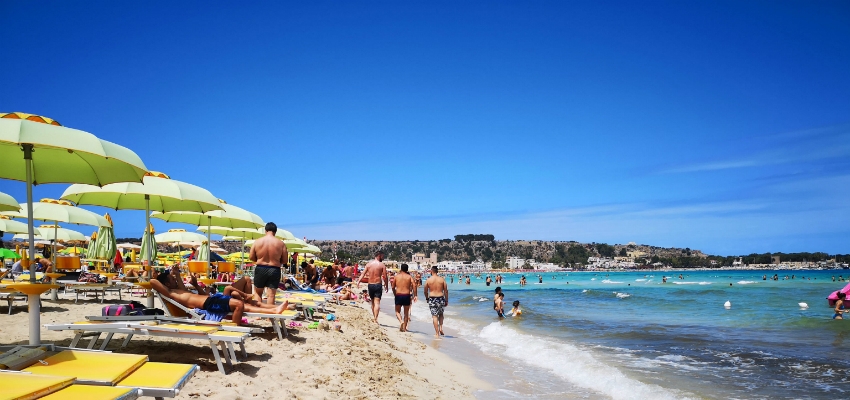
«L’Italia riceve da tutte le concessioni 100 milioni di euro. Queste concessioni [...] non vanno mai a gara e pagano canoni irrisori [...] Lo stabilimento più vip di Capalbio paga 4.500 euro l’anno di canone. Credo che un ombrellone per la stagione costi almeno 3.000 euro. Quindi con un ombrellone si rifà di tutta la concessione annuale» (0:23)
Publisher’s rating: Vero
The review checks the statement Carlo Calenda made at 0:23 in a video published on his party’s YouTube channel. He argued that Italy receives about €100 million a year from beach concessions, that concessions are not put out to tender, and that revenue from one summer umbrella at a luxury Capalbio establishment could cover its annual concession fee. The review says it checked those claims and found the reported facts correct, while distinguishing the factual claims from Calenda’s political criticism of a legislative amendment. For the €100 million figure, the review cites the 2017 Economic and Financial Document (DEF), which reported that concessions generated €103 million in 2016. It also cites a parliamentary question answered by Economy Minister Pier Carlo Padoan on April 27, 2017, which gave the more precise figure of €103,232,870 in state revenue for 2016. Thus the rounded amount in Calenda’s statement was supported, though it referred to data from four years earlier. On tenders, the review describes a long-running preference in Italian law for extending concessions rather than putting them out for competition, and links the issue to conflict with EU rules. For the umbrella comparison, it reports that Legambiente put the annual fee for the Capalbio establishment at €6,098, while the review’s account of Calenda’s estimate was that four summer months of beach season would bring in more than €6,000 from an umbrella. It concludes that the comparison is substantially accurate for high-end establishments, while noting that the low-fee comparison does not apply equally to all beach businesses.

Amazon está vendiendo un Iphone 11 a 2 euros
Publisher’s rating: Falso
Newtral investigated a video promoting a supposed two-euro iPhone 11 Pro deal. The video showed a purchase ticket bearing Amazon’s name, the phone, and a website explaining how to obtain it. The offer was tied to a message claiming that Amazon was closing its European warehouses and liquidating stock. The review says the deal and the message were false: “Se trata de un bulo, y seguramente una estafa, que explica cómo conseguir un iPhone Pro 11 a dos euros rellenando un formulario.”

ఇతర దేశాలలో లీటర్ పెట్రోల్ ధర భారత్ లో కన్నా చాలా తక్కువగా ఉంది
Publisher’s rating: FALSE
Bankia está mandando mensajes alertando de que “tu cuenta ha sido detenida”
Publisher’s rating: Falso
Newtral examined a message claiming to be from Bankia that told recipients their account had been detained and directed them to a link. The article says the message was a phishing attempt, not a genuine account notice. Its account of the message matches the wording in the claim. The investigation describes following the URL in the message: it led to a website made to look almost identical to Bankia’s, where visitors were asked for their username and password. Newtral says that entering those details could give the scammers access to the users’ Bankia-linked accounts. The article also reports that a browser displayed a warning that the destination was a deceptive site that could solicit sensitive information. As further evidence, Newtral cites Bankia’s response to users who asked about the message on Twitter. The response identified it as a phishing attempt and advised people not to open the link or enter personal or banking details. These checks address the specific message at issue: its link led to an imitation login page, and Bankia itself warned against interacting with it.
Price of petrol in other countries is very low compared to that in India.
Publisher’s rating: FALSE
FACTLY examined a viral post comparing petrol prices in several countries with India’s. Its central finding was that the post’s listed figures did not reliably represent the actual prices: the review says prices in some countries were higher than India’s, while the post substantially understated prices in several others. It also notes that the claim could not be treated as a simple comparison in which petrol was uniformly much cheaper abroad. For Pakistan, Bangladesh and Sri Lanka, the review checked figures against named official or company sources. It reports Pakistan’s Oil and Gas Regulatory Authority circular of 26 June 2020 as giving a price of PKR 100.11 per litre, converted in the article to ₹45.35; Shell Pakistan reportedly sold petrol for the same amount. It cites Bangladesh Petroleum Corporation at Taka 86 per litre, or ₹76.26, and Sri Lanka’s Ministry of Petroleum Resource Development at LKR 161 per litre, or ₹65.20. The post, by contrast, listed ₹26, ₹22 and ₹34 for those countries. The review also compared post figures with Globalpetrolprices data dated 6 June 2020. It gives Italy as ₹120.50 per litre, Cuba as ₹89.64 and Nepal as ₹60.23, against post figures of ₹14, ₹19 and ₹34. It reports Afghanistan at ₹33.01 and Burma at ₹38.24, compared with the post’s ₹36 and ₹30. The article says India’s 6 June price matched the post, but concludes that the international figures were inaccurate and that prices varied: some countries were more expensive than India and others cheaper.
"China has been stealing our manufacturing, costing Wisconsin almost 90,000 jobs."
Publisher’s rating: Mostly False


LsjExpress melayani pengiriman barang tujuan gresik ke palu dengan tarif Rp. 7.000/KG
Publisher’s rating: LsjExpress
Supermarket chain Puregold is giving away P10,000 daily via online raffles.
Publisher’s rating: Fake
“Forty percent of the money that was supposed to go to small businesses did not go to small businesses. It went to large businesses.”
Publisher’s rating: This is misleading.
Coca-cola is recruiting casual workers
Publisher’s rating: FALSE

India’s debt is increased steeply from US$ 296 billion in 2014 to US$ 486 billion in 2018.
Publisher’s rating: FALSE
The claim concerns India’s total debt: it says the amount rose from US$296 billion in 2014 to US$486 billion in 2018, presenting this as a steep increase during Prime Minister Modi’s term. The review checks those figures against Ministry of Finance data for the ends of the relevant financial years, rather than accepting the amounts circulated in the post. The figures reported by the review are substantially different from those in the claim. It gives India’s total outstanding debt as US$929.6 billion on 31 March 2014 and US$1,265.7 billion on 31 March 2018. The review says these are revised estimates, converted to US dollars using exchange rates from 28 March in each year. It reports rates of 60.0998 rupees per US dollar for 2014 and 65.0441 for 2018. The comparison supports the review’s conclusion that the post’s stated figures are wrong. The review characterizes the increase in total debt over the period as gradual, not steep. Its account also makes clear that the comparison is of total outstanding debt, not external debt alone.

«I dati diffusi oggi dall’Istat sull’impatto che l’emergenza Covid ha avuto sulla vita e l’occupazione delle donne dimostrano che le disuguaglianze sono cresciute in modo allarmante»
Publisher’s rating: Vero
The review assesses Mara Carfagna’s claim that Istat’s newly released figures showed the pandemic had increased inequalities affecting women’s lives and employment. It says the figures were in Istat’s 2020 annual report and that the review checked Carfagna’s observation against that report. The review concludes that the claim was supported by the data it examined: the lockdown affected women workers more than men in several respects, and women’s employment fell more sharply in percentage terms between March and April 2020. The review points to difficulties balancing work and home responsibilities during the first phase of the emergency, as well as the larger relative decline in women’s employment. It also places those pandemic effects alongside pre-existing disadvantages documented in the report, including pay and occupational segregation. Its conclusion is therefore about a worsening of inequalities that were already present, not evidence that all gender inequalities began with Covid or that every woman experienced the same effects.

«Gli altri Paesi hanno meno interesse di noi al Mes perché hanno un debito meno elevato e possono attivare prestiti alternativi sui mercati a tassi bassi come quelli del Mes. Noi no»
Publisher’s rating: C'eri quasi
Pagella Politica examined Enrico Letta’s explanation for why other countries had not sought the euro-area Pandemic crisis support loan: that they had less public debt and could borrow on markets at rates comparable to the loan’s, while Italy could not. The review concluded that Letta was close to right, but that this explanation left out other reasons governments might hesitate to apply. For the debt comparison, the review used Eurostat figures for the fourth quarter of 2019. Italy’s public-debt-to-GDP ratio was 134.8 per cent, second highest in the EU after Greece’s 176.6 per cent. Among other euro-area countries eligible for the mechanism, the cited ratios were lower: Portugal 117.7 per cent, Belgium 98.6 per cent, France 98.4 per cent, and Spain and Cyprus 95.5 per cent. On this part, the review said Letta was right, apart from the qualification that Greece had more debt than Italy. The borrowing-cost comparison was less uniform. The review compared 10-year government-bond rates with the 0.08 per cent rate on 10-year Mes loans. Italy’s rate was 1.64 per cent, second only to Greece’s 1.97 per cent, while seven countries had bond rates below the Mes rate, including Belgium, France and Germany. Some countries could therefore borrow at rates comparable to or lower than the loan rate; others faced higher rates. The review said the claim was true for some countries, not all. The review also cautioned against treating debt and interest costs as the only explanation for not applying. It cited concerns about the Mes’s preferred-creditor status, the possibility that applying could signal weakness to markets, and uncertainty over whether the loan’s conditions were definitively established in binding legal acts. Its conclusion was that Letta’s account captured part of the explanation but omitted these other considerations.

Mercadona pide personal urgente para contratar inmediatamente a través de este anuncio de Facebook
Publisher’s rating: Falso
The claim concerned supposed Mercadona job offers circulating through Facebook messages. The messages asked people to provide personal details to arrange an interview. Newtral says it contacted Mercadona, whose communications team said the advertisement was false and that the company does not request personal data for recruitment through Facebook or other platforms. This directly addresses both the advertised hiring process and the request for information. (Mercadona said: “Estas ofertas son falsas, nosotros nunca pedimos datos personales para procesos de selección”; it also said it did not request data “a través de Facebook, Milanuncios, LinkedIn u otra plataforma”.)

«Con la riapertura graduale delle rotte extra Schengen decisa dall’Ue, tagliando fuori i voli provenienti da Usa e Russia, il turismo italiano perderebbe 5,5 miliardi secondo le stime di Bankitalia. Nel 2019, 4,4 milioni di statunitensi hanno visitato il bel Paese»
Publisher’s rating: C'eri quasi
The claim concerned the EU’s decision on reopening travel from countries outside the EU and Schengen area from 1 July 2020, and Mattia Mor’s assertion that excluding the United States and Russia would cost Italian tourism €5.5 billion. The review checked the EU Council’s 30 June recommendations and compared the claim’s figures with the Bank of Italy’s 5 June study, “Indagine sul turismo internazionale.” It notes that the recommendations were not binding on member states and that Italy could, in principle, choose to admit tourists from countries not on the recommended list, although the review reported that no EU country had opened its borders to such countries at that point. The United States and Russia were absent from the list. The visitor figure was accurate: Bank of Italy data showed that 4.4 million US tourists visited Italy in 2019, including 3.9 million who stayed overnight. But the €5.5 billion was not a forecast of what Italy would lose because of the travel restrictions. It was the amount US tourists spent in Italy during 2019; the study did not provide corresponding data for Russian tourists. The review also cautions that US and Russian tourists could visit in January and February, and that travel might resume later in the year. Thus, presenting the full-year US spending figure as money lost because of the restrictions overstates what the cited evidence establishes.