PeakMetrics / Fact Checks
Economy & business fact checks
Explore claims publishers have checked about economy & business. Read their original ratings and follow the evidence.
Search fact checks
Search by text or image7,099 published reviews in this topic

వీడియోలో పెట్రోల్ ధర గురించి అడిగిన వ్యక్తిని కూర్చోమని చెప్తున్న ప్రధాని మోదీ
Publisher’s rating: FALSE
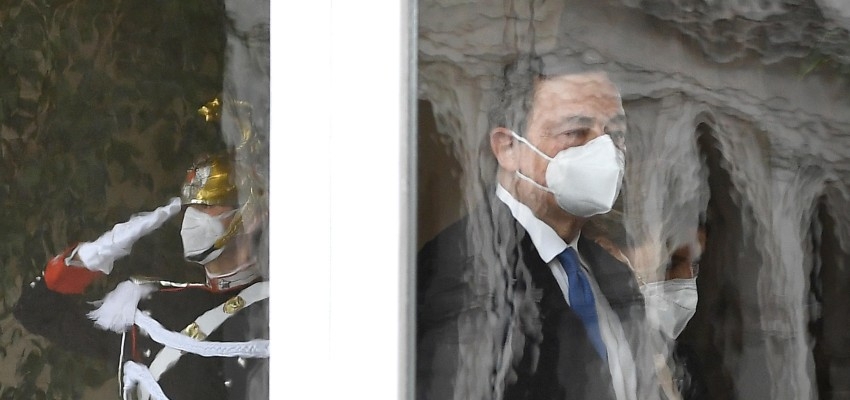
«Un calo [dello spread] che secondo le stime vale già per quest’anno un risparmio di un miliardo di euro per le casse dello Stato»
Publisher’s rating: Pinocchio andante

“BILLONARIOS AUMENTARON FORTUNA EN US$3.9 BILLONES DURANTE CRISIS COVID MIENTRAS QUE TRABAJADORES PERDIERON US$3.7 BILLONES”
Publisher’s rating: Real
Video uang kertas pecahan Rp 100 bergambar Presiden Jokowi yang diklaim sebagai hasil redenominasi
Publisher’s rating: Keliru
एफ.सी.आई का अनाज का गोदाम है, जहाँ एक कर्मचारी उन अनाज को सड़ाने के लिए उनके बोरों पर पानी डाल रहा है।
Publisher’s rating: False
Foto-foto yang diklaim sebagai foto-foto karyawan J&T yang mogok kerja akibat dipotongnya gaji mereka
Publisher’s rating: Keliru

“A CBO report found that without any additional stimulus, our economy wouldn’t reach pre-pandemic levels until 2025.”
Publisher’s rating: False

Carrefour. Celebração do 70º aniversário. Brindes grátis, boa sorte!
Publisher’s rating: Falso
Auf Facebook wirbt aktuell ein vermeintlicher Trachtenshop mit dem Namen «zeitlosliebe.de». «Ich hoffe, Sie können Ihr Lieblings-Dirndl zum günstigsten Preis kaufen!!!», heißt es im Info-Text auf der Facebookseite. In einem Post wird behauptet: «Aufgrund der Absage des Oktoberfestes in München im letzten Jahr, hatten wir eine Menge Vorräte auf Lager, so dass wir sie zu einem sehr geringen Preis stellen.» Handelt es sich hierbei um einen seriösen Online-Anbieter?
Publisher’s rating: «zeitlosliebe.de» ist kein seriöser Online-Shop für Mode.
The review examined whether «zeitlosliebe.de», promoted on Facebook as a dirndl shop, was a trustworthy online seller. Its Facebook page advertised low prices and a post attributed surplus stock to the cancellation of Munich’s Oktoberfest the previous year. The review focused on the shop’s website and the business details presented there, rather than treating the sales pitch as proof of legitimacy. The article reports that several features pointed against trusting the seller. A central concern was the website’s legal notice. As of 4 February 2021, it listed a managing director, a commercial-register number and an email address, but no telephone number, VAT identification number or business address. The review says the number instead matched a company for sun protection and facade profiles in Puchheim, while the website’s contact page gave a UK company’s postal address. It also reports that the Facebook page’s business details differed from those on the website, leaving customers uncertain about the contracting party and where their money would go. The review also cites inconsistent language and awkward wording on the site, and says reverse-image searches found photos used by other sellers. It reports that Austria’s Watchlist Internet had warned about «zeitlosliebe.de» since late January 2021 and listed it among shops associated with non-delivery, counterfeit goods or data collection. Taken together, these reported discrepancies and warning signs support the article’s conclusion that the shop was not a trustworthy fashion retailer.


Sai primeiro trem do estado do Mato Grosso para Santos; trem tem containers duplos
Publisher’s rating: ENGANOSO: Ao contrário do que afirmam publicações nas redes sociais, o trem que aparece nas imagens não é o primeiro a trafegar pela ferrovia. O primeiro trecho da Ferronorte foi inaugurado em 1999 e o mais recente foi entregue em 2013. A operação dos vagões double stack, que transportam dois contêineres empilhados, começou em julho de 2019.

மார்ச் அல்லது ஏப்ரல் மாதத்துக்குள் பழைய ரூ.5, ரூ.10, ரூ.100 நோட்டுகள் திரும்ப பெறப்படும் என ரிசர்வ் வங்கி அறிவிப்பு
Publisher’s rating: FALSE
The claim concerned a Facebook post saying the RBI had announced that old ₹5, ₹10 and ₹100 notes would be withdrawn by March or April. Vishvas News describes its investigation as finding that the RBI had made no such decision. The review says it traced similar posts to remarks about old ₹100 notes possibly ceasing to circulate from March or April, made by RBI Assistant General Manager B. Mahamesh at a district-level meeting in Mangaluru. That reported discussion was not an announcement that all three denominations would be withdrawn. The review reports two further checks. It says RBI had previously stated that old ₹100 notes remained legal tender after the introduction of a new purple ₹100 note in 2018. It also says the outlet contacted an assistant to Yogesh Dayal, Chief General Manager of RBI’s Communications Department, who said RBI had not issued such an announcement. The article additionally reproduces an RBI post clarifying that reports about withdrawal of old-series ₹100, ₹10 and ₹5 notes in the near future were incorrect. Together, the source’s account distinguishes a report about possible circulation changes for old ₹100 notes from the viral claim of an RBI decision to withdraw all three denominations. It presents the RBI clarification and the official’s response as evidence against the claimed announcement.
Een Facebookgebruiker deelt zijn mailverkeer met de belastingsdienst op sociale media. Het mailverkeer moet aantonen dat de man geen 'contract' heeft met de Nederlandse staat, zoals hij zelf ook in de caption vermeld. Volgens de man is hij alsnog ongewenst bezit "van de staat, voor de staat, zonder rechten". Ook vergelijkt hij de regering en de staat met een bedrijf, dat contracten aangaat met 'andere bedrijven' (lees: de burgers). "NB De Staat der Nederlanden staat genoteerd op Wall Street", besluit hij in zijn brief.
Publisher’s rating: Er staan enkele onwaarheden in het mailverkeer van de man. De Staat der Nederlanden is géén beursgenoteerd bedrijf. Ook heb je als Nederlandse burger (vanzelfsprekend) wél rechten. Hoewel de brief is voornamelijk filosofisch van aard, is hij toch onjuist.
The review examined a Facebook post in which a man shared correspondence with the tax service to argue that Dutch citizens have no contract with the state. In the letter, he compared the state and government to a company contracting with citizens, described himself as property “of the state, for the state, without rights,” and asserted that the State of the Netherlands was listed on Wall Street. The correspondence at issue was dated 10 August 2020 and was posted on social media on 3 February 2021; the tax service involved was in Breda. The review checked the Wall Street assertion against the Wall Street Journal’s company-list data and the New York Stock Exchange’s information, reporting that neither listed a company called the State of the Netherlands. It also cited market expert Pascal Paepen, who said countries are not organized as corporations and that listing them on an exchange was not currently possible. Paepen qualified that view: he did not rule out the possibility that countries might be listed in the future. On the claim that Dutch citizens have no rights, the review pointed to the Dutch Constitution as contrary evidence. It described much of the letter’s argument as philosophical, but identified specific factual assertions—about the state being publicly listed and citizens having no rights—that it considered contradicted by the cited material.


పాకిస్తాన్, నేపాల్ మరియు శ్రీలంకలో కన్నా భారత దేశంలోనే పెట్రోల్ ధరలు తక్కువగా ఉన్నాయి
Publisher’s rating: FALSE
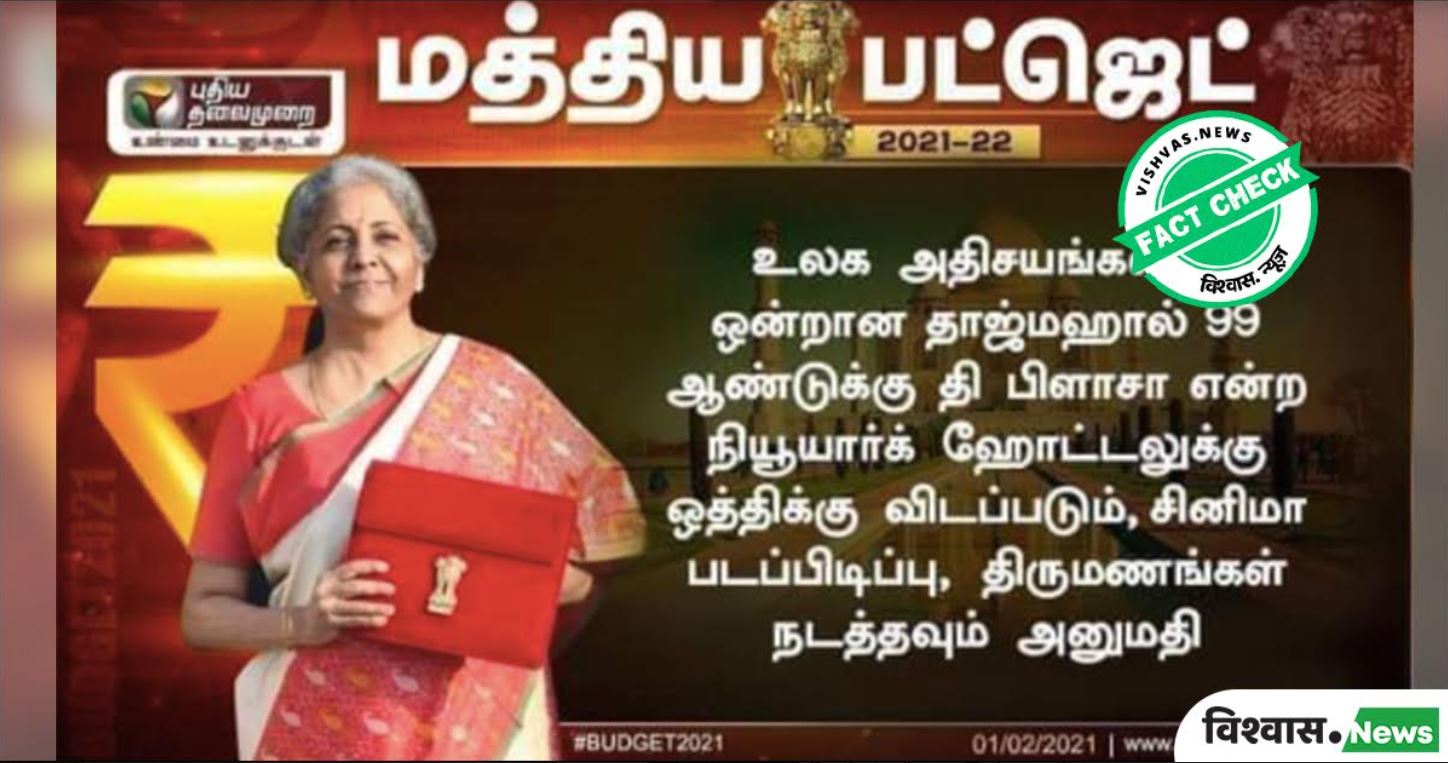
बजट भाषण में वित्त मंत्री ने की ताज महल को लीज पर देने की घोषणा
Publisher’s rating: FALSE

జర్మనీ ప్రభుత్వం పెట్రోల్ రేట్లు పెంచడంతో అక్కడి ప్రజలు నిరసనగా రోడ్లపై తమ కార్లు వదిలి వెళ్లిన ఫోటో.
Publisher’s rating: FALSE

RBI has decided to withdraw old currency notes of denomination Rs 100 Rs 10 and Rs 5 rupees from March.
Publisher’s rating: FALSE
The claim concerned a social-media post saying the Reserve Bank of India (RBI) would withdraw old ₹100, ₹10 and ₹5 notes from March. Vishvas News reports that it checked the post’s claim against information from RBI and found no such decision had been made. The review explains that media reports had quoted an RBI official discussing plans to stop circulation of old ₹100 notes from March–April. It says those reports were followed by viral social-media posts, but that the RBI had earlier clarified that old ₹100 notes remained legal tender when it introduced a new design in 2018. The review also reports that an RBI communications official told Vishvas News there were no instructions to withdraw the notes, and that the RBI had issued a public clarification addressing reports about all three denominations. The review’s central evidence is that the RBI’s clarification said the reports of a near-future withdrawal of old ₹100, ₹10 and ₹5 notes were incorrect. This directly contradicts the post’s assertion that the RBI had decided to withdraw those notes from March.