PeakMetrics / Fact Checks
Economy & business fact checks
Explore claims publishers have checked about economy & business. Read their original ratings and follow the evidence.
Search fact checks
Search by text or image7,096 published reviews in this topic

Claim: misinformation being shared that state governments levying 55 per cent tax on LPG
Publisher’s rating: False
The review examined a social-media post alleging that central government tax was 5% and state-government tax was 55% on an LPG cylinder. It says the post was shared by a Facebook account named Palanisamy on July 15, 2021, and included a purported price breakdown: a base price of ₹495, central tax of ₹24.75, and additional charges and state tax. The post’s arithmetic assigned the state ₹291.36 in tax and arrived at a total of ₹861.18. The review questioned that breakdown, including its two separate transport charges and its claim that the dealer commission was only ₹5.50. To check the figures, the publisher says it looked for information on LPG pricing and dealer commissions, and examined reporting and a Ministry of Petroleum comparison of LPG prices before and after GST. It reports that news sources put the dealer commission for a 14.2 kg cylinder at about ₹61.84, following a central-government increase in 2019. The review also says states applied VAT rates of 14% or 15%, rather than 55%, and that the Ministry’s comparison listed 5% GST for domestic cylinders, divided into 2.5% central and 2.5% state tax, with no additional taxes. On that evidence, the review concluded that the specific claim of 55% state tax on domestic LPG cylinders was false. It also cautioned that it could not find the precise pricing formula on government websites; its conclusion about the tax rate rests on the information it reports from the GST comparison and other cited material.

സംസ്ഥാന സര്ക്കാരുകള് പാചകവാതക സിലിണ്ടറില് 55% നികുതി ഈടാക്കുന്നു
Publisher’s rating: FALSE


Anand Seth, Amul Milk’s owner had fired 1.38 lakh workers for eating Beef
Publisher’s rating: FALSE
The claim names Anand Seth as Amul Milk’s owner and says he fired 1.38 lakh workers for eating beef. The review explains that Amul is a brand of Gujarat Co-operative Milk Marketing Federation Ltd. (GCMMF), a cooperative federation of Gujarat dairy cooperatives—not a company owned by one individual. It identifies Shamalbhai B Patel as chairman, Valamjibhai R Humbal as vice chairman and RS Sodhi as managing director, and says there is no mention of Anand Seth as Amul’s owner. The review also reports that it found no recent news reports of Amul firing workers and that the company’s official Facebook, Twitter and Instagram accounts did not mention such firings. Those absences are the review’s reported checks; they do not, by themselves, establish that an event could not have happened. For a direct response, Aajtak approached GCMMF managing director RS Sodhi. He said Amul did not even have 1.38 lakh employees, described Amul as a cooperative owned by farmers who supply it with milk, and denied discrimination based on caste or religion. The combination of the incorrect ownership attribution, the stated mismatch with Amul’s employee count and the managing director’s denial underpins the review’s conclusion that the firing claim is false.
O Mercado Livre afirmou ser falso Promoções com links Falsos
Publisher’s rating: Checagem de fatos
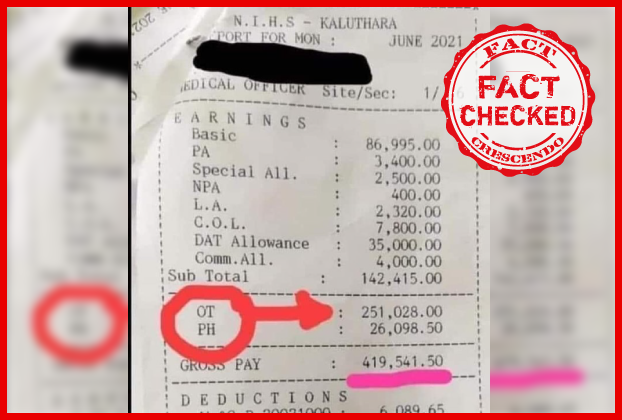
வைத்திய அதிகாரிகளின் சம்பளம் மாதமொன்றில் 2 இலட்சத்து 50 ஆயிரமா?
Publisher’s rating: MISLEADING
The review examined a salary slip circulated online alongside a Facebook post saying that someone who became a medical officer could earn at least 400,000 in two months. It focused on a slip attributed to Kalutara Hospital and the claim that it showed a medical officer’s monthly salary. The review reports that the hospital’s responsible doctor explained that the additional-duty and holiday-work payments on the slip covered two months, not one. (“Sutharshan Siro என்ற பேஸ்புக் கணக்கில் “ தயவு செய்து எப்படியாவது Medical Officer ஆக வந்து விடுங்கள்.. இரண்டு மாதங்களில் குறைந்தது 4 இலட்சம் உழைத்திடலாம் “”; “இந்த சம்பளப்பற்று சீட்டு களுத்துறை வைத்தியசாலையில் பெயரில் கொடுக்கப்பட்டுள்ளமையினால் எமது குழு குறித்த வைத்தியசாலையில் பொறுப்பு வைத்தியரை தொடர்புக்கொண்டு இது குறித்து விபரத்தினை கேட்டது. அப்போது குறித்த சம்பளச்சீட்டில் உள்ள மேலதிக வேலைக்கான மற்றும் விடுமுறை தின பணிக்காக இரண்டு மாதத்தின் கொடுப்பனவுகள் சேர்த்து வழங்கப்பட்டுள்ளதாக அவர் தெரிவித்தார்.”) The review says its team also contacted the hospital’s accounts department. According to the article, the amount included payments for 228 hours of overtime across April and May, as well as payments for working three rest days per month over those two months. That makes the slip a combined two-month total, rather than evidence of a regular monthly salary of 250,000. The article’s conclusion is that the claim based on the circulated slip was misleading. (“களுத்துறை வைத்தியசாலையில் கணக்கு பிரிவினை நாம் தொடர்புக்கொண்டு வினவிய போது, குறித்த சம்பள பற்றுசீட்டில் உள்ள கணக்கானது கடந்த ஏப்ரல் மற்றும் மே மாதங்களுக்கான மேலதிக வேலை நேரமாகிய 228 மணித்தியாலத்திற்கான கொடுப்பனவும் ஒய்வு நாள்கள் மாதம் ஒன்றுக்கு 3 நாள் வேலையின் அடிப்படையில் இரு மாதங்களுக்கான கொடுப்பனவுகளே அதில் உள்ளடங்கியுள்ளதாக தெரிவித்தார். இதற்கமைய குறித்த சம்பள பற்று சீட்டானது, இரண்டு மாதங்களின் கூட்டுத்தொகை என்பது எமக்கு உறுதியானது.”; “நாம் மேற்கொண்ட தேடல் முடிவில், வைத்தியர்களின் சம்பள பற்றுசீட்டு தொடர்பாக பகிரப்படும் தகவல் போலியானது என கண்டறியப்பட்டுள்ளது.”)

Labor contractualization did not exist during the Ferdinand Marcos era.
Publisher’s rating: False
Rappler examined a Facebook video titled “Dapat nyo malaman sa pamilya Cojuangco-Aquino at pamilya Marcos.” At the 9:13 mark, it claimed there were no contractual employees under Marcos and that Corazon Aquino later passed a bill to allow them. Rappler said readers had sent it the video for verification and that Facebook’s Claim Check tool had flagged the post. The review reported that the video had more than 6.5 million views, 201,000 reactions and 15,000 comments on Facebook at the time of its account. The central evidence cited by the review is the Philippine Labor Code, signed by Marcos in 1974 through Presidential Decree 442. Rappler says contractualization was adopted in Philippine law through that code, contradicting the video’s assertion that the practice did not exist during his administration. The review describes a system in which workers’ contracts could run for no longer than six months and be renewed as they expired, allowing companies to avoid regularizing employees and providing benefits such as paid leave and bonuses. Rappler also quoted economist Cid Terosa, who said Marcos signed a decree allowing temporary-worker hiring amid economic instability and high unemployment. The review places the practice’s introduction in 1974, while noting that later presidents tried to end it without success. It adds that the House passed an anti-endo bill on December 1, 2020, but that some lawmakers objected because that version still allowed legitimate job contracting and fixed-term employment. This later legislative detail concerns continuing debate over the practice; it does not alter the review’s evidence that contractualization had already been adopted under Marcos.
Claim: Three year old news shared now that BJP reduced fuel price only in their ruling states
Publisher’s rating: False
The review investigated a social-media post claiming that petrol and diesel prices had been reduced in BJP-governed states but not in Tamil Nadu. The post used a Polimer television news video, with a caption presenting the price reduction as current. The review says the video itself reported that, after a request from the central government, several state governments across India had reduced taxes on petrol and diesel, including the Bihar government: “மத்திய அரசின் வேண்டுகோளை ஏற்று இந்தியா முழுவதும் பல்வேறு மாநில அரசுகளும் பெட்ரோல், டீசல் மீதான வரி விதிப்பை குறைத்துள்ளன. அந்த வரிசையில் பீகார் அரசும் நடவடிக்கை எடுத்துள்ளது,” To check the video’s provenance, the reviewers looked for the Polimer report, using the Polimer logo and other features visible in the shared clip. They identified it as a video from 2018—not a new report about a current reduction. The review’s account of this check is: “பாலிமர் லோகோ உள்ளிட்டவை உள்ளதால், பாலிமர் தொலைக்காட்சி வெளியிட்ட அந்த வீடியோவை முதலில் தேடினோம். இதன்படி, பாலிமர் வெளியிட்ட வீடியோ கடந்த 2018ம் ஆண்டைச் சேர்ந்ததாகும்.” The key context is that an older report about state tax cuts was recirculated as if it described a new action limited to BJP-governed states. The review says it found no current media report of such an announcement and no announcement from the central government: “ஆனால், தற்போது இப்படியான செய்தி எதையும் ஊடகங்கள் வெளியிடவில்லை, அத்துடன், மத்திய அரசும் அறிவிப்பு எதையும் தரவில்லை.” On the evidence described, the clip’s age and its original report about multiple states undermine the post’s presentation of it as current news.

కేంద్ర ప్రభుత్వ అప్పులు పరిమితులకు లోబడి ఉండగా, ఆంధ్రప్రదేశ్ రాష్ట్ర అప్పులు పరిమితులు దాటాయి
Publisher’s rating: MISLEADING
“Average gas price: June 2020: $2.21 June 2021: $3.07 President Biden’s economy!”
Publisher’s rating: Four Pinocchios

పెరుగుతున్న పెట్రోల్ ధరలపై కోపంతో హర్యానా రాష్ట్రంలో ఒక వ్యక్తి పెట్రోల్ పంపుకు నిప్పంటిస్తున్న వీడియో
Publisher’s rating: FALSE

State government is collecting more tax than central government on petrol
Publisher’s rating: FALSE
FACTLY examined a viral post claiming that state governments collect more tax than the central government on petrol. Its comparison uses figures for petrol sold in Telangana, while also giving Delhi price-buildup figures as an example of the petrol price and taxes paid at the pump. The article explains that state tax arrangements vary, so its headline comparison is not a single uniform state-versus-centre calculation for every state. The review separates central excise into components and explains that only Basic Excise Duty (BED) is shared with states. It says the other listed components—Special Additional Excise Duty, Road & Infrastructure Cess, and Agriculture & Infrastructure Development Cess—are retained by the central government. Of Rs. 1.40 per litre in BED, the article applies the 15th Finance Commission’s 41% state share: Rs. 0.59 goes to states collectively, while Rs. 0.81 remains with the centre. Adding that Rs. 0.81 to Rs. 31.50 in non-divisible excise components, it calculates central-government receipts at Rs. 32.31 per litre. For Telangana, the article calculates state VAT of Rs. 26.77 per litre from the stated 35.20% rate and adds Telangana’s reported share of BED, Rs. 0.01, for a total of Rs. 26.78. On those figures, central receipts exceed Telangana’s state receipts. The review therefore supports its conclusion for the comparison it presents; its figures should be understood in that stated context, rather than as a claim that every state uses Telangana’s tax formula.

Promoção ‘Sonho de Pai’ Mercado Livre Neste dia dos pais, distribuiremos 5.000 prêmios grátis! offredir.ru
Publisher’s rating: Falso
"Every single state that has adopted legalizing marijuana has been disappointed by the economic model.”
Publisher’s rating: Three Pinocchios

మద్యం అమ్మకాలు ఆధార్ కార్డు ద్వారా జరగాలి; మద్యం వినియోగదారులకు ఎలాంటి సబ్సిడీలు ఇవ్వకూడదు – రతన్ టాటా
Publisher’s rating: FALSE