PeakMetrics / Fact Checks
Economy & business fact checks
Explore claims publishers have checked about economy & business. Read their original ratings and follow the evidence.
Search fact checks
Search by text or image7,095 published reviews in this topic

خاتمی دولت را با ۶ هزار میلیارد تومان بدهی تحویل گرفت؛ احمدینژاد با ۲۶، روحانی با ۸۸ و رئیسی با ۱۳۶۷ هزار میلیارد تومان.
Publisher’s rating: غیرقابل اثبات
र्ल्ड बैंक ने भारत का विकासशील देश का टैग हटा दिया है। अब भारत को लोअर मिडिल इनकम कैटेगरी में गिना जायेगा।
Publisher’s rating: Missing Context

Recent news of NITI Aaayog VC comments ‘India’s economy is in worst phase in 70 years’
Publisher’s rating: MISLEADING
The claim concerns a news clip presented on social media as recent, with Hindi headlines loosely translated as saying India’s economy was in its worst phase in 70 years. FACTLY reports that the clip itself was undated and that its apparent recency came from how people were sharing and commenting on it, rather than a date shown in the footage. The review identifies the speaker as NITI Aayog Vice Chairman Rajiv Kumar and places the remarks at the Hero Mindmine summit in August 2019, during discussion of an economic slowdown. The reported remarks were about an unusual liquidity problem affecting the financial sector. Kumar said the government had not faced this kind of liquidity situation in 70 years, with the sector in churn and institutions not trusting one another. That is more specific than the viral headline’s broad characterization of the economy, and the review treats the clip as old material being recirculated as recent—not as evidence of a new statement. FACTLY says several news agencies had reported Kumar’s comments at the time, and contrasts the old remarks with his more recent view, reported in the review, that India was on the cusp of a major economic recovery. It also says NITI Aayog had not lately made comments in line with the viral post. Taken together, the review’s account supports the key correction: the comments were made in 2019, not recently. The supplied excerpt does not identify the news agencies or provide the clip’s original broadcast date, so those details cannot be independently specified here.
Chińskie rezerwy odpowiadają za wzrost cen żywności.
Publisher’s rating: Manipulacja

Leroy Merlin kontynuuje emisję reklam mimo kontrowersyjnej decyzji o pozostaniu na rynku rosyjskim.
Publisher’s rating: Prawda
“We are still sending about $100 million every month to Russia to buy uranium.
Publisher’s rating: Probably Exaggerated
“In 2021 Russian imports [of uranium] cost almost $1 billion, money that helped underwrite Mr. Putin’s war machine.”
Publisher’s rating: Possibly correct

הקורונה סייעה לבתי המלון בארץ בגלל שישראלים לא היו יכולים לצאת לחו"ל
Publisher’s rating: חצי נכון
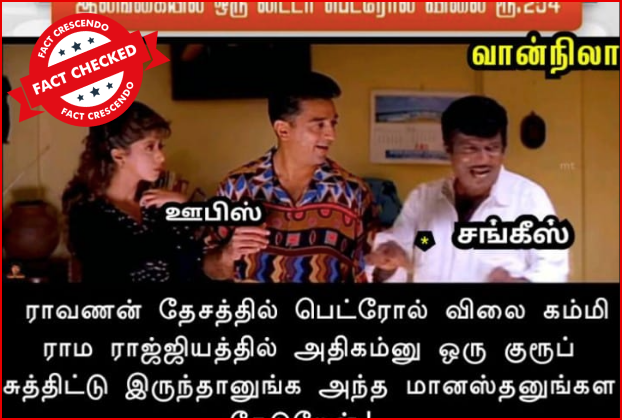
Claim: misleading shared that Lankan fuel prices higher than India
Publisher’s rating: FALSE
Fact Crescendo examined social-media posts that used news cards about rising fuel prices in Sri Lanka to suggest that petrol and diesel there cost more than in India. The review describes posts sharing a Polymer TV card without specifying which country’s rupees its prices referred to, and another post combining a fuel-price card with a film scene. It says the ambiguity arose because several countries call their currencies rupees, while some media reports did not identify the Sri Lankan currency. The review notes that Sun News did specify the Sri Lankan currency, unlike Polymer and other outlets: “சன் நியூஸ் வெளியிட்டிருந்த நியூஸ் கார்டில் இலங்கை மதிப்பு என்று குறிப்பிட்டிருந்தனர். ஆனால், பாலிமர் உள்ளிட்ட ஊடகங்கள் இலங்கை மதிப்பில் என்பதைக் குறிப்பிடத் தவறிவிட்டன.” The decisive comparison in the review is a currency conversion, not a direct comparison of the two countries’ nominal rupee figures. It states that on April 20, 2022, one Sri Lankan rupee was worth 23 Indian paise; on that basis, Sri Lankan petrol priced at 338 rupees per litre worked out to 78.1 Indian rupees. The review compares that with Indian petrol priced above 110 rupees per litre, and says Sri Lankan diesel converted to 67 Indian rupees per litre. It concludes that the posts’ comparison was misleading because they presented Sri Lankan-currency prices as though the figures could be compared directly with Indian rupees: “இந்தியாவில் ரூ.112க்கு விற்பனையாகும் பெட்ரோலை வாங்கிக் கொண்டு, இலங்கைக்கு கடத்திச் சென்று இலங்கை மதிப்பில் 338க்கு விற்றால், நஷ்டம்தான் வரும்”.
Dies ist ein Gewinnspiel von Edeka.
Publisher’s rating: Falsch
Das ist ein Gewinnspiel von Aral.
Publisher’s rating: Das angebliche Gewinnspiel ist unseriös.

News clip stating World Bank has removed the developing nation tag of India
Publisher’s rating: MISLEADING
The claim concerned a Jansatta news clip circulated on social media as recent, saying that the World Bank had stripped India of its developing-country tag. The review says the clip was actually from 2016 and was being shared in a way that presented old reporting as new. It reports that a keyword search located the same Jansatta report, published on 05 June 2016. [Source support: S1]

COMPARTILHA! URGENTE! TSE PROÍBE BOLSONARO BAIXAR PREÇO DE COMBUSTÍVEL. AJUDE SALVAR O BRASIL. COMPARTILHA!
Publisher’s rating: Falso

UPA സര്ക്കാര് ഓയില് ബോണ്ടിന് വേണ്ടി 2.5 ലക്ഷം കോടി ഡോളറിന്റെ കടം വാങ്ങി
Publisher’s rating: FALSE
“What people don’t know is that 70 percent of the increase in inflation was the consequence of Putin’s price hike because of the impact on oil prices. Seventy percent.”
Publisher’s rating: Needs context
Proposition de travail de « mise sous pli », à domicile.
Publisher’s rating: Ne pas répondre à l’annonce ! Il s’agit d’une escroquerie, maintes fois dénoncée, en France en particulier, sur le site « Signal Arnaques ».
The review concerns a Facebook offer seeking people for work at home putting advertising materials into envelopes. The post, in the Belgian group “A vendre région la louviere,” promised daily payment of 75 or 110 euros for two to three hours’ work. The review notes that the offer was written in poor French and that comments on the post had been disabled. To check the image accompanying the offer, the review traced it to a 2019 photo from the French association Caméléon. The association works to address sexual violence against children and adolescents, and had itself warned on Facebook in February 2022 about fraudulent Facebook offers for paid envelope-stuffing work. It said such ads were numerous and appeared under different profiles, and advised users not to click links or provide personal information. The review also cites reports on the French site Signal-Arnaques describing similar envelope-stuffing job scams. Those reports warn that applicants may be asked to pay fees or buy equipment, or may face financial fraud involving false cheques or advance payments. The evidence supports treating the offer as fraudulent, but the review’s account does not document a completed transaction or identify who posted this particular advertisement.
ارزش صادرات غیرنفتی ایران در سال ۱۴۰۰ به بالاترین رقم در سالهای پس از انقلاب رسیده است.
Publisher’s rating: نادرست