PeakMetrics / Fact Checks
Economy & business fact checks
Explore claims publishers have checked about economy & business. Read their original ratings and follow the evidence.
Search fact checks
Search by text or image7,093 published reviews in this topic

Now there is also GST for using toilets. The photo shows a receipt as an example from Punjab
Publisher’s rating: FALSE
The claim concerned a receipt circulated online as an example from Punjab: it appeared to charge one extra rupee in GST on a five-rupee toilet-use fee. FACTLY reports that it checked the CBIC-GST website and found that GST is nil on public-convenience services, including providing bathrooms, washrooms, lavatories, urinals or toilets. That directly contradicts the claim that GST was imposed for using the toilet shown on the receipt. The review also examined the receipt’s history and provenance. It says the same image had circulated since July 2017, attributed to a Sulabh toilet at Ludhiana Bus stand. In reporting quoted by FACTLY, a Sulabh International official said the organisation had no centre at that bus stand, and the bus stand manager agreed the receipt was fake. The review therefore presents the image not as evidence of a current charge, but as an old receipt that authorities had already rejected. As an additional check on the receipt’s apparent tax amount, FACTLY notes that one rupee on a five-rupee charge works out to 20%, which it says is not one of the GST tax slabs. This supports the review’s conclusion about the receipt’s implausibility; the separate CBIC-GST information is its evidence about the tax treatment of public toilet services.

Comparison of GST rates of certain goods with that of their pre-GST tax rates
Publisher’s rating: MISLEADING
The claim concerns a social-media post comparing GST rates on selected goods with rates said to apply before GST, and presenting the current rates as lower. FACTLY’s review places the post in the context of GST Council rate changes that took effect on 18 July 2022. Its central objection is that the comparison treats pre-GST rates as though they were uniform across India, although state taxes varied by state and the earlier system also involved multiple kinds of indirect taxes. The review says that the post selected goods and services for which GST rates were lower, leaving out examples taxed more under GST. It gives essential commodities as a counterexample: when pre-packed, curd, rice, wheat and flour would attract 5% GST under the revised rates, while wheat, rice and flour had been taxed at 2.5%, 2.75% and 3.5%, respectively, before GST. It also notes that services were charged at 15% service tax before GST and that most services were then taxed at 18%. Thus, the review does not establish that taxes never fell after GST; it acknowledges that taxes on many goods and services did fall. Its finding is that the post’s selected comparisons do not support a general conclusion: pre-GST state rates were not uniform, and the examples omit goods and services whose taxes increased. The review describes the comparison as irrational and selective on those grounds.
দেশে গ্যাসের সংকটের কারনে বিদ্যুৎ উৎপাদন হচ্ছে না! অন্যদিকে ভারতে এলপিজি গ্যাস রপ্তানি করা হচ্ছে
Publisher’s rating: Misleading
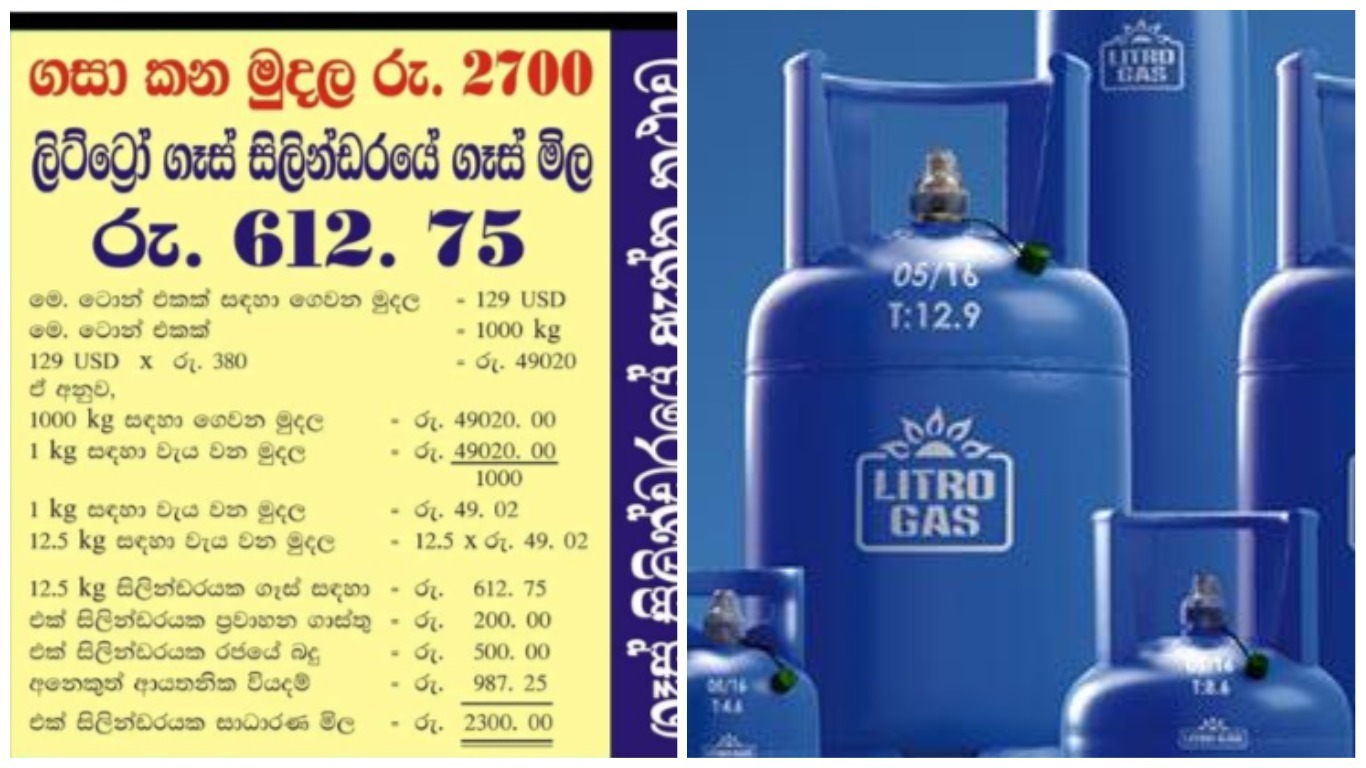
ලිට්රෝ ගෑස් මිල සැකසෙන ආකාරය පිළිබඳ හුවමාරු වූ නොමඟ යවන සුළු සටහන් පෙළක්!
Publisher’s rating: Misleading
The review investigates social-media calculations that suggested the gas in a 12.5 kg Litro cylinder cost only about Rs. 612, and that a cylinder could therefore be sold for around Rs. 2,300. It says the central error was treating a shipping-and-tax figure as the purchase price of the gas. The review reports that the circulated calculations used US$129 per metric tonne—the amount Litro paid Oman Trading for shipping—as though it were the price of the gas itself; the actual gas purchase cost was not included in those posts. To check the figures, the publisher says it examined the calculations and asked Litro for a cost breakdown. Litro’s information put the gas purchase price at US$725 per metric tonne. Using the exchange rate stated in the review, Rs. 369.71 per US dollar, the publisher calculated that the gas in a 12.5 kg cylinder cost about Rs. 3,350. It also calculated about Rs. 596 for shipping and taxes, and reported Litro’s figures of Rs. 590 for operations and Rs. 373 for distribution. Those four components total Rs. 4,910, the cylinder price used in the review’s calculation. The review says gas purchase alone accounted for 68% of that total, while shipping and taxes accounted for 12%. It also cites a comparison with Indian cylinder prices, but the decisive correction to the viral calculation is the distinction between the US$129 shipping-and-tax figure and the US$725 gas purchase price. The review concludes that presenting the former as the cost of the gas produced a misleading calculation.

Hacienda establece un límite de 1.000€ para sacar dinero en los cajeros
Publisher’s rating: False
طبق گزارش صندوق بینالمللی پول، ایران چهاردهمین اقتصاد بزرگ جهان است.
Publisher’s rating: گمراهکننده



ברוב המדינות המפותחות, ה-OECD, שיעור המיסוי הוא די דומה למה שקורה במדינת ישראל
Publisher’s rating: ללא ציון
The claim concerns the share of the price of fuel paid in tax in Israel compared with developed OECD countries. It was made by Nahum Yehoshua, the Energy Ministry’s chief economist for the fuel administration, in an interview about rising fuel prices. The investigation tested that comparison using the latest international comparison it could find: International Energy Agency figures for the second quarter of 2020. It explains that the measure is the excise tax and VAT as a share of the final fuel price. In those figures, Israel’s tax share was 75%, the highest among 33 OECD members. Finland followed at 73%, Sweden at 72%, and the United Kingdom, France and Greece at 71%; the OECD average was 63%. Thus, although many countries had tax shares in a broadly similar range and most exceeded 50%, the comparison did not show Israel’s rate to be merely typical: Israel was at the top of the group in the available data. The investigation also cautions that the figures were dated and could not establish a current, systematic international comparison. Israel’s tax share later fell as fuel prices rose and after a tax reduction; by July 2022 it was reported at 48.5%. Other countries also reduced fuel taxes, while some impose congestion or distance-based charges not captured by comparing fuel taxes alone. The evidence therefore supports a qualified conclusion: the 2020 comparison put Israel’s fuel-tax share above its OECD peers, while the later situation was harder to compare and other transport taxes complicate the broader comparison.

మన్మోహన్ సింగ్ మరియు నరేంద్ర మోదీ హయాంలలో పలు ఆర్ధిక సూచిలకు సంబంధించిన గణాంకాలు
Publisher’s rating: MISLEADING

日用品大手のユニ・チャームの初任給「男性と女性で金額が違う」と読み取れるツイートが拡散
Publisher’s rating: ミスリード
A viral tweet about a daughter researching starting salaries after expressing interest in the Sofy brand could be understood as claiming that Unicharm pays different starting salaries to men and women, although the tweet did not name the company. Unicharm said there was no gender-based difference in starting pay, and its published figures showed different amounts by educational attainment. The author later said the criticism was aimed at social gender inequality, not Unicharm.

संबित पात्रा ने गैस सिलेंडर की महंगाई का विरोध करने वालों को जवाब दिया कि “केवल गैस महंगा हुआ है, सिलेंडर नहीं।”
Publisher’s rating: False
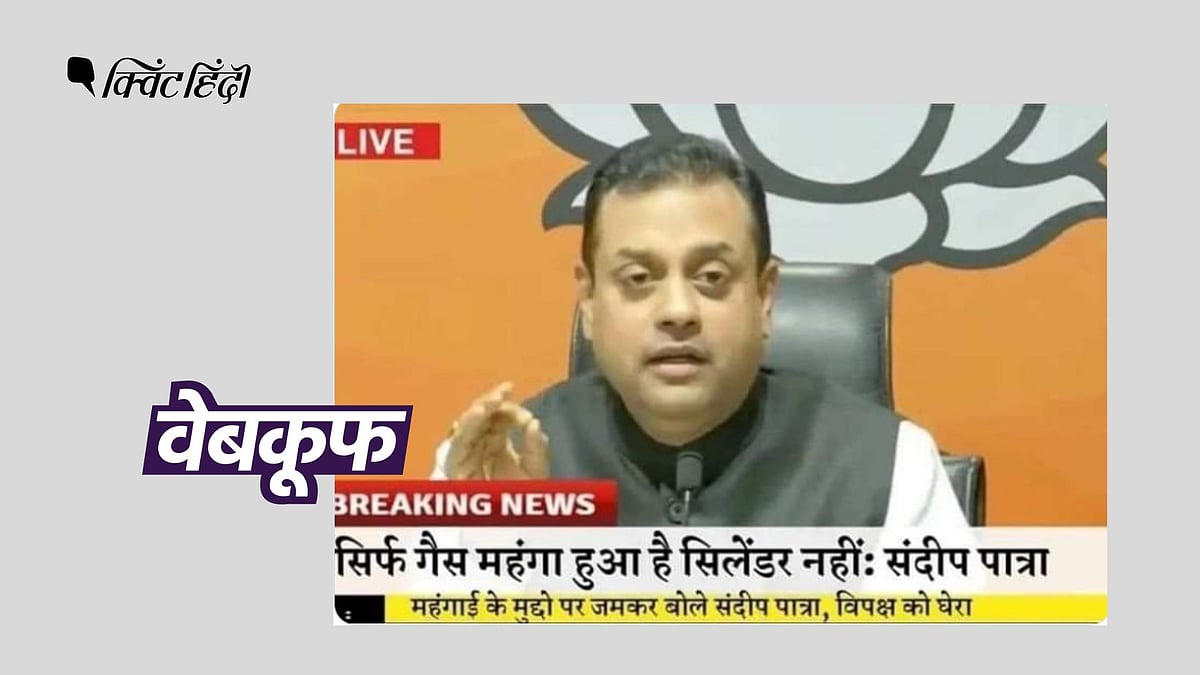
संबित पात्रा ने कहा सिर्फ गैस की कीमत बढ़ी है, सिलेंडर की नहीं
Publisher’s rating: FALSE

A purported website of Google Pay alluring cash rewards up to 1999 rupees
Publisher’s rating: FALSE
The claim concerns a website shared on social media that purported to be Google Pay and promised rewards of up to 1999 rupees after users scratched a digital reward card. FACTLY says it checked the linked site and found it was not Google Pay’s official website; it also reports that Google Pay had not announced such rewards on its official site. The review describes the offer as a route to a payment request, not a genuine cash reward. (S1) In the review’s account, scratching the card revealed an amount, and pressing the “CLAIM YOUR REWARD IN BANK” button redirected users to the Google Pay app and asked them to pay that same amount to an unknown bank account. FACTLY further notes that Google Pay and other digital wallets do not require customers to pay money or enter a UPI PIN to receive money or rewards. That described flow is the key evidence against the offer’s legitimacy: the purported reward required the user to send money. (S1) The review concludes that the purported website was fraudulent. It also reports that Google Pay’s official Twitter account responded to tweets about these fraudulent websites by directing users to help for possible fraud victims. The excerpt does not identify the site operator or document what happened to any individual users, so those details cannot be established from the supplied evidence. (S1)

చైనాలో బాంకింగ్ వ్యవస్థ కుప్పకూలిపోయింది. బ్యాంకులు నగదు విత్డ్రాలను నిలిపివేసాయి
Publisher’s rating: MISLEADING

Each citizen would get Rs. 14.81 crores, if the 2000 crores spent on building a statute is distributed among the 135 crore population
Publisher’s rating: FALSE
The claim under review says that distributing Rs. 2,000 crores among 135 crore people would give each person Rs. 14.81 crores. FACTLY’s investigation addresses that exact calculation and says the error is in the unit: the amount per person is Rs. 14.81, not Rs. 14.81 crores. The review’s account of the post and its finding are explicit: it says the post claims “each citizen would get Rs. 14.81 cr” and states that “each individual would get just 14.81 rupees and not 14.81 crores.” The figures themselves show why the distinction matters. Dividing 2,000 crore rupees by 135 crore people cancels the shared “crore” factor, leaving about 14.81 rupees per person. The result is therefore not 14.81 crore rupees each. FACTLY describes the same correction directly: “it is not 14.81 crore but just 14.81 rupees” for each individual when that amount is distributed among a population of 135 crores. The review places the post amid criticism of spending on statues, but that context does not change the arithmetic. It mentions the 2018 inauguration of the Sardar Vallabhbhai Patel statue in Gujarat and estimates the project cost at nearly 3,000 crores; the post’s calculation, however, uses 2,000 crores and 135 crore people. The review’s conclusion concerns that stated division, not whether the spending itself was justified.

No more dollar transactions in international settlements, as RBI introduced rupee settlement mechanism
Publisher’s rating: MISLEADING
The claim concerns whether RBI’s new rupee-settlement mechanism ended dollar transactions in international trade. FACTLY says the social-media post made that inference, then distinguishes the new arrangement from the existing payment mechanisms. The review describes RBI’s action as asking authorised banks to establish a rupee-settlement mechanism, not as replacing all other currencies.
“Você está tendo um empobrecimento da classe média”
Publisher’s rating: Verdadeiro