PeakMetrics / Fact Checks
Disasters & emergencies fact checks
Explore claims publishers have checked about disasters & emergencies. Read their original ratings and follow the evidence.
Search fact checks
Search by text or image3,262 published reviews in this topic

RSS members helped in relief work during cyclone Fani
Publisher’s rating: FALSE
The review examined viral pictures presented as showing RSS members carrying out relief and rescue work in Odisha after Cyclone Fani. It says the pictures were shared on Twitter and Facebook with that claim, but the images did not document Fani relief work: they came from response efforts during earlier cyclones, Ockhi and Titli. To investigate the images, The Quint reports conducting reverse-image searches. One search led to a Vishwa Samvad Kendra, Telangana website, where a post dated 2 December 2017 shared similar pictures. The review identifies the picture in that post as showing RSS workers helping during Cyclone Ockhi in 2017. For the other circulated images, a Yandex search led the investigators to a Twitter post that they describe as identifying their origin. The review says those images were taken during relief work after Cyclone Titli hit Odisha. Thus, the review's evidence concerns the provenance of the specific viral pictures: it places them in relief efforts for earlier cyclones, rather than after Fani.

The flooding video at Howrah bridge was not taken during Cyclone Fani
Publisher’s rating: FALSE
The review examined a Facebook post presenting flooding at Howrah Bridge as footage from Cyclone Fani. Its description says the post claimed the video had been shot at the bridge “last week,” and frames the central question as whether it was taken during the cyclone. The review’s conclusion is that the video was old and unrelated to Fani. To check the claim, the review reports searching YouTube for “Flooding at Howrah Bridge” and finding a similar video. It gives that YouTube video’s upload date as July 6, 2018, then uses that date to support its conclusion that the Facebook footage was old rather than footage of the recent cyclone. The excerpt does not provide further details about how the YouTube video was matched to the Facebook post, so the reported comparison is the evidence available here.

ఒడిషాలో ఫోని తుఫాను సృష్టిస్తున్న భీభత్సంలో చిక్కుకున్న బస్సు
Publisher’s rating: FALSE
ఒడిషాలో ఫోని తుఫాను సృష్టిస్తున్న భీభత్సంలో చిక్కుకున్న బస్సు.
Publisher’s rating: FALSE
Claim did RSS workers help people affected by cyclone fani in Orissa
Publisher’s rating: Fact Crescendo Rating FALSE
Photo of damaged Bhubaneshwar Airport after Cyclone Fani
Publisher’s rating: False. Old image being circulated
Photo of cabin crew members who perished in the Ethiopian Airlines crash
Publisher’s rating: False.
Claim old flood video revived as recent incident in Kolkata
Publisher’s rating: Fact Crescendo Rating FALSE

This video is recent and shows a ship being caught in storm during Cyclone Fani.
Publisher’s rating: FALSE

The waves in the video are in the Bay of Bengal and were caused due to Cyclone Fani.
Publisher’s rating: FALSE
FACTLY investigated a video shared as showing waves caused by Cyclone Fani, including the specific assertion that the waves were in the Bay of Bengal. Its review reports that the video was not recent: it found the same footage on social media platforms in 2018, before Fani. That earlier appearance directly undermines the claim that the footage depicts waves caused by Fani. To investigate, the review says it split the posted video into frames using the Invid tool and searched those frames with Yandex Reverse Image Search. The search returned similar videos bearing different titles, and the review reports finding the same video on YouTube and Facebook in 2018. On that basis, it concluded the footage was unrelated to Cyclone Fani. The supplied text does not describe independent verification of the video’s location, so its evidence establishes the footage’s earlier circulation rather than confirming where the waves were filmed.
The image of mended and worn out slippers claimed to be of a MP farmer who died after being struck by lightning
Publisher’s rating: Fact Crescendo Rating: False

పోస్ట్ లోని ఫోటోలను మరియు వీడియోని గత వారం తెలంగాణ లో వడగళ్ళు పడినప్పుడు తీసారు
Publisher’s rating: FALSE


Video of massive fire break out in Kolkata at Exide crossing.
Publisher’s rating: FALSE

Los rumores y noticias falsas del incendio de la catedral de Notre Dame en París
Publisher’s rating: Falso
Huge hailstorm in Telangana.
Publisher’s rating: FALSE
The claim concerned a social-media post presenting hailstorm images and a video as footage from a storm in Telangana the previous week. FACTLY examined the images and video in that post and concluded that most were taken from other sources, rather than documenting the claimed Telangana event. For the images, the review describes using Google Reverse Image search. It reports that one photo had appeared in a tweet by Shel Winkley on April 6, 2019, identifying hail in Flo, Leon County, southeast of Buffalo, Texas. The review says another image’s original source was not established, but that the same image had been uploaded to 9GAG in October 2018; it therefore was not from the previous week’s Telangana storm. For the video, FACTLY says it divided the Facebook clip into frames using InVID and searched those frames with Google Reverse Image search. The same video had been posted on YouTube on March 30, 2018, as hailstorm footage from Bangladesh, and the review notes multiple similar Bangladesh claims during March 2018. It says the video was not from the Telangana storm; its more tentative assessment was that it could be from Bangladesh and from 2018. The conclusion is that most of the post’s images and video were drawn from other sources and misrepresented as Telangana footage.
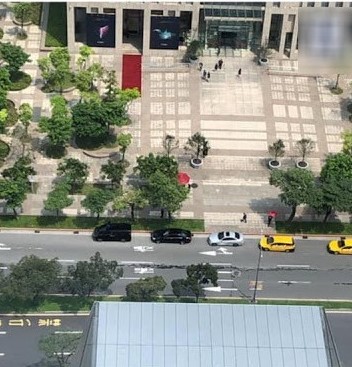
2019年4月18日地震導致台北市松仁路地面龜裂
Publisher’s rating: 錯誤
The claim concerned a black line on the road in front of 123 Songren Road, in Taipei’s Xinyi District, which circulated online after an earthquake in the Hualien area on April 18, 2019. The review identifies that earthquake as event number 108031, occurring at 1:01 p.m.; it says reports and online posts attributed the apparent road damage to the quake. The disputed line was therefore a specific feature at a named location, not a general claim about earthquake damage elsewhere. [S1: “今日(2019年4月18日)中午13時01分花蓮地區發生編號第 108031 號地震,二十餘分鐘後,網路流傳台北市松仁路地面因地震裂開”] The fact-check center says it went to the site at 123 Songren Road and found a black mark, not a crack. It also reports that local traffic was continuing normally: a television report at 1:55 p.m. showed current footage and said Songren Road had not been closed. These observations address the actual location and the claim that the road had split, rather than relying only on the appearance of a circulating image. [S1: “查核中心前往台北市松仁路123號前勘查,確認地面上有黑色污漬,並非裂縫。”] [S1: “於 13:55 報導正確訊息闢謠,並播出現場最新影片 、說明松仁路並未封鎖,車輛通行正常。”] The review further cites a Taipei City Government statement issued at 3:11 p.m. The city said the dark line was a road-repair material, “加熱型改質瀝青裂縫填縫膠” (a heat-applied modified asphalt crack-sealing compound), used in routine road maintenance—not evidence that the earthquake had opened the road. Taken together, the on-site inspection and the city’s explanation support the conclusion that the image showed a repaired road surface, not earthquake-caused cracking. [S1: “台北市政府於下午 15:11 發布新聞稿指出”] [S1: “信義區松仁路路面的污漬為修補路面的「加熱型改質瀝青裂縫填縫膠」。”]

Video of fire at a high-rise tower claiming to be a building in Mumbai's Andheri region.
Publisher’s rating: FALSE