PeakMetrics / Fact Checks
Disasters & emergencies fact checks
Explore claims publishers have checked about disasters & emergencies. Read their original ratings and follow the evidence.
Search fact checks
Search by text or image3,262 published reviews in this topic

A claim that Thunder Kills 23 Cows In Ekiti
Publisher’s rating: True, but the incident occurred in year 2018 and not 2019.
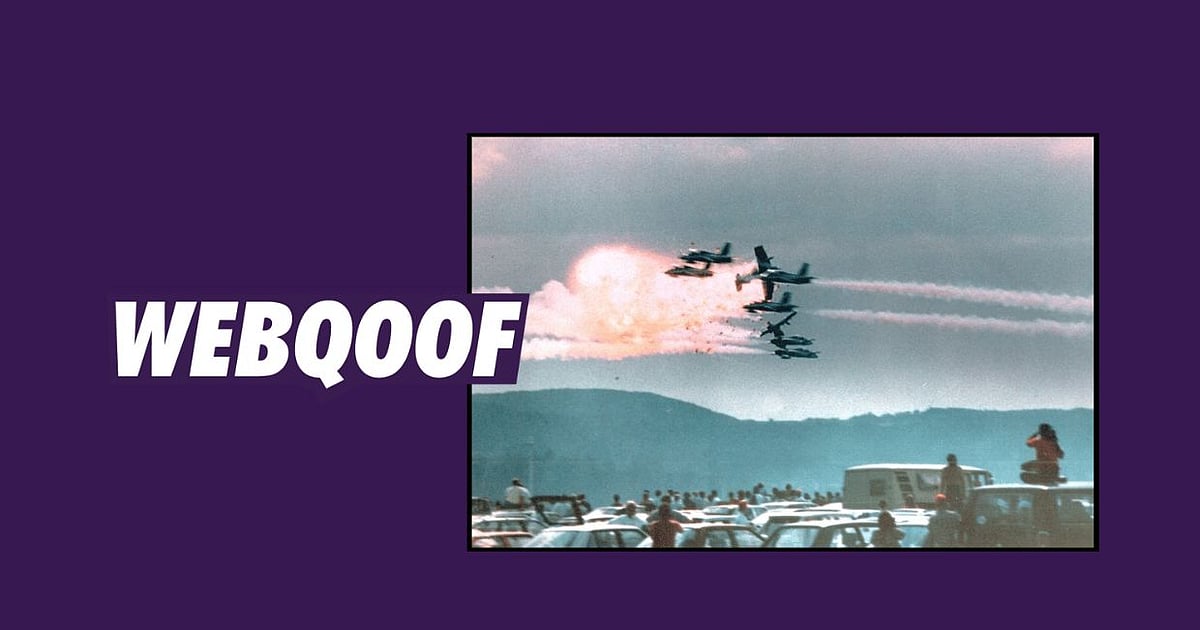
Is the viral video from Russian air crash
Publisher’s rating: FALSE
The viral post claimed that footage showed an Italian air-show team crashing at a Russian air show “yesterday,” with planes colliding and ten planes destroyed. The Quint’s investigation found that the video did not show a Russian event: it was footage of the Ramstein air disaster in Germany in 1988. The post’s description therefore misidentified both the location and the timing of the incident. [S1: “The video is actually from the Ramstein air disaster that took place in 1988 in Germany.”] To identify the footage, The Quint says it used InVID for frame-by-frame analysis, reverse-searched the frames on Yandex, and then searched YouTube using terms related to Ramstein and an air show. It found a video titled “Ramstein airshow crash in West Germany 1988” that it reported was identical to the viral clip, including its narration. [S1: “This video is identical to the one which is viral -- even down to the same narration.”] The review connects the footage to the disaster at Ramstein Air Base, where three Italian stunt planes collided during an air show in 1988. It reports that a later Associated Press account described a commemoration on 28 August 2018 marking 30 years since the tragedy. That context shows why the footage could be recirculated as though it depicted a recent event, but it does not support the post’s claim that a crash had happened at a Russian show the previous day. [S1: “A religious programme was organised to commemorate the death of 70 people who died when three Italian stunt planes collided in 1988.”]
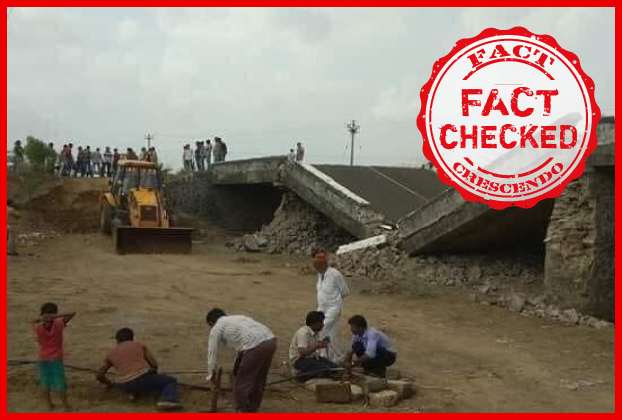
Claim: Junagadh bridge recently inaugurated by Modi collapsed
Publisher’s rating: FALSE
The review investigates a social-media post claiming that a bridge on the Jamnagar–Junagadh road had been laid by Narendra Modi while he was Gujarat’s chief minister, inaugurated by him as prime minister, and collapsed a few months later. It reports that the bridge did collapse, but distinguishes that event from the post’s claim about the bridge’s age and Modi’s involvement. The collapse occurred at about 2 p.m. on June 19, near the Gopeshwar Mahadev temple, on the highway between Jamnagar and Junagadh. The review says no vehicle was on the bridge at the time, and police redirected traffic.


Claim image depicting cyclone Vayu effect in Mumbai
Publisher’s rating: FALSE

The image of ‘Cyclone Vayu’ hitting the Mumbai beach
Publisher’s rating: FALSE
The claim concerns a wave image shared as showing Cyclone Vayu hitting the Mumbai coast. FACTLY reports that it checked the image’s provenance using a Google reverse image search and found the photo on an Instagram account. The account’s post date was July 16, 2018, predating the Cyclone Vayu claim. On that basis, the image does not show the cyclone hitting Mumbai; it is an older image unrelated to the event.

LINE 流傳「昨天俄羅斯航空展」、「義大利飛行表演隊發生意外,飛機空中相撞」這樣的謠言訊息,並附上一段花式飛行撞機的影片。
Publisher’s rating: 不實

Malik Heights on fire and whether the photos depicted the situation
Publisher’s rating: False.
Photos of Malik Heights building fire in Nairobi, Kenya
Publisher’s rating: False

搭火車遭遇緊急狀況,怎麼呼叫列車長?
Publisher’s rating: 事實釐清
The review examined ways passengers can seek help aboard trains operated by Taiwan Railways. It says passengers needing service can contact the railway’s customer-service center: landline callers can use 0800-765-888, and mobile callers can use 02-2191-0096. It also lists online voice service and a dedicated service line for people with hearing disabilities. For urgent in-car situations, the railway had a separate number, 02-2314-7808, posted on train-carriage notices but not on its website. The review explains that the customer-service center can radio the train conductor to respond to reports such as disruptive conduct, arguments, or fights.

Aerated drinks can be used to douse fires.
Publisher’s rating: FALSE
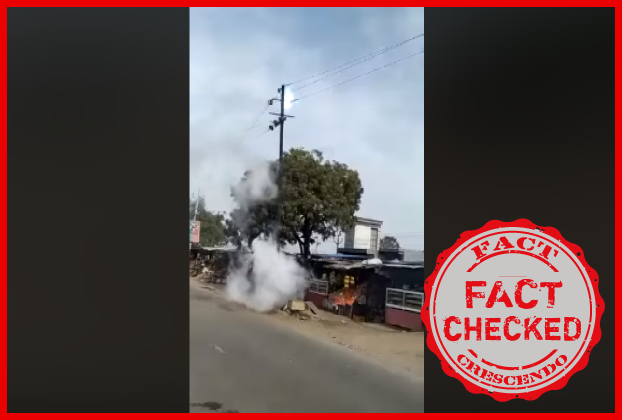
Claim: Dangerous short circuit blast happened on May 16
Publisher’s rating: FALSE
The claim concerns a viral video of an electrical pole and wires burning, with smoke filling a road and people reacting in panic. The post urged viewers to share the footage until firefighters arrived; the review says the video was being presented as a recent incident in Tamil Nadu on May 16. However, the post itself did not identify a location or say when the incident shown had occurred. The review also notes that people in the footage speak Hindi, which it used to reject the claim that the event happened in Tamil Nadu. To trace the footage, the investigators separated out a frame and searched for it in reverse. They found the same scenes in an earlier video posted by a YouTube channel called Top 1 Viral Videos on May 6. The source says that upload did not identify the location, so the investigators also examined a white car’s registration number, UP 16 AL 6162, using the Ministry of Road Transport and Highways’ vehicle-registration lookup. That search identified the car as belonging to Noida, Uttar Pradesh. The review’s evidence therefore contradicts the post’s May 16 and Tamil Nadu attribution: the footage had appeared online by May 6, and the vehicle evidence points to Noida rather than Tamil Nadu. The excerpt does not establish the precise date or location of the electrical incident itself; it supports the conclusion that the viral post’s stated attribution was false.

LINE傳行人雨天因斑馬線白漆面滑倒的影片,謠言描述「雨天過横道線萬萬不可踩在斑馬線的白漆面,非常滑」、「後腦部著地,瞬間一條生命終結了」這樣的錯誤內容。
Publisher’s rating: 不實
Claim old video claims to be scenes from cyclone fani hitting the eastern coast
Publisher’s rating: Fact Crescendo Rating FALSE
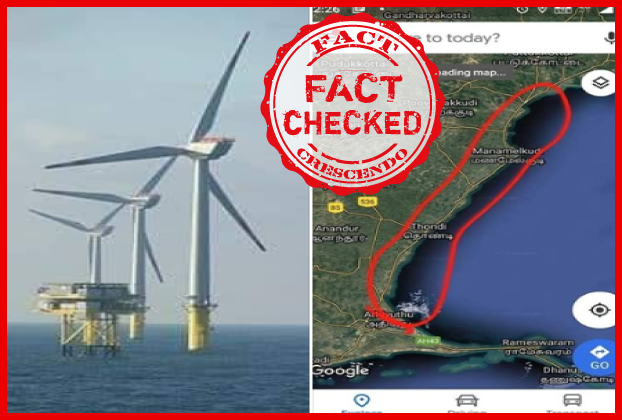
Claim: Modi diverted Fani Cyclone from Tamil Nadu
Publisher’s rating: FALSE

Claim old video shared as impact of fani cyclone
Publisher’s rating: Fact Crescendo Rating FALSE

有國際公約規範,當發生重大災害,鄰國可不經受災國之同意便入境救援
Publisher’s rating: 錯誤
The review investigated a rumor that an international agreement lets a neighboring country enter another country to conduct rescue operations without that country’s consent. The rumor circulated after an earthquake in Hualien on April 18, 2019, and alleged that a rule tied to earthquakes above magnitude seven explained why the event’s reported intensity had been limited. The review addresses the no-consent entry claim, rather than establishing that the alleged reporting decision occurred. To check the claim, the review examined Taiwan’s disaster-related agreements recorded in the Ministry of Foreign Affairs treaty database, consulted the relevant rules for receiving foreign assistance, and sought views from three legal scholars. It reports that the agreements with Japan and a California emergency-services office provide for cooperation on disaster prevention and response, but do not authorize entry without Taiwan’s approval. The stated procedure for unsolicited foreign assistance is to report the offer through government channels so that the designated disaster-response authorities can decide whether to accept it. The review also reports that the consulted scholars identified no international convention giving a state that authority without the affected state’s consent. It distinguishes this from the broader question of whether international law should address cross-border disaster aid without consent: one scholar said that issue remained under discussion and unsettled. The cited evidence therefore does not support the rumor’s assertion that an existing international convention permits neighboring countries to enter without consent.