PeakMetrics / Fact Checks
Disasters & emergencies fact checks
Explore claims publishers have checked about disasters & emergencies. Read their original ratings and follow the evidence.
Search fact checks
Search by text or image3,262 published reviews in this topic


Video of an accident on Mysuru road in Karnataka
Publisher’s rating: FALSE
The claim concerned a video of a truck striking cars that was being shared as footage of an accident on Mysuru road near Kangeri, Karnataka. FACTLY says its investigation found that the video instead showed an accident on Russia’s M-5 highway, which connects Moscow and Chelyabinsk. The review therefore concludes that the location attached to the video was false. The review describes how it checked the footage: screenshots from the video were subjected to reverse-image searching, which returned a video from Ruptly. FACTLY reports that Ruptly placed the accident on the M-5 highway at Chelyabinsk, Russia. This identified provenance contradicts the post’s claim that the footage showed a crash on Mysuru road. FACTLY also reports that two people were killed and seven injured in the Russian accident. Its account says that other news reports about the accident were available, but the supplied excerpt does not identify those reports or provide further details. The evidence presented in the review is the video’s match to Ruptly’s Russian accident footage, rather than evidence of a separate Mysuru crash.

Claim: This flooding picture is not from Singapore
Publisher’s rating: Fact Crescendo Rating: False
The claim concerned a photo of cars partly submerged in water that social-media posts presented as a scene of flooding in Singapore. The review says it examined where that particular photo was taken, rather than whether the posts’ broader criticism of flood management was fair. It notes that Singapore did experience flooding on June 23: a Tamil Murasu report cited in the review said heavy rain caused flooding in some areas and that the water had receded from all affected areas by 9:20 a.m. The review also reports that photographs and videos of knee-deep flooding in Singapore were available, but those were not enough to establish that the disputed image was from there. To trace the image, the reviewer says they used a reverse-image search. Although some social-media users had shared it as a picture of Singapore’s June 22–23 flooding, searches also found posts identifying it as a scene from flooding in Guangzhou, in southern China. The decisive evidence described in the review is that Chinese news outlets had published the image on May 22, and that the same scene appeared in a News PS video about Guangzhou flooding. The review directs readers to the scene at 1 minute 35 seconds in that video. On that basis, it concludes that the disputed photo was taken in China, not Singapore. The documented flooding in Singapore is relevant context, but does not establish the location of this separate image.
Foto yang diklaim sebagai foto banjir di Singapura pada 23 Juni 2020
Publisher’s rating: Keliru
Video yang diklaim sebagai video motor yang terbakar karena hand sanitizer
Publisher’s rating: Keliru
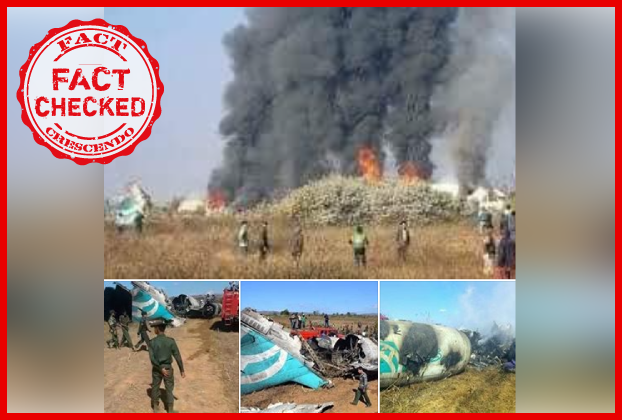
၂၀၁၂ Air Bagan လေယာဉ်ပျက်ကျမှုက ပုံတွေကို ရခိုင်ပြည်နယ်မှာ စစ်လေယာဉ်ပျက် ကျမှုအဖြစ်ဖော်ပြနေ
Publisher’s rating: False
The review examined social-media posts claiming that a plane carrying military weapons to Rakhine State had crashed there, and used photographs of wreckage and fire as evidence. It says the posts attributed to a Facebook user named “MaGwi MaJap” described a military aircraft crash and an alleged exchange of fire among officers aboard. The review’s central finding is that the pictures did not depict that claimed event: they were photographs of the Air Bagan crash near Heho in Shan State. To check the images, the publisher says it used reverse-image searches. It reports that the burning-scene photograph matched images of an Air Bagan aircraft that crashed while landing near Heho on December 25, 2012. It says a second picture also matched photographs from that crash, while the third and fourth appeared in Myanmar Times articles about the Air Bagan accident. The review therefore treats the images’ earlier provenance—not the accompanying Rakhine narrative—as decisive evidence. The review concludes that the circulated images were from the December 25, 2012 Air Bagan crash near Heho Airport in Shan State, not a military-plane crash in Rakhine. Its closing assessment is specifically about the photos used to support the social-media claim.
ഹിമാചല് പ്രദേശില് സ്ഫോടന വസ്തുകള് ഭക്ഷിച്ച് അപകടപ്പെട്ട പശുവിന്റെ ചിത്രങ്ങള്.
Publisher’s rating: FALSE
Kan een flesje ontsmettingsalcohol door de hitte ontploffen of ontbranden in de auto? Volgens een post op Facebook die de voorbije dagen gretig gedeeld wordt, is dat mogelijk. Een Belgische gebruiker beweerd in een post op Facebook op 8 mei 2020: "Opletten met flesje ontsmettingsalcohol in de auto, dit kan er gebeuren als je auto enige tijd in de zon staat pas er dus ook mee op om dit in jullie campers niet in de zon te zetten!" Het "bewijs" wordt geleverd met een foto waar je de grote schade kan zien die de explosie of brand zou veroorzaakt hebben.
Publisher’s rating: De claim dat een flesje ontsmettingsalcohol in de auto door de hitte kan ontploffen of in brand vliegen is onjuist. Experts stellen duidelijk dat ontsmettingsalcohol of alcoholgel niet vanzelf kan exploderen of ontbranden.
The Facebook post, shared by a Belgian user on 8 May 2020, warned that a bottle of disinfectant alcohol left in a car in the sun could cause a fire or explosion. It presented a photograph of a badly damaged car as evidence. The investigation traced the image’s visible Portuguese writing and background to Brazil, and reported finding it circulating there and elsewhere online. Some people sharing it acknowledged that it was an image found on the internet, not a photograph they had taken themselves. The investigation does not establish the precise cause of the damage shown.

The video shows huge waves engulfing Worli sea link bridge in Mumbai during Nisarg storm
Publisher’s rating: FALSE
The review investigated whether the circulating footage showed huge waves striking Mumbai’s Worli Sea Link during Cyclone Nisarg. It reports that the video was being shared with that attribution, but says its examination found it had already appeared online in 2017. The review therefore concludes that it was not footage of waves hitting the Mumbai bridge during Nisarg. [S1: “हा व्हिडियो निसर्ग वादळादरम्यान मुंबईतील वरळी सी-लिंक पुलाचा असल्याचा दावा केला जात आहे.फॅक्ट क्रेसेंडोने याविषयी पडताळणी केली असता हा व्हिडियो 2017 पासून इंटरनेटवर उपलब्ध असल्याचे समोर आले.”] The review describes checking visible features in the footage: one person rides a motorcycle on the bridge while another walks, which it says is not permitted on the Worli Sea Link. It also says the bridge’s design does not resemble Mumbai’s sea link. These observations prompted doubt about the claimed location; the article then reports searching YouTube using keywords to investigate the video’s earlier history. [S1: “विशाल लाटा उसळत असताना पुलावर एक व्यक्ती मोटारसायकलवर आणि दुसरा व्यक्ती पायी चालताना दिसतो. वरळी सी-लिंकवर यो दोन्ही गोष्टींची परवानगी नाही. तसेच या पुलाची रचनादेकील मुंबईतील सी-लिंकसारखी नाही.”] [S1: “हा व्हिडियो नेमका कधीचा आणि कुठला आहे हे तपासण्यासाठी युट्युबवर की-वर्ड्सद्वारे सर्च केले.”] According to the review, the same video was circulating under several different location claims, including Worli, Rameswaram, Visakhapatnam and Sri Lanka. It traces the earliest upload it found to 24 August 2017, with the video described as showing waves at a sea bridge east of Minicoy in Lakshadweep on 23 August. The review compares the bridge in the footage with a photograph of a bridge built on eastern Minicoy, but qualifies that the precise location could not be established conclusively. Its firm conclusion is narrower: the footage predates Nisarg by years and is not from Mumbai. [S1: “परंतु, हे सगळे व्हिडियो 3 डिसेंबर 2017 या तारखेच्या नंतरचे आहेत. अधिक शोध घेतला असता, सर्वात आधी हा व्हिडियो 24 ऑगस्ट 2017 रोजी युट्यूबवर अपलोड केल्याचे आढळले. यातील माहितीनुसार, हा व्हिडियो लक्षद्विप बेटावरील आहे. तेथील मिनिकॉयच्या पूर्व दिशेकडील समुद्र-पुलावर 23 ऑगस्ट 2017 रोजी अशा विराट लाटा धडकल्या होत्या.”] [S1: “प्रथमदर्शनी हा व्हिडियो लक्षद्विप येथील असल्याचे प्रतीत होते परंतु, ठोसपणे स्थान सांगता येत नाही. तरी हा व्हिडियो किमान 3 वर्षे जुना आणि मुंबईतील नसल्याचे स्पष्ट आहे.”]
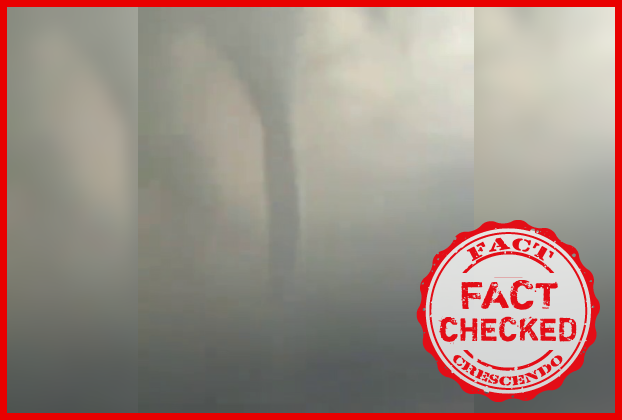
A video of Nisarg Cyclone spotted at Uran in Raigad district of Maharasthra
Publisher’s rating: FALSE
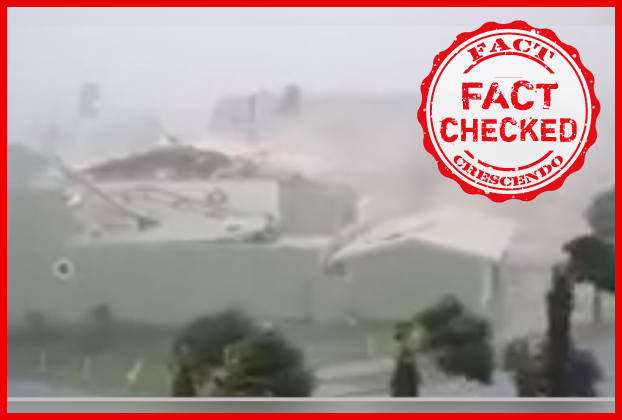
Video of destruction caused by Nisarg storm in Maharashtra
Publisher’s rating: FALSE
Foto yang diklaim sebagai foto tanah longsor yang tutup Tol Ungaran Semarang pada 30 Mei 2020
Publisher’s rating: Sesat
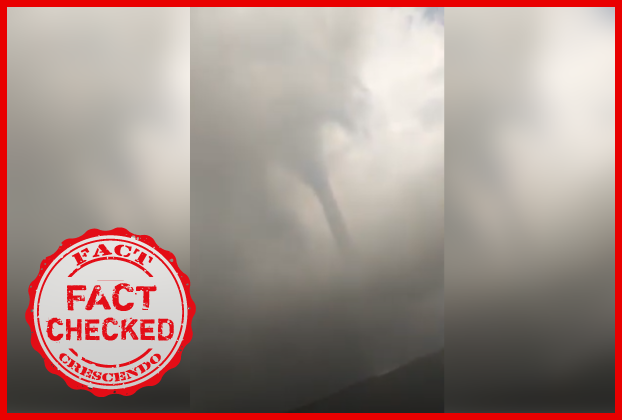
यह वीडियो चक्रवात निसर्ग का है, जिसने बुधवार 3 जून 2020 को गुजरात और महाराष्ट्र में काफी नुकसान पहुँचाया है,
Publisher’s rating: False

Video of a man sheltering from a Nisarg storm was hoisted into the air by strong winds
Publisher’s rating: FALSE
The claim concerned a video of a man gripping a shed as strong winds lift it—and him—into the air, said to show the effects of Cyclone Nisarg. The review reports that it checked the clip and found it was older footage, not an incident during Nisarg: “हा व्हिडियो निसर्ग वादळादरम्यानचा नाही. हा व्हिडियो 1 जून 2018 रोजी सीसीटीव्हीमध्ये कैद झाला होता.” The source says the precise location was not established, so it does not identify where the footage was recorded. To investigate the clip’s provenance, the review says a search for “man holding a shed in storm” led to a SWNS YouTube video uploaded on May 15, 2019. That version ran for 48 seconds, compared with 17 seconds for the circulating clip. The review then describes examining the footage: it noted CCTV characteristics and a date visible in the upper-right corner at the 16-second mark. It reports that the displayed date was June 1, 2018, predating Cyclone Nisarg. The review also found a Facebook post sharing the video on June 10, 2018. Together, the visible CCTV date, the earlier social-media share, and the longer SWNS version support the review’s conclusion that this was pre-existing footage misrepresented as Nisarg-storm video. The source expressly qualifies the finding: the clip’s exact location remained unknown.

મહારાષ્ટ્રમાં આવેલા નિસર્ગ વાવાઝોડાંના આ દ્રશ્યો છે.
Publisher’s rating: FALSE

જામનગર જિલ્લાના જોડિયા તાલુકાના બાલંભા ગામમાં પવનચક્કીમાં આગ લાગી.
Publisher’s rating: FALSE
The claim concerned a fire at a windmill in Balambha village, in Jodia taluka of Jamnagar district. The review says a Facebook post shared on May 31, 2020, carried that allegation and a video. Its investigation focused on whether the video showed the claimed place and incident—not simply on whether a windmill fire had occurred somewhere. The review reports that a reverse-image search using a screenshot from the shared video led to a May 26, 2020 report by MAA NEWS LIVE. That report had used the same video but placed the fire at Ashiravandh in Abdasa taluka, Kutch district. This is the decisive mismatch: the footage was associated with a different district and taluka from the location stated in the post. The review also cites a Divya Bhaskar report describing a fire in a Suzlon windmill caused by a short circuit, with two blades falling to the ground. It says local outlets Kutchuday News and Sanj Samachar also reported the incident. Together, the reporting supports the review’s conclusion that the post misidentified the video’s location: evidence of a windmill fire in Kutch does not establish that the footage showed Balambha in Jamnagar.
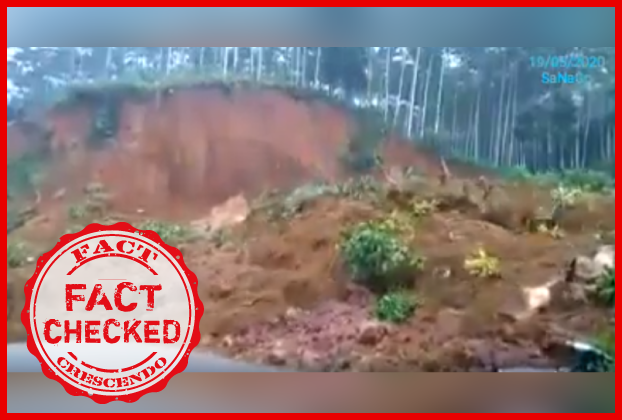
Video Of A Landslide In Indonesia Falsely Portrayed As Hatton In Sri Lanka
Publisher’s rating: FALSE
The review examined social-media posts presenting a landslide video as footage from Hatton, Sri Lanka. One post captioned it “Landslide in Hatton,” while another said it showed the Hatton–Colombo road near Diyagala. The review distinguishes those posts from a separate landslide that actually affected the Hatton–Colombo main road: its account says an earth embankment collapsed in Watawala on 19 May 2020, temporarily disrupting vehicle movement. It also notes that video footage of that local incident circulated, making the distinction between the two videos important. To check the viral clip’s provenance, the investigators listened to the speech in it and reported that it was neither Tamil nor Sinhala. They then took a screenshot and used Google reverse image search, followed by a keyword search on YouTube. That search led them to a verified Metro TV News report published on 10 April 2020, which the review says showed the same video and identified the landslide as occurring in Indonesia on 9 April, in settlements named Chiangjur and Sukanagara. The review further says it compared reports and images of the actual Hatton–Colombo road landslide and found that its location differed from the viral video. Its conclusion is that the clip was originally from the Indonesian landslide, not the Hatton incident. Thus, the misleading element was the video’s attribution to Hatton, rather than the existence of a separate landslide there.

Image shows a low quality road destroyed by Amphan Cyclone in West Bengal
Publisher’s rating: FALSE

ఫోటోలు తాజాగా ఉత్తరాఖండ్ లోని అడవులలో చెలరేగిన మంటలకి సంబంధించినవి
Publisher’s rating: FALSE