PeakMetrics / Fact Checks
Crime & justice fact checks
Explore claims publishers have checked about crime & justice. Read their original ratings and follow the evidence.
Search fact checks
Search by text or image6,833 published reviews in this topic
गुजरात में रक्षाबंधन के दिन एक मुस्लिम युवक, लड़कियों को छेड़ रहा था, जिसके बाद वहां की पुलिस ने उसे सरेआम डंडे से पीटा।
Publisher’s rating: False

TDP నేత రాజేష్ సరిపెల్ల మహిళలను విదేశాలకు అక్రమంగా రవాణా చేస్తున్నారని ఆంధ్రప్రభ, NTVలో వచ్చిన వార్తా కథనాలు
Publisher’s rating: FALSE
এই ভিডিঅ'টোত মণিপুৰত মেইটেই লোকৰ দোকানত কুকি লোকে লুটপাত চলোৱা দেখা গৈছে।
Publisher’s rating: মিছা

Video related to the incident of a Muslim man who killed the family members of a Hindu girl in Rajasthan
Publisher’s rating: FALSE
The claim concerns a video circulated as showing a Muslim man in Rajasthan killing the family members of a Hindu girl because they opposed his marriage to her. FACTLY reports that the footage instead shows an attack in Kharwa village, Ajmer district, in 2021. It identifies the perpetrator as Ajit Cheeta, not the name used in the post, Ajmal Khan. (S1: “The post mentions the accused name as Ajmal Khan.”; “The video shared in the post shows an old incident that took place at Kharwa village in the Ajmer district of Rajasthan in 2021.”) The review says Ajit killed his two daughters and injured his wife, and reports unemployment and financial hardship as the alleged reason—not a dispute over a marriage. It also explains that the Cheetah Mehrat community includes Hindus and Muslims, and that the investigating officer said the incident was not communal. This evidence contradicts the post’s description of both the victims’ relationship to the accused and a communal motive. (S1: “A man named Ajit Cheeta killed his two daughters and injured his wife alleged to be because of unemployment and financial crisis.”; “Speaking to the Quint, Surendra Singh Jodha, the investigating officer from Beawar Sadar police station, confirmed that the incident was not communal in nature.”) FACTLY describes checking screenshots from the video through reverse image search. It says this led to similar visuals posted by a social-media user on 14 July 2021, and that Dainik Bhaskar had also published similar footage in July 2021. The review further cites a contemporaneous Patrika account and an Ajmer Police FIR screenshot as evidence identifying the incident and accused. (S1: “On reverse image search of the screenshots of the video, a video showing similar visuals was found published by a social media user on 14 July 2021.”; “In the FIR copy, the accused name was clearly mentioned as Ajit Cheetah.”)


స్వాతి మలివాల్ అనే మహిళ గత ఎనమిది రోజులుగా, రేప్ చేసిన వారిని ఉరితీయాలంటూ ఢిల్లీలో నిరాహార దీక్ష చేస్తున్నారు
Publisher’s rating: MISLEADING


تسريبات من سجن ترامب
Publisher’s rating: خبر كاذب - الصور صممها صحفي بريطاني يدعى إليوت هيجنيز ونشرها بحسابه على تويتر في 21 مارس 2023.

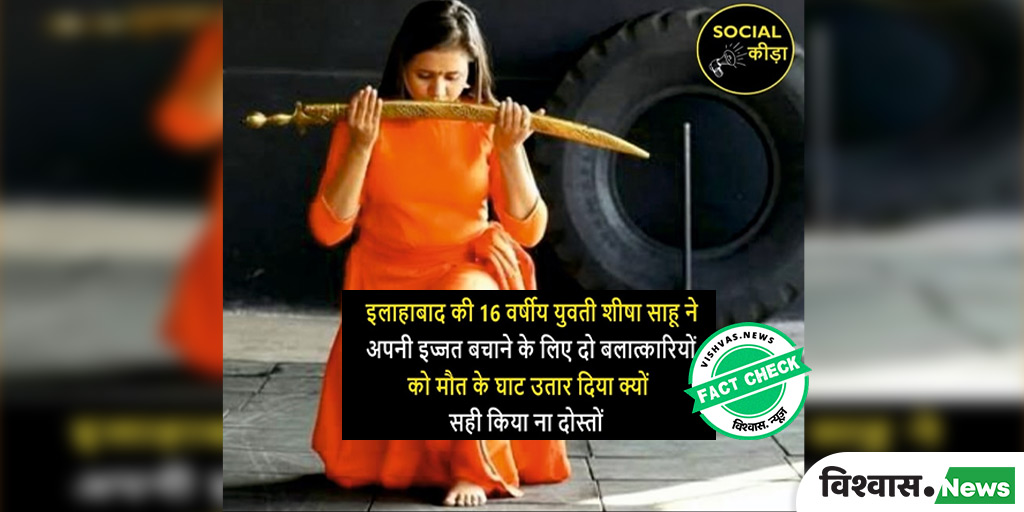
16 वर्षीय युवती शीषा साहू ने अपनी इज्जत बचाने के लिए दो बलात्कारियों को मौत के घाट उतार दिया। सही किया ना दोस्तो।
Publisher’s rating: Fake


A picture shows Imran Khan sporting a beard ahead of a court appearance.
Publisher’s rating: False

Video showing a slave market in Africa
Publisher’s rating: FALSE
The video was shared as showing women being auctioned at a slave market in an African country, with some posts identifying the location as Ethiopia. FACTLY investigated that specific video and concluded it instead shows a religious ritual in Senegal. Its account says the footage was taken during Ndut initiation rituals at Djilass village in December 2022. To investigate the footage, the review describes reverse-image searches of screenshots, which found a video with similar visuals published on YouTube in 2017 and described as an Ndut dance demonstration. It also found a TikTok video showing similar visuals from another angle, identified as Ndut rituals at Djilass village in Senegal in 2022. These findings connect the imagery to a ritual, rather than an auction or slave market. The review also reports finding a video published by Ndindy Fall Tv on 26 December 2022, captioned “Ndoutt from Djilasse: first images with nearly 600 ndiouli”. It explains that Ndut is a Serer rite of passage and religious education marking the transition from childhood to adulthood. Taken together, the reported image searches and matching footage support the conclusion that the video shows a ritual in Senegal, not a slave market in Africa.

Photos show PML-N supporters taking Humayun Dilawar, a trial court judge, shopping in London.
Publisher’s rating: False

ひろゆき氏「性被害者の22人に1人は挑発的な服装が被害の一因」
Publisher’s rating: 誤り
The review traces Hiroyuki’s post to a dispute following DJ SODA’s report that audience members touched her breasts during a music festival in Osaka. In response to her statement that clothing and sexual victimization are unrelated, he cited a purported Utah State University study and argued that one in 22 sexual-assault victims had provocative clothing as a contributing factor. The review says he linked to a Google Answers page, where a respondent had provided links to several sources, including the university study. The link to that study no longer worked, so the reviewer consulted an archived copy. The archived text did not say that provocative clothing contributed to 4.4% of reported rapes. It said that 4.4% involved “provocative behavior” by the victim—a different claim, because the cited wording concerns behavior, not clothing. The review also notes the post’s shift from that reported figure to a claim about clothing as a cause. Thus, the one-in-22 number does not establish the asserted clothing-related finding. The review further reports that the study text said most arrested sex offenders did not remember victims’ clothing. It concludes that the cited material does not support Hiroyuki’s argument that the claim clothing and sexual crime are unrelated is false; rather, the material presented in the review conflicts with his interpretation.
The image shows Fox News described the UNC suspect as “mostly white Asian male.”
Publisher’s rating: False
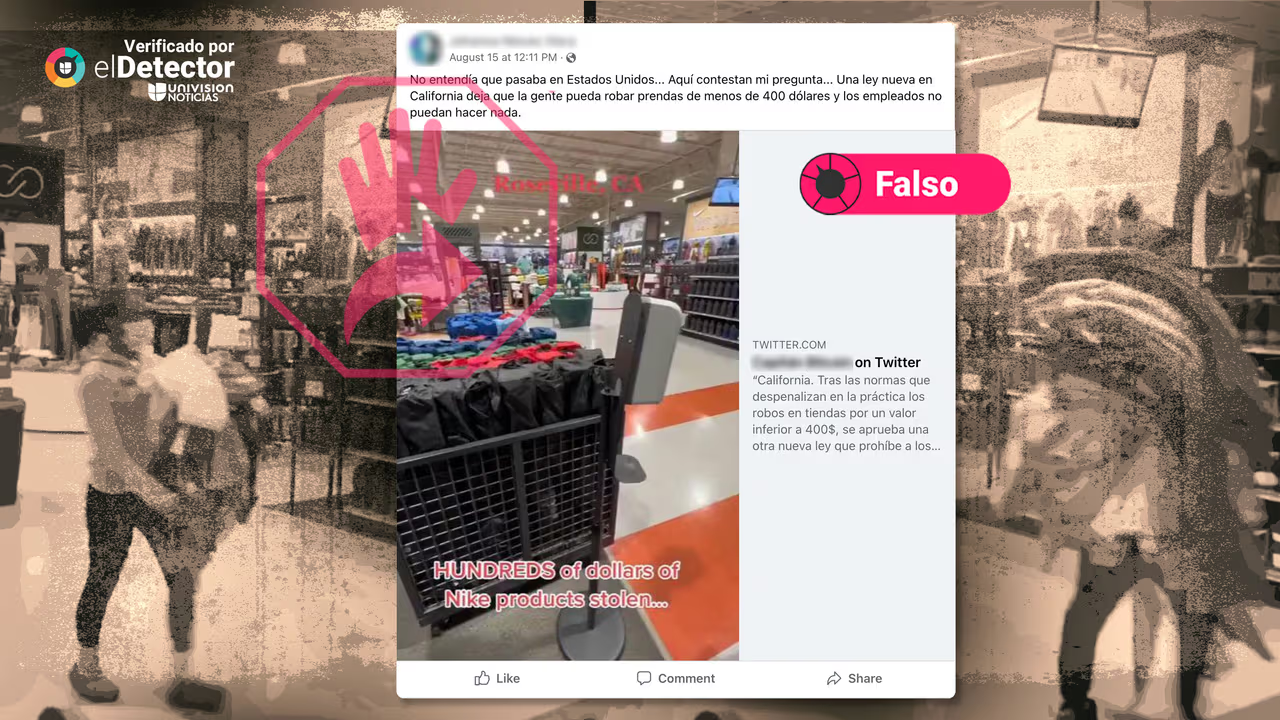
“En California, Estados Unidos, roban y nadie puede hacer nada tras la ley que despenaliza la práctica de robos en tiendas por un valor inferior a cuatrocientos dólares, que además prohíbe a los empleados de un comercio hacer frente a quien quiera robarles”.
Publisher’s rating: Falso