PeakMetrics / Fact Checks
War & conflict fact checks
Explore claims publishers have checked about war & conflict. Read their original ratings and follow the evidence.
Search fact checks
Search by text or image5,848 published reviews in this topic
On Nov. 26, 2020, 200 members of the New People's Army (NPA) surrendered to the government.
Publisher’s rating: False

Militantes do MST destroem estação de transmissão no Amapá
Publisher’s rating: FALSO: As imagens de um vídeo que viralizou são de 2017, quando um grupo de agricultores invadiu uma fazenda em Correntina, na Bahia, para protestar contra obras de irrigação que reduziram o nível de um rio da região – eles não são ligados ao MST.

2014 నుండి ఇప్పటి వరకి ఇస్లామిక్ ఉగ్రవాదుల దాడిలో ఒక్కరు కూడా మరణించలేదు
Publisher’s rating: FALSE

பாகிஸ்தானில் உள்நாட்டு போர் வெடித்தது. ராணுவம் போலீசார் இடையே கடும் மோதல்.
Publisher’s rating: Fake

ఉగ్రవాది ఆత్మాహుతి దాడికి సంబంధించి వోక్స్ వాగన్ సంస్థ నిర్మించిన ప్రకటన వీడియో.
Publisher’s rating: FALSE

Missile attacks carried out by Tigray forces against Eritrea's capital Asmara
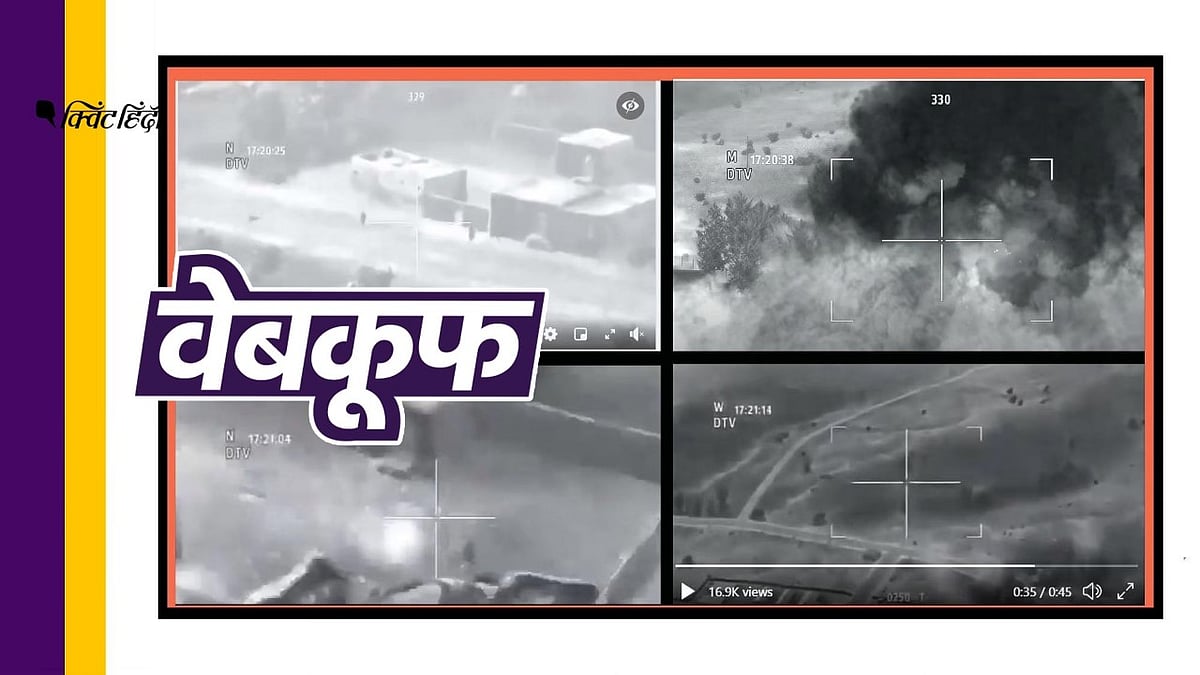
Publisher’s rating: False. This video shows an Iranian missile attack on a US army base in Iraq in January this year.

భారత ఆర్మీ పాక్ ఆక్రమిత కాశ్మీర్ లోని టెర్రరిస్ట్ లాంచ్ పాడ్లపై పిన్ పాయింట్ స్ట్రైక్స్ నిర్వహించింది
Publisher’s rating: FALSE
Ethiopia's Prime Minister Abiy Ahmed was spotted on the battlefield
Publisher’s rating: The image has been doctored. It is not the prime minister in the picture.
Photo of attack by Tigray forces on Bahir Dar in the Amhara region
Publisher’s rating: The photo being used is actually of an explosion in China's port city of Tianjin in 2015 at a warehouse containing hazardous chemicals.
The claim concerns a photo circulated as evidence of an attack by Tigray forces on Bahir Dar, in Ethiopia’s Amhara region. The BBC’s review says the same photo was also used to claim an attack on Asmara, Eritrea’s capital. Its central correction is that the image does not depict either claimed attack: it shows an explosion in Tianjin, China, in 2015, at a warehouse containing hazardous chemicals. The review places the photo among misleading images shared during the escalating Ethiopia conflict, including images from other places and from before the conflict. This matters because a genuine photograph of an explosion can still mislead when it is given a false location, date, or event description. Here, the mismatch is specific: the image’s documented setting is Tianjin in 2015, not Bahir Dar during the conflict. The excerpt does not describe the BBC’s precise verification method for this particular photo or provide the original image’s photographer or publication. It therefore supports the correction about the image’s subject and provenance as stated by the review, but does not provide further details about how that identification was established.
An Ethiopian jet was shot down
Publisher’s rating: The video is fake and comes from a video game.
Foto yang diklaim sebagai foto cincin kawin yang diambil dari jari korban Perang Dunia II
Publisher’s rating: Sebagian benar

ಇತ್ತೀಚೆಗೆ ಫ್ರಾನ್ಸದಲ್ಲಿ ದಾಳಿ ನಡೆಸಿದ ಭಯೋತ್ಪಾದಕನನ್ನು ಫ್ರಾನ್ಸ್ ಪೊಲೀಸರು ಬೆನ್ನಟ್ಟುವ ವಿಡಿಯೋದ ದೃಶ್ಯ.
Publisher’s rating: FALSE
Is the video released by India as an attack on Pakistan was an old video of Syria?
Publisher’s rating: Fake

Nach dem Terroranschlag am 2. November 2020 in Wien trafen aus vielen Teilen der Welt Solidaritätsbekundungen ein. Zahlreiche Staats- und Regierungschefs sprachen Österreich ihr Mitgefühl aus und auch die eine oder andere Sehenswürdigkeit erstrahlte aus Solidarität in den Farben Österreichs: rot-weiß-rot. Auch der Pariser Eiffelturm, behaupten einige Facebook-User (hier archiviert).
Publisher’s rating: Das ist falsch. Der Eiffelturm erstrahlte nach dem Anschlag in Wien nicht in Rot-Weiß-Rot.
The claim concerned a photo shared on Facebook as showing the Eiffel Tower lit in Austria’s red-white-red colors in solidarity after the Vienna attack of 2 November 2020. The review reports that a spokesperson for Austrian Chancellor Sebastian Kurz confirmed on Twitter on 3 November that the image was fake. It also cites the Austrian ambassador in France, who said the Eiffel Tower company had confirmed that the tower had not been illuminated in those colors that day. The French embassy in Vienna separately told Austria’s APA news agency on 4 November that the image was an old photograph, not one from the previous day. The review describes two further checks of the image and its timing. A reverse-image search produced no other matches, so the image’s origin could not be established that way. The review also compared the Facebook photo with webcam images: parts of the tower’s upper section were covered at the relevant time, but that covering was not visible in the circulating photo. These details support the review’s conclusion that the image did not depict the tower as it appeared after the attack. The review notes that the picture had been posted by the “Paris France Official” social-media page with a message describing it as solidarity with the victims. It says the image might instead date from 2016, when, according to the review, social-media users could get the tower lit in their country’s colors during the European Football Championship by generating sufficient engagement. That possible earlier origin is not established: the review says the image’s source remains unclear.

Bild- und Videomaterial von bewaffneter Person in Gasse wurde im Zuge des Terroranschlags in Wien aufgenommen.
Publisher’s rating: Die Aufnahme stammt aus Wien und zeigt den Attentäter.
The claim concerns footage of an armed person in an alley, said to have been recorded during the Vienna terror attack. The APA review says it assessed viral videos associated with the attack, and for this particular clip reports that it could be verified as originating in Vienna. It explains that information about where shots were fired—near Schwedenplatz or in Seitenstettengasse—helped establish the video’s location. [S1: “Zu überprüfende Information: Bild- und Videomaterial von bewaffneter Person in Gasse wurde im Zuge des Terroranschlags in Wien aufgenommen.”; “Mit der Information, dass die Schüsse in der Nähe des Schwedenplatzes bzw. in der Seitenstettengasse gefallen sind, konnte das Video schnell verifiziert werden.”] The review describes three location clues: a yellow sign, a green sign, and the pattern of the street paving. It says these features provided decisive indications for checking the video. The conclusion in the review’s assessment is that the recording is from Vienna and depicts the attacker. [S1: “Vor allem drei Merkmale liefern entscheidende Hinweise: ein gelbes Schild, ein grünes Schild und das Muster des Straßenpflasters.”; “Einschätzung: Die Aufnahme stammt aus Wien und zeigt den Attentäter.”] The article also distinguishes this clip from other viral material it discusses: some videos concerned different events or locations, including a purported arrest that it identifies as Barcelona, while other videos were separately assessed as scenes in Vienna. Those separate assessments do not change which footage the alley-video claim concerns. [S1: “Zu überprüfende Information: Video zeigt Festnahme des Attentäters durch Wiener Polizei. Einschätzung: Das ist falsch. Das Video stammt aus Barcelona.”; “Zu überprüfende Information: Ein Video zeigt Szenen am Schwedenplatz zur Zeit des Anschlags. Einschätzung: Das ist richtig.”]