PeakMetrics / Fact Checks
War & conflict fact checks
Explore claims publishers have checked about war & conflict. Read their original ratings and follow the evidence.
Search fact checks
Search by text or image5,840 published reviews in this topic
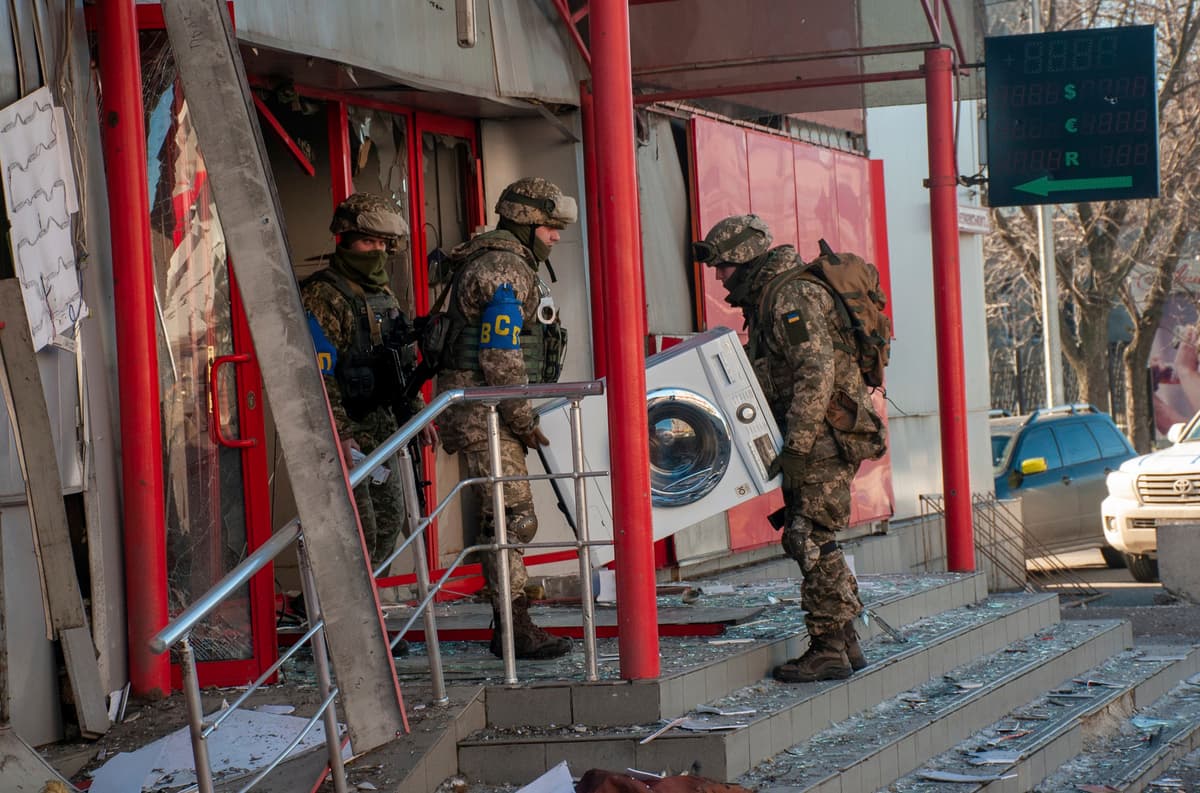
جنود أوكرانيين يسرقون منازل المدنيين في ضواحي كييف
Publisher’s rating: تلاعب بالحقائق

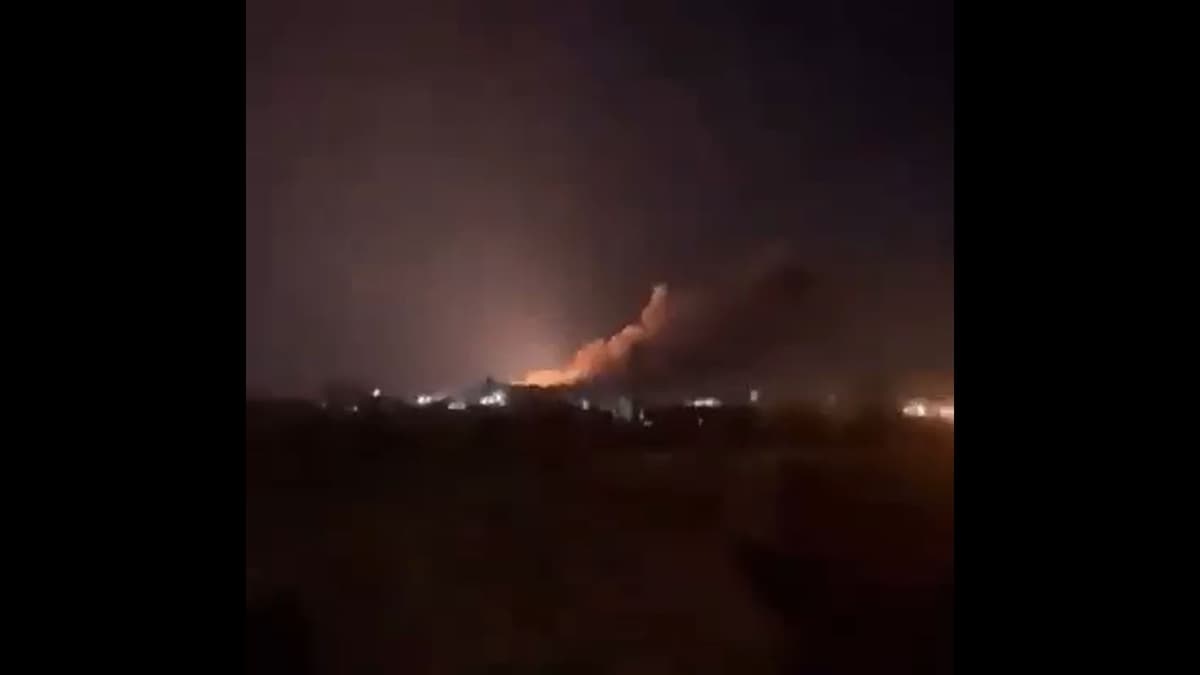
بالتنسيق مع القيادة العسكرية الروسية المركزية إسرائيل تدك أوكار العدوان الإيراني ومليشياته في ريف دمشق
Publisher’s rating: خارج السياق
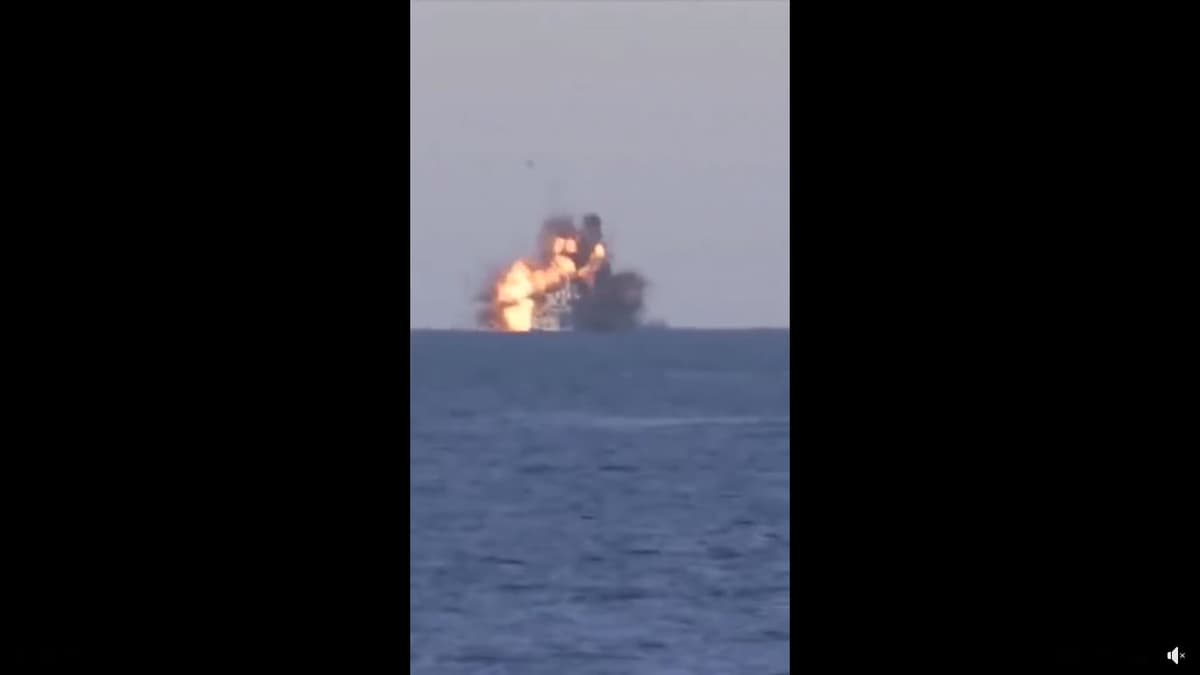
Le numéro de série du missile utilisé dans l'attaque de Kramatorsk prouve que celui-ci appartient à l'armée ukrainienne.
Publisher’s rating: Les éléments présentés sur Facebook ne permettent pas d’attribuer la responsabilité de cette attaque à l’un ou l’autre camp. D'après des observateurs internationaux, a Russie et l’Ukraine possèdent toutes les deux des missiles Tochka-U dans leur arsenal, et le Kremlin a déjà été accusé de s'en être servi dans le conflit actuel. Il est impossible de désigner un coupable sur seule base d’un numéro de série.
The claim concerned a Tochka-U missile found after the 8 April 2022 attack on the railway station in Kramatorsk, eastern Ukraine. Facebook posts argued that its serial number proved the missile belonged to Ukraine’s armed forces. The review notes that Russia and Ukraine blamed each other for the attack, and that the missile debris was identified as belonging to a Tochka-U; neither fact by itself establishes who launched it. The investigation examined whether a serial number could identify the missile’s user. Frederik Coghe, a lieutenant colonel affiliated with Belgium’s Royal Military Academy, told dpa that markings generally identify the manufacturer, not the force using the munition. He explained that a serial number cannot establish ownership without records showing which numbers were held in which countries. The review says such records are unavailable and that the distribution of these Soviet-era missiles after the Soviet Union’s collapse cannot be traced. The review also addresses the argument that Russia no longer uses Tochka-U missiles. It reports that Amnesty International investigators attributed their use to Russian forces in attacks in Vouhledar, Kharkiv and Uman on 24 February 2022, and that the Institute for the Study of War said a Russian military unit operating in the Donbas possessed them. It also notes that both Russia and Ukraine have Tochka-U missiles in their arsenals. Taken together, the cited evidence means the missile type and its serial number do not establish which side launched the missile at Kramatorsk.

ಸೋಪೋರ್ (ಜೆ&ಕೆ) ನಲ್ಲಿರುವ ಸಿಆರ್ಪಿಎಫ್ ಶಿಬಿರದ ಮೇಲೆ ಪೆಟ್ರೋಲ್ ಬಾಂಬ್ ಎಸೆದ ಬುರ್ಖಾ ಧರಿಸಿರುವ ವ್ಯಕ್ತಿ ರಯೀಸ್ ಅಹ್ಮದ್ ಭಟ್.
Publisher’s rating: MISLEADING
В Испании протестуют против поддержки Украины
Publisher’s rating: Намеренно созданный фейк
Een video toont hoe Oekraïense soldaten lijken versprijden over de straten van Boetsja.
Publisher’s rating: De beelden werden gefilmd op 2 april 2022 in Boetsja, een voorstad van Kiev, door het persagentschap AP. De Oekraïense soldaten verplaatsten de lijken met kabels om ze vanaf een veilige afstand van de straat te halen en ze te controleren op explosieven of andere boobytraps. Het is geen bewijs dat de situatie in Boetsja in scène werd gezet.
NAVO-generaal Roger Cloutier is in Marioepol gevangen genomen door de Russen
Publisher’s rating: De berichten zijn onjuist. Luitenant-generaal Roger Cloutier is sinds juli 2021 niet in Oekraïne geweest, verklaart de Noord-Atlantische Verdragsorganisatie (NAVO) aan Deutsche Presse-Agentur (dpa). Op zijn sociale media is te zien dat Cloutier op 13 april nog sprak bij een huldiging van soldaten. De beelden van de man die door de Russische veiligheidsdienst wordt gearresteerd, hebben bovendien met Cloutier te maken.
La BBC diffuse une vidéo accusant l'Ukraine de l'attaque à Kramatorsk.
Publisher’s rating: Cette vidéo a été manipulée. Elle n’a jamais été diffusée par la BBC, et la chaîne n’a pas non plus attribué la responsabilité de l’attaque à l’Ukraine. Les soi-disant preuves apportées dans la vidéo ne permettent pas non plus de désigner un coupable.
The claim concerns a video circulating online that appeared to show the BBC blaming Ukraine for the 8 April 2022 missile strike on Kramatorsk railway station. The clip used the BBC logo and alleged that the missiles’ serial numbers showed they belonged to Ukraine. The review says the video was not published by the BBC and that the broadcaster did not assign responsibility for the attack to Ukraine. [S1: “La BBC aurait diffusé une vidéo dans laquelle elle accuserait Kiev d’être responsable du bombardement ayant frappé la gare de Kramatorsk, dans l’est de l'Ukraine, le 8 avril 2022. Selon cette vidéo, flanquée du logo de la chaîne britannique, le numéro de série des missiles utilisés dans l’attaque qui a tué plus de 50 personnes indiquerait que ceux-ci appartiendraient à l’arsenal ukrainien.”] The review describes checks of the clip’s appearance and publication history. Although it imitated the BBC’s logo, typeface and layout, the review notes that BBC videos using footage not filmed by the broadcaster generally identify that footage in the upper-right corner, while this clip did not. The BBC stated on its official Twitter account on 13 April 2022 that the video was fake; a BBC correspondent in Ukraine who covered the Kramatorsk events also warned that it was manipulated. The review further reports that the clip could not be found on the BBC’s official website or Facebook, YouTube and Twitter accounts. [S1: “Dans des reportages de la BBC, les enregistrements qui n’ont pas été filmés par la chaîne sont généralement mentionnés dans le coin supérieur droit de la vidéo, ce qui n’est pas le cas ici.”] [S1: “Celle-ci a fait savoir le 13 avril 2022, via son compte Twitter officiel, qu’il s’agissait d’une fausse vidéo.”] [S1: “Le clip est par ailleurs introuvable sur les différents canaux de diffusion officiels de la chaîne – que ce soit sur son site web, ou ses comptes Facebook, YouTube et Twitter.”] The review distinguishes the fabricated clip from the BBC’s actual coverage. It says a BBC report published on the day of the strike noted that Ukraine and Russia accused each other, rather than attributing the attack to Ukraine. It also describes a later BBC investigation into the missile remains: it identified a Tochka-U missile and noted that both Russia and Ukraine had such missiles, while reporting evidence that Russia had used them during the conflict. The review concludes that the serial number alone could not establish which side was responsible. [S1: “Dans un article paru le jour de la frappe, la chaîne souligne justement que l’Ukraine et la Russie se sont mutuellement accusées d’avoir perpétré cet acte.”] [S1: “Elle précise qu’il existe des preuves que ces armes ont déjà été employées par la Russie au cours du conflit actuel – ce que Moscou dément – mais que l’Ukraine possède également ce type de missiles, hérités de l’ère soviétique, dans son arsenal.”]
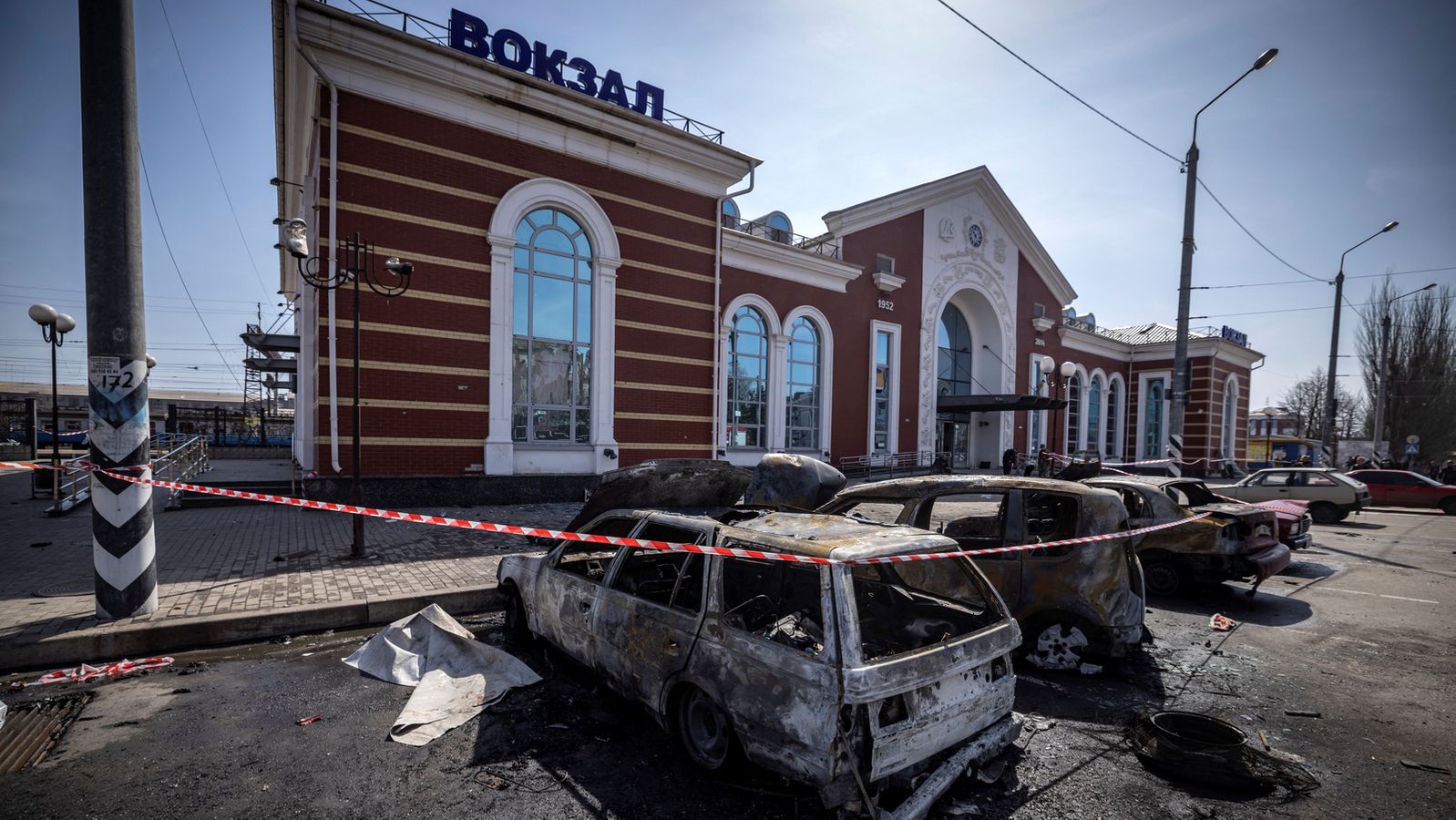
Ein Fake-BBC-Video legt nahe, die Ukraine hätte selbst den Bahnhof von Kramatorsk angegriffen.
Publisher’s rating: Für die Behauptung gibt es keine stichhaltigen Belege. Das Video ist nicht von der BBC, sondern gefälscht.

Die ukrainische Armee sei von Nazis unterwandert und rechtsextreme Kräfte hätten in dem Land das Sagen
Publisher’s rating: Die Asow-Bewegung in der Ukraine ist nationalistisch und offen rechtsextrem. Die Bewegung hat nur geringen Rückhalt in der Bevölkerung. Das Asow-Regiment gibt sich gemäßigter. Es stellt nur einen kleinen Teil der ukrainischen Kämpfer. Dass die gesamte Armee rechtsextrem sei, lässt sich daraus nicht schlussfolgern.
L'Ukraine est responsable d'une attaque au missile Tochka-U intervenue dans le centre de Donetsk en mars 2022.
Publisher’s rating: Il n’y a aucune preuve qu’il s’agirait d’une attaque ciblée de l’armée ukrainienne sur les civils de Donetsk. L'utilisation supposée d'un missile Tochka-U ne permet en effet pas d'arriver à une telle conclusion, puisque la Russie posséderait aussi ce type d'armes. De plus, les photos qui accompagnent la publication sont des images d'archives et ne prouvent en rien les propos de l’utilisateur Facebook.
Die russischen Streitkräfte in der Nähe von Mariupol haben den Oberbefehlshaber der NATO, General Cloutier, gefangen genommen.
Publisher’s rating: Diese Behauptungen sind nicht belegt. Generalleutnant Cloutier befand sich nach Angaben der Nato im April 2022 in Izmir in der Türkei.
The claim concerns a Facebook rumor circulating in April 2022 that US General Roger Cloutier had been captured by Russian forces near Mariupol, or was trapped in the city. The review identifies Cloutier as commander of NATO’s Allied Land Command (LANDCOM), based in Izmir, Turkey. It says the claim was not supported by evidence and reports that NATO placed him in Izmir in April. [S1: “Im April 2022 wird auf Facebook eine weitere Behauptung mit Bezug zu der Stadt aufgestellt: Der US-amerikanische General Roger Cloutier sei in der Nähe der Stadt von russischen Truppen gefangen genommen worden, beziehungsweise in Mariupol eingeschlossen (archiviert).”] The review describes several checks relevant to the rumor. NATO’s Supreme Headquarters Allied Powers Europe told the agency that Cloutier’s most recent visit to Ukraine had been in July 2021, for talks in Kyiv, and called the capture claims “completely false.” It also said there were no forces under NATO command in Ukraine at that time. [S1: “Roger Cloutier habe die Ukraine zuletzt im Juli 2021 besucht, «um in Kiew Gespräche mit dem Führungsstab zu führen und die Partnerschaft der Nato mit den Streitkräften der Ukraine zu stärken» - das erklärte das Nato-Oberkommando der Alliierten Streitkräfte in Europa auf Anfrage der Deutschen Presseagentur per Email.”] [S1: “Die Behauptungen, Cloutier sei in der Ukraine gefangen genommen worden, seien «komplett falsch». In der Ukraine befinden sich derzeit keine Streitkräfte unter Nato-Kommando, erklärte das Oberkommando.”] The review also points to Cloutier’s own response to the rumors and to photographs from an event in Izmir in early April. Taken together, the reported location, NATO’s response, and the dated event material contradict the claim that he had been captured near Mariupol. The review concludes that there was no evidence of such a capture. [S1: “Auf dem LinkedIn-Profil von Coutier ist die Antwort auf eine Frage zu seiner angeblichen Gefangennahme eindeutig: «Diese Gerüchte sind völlig falsch.»”] [S1: “Cloutier ist auch auf Fotos einer Veranstaltung in Izmir zu sehen, die vom 5. April stammen sollen: In einem Beitrag auf Cloutiers Profil am 5. April, in einem Tweet der Nato am 6. April und auch Fotos auf Facebook vom 5. April.”] [S1: “Zusammengefasst: Es gibt keine Belege, dass Cloutier in Mariupol gefangen genommen worden ist.”]
Une vidéo diffusée par inadvertance dans les médias montre des soldats ukrainiens dispersant des cadavres dans la ville de Boutcha, preuve d'une mise en scène.
Publisher’s rating: Les images ont été filmées le 2 avril 2022 à Boutcha, au nord-ouest de Kiev, par l’agence de presse Associated Press (AP). D’après celle-ci, la vidéo montre des soldats ukrainiens en train de retirer des cadavres des rues à l’aide de câbles, au cas où ceux-ci auraient été piégés avec des explosifs. Elle ne prouve pas une quelconque mise en scène de leur part. En outre, ces images n’ont pas été diffusées par mégarde.
Azov bataljon stak in 2016 een Nederlandse vlag in brand
Publisher’s rating: Deze afbeelding komt uit een video, maar er is geen bewijs dat de mannen in die video echt van het Azov-bataljon zijn. De militie heeft dit vanaf de publicatie van de video stellig ontkend. Deze video bevat ook subtiele verschillen met officiële Azov-video’s. De video lijkt door een Russisch trollennetwerk de wereld in te zijn geholpen.
The review traces the claim to a video that appeared on YouTube on 18 January 2016. It shows masked men threatening the Netherlands over the referendum on the Ukraine–EU Association Agreement and then burning a Dutch flag. The men present themselves as Azov fighters, but the footage itself does not establish that they belonged to the battalion. The review therefore distinguishes between what the video depicts and who the men actually were: the flag-burning scene is in the footage, while the claim that Azov members carried it out is not substantiated. The review reports that Azov disowned the video the day after it appeared. A commander called it a provocation unrelated to the regiment and cited the actors’ airsoft weapons and handling of them. Ukraine’s government also said the video was fake, and the cyber police reportedly opened an investigation. The review further describes Bellingcat’s examination: it found differences between the video’s Azov-logo introduction and official Azov videos, including darker colours and lower resolution in the circulated video. Taken together, these points support the conclusion that the footage cannot reliably be attributed to Azov; they do not establish that the battalion burned the flag.
Zelensky opent vuur op eigen burgers.
Publisher’s rating: Niet Oekraïense soldaten openen hier het vuur. De video is van 21 maart 2022 en afkomstig uit de Oekraïense stad Cherson, wat op dat moment al in handen was van de Russen. Te zien is hoe lokale bewoners protesteren tegen de Russische bezetter. Ze schreeuwen ‘Naar huis!’, waarna (waarschuwings)schoten worden gelost.
This Video shows the preparation for the next staged "killing of civilians through russians".
Publisher’s rating: Das Video zeigt Dreharbeiten für eine Fernsehserie in Russland und ist darum kein Beweis für vermeintlich inszenierte Todesopfer in der Ukraine.
The Facebook post presented footage of two men working on a male mannequin as preparation for a staged video of civilians supposedly killed by Russians. The investigation identified the footage instead as work on a film set: a woman in Russia who described herself as a “second director” disclosed that the mannequin was being used for filming. This directly addresses the video at the center of the claim, rather than merely offering general information about staged footage. The review compared the original clip with other images and videos the woman had published from the production. It reports that the same man appears working on the mannequin in multiple recordings, and that the mannequin is later dropped from a crane in a stunt filmed in front of a high-rise. The woman identified the man as the film crew’s stunt coordinator. The review also notes that his camouflage-style jacket has no visible military insignia. To check where the footage was recorded, the investigation compared locations visible in the videos and photos with images on Google Maps. It concluded that the scenes were filmed in a suburb of Saint Petersburg, Russia—not in Ukraine. The review says the production was for a television series, but does not identify which series. Thus, the footage supports a film-production explanation, not the claim that the video shows preparations to fabricate evidence of killings in Ukraine.

2014ರ ಮೊದಲು ಮತ್ತು ನಂತರ ಕಾಶ್ಮೀರದ ಪರಿಸ್ಥಿತಿಯನ್ನು ಹೋಲುವ ದೃಶ್ಯಗಳು.
Publisher’s rating: FALSE