PeakMetrics / Fact Checks
War & conflict fact checks
Explore claims publishers have checked about war & conflict. Read their original ratings and follow the evidence.
Search fact checks
Search by text or image5,840 published reviews in this topic
Das Video zeigt deutsche Panzer auf dem Weg in die Ukraine.
Publisher’s rating: Im Video ist Militärgerät der US-Armee zu sehen. Es sei im Zusammenhang mit einer militärischen Übung von Nato-Verbündeten von Deutschland aus ins Baltikum transportiert worden, so die US-Militärvertretung in Europa.

בשנת 2020 היו אפס נרצחים ישראלים מטרור
Publisher’s rating: לא נכון
The review examined statements by Benjamin Netanyahu and other Likud politicians that there were no Israeli victims of terrorism in 2020. It compared those statements with the Shin Bet’s annual summary for that year. The review reports that, although attacks and fatalities declined, three Israelis were killed in terrorist attacks during 2020: a soldier in May, and two civilians in August and December. The cases it identifies are Staff Sergeant Amit Ben Yigal, killed by a stone striking his head during an operational activity in the village of Ya’bad; Rabbi Shai Ohayon, fatally stabbed at the Segula Junction; and Esther Horgen, murdered near the settlement of Tal Menashe in the West Bank. On that evidence, the annual total was three, not zero. The review also explains a possible source of confusion: a 2020 news report concerned a different, rolling period and referred only to civilian victims. The review says that report covered the period since the August 2019 killing of Rina Shnerb, and that Ohayon was killed the day after the report appeared. It emphasizes that Ben Yigal, killed in May 2020, was a soldier but was counted by the Shin Bet among fatalities from terrorist attacks. Thus, neither the different date range nor the civilian-only framing supports the claim about all Israelis killed during calendar year 2020.
Israel is talking to Ukraine to facilitate the delivery of laser weapons against drones and missiles
Publisher’s rating: False
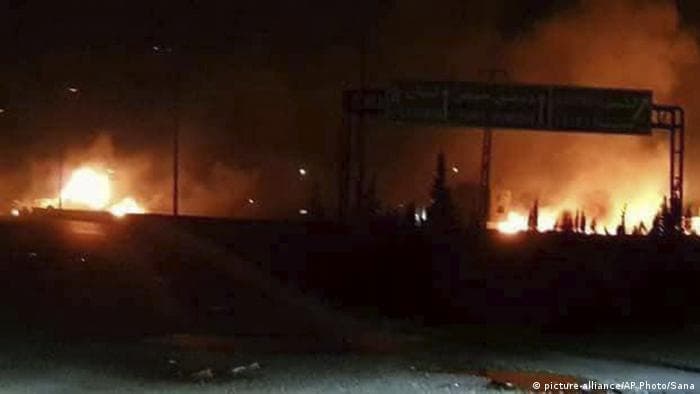
صورة تعود للقصف الإسرائيلي فجر اليوم على دمشق بالقرب من السومرية
Publisher’s rating: خارج السياق
Eine Ukrainierin hat ein Fotoshooting mit sich selbst in der Hauptrolle zur Inszenierung ihres angebliches Todes in Butscha abgehalten.
Publisher’s rating: Das Foto der Toten wurde nicht inszeniert. Sie ist auch auf Bildern und in Videos eines Fotojournalisten aus Irpin zu sehen. Die Ukrainerin auf dem Selfie hat sich in einem Facebook-Posting ausgemalt, dass ihr dasselbe hätte wiederfahren können. Ihre Formulierung dazu war missverständlich, von einem Fotoshooting war allerdings nie die Rede.
The claim concerned two images circulated together: a young woman taking a mirror selfie and a dead woman lying on the ground. A Facebook post asserted that the women were the same person and that she had arranged a photoshoot depicting her own killing in Bucha. The review found that the images did not show the same woman and that the selfie’s author was imagining what could have happened to her—not staging her own death. It also found no mention of a photoshoot in the post. The review traced the wording to posts by Facebook user Nastia Savchyshyn. In her April 4 post, she wrote, “Das ist mein Foto links. Aber das ist auch mein Foto rechts,” a phrase that could be read as saying both images showed her. On April 5 she changed it to say the right-hand photo “hätte ich sein können” (“could have been me”). She later apologized for the misunderstanding and stated that she was alive. The review’s account therefore identifies a change in wording that helps explain how the false interpretation arose, while distinguishing it from the claim that an actual photoshoot took place. The review also checked the location and provenance of the image of the dead woman. It reported that the image was from Irpin, not Bucha, and that a France 2 photographer had also photographed and filmed the woman there. It located the scene on Mechnykova Street using visible remains of a house and a bright red fence opposite. Those reported checks support the conclusion that the death image was not staged as the claim alleged.
Ferdinand Marcos Sr. got a Silver Star medal in April of 1945 for the defense of Bessang Pass in Kiangan, Mountain Province.
Publisher’s rating: False
President Zelensky kreeg een vredesakkoord aangeboden maar weigerde dat.
Publisher’s rating: De bewering dat Zelensky een vredesakkoord van Scholz afsloeg is onjuist. De beweringen gaan terug op een artikel van de Wall Street Journal. Volgens hen adviseerde Scholz Zelensky op 19 februari 2022 afstand te doen van de NAVO-aspiraties. Dat is echter niet hetzelfde als een vredesovereenkomst of -akkoord. Daarvoor moet ook de andere partij in een conflict, in dit geval Rusland, betrokken zijn.
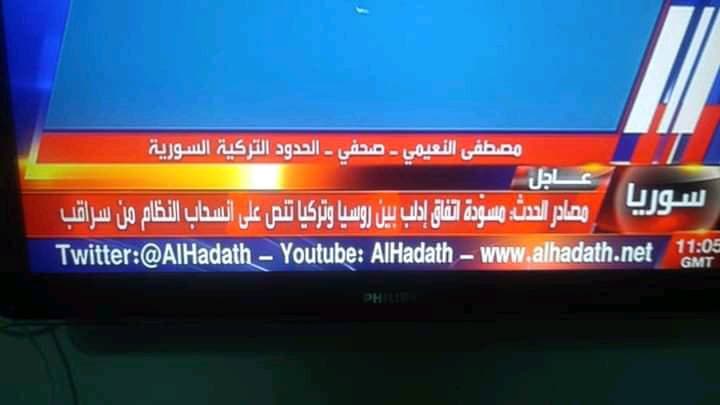
مسودة إتفاق إدلب تنص على انسحاب النظام السوري من مدينة سراقب في ريف إدلب
Publisher’s rating: تضليل
Video zeigt Zerstörung eines russischen Panzers durch ukrainische Panzerabwehrrakete.
Publisher’s rating: Falsch. Der Clip ist mindestens seit 2017 im Netz und stammt vermutlich aus Syrien.
В Бучу организовали кровавую постановку из трупов
Publisher’s rating: Намеренно созданный фейк
Une vidéo montre des personnes faisant semblant d'être mortes en Ukraine.
Publisher’s rating: La vidéo immortalise une manifestation pour le climat qui s’est déroulée à Vienne, la capitale autrichienne, début février 2022. Elle n’a rien à voir avec la situation actuelle en Ukraine. Le bandeau faisant mention du conflit russo-ukrainien a été ajouté à la vidéo originale pour induire en erreur ceux qui la visionnent.
The video at issue showed a reporter beside people lying in body bags. A version circulated with a banner claiming that Ukraine’s health ministry had reported 57 deaths and 169 injuries during a Russian offensive; the visible movement of one person was used by some viewers to suggest the footage was staged. The review traces the footage instead to a climate-policy protest in Vienna, Austria, on February 4, 2022, organized by Fridays For Future. The review identifies the Austrian outlet oe24 as the source of the original video, published on the day of the protest. In that version, the report’s banner identifies a Vienna demonstration against climate policy, and accompanying coverage describes 49 activists in body bags. The people lying down were representing victims that the protest organizers said could result from the failure of Austrian climate policy—not casualties in Ukraine. The review also describes how the misleading version was altered: it was zoomed in to focus on the body bags, the original banner was replaced with one referring to the Ukraine war, and English commentary was added. The footage predates Russia’s February 24, 2022 offensive. Together, the original video’s identification of the place and event, the protest’s stated purpose, and the edits to the circulating version establish why the footage does not show people pretending to be dead in Ukraine.
Foto toont president Zelensky die een toespraak geeft voor het Azov-bataljon in 2018 tijdens hun jaarlijkse tactische meeting.
Publisher’s rating: De foto werd bewerkt: in de realiteit toont het beeld politicus Andriy Biletsky die een toespraak geeft in 2008. Het toont ook de ultranationalistische organisatie Patriot van Oekraïne en niet het Azov-bataljon. Die laatste werd pas in 2014 opgericht. Biletsky was wel van allebei die groeperingen de oprichter.
The claim attached to the circulated image was that Volodymyr Zelensky spoke at an annual gathering of the Azov battalion in 2018, before becoming Ukraine’s president. The dpa review examined that specific image and says it was altered: the person pictured speaking is politician Andriy Biletsky, not Zelensky, and the scene dates to 2008 rather than 2018. The event shown was a congress of the ultranationalist movement Patriot of Ukraine. The review says the image was found online in multiple places, including Wikimedia Commons, and describes the image link supplied with the social-media post as a dead end. It identifies the original image as showing Biletsky speaking at the Patriot of Ukraine congress in 2008. These details address both the identity of the speaker and the date and setting represented by the photograph. The review distinguishes Patriot of Ukraine from Azov while noting a connection through Biletsky. Patriot of Ukraine was founded in 2005; Azov emerged in its setting, together with the Social National Assembly, in spring 2014. Because the pictured speech predates Azov’s creation, the image does not show an Azov gathering. The review also states that Zelensky did not give the speech depicted.
Une vidéo montrant comment l’armée ukrainienne a préparé un faux massacre à Boutcha diffusée par inadvertance dans les médias.
Publisher’s rating: Cette vidéo n’est pas une preuve d’une quelconque manipulation. La scène a été filmée par l’agence de presse Associated Press (AP) à Boutcha le 2 avril 2022. On y voit des soldats ukrainiens retirer des cadavres des rues à l’aide de câbles, dans le but de garder une distance au cas où il y aurait d’éventuels explosifs dissimulés. Les images n’ont pas non plus fuité.
The claim concerns a short video said to show Ukrainian soldiers staging deaths in Bucha, with the footage supposedly broadcast inadvertently and therefore exposing a fabricated massacre. The review identifies the clip as showing soldiers moving bodies with cables, but says that this action does not establish that the deaths were staged. It reports that the soldiers were keeping their distance in case the bodies were booby-trapped with explosives. The review traces the clip’s provenance rather than treating its appearance on social media as evidence of a leak. It says the footage appeared in a longer report uploaded by Ukrainian broadcaster UATV on 3 April 2022, but that UATV credited the material to Associated Press. AP had filmed it in Bucha on 2 April and also published it on YouTube. The review therefore concludes that the footage was not accidentally exposed in media coverage. The review further reports that AP said its journalists had filmed the scene on location and that the soldiers moved the bodies from the streets to maintain a safe distance in case explosives were present. It also notes that the wider details of what happened in Bucha had not yet been established with certainty at the time covered by the review. Its narrower finding is that this AP video does not support the claim that Ukrainian forces staged the massacre.

රඹුක්කන ගැටුම් සිදුවී පුද්ගලයෙකු මරණයට පත්වූ අප්රේල් 19 වනදා වන විට, රඹුක්කන පොලිස් ස්ථානාධිපතිගේ ඡායාරූපයක්
Publisher’s rating: Misleading
The review examined social-media posts that identified a man in circulated photographs as the Rambukkana police station chief responsible for the police response to the April 19, 2022 protest. The protest followed fuel-price increases and shortages; police gunfire during efforts to disperse protesters killed a person. The issue was whether the photographs showed the officer serving as chief at that time, rather than whether the images were genuinely of the man pictured. The review says the posts also circulated photographs presented as showing his family and named him “Elmo Malcom pate.”
Kiew bereitet Provokation gegen russische Streitkräfte vor, angeführt von britischen Filmemachern.
Publisher’s rating: Das Foto ist aus dem Kontext gerissen worden. Es zeigt die Bergung eines toten Zivilisten aus einem Massengrab in Butscha. Gerichtsmediziner entnahmen am 11. April 2022 den gefunden Leichen DNA-Proben zur Identifizierung.
The claim combines an alleged warning about Ukrainian plans in the Sumy region with a Facebook photo said to show British filmmakers helping Ukraine stage events to discredit the Russian military. The review focused on whether the people in that image were filmmakers or were present at a staged production. It identifies the image as showing the recovery of a civilian from a mass grave in Bucha, not a film crew, and says forensic examiners took DNA samples from the recovered bodies on April 11, 2022. [S1]
Der Raketentyp, die Seriennummer und die Lage des Raketenkörpers beweist, dass die Ukraine selbst den Angriff auf den Bahnhof in der ukrainischen Stadt Kramatorsk gestartet hat.
Publisher’s rating: Sowohl Russland als auch die Ukraine verwenden Totschka-U-Raketen. Die Seriennummer hat keine Aussagekraft über das Herkunftsland.

Visuals of a Palestinian man offering prayer during the recent raid on Al-Aqsa Mosque by Israeli forces
Publisher’s rating: MISLEADING
The claim concerns a video said to show a Palestinian man praying during a recent Israeli raid on Al-Aqsa Mosque. FACTLY concluded that the video was old and did not depict those recent raids. The review says the post paired the video with the text “Palestinian young man weeps in tears during du’aa for Al Aqsa,” and identifies the claim as visuals of a Palestinian man praying during the recent raid. To investigate the video’s provenance, FACTLY reports that a reverse image search returned blog reports from July 2017 showing the same visuals. Those reports described Palestinians holding a sit-in near Al-Asbat gate in Jerusalem in protest of metal detectors at the mosque entrances; one account said they continued evening prayers despite Israeli forces’ intervention. FACTLY also found mainstream news reports from July 2017 about clashes over those security measures. The review draws a careful distinction between establishing that the footage predates the recent raid and proving exactly what it depicts. It says it could not independently verify that the video was from the 2017 clashes. Its conclusion is that the visuals were online by 2017, so they were not related to the recent raids—not that their specific connection to the earlier clashes was confirmed.
Russland setzt keine Totschka-U-Raketen mehr ein.
Publisher’s rating: Falsch. Sowohl Russland als auch die Ukraine verwenden Totschka-U-Raketen.
The review examines the Russian denial of responsibility for the 8 April 2022 attack on the railway station in Kramatorsk, in eastern Ukraine. The stated basis for that denial was that the Russian army supposedly did not use the type of missile employed in the attack. The review identifies the weapon as a Totschka-U, version 9M79-1, and addresses the broader claim about Russian use rather than relying on the weapon identification alone. The review says images carried by Italian media identified the Kramatorsk missile as a Totschka-U. It also reports that, although Russia had officially replaced its arsenal with the newer Iskander system, there were several indications of Russian Totschka-U use during the war: Amnesty International reported an attack on a hospital in Vuhledar on the first day of the invasion, and the Institute for the Study of War said a Russian unit deployed in Donbas was equipped with the missile. The review further cautions against attributing the Kramatorsk missile to Ukraine based on its serial number. It reports that the Soviet-era numbers were not enough to identify which country held a missile, and quotes a military expert explaining that they have no meaning without records linking numbers to countries. The evidence presented therefore challenges the assertion that Russia no longer used the missile and the serial-number argument used in the dispute over responsibility for the attack.