PeakMetrics / Fact Checks
War & conflict fact checks
Explore claims publishers have checked about war & conflict. Read their original ratings and follow the evidence.
Search fact checks
Search by text or image5,840 published reviews in this topic

La imagen de un mapa de Europa con Ucrania ‘apagada’
Publisher’s rating: False

ウクライナのブチャがたった2週間で元に戻った
Publisher’s rating: 不正確
The review found that the video showed a Kyiv-region street after months of rebuilding, not Bucha returning to normal in two weeks. It says the original footage was posted about six months after the attacks began, so the two-week claim was inaccurate. [S1]

Photos of Chinese soldiers killed in the 2020 Galwan clash with India.
Publisher’s rating: FALSE
The claim concerns photos shared as showing Chinese soldiers killed in the 2020 Galwan clash with India. FACTLY’s review concludes that the photos do not depict that event: it identifies them instead with a 2010 fire accident in China. The review’s stated finding is that the images are unrelated to the Galwan clash. To investigate, FACTLY says it ran the photos through Google Reverse Image Search. That search found one of the images in an article published in 2010. For the other image, the review says its surroundings were similar to those in photographs from the 2010 article. The review therefore connects both circulated photos to the earlier incident, rather than to the 2020 border clash. The review describes the 2010 images as showing people killed in a grassland fire in China. It cites a South China Morning Post report stating that the 2010 fatalities included soldiers, grassland-administration workers, and local residents. That context matters: the presence of soldiers among the dead does not establish that the photos show casualties from Galwan. The review’s conclusion is that the claim about the photos is false.

In Zossen wurden auf einen russischen Panzer geschrieben: "BEFREIT UNS NOCHMAL!"
Publisher’s rating: Das Foto zeigt einen Schriftzug, der 1988 an einem sowjetischen Panzermonument in Schwerin angebracht wurde, um gegen das damalige DDR-Regime zu protestieren. Heute steht der Panzer vermutlich noch in einem Vorgarten in Bad Oldesloe.
The post attributed the photograph of a tank marked “Befreit uns noch mal!” to a Soviet monument in Zossen, south of Berlin. The review investigated the photograph and its location rather than treating the post’s caption as proof. It reports that the image had circulated online for years, and that the Zossen attribution likely originated in a 2018 post. The photo itself also contains an Odnoklassniki watermark; the review says the logo shown was used by that Russian online community until 2011. The review traced the slogan to a different place and event. A Schweriner Volkszeitung article identified the Soviet T-34 as a monument at the entrance to Schwerin on the B 104 and reported that opposition activists put the slogans on it in 1988. The review also cites an excerpt from court documents recording that, during the night of 8–9 August, two men wrote “Befreit uns nochmal,” “Perestroika” and “Frei” on the tank monument in Schwerin-Schelfwerder. These records connect the photographed slogan to Schwerin, not Zossen. The account in the book *Erinnerungen für die Zukunft*, as quoted in the review, supplies context for the wording: one participant said the activists had painted “Perestroika” and “Befreit uns noch mal!” on the tank, and explained that they had intended the slogan for an American tank because Americans had liberated Schwerin from fascism, but the monument there was Russian. The review further reports that the two men were sentenced by DDR authorities to eighteen months in prison. It says the tank was later sold to a disposal company in Bad Oldesloe, where images showed it still on the company’s grounds in 2014 and 2021.

Zマークを車につけているロシア人をカザフスタン人が歓迎している
Publisher’s rating: 誤り
The video was misrepresented as showing Kazakh people confronting Russians over Z symbols on their cars. The review identifies it as footage of a parking-fee dispute at a commercial facility in Almaty, uploaded to YouTube on March 30, 2021, before Russia’s invasion of Ukraine began in February 2022.

Videonun Pençe Kılıç Hava Harekatı’nda bulunan Türk askerini gösterdiği iddiası
Publisher’s rating: Yanlış

Videoda isyan eden kadının PKK/YPG sözcüsü Ferhat Şami olduğu iddiası
Publisher’s rating: Yanlış

Görüntülerin Pençe Kılıç operasyonunu gösterdiği iddiası
Publisher’s rating: Yanlış

Videodaki kişilerin Taksim’deki terör saldırısı ile dalga geçtikleri iddiası
Publisher’s rating: Yanlış

Na de bevrijding van Cherson zijn Oekraïense soldaten al begonnen met het opsporen en onderdrukken van burgers, die zouden gecollaboreerd hebben met de Russen, toont deze video aan.
Publisher’s rating: Alles wijst erop dat de man een Russische soldaat in burgerkleding is, geen lokale inwoner. Dat is duidelijk aan de hand van het getoonde militaire paspoort.
The claim concerns a TikTok video said to show Ukrainian soldiers pursuing or punishing Kherson residents suspected of collaborating with Russian forces after the city’s liberation. The dpa review examined that video, which shows Ukrainian soldiers and a man whose face is covered with bandages. It concluded that the footage does not establish that Ukrainian forces were repressing local residents. The review’s central identification evidence is the document shown in the footage. It describes the document as a Russian military passport, distinguishing it from a civilian passport by its vertical layout rather than the usual horizontal layout. The review also notes that the passport appears to bear an older Soviet-era design. The man’s identity and birthplace could not be conclusively established from the video: the image quality was too poor to read the birthplace, and the bandages prevented a reliable comparison with the passport photograph. The review reports that the Ukrainian soldiers in the video describe the man as a “tchmobik” from Moscow, a derogatory term for a recently mobilized Russian soldier, according to a translation carried out by dpa. The passport and the soldiers’ description support the interpretation that the man was a Russian soldier in civilian clothing, rather than a local resident. The review acknowledges remaining questions, but says the footage is not sufficient evidence of reprisals against Kherson’s local population.

El artículo 5 de la OTAN fue activado tras la caída de un misil en Polonia.
Publisher’s rating: Falso
“We lost lives, left Americans behind and surrendered $85 billion worth of the finest military equipment anywhere in the world.”
Publisher’s rating: False
“We had practically, just about, not that I can think of, no Islamic attacks, terrorist attacks during the Trump administration.”
Publisher’s rating: False
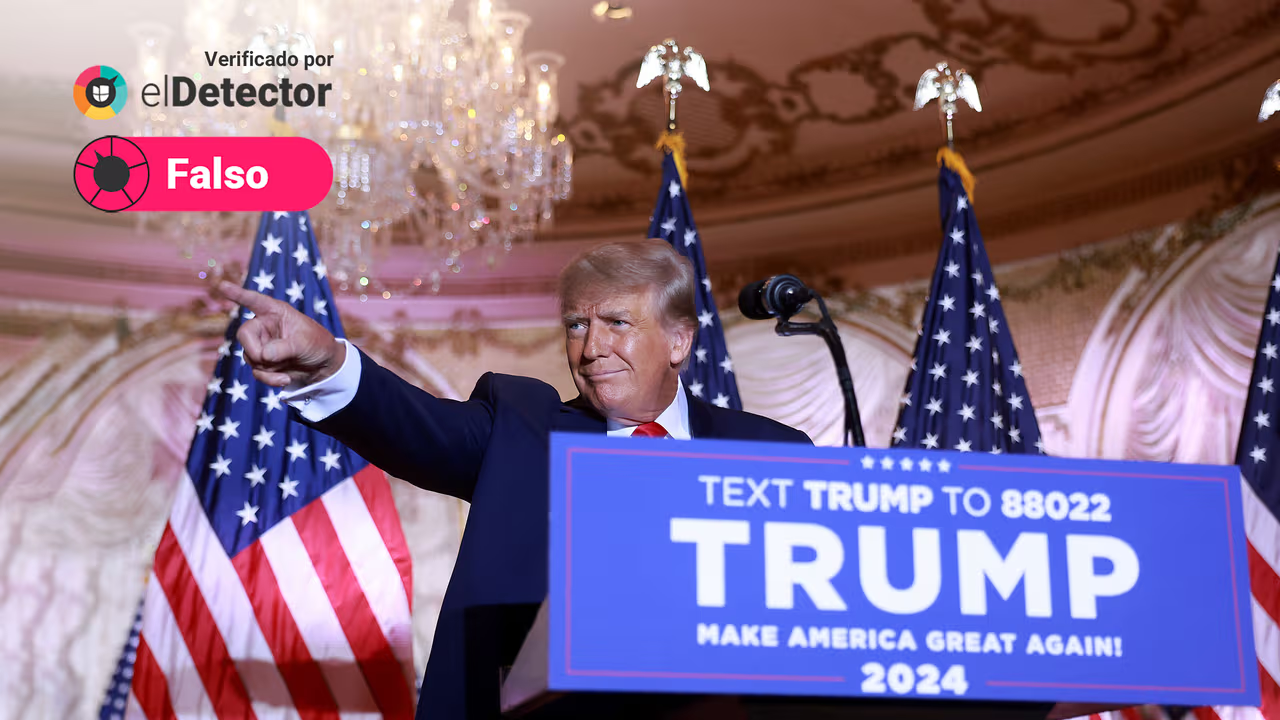
“En Afganistán [....] entregamos el mejor equipo militar por valor de $85,000 millones”.
Publisher’s rating: Falso

Schiffe, die Getreide ausliefern, werden auf dem Rückweg in die Ukraine mit Waffen beladen.
Publisher’s rating: Die Schiffe werden durchsucht und auf ihrer festgelegten Route technisch überwacht. Dem Gemeinsamen Koordinierungszentrum, in dem sowohl Vertreter Russlands als auch der Ukraine die Überwachung und Kontrolle gewährleisten, ist ein solcher Fall unerlaubter Ladung nicht bekannt.

İngiltere’nin Ankara ve İstanbul için 3 gün önceden terör uyarısı yaptığı iddiası
Publisher’s rating: Yanlış