
Neutrogena Faces Backlash Over Hayden Panettiere’s Postpartum Depression Account
PeakMetrics data shows Neutrogena favorability fell to 7.1% after renewed attention to Hayden Panettiere's postpartum depression account.
Published
Following the tragic passing of actress Hayden Panettiere, people online are revisiting an account she shared earlier this year about her former relationship with Neutrogena—and raising new questions about how brands support their longtime partners during deeply personal moments.
Panettiere represented Neutrogena for roughly a decade. Earlier this year, she alleged that the company sought to end her endorsement after she publicly discussed experiencing postpartum depression in 2015 while promoting the television series Nashville. According to Panettiere, her representative prevented the immediate termination, but Neutrogena did not renew her contract several months later.
As tributes to Panettiere spread online, clips and articles recounting that experience have resurfaced. The renewed attention has shifted the conversation around Neutrogena from largely neutral to overwhelmingly unfavorable.
PeakMetrics analyzed the resulting online conversation as of 3 p.m. ET Monday to understand how people are responding, what is driving the criticism and whether it is affecting their willingness to support the brand.
The Conversation Has Turned Sharply Unfavorable
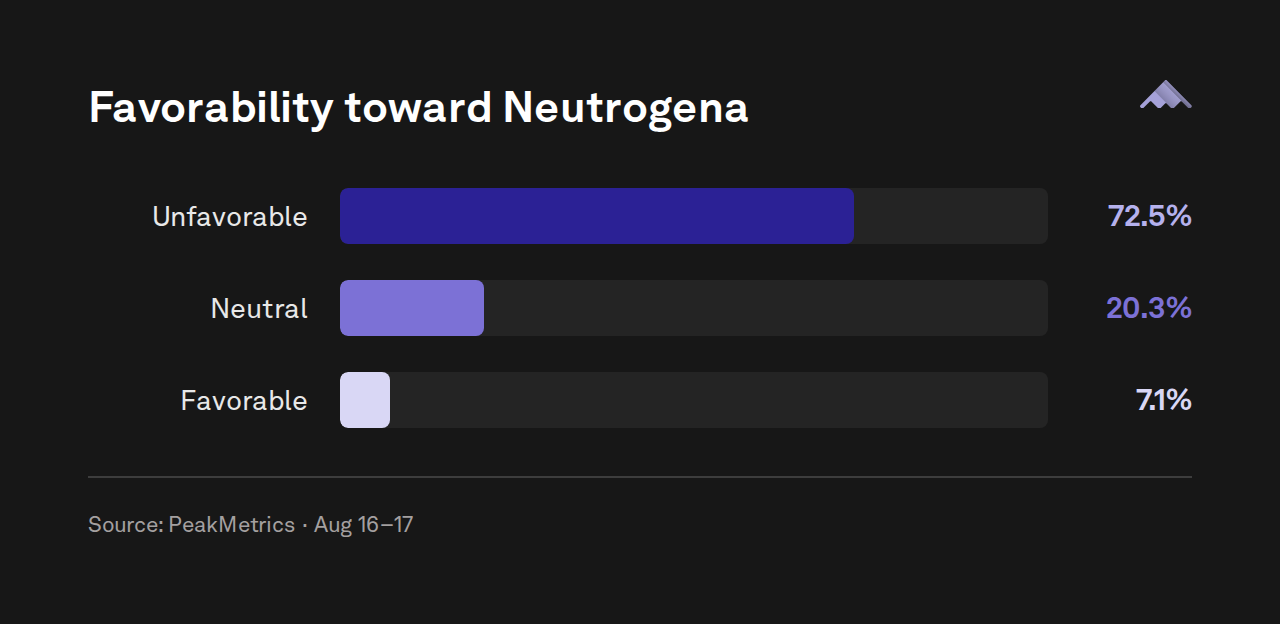
Nearly three-quarters of the conversation—72.5%—is unfavorable toward Neutrogena, compared with 20.3% neutral and just 7.1% favorable.
Much of the negative discussion centers on Panettiere’s allegation that the brand tried to end a longtime partnership after she spoke publicly about postpartum depression. Her account is being shared not simply as an isolated disagreement between a company and a spokesperson, but as an example of how employers and brand partners have historically responded when women discuss mental health openly.
That framing has given the story broader resonance and moved it beyond the details of one endorsement contract.
For Many, the Allegation Has Changed How They View the Brand
Roughly 40% of the conversation either calls for Neutrogena to be cancelled or expresses an intention to stop purchasing from or supporting the brand.
Not every critical post amounts to a direct boycott call. But many posts say the allegation has altered their perception of the company and its values.
The response is especially pointed because Neutrogena primarily markets products to women. Users are questioning why a company with that customer base allegedly failed to support a longtime spokesperson when she spoke honestly about a condition that affects many women and families.
Overall, 68.7% of the rhetoric surrounding Neutrogena is critical.
Postpartum Depression Is at the Center of the Backlash
Among posts criticizing Neutrogena, 84.4% focus on postpartum depression or perceived mental-health discrimination.
Users frequently characterize the alleged decision as punishment for speaking candidly about a serious health condition. One shared reaction described the situation as “dystopian,” reflecting the broader concern that public figures may be expected to appear relatable and authentic—until that authenticity becomes uncomfortable for the brands associated with them.
Another 12.5% of the criticism focuses on Neutrogena’s alleged use of a morality clause or its broader employment practices. People are questioning whether discussing postpartum depression could reasonably violate such a clause and why the company reportedly chose not to renew Panettiere’s contract after nearly a decade together.
A Past Decision Viewed Differently Today
The renewed criticism also reflects how much the conversation around postpartum depression has changed since 2015. People are revisiting Panettiere’s account with a greater understanding of the condition and questioning whether she received the support she needed at the time.
That discussion is happening as people mourn Panettiere and remember her life and career. This was only one part of her story, but it has struck a chord with many who believe she deserved compassion when speaking openly about something so personal.
It’s also worth noting that Neutrogena was owned by Johnson & Johnson in 2015 and became part of Kenvue when the consumer-health business separated in 2023. The brand is under different ownership today, and expectations around mental health and brand partnerships have changed considerably. While the circumstances are very different, we saw a glimpse of Neutrogena’s current approach when it responded to Tate McRae’s recent makeup-wipe blunder with humor rather than distancing itself. That context doesn’t erase the concerns people are raising, but it does give Kenvue an opportunity to acknowledge them, clarify what has changed and show where Neutrogena stands today.
How this analysis was built
These insights were surfaced using PeakMetrics Smart Categories, which use LLM-powered classification to understand the context, themes, tone and author signals behind each post — rather than relying on keywords or Boolean searches. This captures nuances like sarcasm and distinguishes between rhetoric that's critical, complimentary or potentially violent, giving a much clearer picture of what's driving a conversation.
To see how Smart Categories can monitor your brand's exposure to a fast-moving narrative, request a demo.
Sign up for our newsletter
Get the latest updates and publishings from the PeakMetrics investigations team.
Loading the newsletter sign-up form…