
A GEO Tool Built for Communications Teams
See how ChatGPT, Claude, Gemini, Grok, and Perplexity describe your brand. PeakMetrics' AI Perceptions connects AI answers with the narratives you track.
Your team can spend years building trust. Someone’s first impression of your company can still come from an AI answer you’ve never seen.
They might ask whether your company is trustworthy, how your product compares with a competitor’s, whether you’re a good place to work, or about an emerging brand story. The answer could reflect the reputation you’ve worked hard to build. It could also repeat an outdated claim, overlook an important part of your story, or frame your brand around an issue you thought was behind you.
For communications teams, that raises a practical question: how do you understand what AI is saying about your brand and decide what to do about it?
We built AI Perceptions to help communications teams answer that question, connecting AI-generated brand perceptions with the news, social conversations, and narratives they already monitor in PeakMetrics. And we’re the first narrative intelligence company to do it.
Why we built AI Perceptions into PeakMetrics
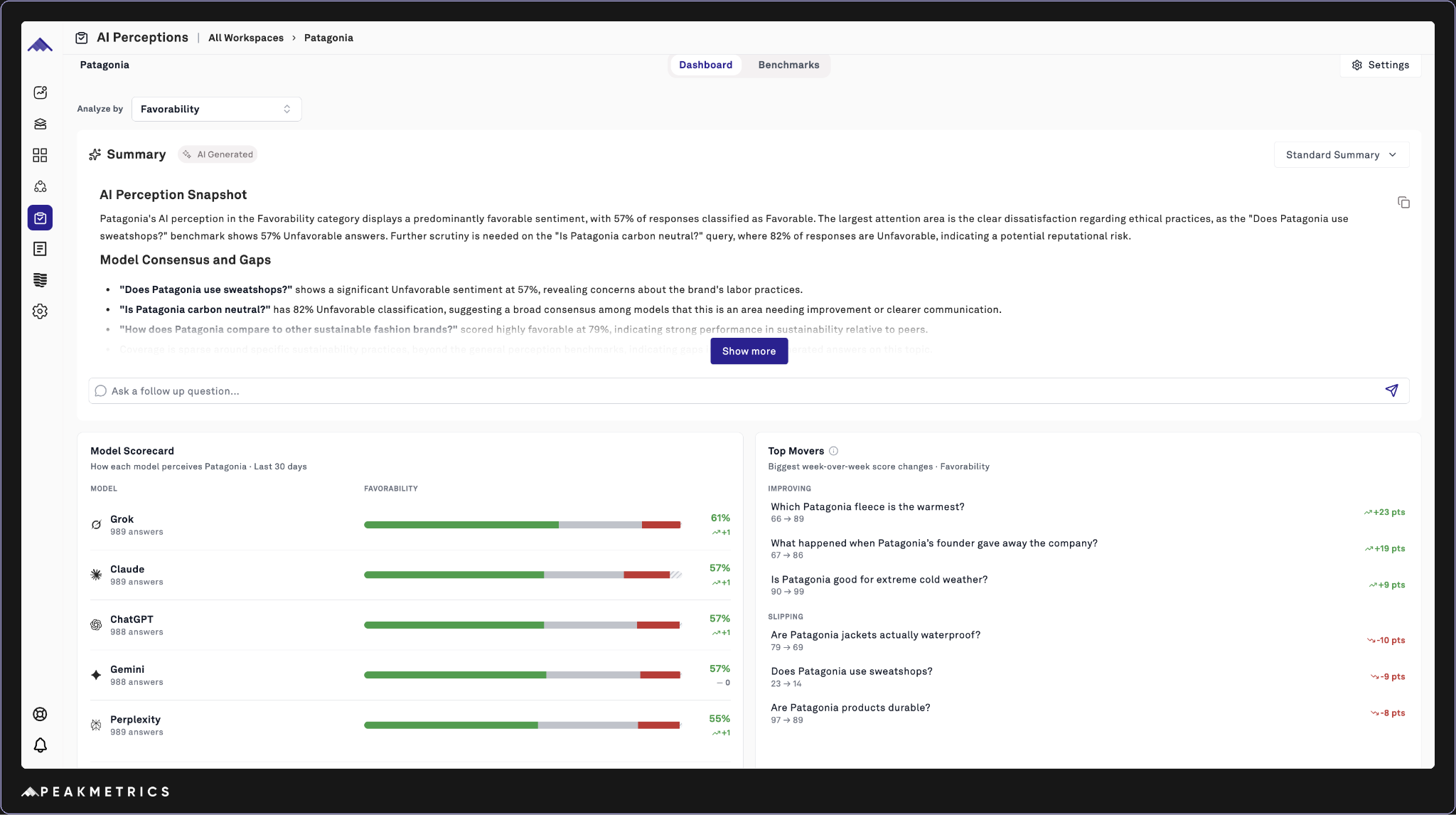
In conversations with customers, the same question kept coming up: “What is ChatGPT (or other models) saying about us?”
But answering that question once only gets you so far. If a model describes your company as untrustworthy, your team needs to know which questions produce that answer, whether other models say something similar, and what information those responses cite. You also need to understand how that portrayal relates to the coverage and conversations you’re already tracking.
We believe GEO belongs in the broader reputation conversation. The news, reviews, online communities, and emerging narratives that communications teams work to understand and influence can also inform AI-generated answers. Seeing those signals together gives teams the context to act.
That’s why AI Perceptions is part of PeakMetrics’ core platform, with AI answers measured alongside news, social media, blogs, podcasts, broadcast, and custom sources. Your team can investigate a changing narrative in real time and see whether it begins appearing in AI responses, all within the same platform.
Here’s what that makes possible.
Track how AI answers the questions that matter to your brand
A prospective customer asks whether your product is worth buying. A job candidate asks about your workplace culture. A journalist asks about your company’s history.
Each question can surface a different version of your brand.
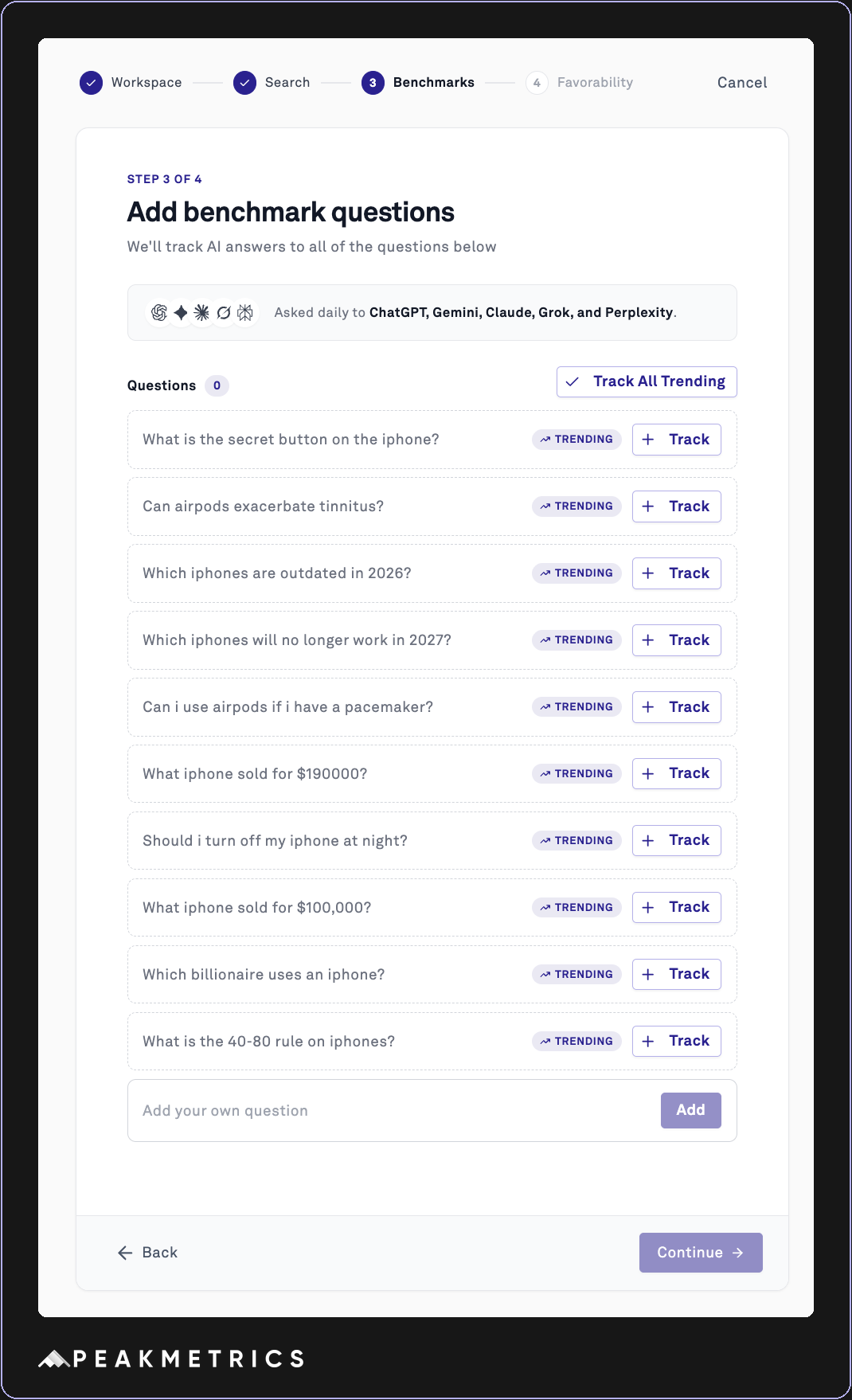
AI Perceptions collects fresh answers daily across ChatGPT, Claude, Gemini, Grok, and Perplexity, giving your team an ongoing view of the answers those questions produce. You can start with recommended high-volume questions about your brand or category and add your own questions around the issues that matter most to your business.
That helps you focus your monitoring on meaningful questions: Are our products described accurately? Is an old controversy still defining us? Are the messages we want audiences to understand coming through?
Instead of relying on occasional manual checks, you have a consistent baseline to work from.
Measure brand favorability, trust, and messaging in AI answers
An answer can mention your company and still leave someone with the wrong impression.
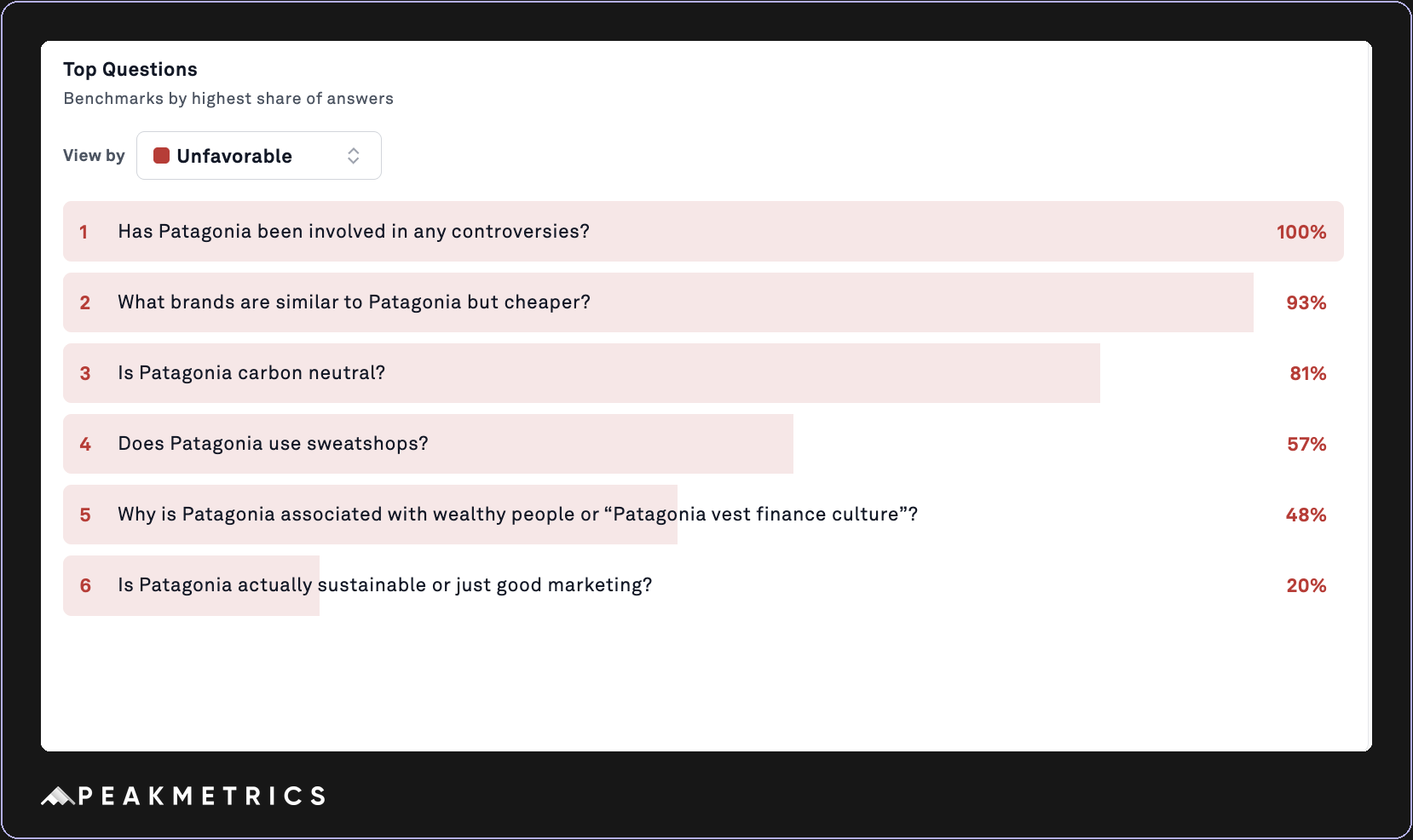
AI Perceptions helps you evaluate how your brand is portrayed, including favorability, trust, key themes, and alignment with your messaging. With customizable Smart Categories, you can also assess competitive share of voice, tone, or language that could influence a purchase decision.
For example, a company investing in innovation might want to know whether AI still describes it as a legacy provider. An employer might want to understand whether answers about its culture reflect recent changes or continue to emphasize older criticism.
Your team can measure the aspects of reputation that matter to your strategy and use those findings to sharpen messaging, identify information gaps, and prioritize communications work.
Spot changes in AI brand perception and prioritize your response
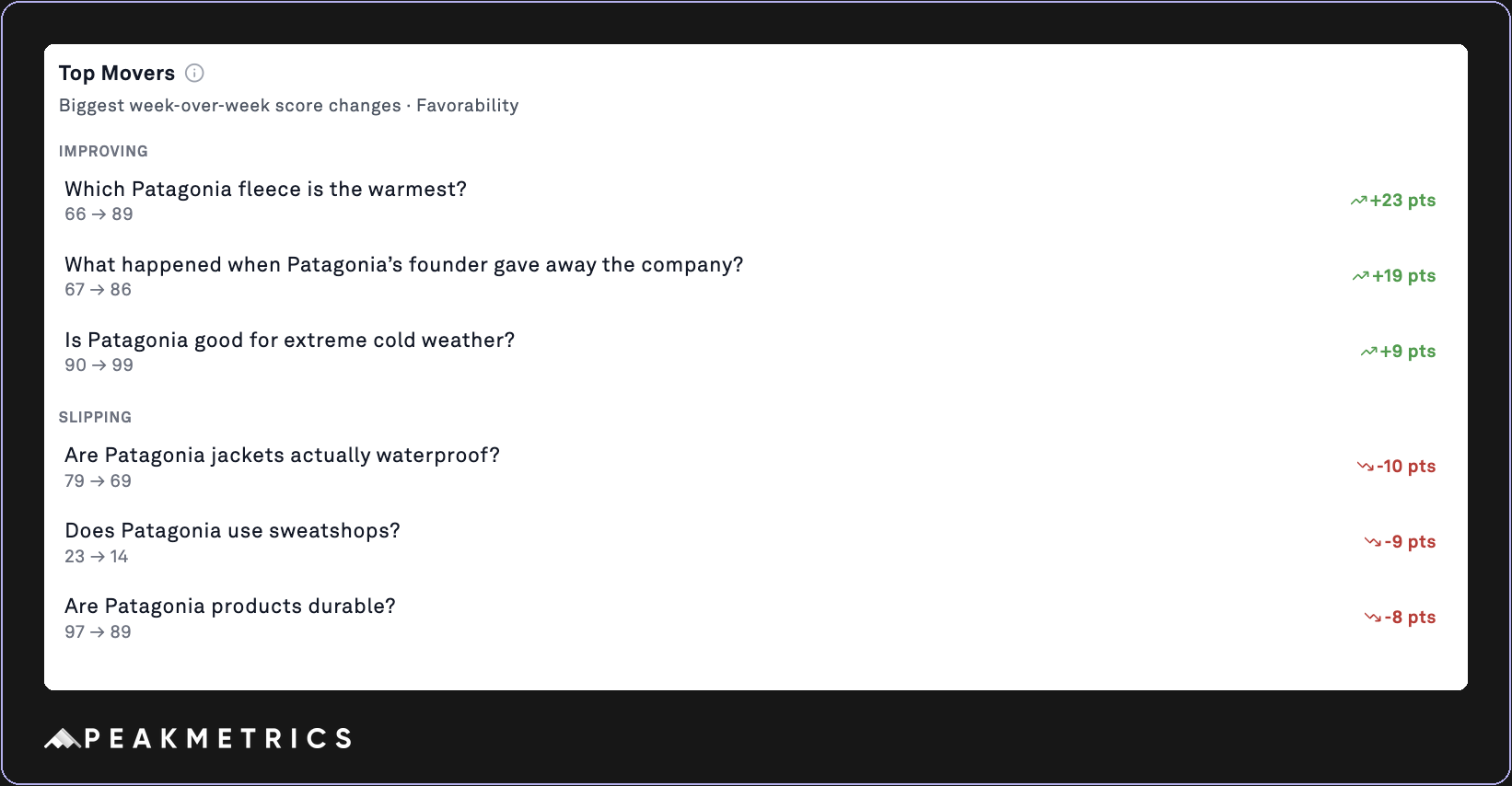
When you’re tracking multiple topics across multiple models, knowing where to look first matters.
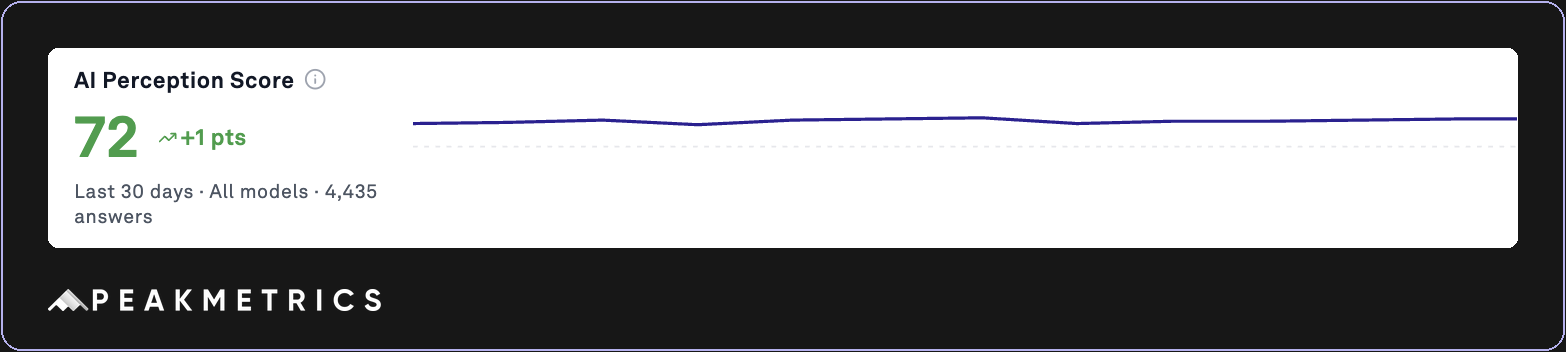
AI Perceptions highlights the questions with the biggest week-over-week shifts, along with the questions producing the most favorable and unfavorable answers. An overall AI Perception Score gives you a benchmark to track, while model comparisons help you see where answers differ.
If perception declines, you can investigate the specific question, model, and response behind the change. You can also review summaries of how answers have evolved, where to focus efforts, and open the full responses for context.
That gives your team a more focused starting point for investigation and a clearer way to explain to leadership what changed and why it deserves attention.
Investigate cited sources to guide your communications strategy
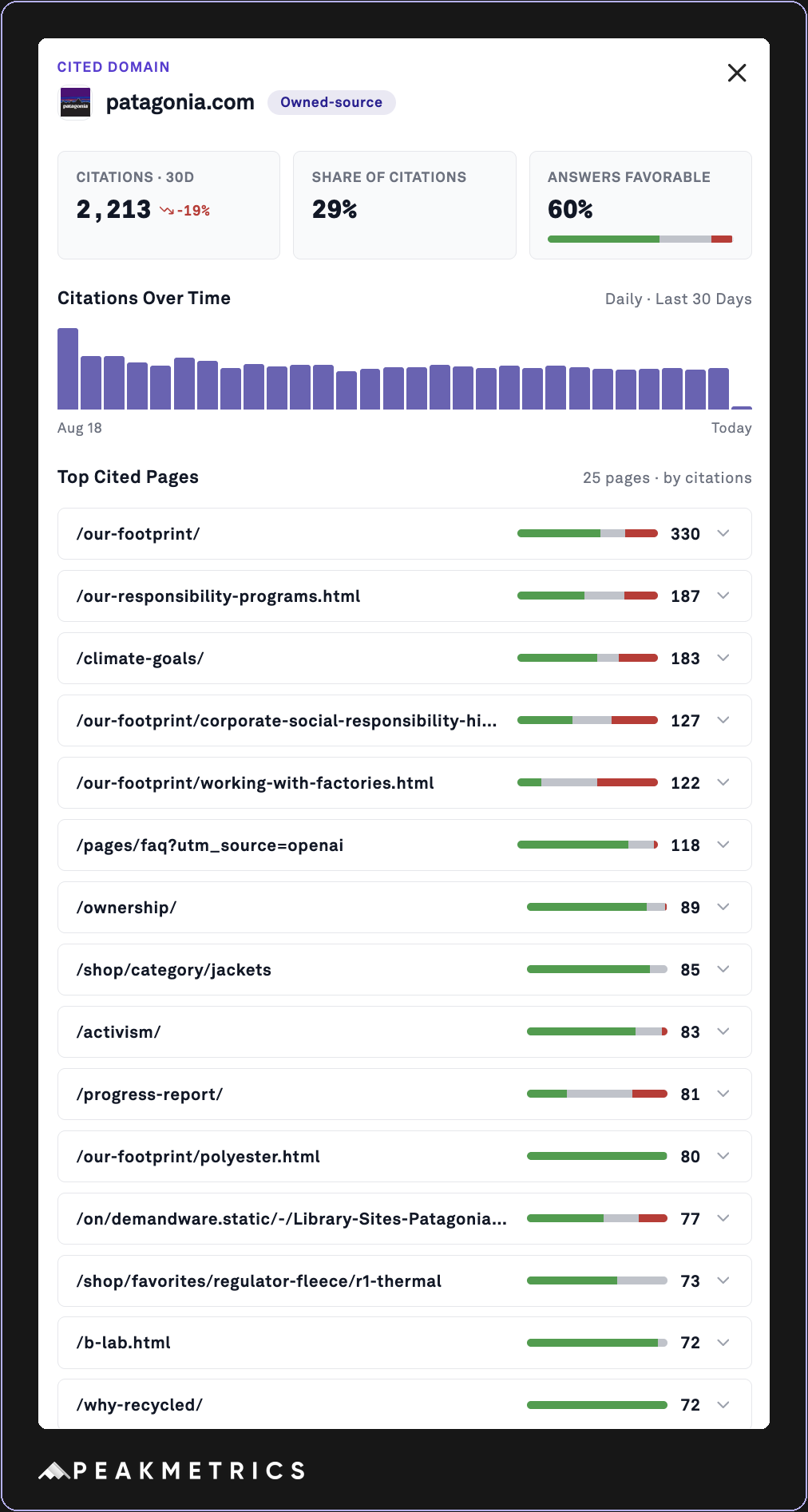
Finding an inaccurate or damaging AI answer is frustrating when you don’t know where to begin addressing it.
AI Perceptions captures the sources cited in tracked responses and shows which domains and pages appear most often. You can investigate whether answers reference your own website, third-party coverage, community discussions, or other sources.
Those citations give your team concrete leads. An outdated page on your site may need updating. A recurring misconception may reveal a gap in your public information. A publication that appears frequently in relevant answers may deserve closer attention in your earned media strategy.
Citations don’t explain every factor behind an AI response, but they provide a practical starting point for understanding the information it presents and deciding where to focus.
Benchmark your brand against competitors in AI answers
.png)
The questions that matter to your brand often include other companies, too. Who leads your category? Which provider is most trusted? What are the trade-offs between your product and a competitor’s?
AI Perceptions lets you compare how brands appear across tracked questions, including their share of voice and how they’re positioned. That helps your team spot where a competitor is associated with a strength you also want to be known for, or where your own differentiators are missing from the answer.
You can use those insights to make more informed choices about the stories you tell, the proof points you emphasize, and the questions your content should answer.
Measure how AI answers change after campaigns and earned media
You earn meaningful coverage. You publish new research. You get an important message into the conversation. What happens next?
AI Perceptions gives teams another way to assess that work. Establish a baseline before a campaign or media push, then track whether the themes, sources, and brand descriptions in AI answers change over time.
You can look for new coverage appearing in citations, key messages becoming more prominent, or outdated claims appearing less often. These changes provide useful evidence for evaluating your strategy and deciding what to do next, alongside your existing communications measurement. They show how tracked answers evolve; they do not, on their own, prove that a specific placement caused the change.
Questions about GEO and AI reputation management
What does GEO mean for communications teams?
Generative Engine Optimization (GEO) focuses on how brands and information appear in AI-generated answers. For communications teams, that includes whether answers represent a brand accurately, reflect its key messages, and reinforce or undermine trust. AI Perceptions supports this work by measuring brand portrayals and cited sources alongside the broader narrative environment in PeakMetrics.
How is AI reputation monitoring different from tracking brand mentions in AI?
Brand mention tracking shows whether a company appears in an answer. AI reputation monitoring examines how that company is described, which themes and claims appear, and how its portrayal changes over time. AI Perceptions helps teams evaluate favorability, trust-related language, messaging alignment, and competitive positioning across tracked responses.
Who is AI Perceptions designed for?
AI Perceptions is built for communications, public relations, corporate affairs, and reputation management teams, including agencies advising clients. It helps these teams investigate brand portrayals, monitor emerging issues, compare competitive narratives, and assess whether their messages are reflected in AI answers.
How can AI Perceptions help during a reputation issue or crisis?
Teams can track questions about an issue, review how different models describe it, and investigate the sources cited in those answers. Because AI responses can be analyzed alongside news and social conversations in PeakMetrics, teams can examine whether a narrative is appearing across those channels and identify information that may need clarification or correction.
Can communications teams correct inaccurate information in AI answers?
Communications teams can address inaccurate information in sources they control, seek corrections from publishers, and make accurate, well-supported information easier to find. AI Perceptions helps identify cited pages to investigate and track whether subsequent answers change. It does not directly edit AI models or guarantee that an update will change their responses.
Can AI Perceptions help inform earned media strategy?
AI Perceptions shows which publications, domains, and pages are cited in tracked answers. Communications teams can use that evidence to identify relevant sources, understand gaps in their brand’s story, and prioritize content or media opportunities. Citation patterns provide an additional input alongside audience relevance and editorial fit when planning outreach.
How can a brand measure progress in AI reputation?
A brand can establish a baseline using a consistent set of questions, then track favorability, key-message alignment, competitive positioning, cited sources, and its overall AI Perception Score. In AI Perceptions, these measures describe the responses collected for tracked questions. They help teams assess change over time without treating one answer as representative of every interaction someone might have with an AI platform.
Bring AI into the reputation work you already do
Communications teams already work on the stories, sources, and conversations that shape how organizations are understood. AI adds another place where that work matters.
We built AI Perceptions to help teams bring it into view: understand the answers, investigate the context, and make informed decisions about how to strengthen their brand’s reputation.
See what AI is saying about your brand and where your team can make an impact. Request a demo of AI Perceptions.
Sign up for our newsletter
Get the latest updates and publishings from the PeakMetrics investigations team.
Loading the newsletter sign-up form…