PeakMetrics / Fact Checks
Has this been
fact-checked?
Paste a claim or upload an image to find existing fact checks. See what fact-checkers found and read the evidence before you share.
Search fact checks ↓API & integrations ↗Browse by topic
Explore fact checks by subject.
Search fact checks
Search by text or imageLatest fact checks
98,327 published reviews
Minorities of the country are paying less taxes when compared to the majority
Publisher’s rating: FALSE
The post alleged that religious minorities in India pay less tax than the Hindu majority. FACTLY’s review focused on whether India’s tax laws give people different tax treatment because of religion. It reports that tax rates vary with income and that people in the same income bracket face the same rate regardless of religious affiliation. It also says the Income Tax Act does not provide concessions based on religion or caste, and that corporate tax laws offer no religiously based relief. The review identifies a qualification: it says Section 10(26) provides an income-tax exemption to members of Scheduled Tribes in Manipur, Mizoram, Nagaland and Tripura. It describes this as a community-based exemption, not a general religious exemption. On the evidence presented, the article’s conclusion is about equal legal treatment by religion—not a comparison of the actual total tax paid by each religious group. That distinction matters because the post’s wording can refer either to tax rates or to how much each group pays in total. The review supports its conclusion about rates and religious exemptions, but does not present group-level tax-payment data. It separately observes that, because Hindus are the majority, the total tax collected from Hindus would be significantly higher than from minorities, especially Muslims. That is an assertion in the article, not a numerical comparison supported by figures in the supplied text.
Monkeypox a biological warfare waged by governments
Publisher’s rating: False

दबंग महिला का वीडियो वायरल, पिस्टल और डंडा लेकर चलती दबंग महिला।”
Publisher’s rating: False

“Lula ataca 'trabalho por aplicativo' e promete acabar com modalidade”
Publisher’s rating: Falso

Claim: Misleading being shared that Modi drink alcohol in foreign visits
Publisher’s rating: FALSE

జనసేన అధ్యక్షుడు పవన్ కళ్యాణ్ ఇంగ్లీష్ భాషలో మాట్లాడటానికి తడబడిన దృశ్యాలు
Publisher’s rating: MISLEADING

सोशल मीडिया पर मनमोहन, सोनिया, मुकेश अंबानी, NSA और पूर्व CJI गोगोई
Publisher’s rating: FALSE
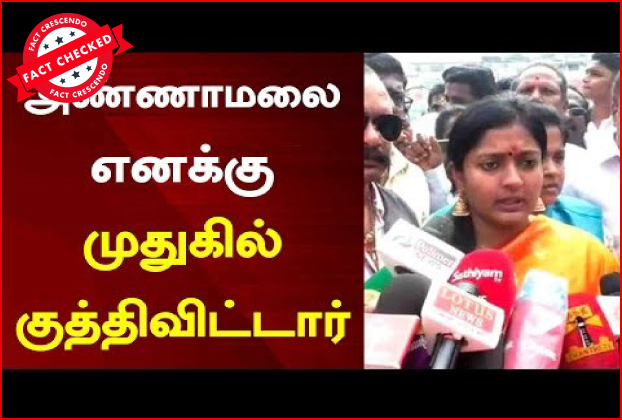

Seema Samridhi Kushwaha, the legal counsel for Nirbhaya rape victim, is featured in the list of ‘world’s 6 most talented women’
Publisher’s rating: FALSE
The review examines a social-media post claiming that Seema Samridhi Kushwaha, who represented the 2012 Delhi gang-rape victim, appeared on a list of the “world’s 6 most talented women.” It reports that she did not appear on such a list and says it found no such list released by a reputed institution or organisation. [S1: “A social media post that claims Seema Samridhi Kushwaha, the legal counsel who fought for Nirbhaya rape victim, is featured in the list of ‘world’s 6 most talented women’ is being widely shared.”; “In fact, there is no such list released by any reputed institution or organisation.”] As support, the review says that information it found about Kushwaha did not mention the claimed recognition, and that it could not find media reports or online evidence of her inclusion. These are the checks described in the review; the excerpt does not identify particular search tools, databases, or institutions queried. [S1: “Information available about her on internet does not mention anything in line with the claim.”; “we could not find any such reports.”] The review distinguishes the viral post’s alleged list from other women’s lists it says are published by organisations such as TIME, BBC, and Forbes. It gives examples including “100 Women of the year” and “The World’s Most Powerful Women,” and says Kushwaha was not featured in those lists either. The excerpt does not provide a date or source for the viral post, or name the purported list’s publisher. [S1: “Every year, organizations like the TIME, BBC, Forbes, etc. release a list like ‘100 Women of the year’, ‘The World’s Most Powerful Women’, etc.”; “However, Seema Samridhi Kushwaha was never featured in such lists.”]

Finance Minister Nirmala Sitharaman commented – “My family buys groceries and other things with Indian rupees, we do not use US dollars. Why should we be concerned about dollar value then?”
Publisher’s rating: FALSE
The claim attributes a specific remark about buying groceries with Indian rupees and not using US dollars to Finance Minister Nirmala Sitharaman. FACTLY’s review says that she did not make the quoted comments and focuses on the image used in posts carrying the claim: it traces that image to her speech in the Lok Sabha on 04 December 2019. The review reports that she did not make the alleged statement during that speech. (S1) To check the attribution, the review says it searched online for evidence that Sitharaman had made the comments and found no relevant sources. It also examined the text of the Lok Sabha debate for 04 December 2019. According to the review, the debate text did not contain the alleged remarks; it notes instead that Sitharaman spoke about not eating much onion that day. (S1) The review further reports that the Press Information Bureau clarified that the Finance Minister had made no such statement. These points address both the alleged remark and the provenance of the accompanying image: the image came from a real parliamentary speech, but the review says the quoted words were not spoken there. (S1)
“Mais um para vcs ficarem atentas. Imposto federal zerado! Mas alguns postos estão cobrando.”
Publisher’s rating: Falso

Photo of Australia’s PM Anthony Albanese with a saffron Hindu scarf during his oath-taking ceremony
Publisher’s rating: MISLEADING
The claim concerns a photo of Anthony Albanese wearing a saffron Hindu scarf, said to show him at his oath-taking ceremony as Australia’s Prime Minister. FACTLY says the photo was not taken at that ceremony and that Albanese did not wear a saffron scarf during it. Instead, the image came from a Hindu Council Australia event in Parramatta, before Albanese became Prime Minister. To identify the photo’s setting, the review reports using Google Reverse Image Search. It says the search found the same photo in an ABC News article, captioned as showing Albanese wearing the scarf at a Hindu Council event in Parramatta earlier that month. The review also reports that Albanese posted similar photos on 6 May 2022, thanking the Hindu Council Australia for inviting him to an event in Parramatta that night. These details place the image at the community event, not at the oath-taking ceremony. The review further distinguishes the photo from the ceremony by noting that visuals of Albanese’s oath-taking ceremony show him without a saffron scarf. It also gives a relevant point of comparison: former Prime Minister Scott Morrison attended a separate, similar Hindu Council Australia event and wore a similar scarf. That comparison does not change the provenance of Albanese’s photo; the review identifies it as a pre-election event image, not a photograph from his swearing-in.
राजस्थान में आयोजित कांग्रेस के चिंतन शिविर में फिल्मी गाने पर नाचते शशि थरूर का वीडियो
Publisher’s rating: FALSE

මහින්ද රාජපක්ෂගේ බයිසිකල් පැදීම සහ හෙලිකොප්ටරෙන් යාම ! (PHOTOS)
Publisher’s rating: Missing Context
The review investigates photographs shared as evidence that former Prime Minister Mahinda Rajapaksa cycled because fuel prices had risen and was using a helicopter for travel during the fuel crisis. It addresses the separate claims about the bicycle, the helicopter, and a photograph of the Netherlands’ ambassador cycling. The publisher’s conclusion is that the posts about Rajapaksa are misleading because they omit the photographs’ original circumstances: “අප විසින් සිදු කරන ලද කරුණු විමසීමේදී තහවුරු වූවේ පසුගිය යහපාලන ආණ්ඩුව සමයේ දී ඉන්ධන මිල වැඩිවූ අවස්ථාවකදී, එයට එරෙහිව මහින්ද රාජපක්ෂ මහතා බයිසිකල් පැද ඇති බවට පළවන සමාජ ජාලා සටහන් නොමග යවන සුලු ඒවා වන බවයි.” For the bicycle image, the review identifies it as showing Rajapaksa and opposition MPs cycling to Parliament in 2017. Their ride was a protest against a temporary fuel shortage, not a protest against a fuel-price increase: “ඔහු ඇතුළු එවකට විපක්ෂ පර්ලිම්නේතු මන්ත්රීවරු පිරිසක් 2017 වාසරේ දී පාර්ලිමේන්තුවට බයිසිකලයෙන් පැමිණියේ කෙටි කලකට ඉන්ධන හිගයක් ඇතිවූ අවස්ථාවක, එයට විරෝධය දැක්වීමටයි.” For the helicopter image, the review says reverse-image searching found the photograph online years earlier, and reports that an Air Force spokesperson identified it as a 28 October 2018 flight from Colombo to Kandy, when Rajapaksa became prime minister of the 52-day government. The article does not establish whether he used an aircraft on the later return journey from Trincomalee; the spokesperson said he was not aware. The review cautions that its finding concerns the circulated photograph, not proof that Rajapaksa never used a helicopter: “අප මෙම ලිපියෙන් කරුණු විමර්ශනය කරනු ලැබුවේ සමාජ මාධ්ය ඔස්සේ සංසරණය වූ ඡායාරූප සම්බන්ධයෙන් පමණකි. හිටපු අගමැති මහින්ද රාජපක්ෂ මහතා මැතක දී භාවිතා කරන ලද හෙලිකොප්ටරයක ඡායාරූපයක් නොවන බවට පමණක් අප මෙමගින් පෙන්වා දී තිබේ.”

Mughal emperor Aurangzeb fought the Chinese and took control of Kailash Manasarovar
Publisher’s rating: FALSE
FACTLY examined a social-media claim that Mughal emperor Aurangzeb fought China and took control of Kailash Manasarovar. It concluded that the review found no evidence for such a campaign. The article describes Aurangzeb’s campaigns against the Ahoms in the northeast, Yusufzai and Sikhs in the northwest, and Marathas in the Deccan; it also notes his annexation of Bijapur in 1685 and Golconda in 1687. It says none of the listed campaigns was against China. The review says it checked an NCERT list of Aurangzeb’s military campaigns, which did not mention China. It also recounts that historians consulted by the Times of India said Aurangzeb had never mounted a military campaign against China or Tibet. FACTLY’s conclusion is that the claim of a war to take control of Kailash Manasarovar is unsupported. The post’s framing also misstates the location, according to the review: it says Kailash Manasarovar is in Tibet, not China. The review therefore challenges both the alleged campaign and the claim that the site was Chinese territory.
Where the data comes from
Fact checks come from Data Commons and link to the organizations that published them.
What you’ll find
Each result links to the original fact check. Open it to read the publisher’s findings, with summaries and supporting sources where available.
Report an error
To report an error, send the page URL and supporting evidence.