PeakMetrics / Fact Checks
Has this been
fact-checked?
Paste a claim or upload an image to find existing fact checks. See what fact-checkers found and read the evidence before you share.
Search fact checks ↓API & integrations ↗Browse by topic
Explore fact checks by subject.
Search fact checks
Search by text or imageLatest fact checks
98,327 published reviews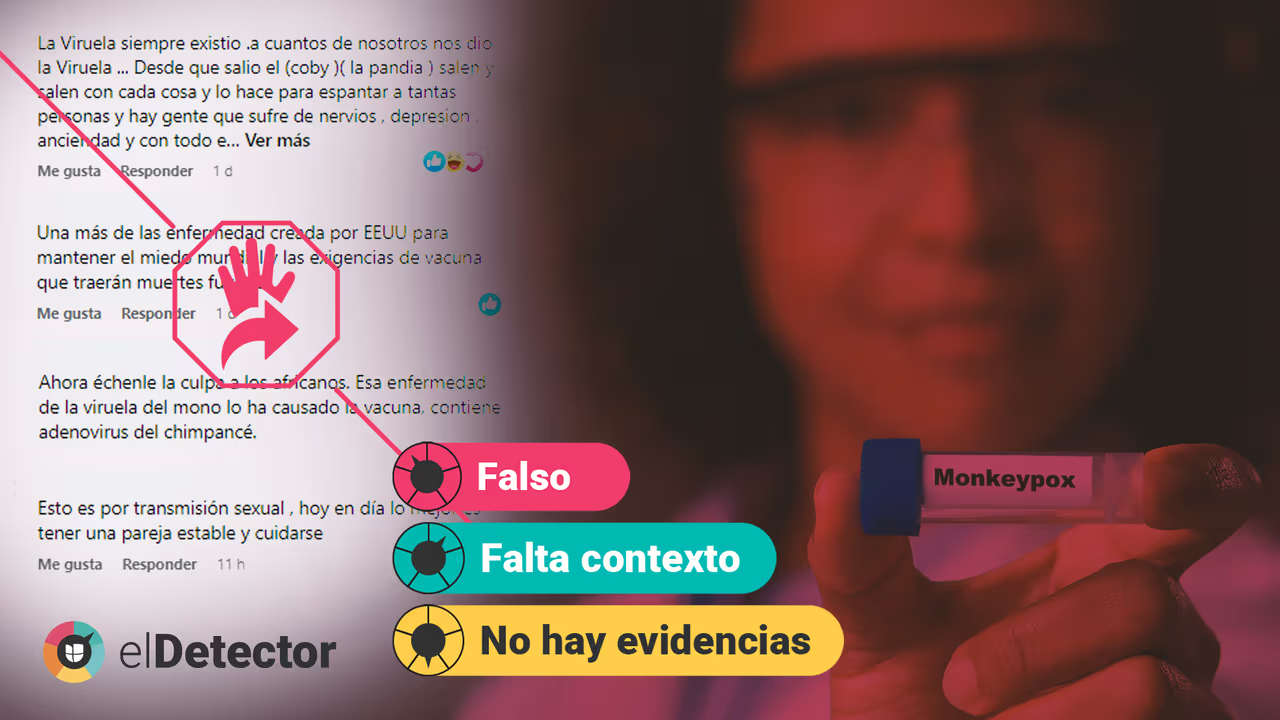
La viruela del mono es una enfermedad nueva o creada
Publisher’s rating: Falso
The claim concerns whether mpox is a newly created disease. Univision’s review treats that assertion as one of several claims circulating in comments on its Facebook coverage after the first reported U.S. case on May 19, 2022. Its conclusion says the disease is naturally occurring, citing analysis of the virus’s composition, and places reported cases in monkeys in 1958 and in humans in 1970. That chronology predates the 2022 outbreak by decades and does not support the claim that the disease was newly created then. The review says it checked the recurring claims using information from the World Health Organization, the U.S. Centers for Disease Control and Prevention and the United Nations, and consulted virologist and vaccine expert José Esparza and infectious-disease specialist Priya Sampathkumar. For the claim at issue, it reports that the virus’s composition had been studied and presents the natural-origin finding alongside the earlier case dates. The excerpt does not name the specific composition study or provide its methods, so those details cannot be assessed from the supplied text.

Apenpokken is niets anders dan gordelroos, en dat is een bijwerking van de coronavaccins.
Publisher’s rating: Apenpokken en gordelroos worden veroorzaakt door twee aparte virussen en hebben niets met elkaar te maken. Er is evenmin enig bewezen verband tussen gordelroos en de coronavaccins. Apenpokken zijn dan ook geen gevolg van de coronavaccins.
Eu mesmo fui o deputado federal mais votado do Brasil
Publisher’s rating: Falso

Fux pediu explicação da PM para as mortes d traficantes na comunidade do RJ, o comandante da PM fez a seguinte colocação: Vista uma roupa da polícia militar, junto com outros ministros do STF, empunhem um fuzil, entrem numa favela do RJ e vcs terão as explicações!
Publisher’s rating: Falso


La viruela del mono es consecuencia de las vacunas contra el covid-19
Publisher’s rating: Falso
The review addresses claims posted in response to news about the first reported U.S. monkeypox case on May 19, 2022. Among them was the specific allegation that monkeypox resulted from COVID-19 vaccines. To assess the claims, El Detector says it checked information from the WHO, CDC and UN and consulted virologist and vaccine expert José Esparza and infectious-disease specialist Priya Sampathkumar.

Video showing Sidhu Moose Wala’s last interview
Publisher’s rating: FALSE
The post claimed that a circulating video showed Sidhu Moose Wala’s last interview. FACTLY identifies the clip as an excerpt from “Dil Diyan Gallan,” a talk show whose website dates the episode to 6 March 2021. That provenance places the footage well before Moose Wala’s death on 29 May 2022, so it cannot be his last interview. The review also points to evidence that he gave interviews much closer to his death. It says interviews were uploaded by On Air and Lok Opinion, and that Amar Ujala interviewed him two days before he was shot dead. Those examples further contradict the claim that the 2021 talk-show clip was his final interview. For its identification of the circulating footage, FACTLY reports using reverse image search on screenshots and finding the full interview on Zee5; it also notes that a portion appeared on Zee Punjabi’s official YouTube channel. The review’s conclusion rests on identifying the clip’s earlier source and date, alongside its account of later interviews.
La viruela del mono es la misma viruela que "siempre existió"
Publisher’s rating: Falso

Claim: youtuber karthik gopinath not revealed as annamalai got a scare in his scam
Publisher’s rating: FALSE

‘బ్రాహ్మణ సమాజాన్ని ద్వేషించే మరియు వేధించే వారిపై ఎవరైనా బ్రాహ్మణులు అట్రాసిటీ కేసు నమోదు చేయవచ్చు’ : సుప్రీంకోర్టు
Publisher’s rating: MISLEADING

අටලුගම දැරිය මරා දැමූ සැකකරු ජවිපේ සමාජිකයෙක් බවට ජාතික පුවත් පතක පළ වූවාද?
Publisher’s rating: Misleading

Claim: This is not the picture of vallalar ramalinga swamigal
Publisher’s rating: FALSE
La viruela del mono se transmite por vía sexual
Publisher’s rating: No hay evidencias / Falta contexto

नेपाल में 29 मई को हुए एयरप्लेन क्रैश की बताकर वायरल हैं तस्वीरें
Publisher’s rating: FALSE

The Geological Survey of India (GSI) has stated that gold reserves of around 222.88 million tonnes including 27.6 tonnes of mineral-rich ore are present in the Jamui district of Bihar
Publisher’s rating: MISLEADING
The claim concerns whether the Geological Survey of India (GSI) said that Jamui district in Bihar held around 222.88 million tonnes of gold reserves, including 27.6 tonnes of mineral-rich ore. The review reports that GSI explicitly disowned that attribution: it said it had not estimated a gold deposit resource in Jamui and that its reports did not contain the claimed combination of figures. The figures have a different, narrower basis. In a December 2021 Lok Sabha reply, Mines Minister Pralhad Joshi said Bihar had 222.885 million tonnes of gold ore containing 37.6 tonnes of gold metal. The reply located Bihar’s gold-ore resource in the Sono area of Jamui and divided it into two UNFC categories. Thus, the reported ore-resource total is not the same as a GSI estimate of gold reserves, and the metal figure in the parliamentary reply is 37.6 tonnes, not 27.6 tonnes. The review adds that similar information about Bihar’s gold-ore resource had been available since at least 2010. That history helps explain how the figures may have circulated, but it does not establish that GSI made the specific statement attributed to it. The review therefore distinguishes a reported state resource estimate from the claimed GSI announcement.

Where the data comes from
Fact checks come from Data Commons and link to the organizations that published them.
What you’ll find
Each result links to the original fact check. Open it to read the publisher’s findings, with summaries and supporting sources where available.
Report an error
To report an error, send the page URL and supporting evidence.