PeakMetrics / Fact Checks
Has this been
fact-checked?
Paste a claim or upload an image to find existing fact checks. See what fact-checkers found and read the evidence before you share.
Search fact checks ↓API & integrations ↗Browse by topic
Explore fact checks by subject.
Search fact checks
Search by text or imageLatest fact checks
98,327 published reviews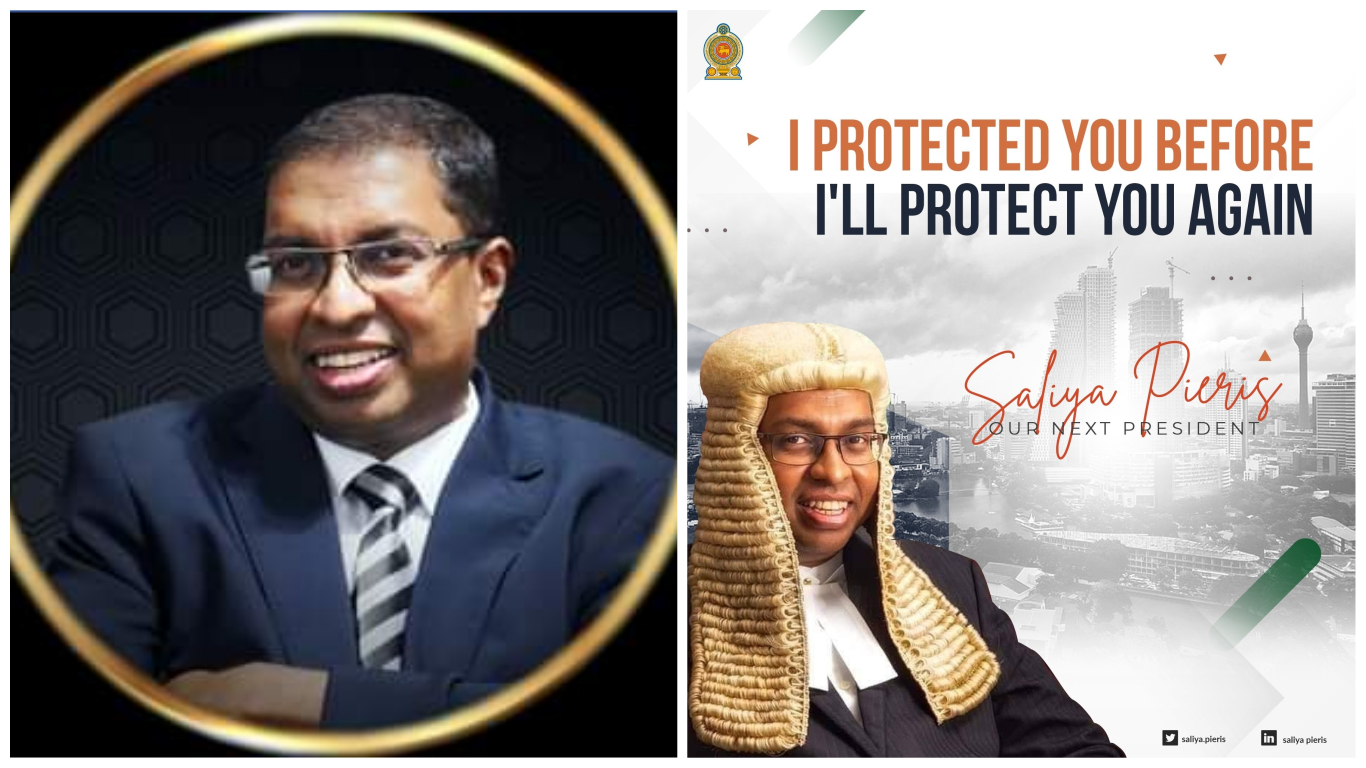
Campaign by Saliya Pieris to become the next president of Sri Lanka!!
Publisher’s rating: False
The review investigates social-media posters attributed to Saliya Pieris, then president of the Bar Association of Sri Lanka (BASL), that presented him as seeking Sri Lanka’s presidency. The posters used political slogans and purported pledges, including calls to “Stand with me.” The article also identified a Facebook page named “Saliya Peiris – Our Next President” as a source of posters that later circulated on WhatsApp. The claim was therefore about an alleged campaign and statements, not simply about Pieris’s public position on peaceful protest. The publisher reports two checks: it searched mainstream media for reports of Pieris making the statements, finding none, and contacted Pieris directly. According to the article, he denied the posts and said he had made no such statements, had no connection to the Facebook page, and had no hope of contesting the presidential election. He distinguished that denial from his support for people’s right to peaceful protest, which he described as a fundamental right. The review also consulted BASL treasurer Rajind Perera. He clarified that the next BASL presidency elections were scheduled for February 2023 and that Pieris could not contest for a third term under the BASL constitution. That detail concerns the leadership of the lawyers’ association, not Sri Lanka’s national presidency; it does not itself establish whether Pieris could run for national office. The article’s conclusion rests on the attribution and candidacy denials reported from Pieris and BASL, alongside the lack of mainstream-media reports it describes.
چقدر از حسابهای توییتر «نامعتبر» هستند؟ نشر اکاذیب
Publisher’s rating: این گزارش، شماره ی جدید از سلسله گزارشهایی است که فکتنامه با عنوان «نشر اکاذیب» منتشر میکند. در این گزارشها، نمونههایی از اخبار مربوط به درستیسنجی و مبارزه با اطلاعات نادرست را که اخیرا در سایتهای درستیسنجی و نشریات معتبر دنیا منتشر شدهاند بررسی و بازخوانی میکنیم.


Claim: misinformation spreading that china made robots performing bharatanatyam
Publisher’s rating: FALSE
The claim concerned a social-media video said to show two Chinese-made, humanlike robots performing Bharatanatyam at Shanghai Disneyland. Posts added details about a five-minute performance, a long wait and a ticket price. The investigation says it examined the video because those claims appeared implausible and because there was no reported evidence of robots operating as realistically as the figures in the footage. These are descriptions of what the posts alleged, not confirmation that the performance happened. [S1]

जो युवक साधु के सात बदसलूकी कर रहा है वह मुस्लिम समुदाय से है।
Publisher’s rating: Partly False

Foto toont twee weerkaarten uit 1986 en 2022 met dezelfde temperaturen, maar de oude heeft groene kleuren en de nieuwe rode/oranje. "Het is om de mensen zich schuldig te laten voelen over de opwarming van de aarde".
Publisher’s rating: De linkse kaart dateer uit de zomer van 2016 en is afkomstig van de Zweedse publieke omroep SVT. De rechtse is afkomstig van een uitzending van Zweedse tv-zender TV4 en dateert uit de zomer van 2021. Niet enkel zijn de data dus fout, de kaarten komen ook van verschillende media die elk een eigen stijl hebben.
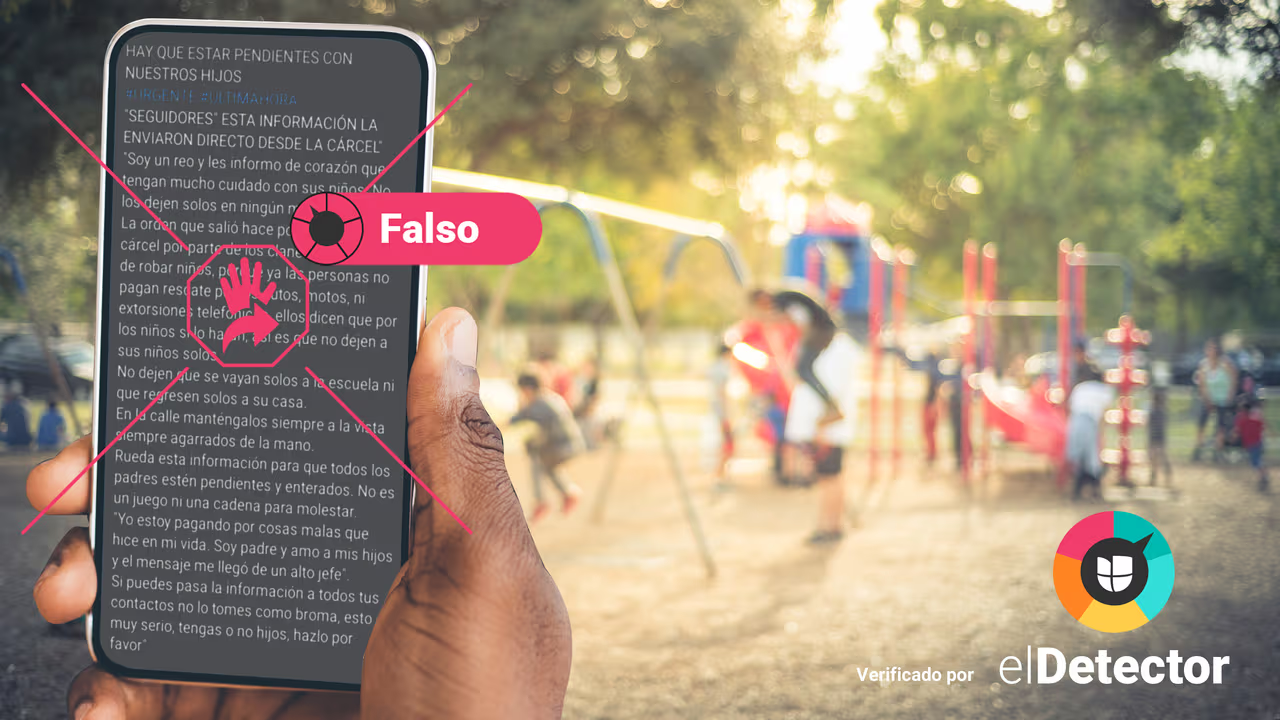
Supuesto reo informa que habrá una ola de secuestros de niños por una “orden” dada por “los clanes mayores” de una prisión
Publisher’s rating: Falso
The claim concerns a widely forwarded warning, attributed to an unnamed prisoner, that children would be abducted under an order from prison “senior clans.” The investigation examined the chain received through elDetector’s WhatsApp chatbot, which warned parents to keep children close and said kidnappers would target children because people no longer paid ransoms for cars, motorcycles, or phone extortion. The article reports that the message circulated in at least 13 Latin American countries, with variations in the prison named in some versions. To trace the chain, the investigators searched Google using terms from the message and searched Facebook; they found evidence of circulation going back to 2015. They compared versions and checked the status of official responses across countries. The article says the same message had been debunked by authorities in eight countries between 2015 and 2022. For the Paraguayan version that prompted the inquiry, Paraguay’s Ministry of Justice press office told elDetector that the information did not circulate among its security agencies. The account also distinguishes countries where authorities had addressed the message from five others—Bolivia, Peru, Guatemala, Colombia, and Chile—where the investigators found no official debunking or reference to it and had asked relevant agencies for information. That qualification matters: the article does not report official confirmation from those five countries. Its conclusion rests on the chain’s recurrence across countries, prior debunkings of the same text, and the Paraguayan ministry’s response, rather than on evidence of a specific planned abduction.

Switzerland became rich and developed because the money in the accounts of one of its private banks which were dormant for 7 years was seized and transferred to the authorities
Publisher’s rating: FALSE
The claim attributes Switzerland’s wealth and development to authorities taking money from a private bank’s accounts after they had been dormant for seven years. The review says that the asserted seven-year seizure does not match the rules it examined: under the Swiss requirements it quotes, the assets must first be without contact for 10 years and then dormant for another 50 years. Only after that 60-year period are they published, and transfer to the federal government is conditional on no beneficiary making a justified request within the specified delay. The review describes checking a 2015 USA Today article and the Swiss “Dormant accounts” website. The USA Today excerpt it cites concerns a published list of accounts dormant for 60 years, with around $45 million in unclaimed assets. The quoted website rules likewise describe publication after a total of 60 years and conditional liquidation and transfer—not confiscation after seven. On this evidence, the post’s seven-year premise is contradicted by the cited account rules. The post also invokes a survey in 2000 supposedly finding that 99.2% of Swiss people wanted seized money used for tourism development. The review says it could not find information supporting that survey. It distinguishes this from a 2016 referendum about a proposed basic income, which it says was rejected and was not about using seized funds. The review also mentions a separate history involving dormant accounts of Jewish people killed in the Holocaust, including a settlement in 1998 and a compensation fund that closed in 2013 after paying out $1.24 billion. It presents that as a distinct issue, not evidence for the post’s seven-year claim.

Генри Киссинджер советовал Зеленскому сдаться
Publisher’s rating: Намеренно созданный фейк

Video of singer Sidhu Moose Wala’s funeral
Publisher’s rating: MISLEADING
The claim concerns a circulating video said to show the funeral of singer Sidhu Moose Wala, who had recently been killed. FACTLY concludes that the video in the post is not from his funeral, while noting that actual footage of crowds at the funeral also exists. The distinction is important: the review challenges the provenance of the particular shared video, not the existence of funeral footage. [S1: “A video is being shared widely on social media with a claim that it shows the funeral of singer Sidhu Moose Wala, who was recently killed.”; “However, there are other actual videos of the crowd at Sidhu Moose Wala’s funeral.”] To investigate, the review says it ran screenshots from the circulating video through Google Reverse Image Search. It reports finding similar videos that had been posted at least seven months earlier and were described as showing the funeral of a soldier; different posts attributed them to different soldiers. On that basis, FACTLY identifies the shared footage as old and unrelated to Moose Wala’s funeral. [S1: “When the screenshots of the video were run through Google Reverse Image Search, many similar videos were found in the search results.”; “Many of those videos were posted at least seven months ago as videos related to the funeral of a soldier (different people claimed them to be the funeral of a different soldier).”; “It is an old video. The video is not related to Sidhu Moose Wala’s funeral.”] The excerpt does not identify the soldier, give a location or date for the older footage, or detail how the actual funeral videos were verified. Its conclusion is limited to the video shared in the claim: it is not related to Moose Wala’s funeral, although the review says separate, actual funeral visuals are available. [S1: “To sum it up, the posted video is not related to the funeral of singer Sidhu Moose Wala.”]
Numa única eleição que foi quatro anos atrás, para a Câmara (...), aumentou em 46% o número de deputadas federais
Publisher’s rating: Verdadeiro, mas...

Utkarsh Dwivedi who bagged fifth rank in Civil Services Examination 2021 was a Corporal in the Indian Air Force
Publisher’s rating: FALSE

Claim: modi not unveiled 14 km underwater tunnel in brahmaputra river
Publisher’s rating: FALSE
Fact Crescendo examined social-media posts claiming that India’s first underwater road-and-rail tunnel had been built beneath the Brahmaputra in Assam, describing it as roughly 14 km long and associating it with Prime Minister Narendra Modi. The review says the post combined photographs of Modi waving with images of transport tunnels, and reports that one version was posted on Facebook on May 30, 2022. The investigators describe using reverse-image search on the photograph of Modi. They identified it as an image connected to the Bhupen Hazarika Bridge, also called the Dhola–Sadiya Bridge. The review says the bridge was inaugurated by Modi in 2017, after its foundation stone was laid in 2011, and measured 9.15 km; it was a bridge, not an underwater tunnel. The review separately identifies the image showing vehicles and a train as a model for Europe’s planned Fehmarn Belt Fixed Link, and another image of a bus and car in a tunnel as a model for a proposed floating bridge in Norway. For the Brahmaputra project itself, the review reports that plans had been discussed, but that the project had not been completed or opened to the public. It says a proposed tunnel’s length had shifted from 14 km to 9.8 km and that the review found no report that construction had started. Its conclusion is that the circulated post presented a planned project and unrelated model images as if a 14 km tunnel had already been built.

Reaction of Delhi IAS officer, who walked their dog at Delhi stadium, after receiving the transfer order
Publisher’s rating: FALSE
The claim concerns a video of an angry woman speaking to someone, circulated as the reaction of Delhi IAS officer Rinku Dugga after she received a transfer order. The review says Dugga and her husband, IAS officer Sanjeev Khirwar, had been transferred following the incident in which they walked their dog at Delhi’s Thyagaraja stadium. It concludes the video does not show Dugga and is unrelated to that transfer. To investigate the clip’s provenance, the review notes that the viral video carries a “Native Media PK” logo. Searching YouTube with relevant keywords led the investigators to a longer video; at 1:53, they heard the woman say the same words as in the viral clip. In that longer video, a media person asks her about Imran Khan’s comments on Mariam Nawaz. The review identifies the woman as unidentified, rather than as Dugga. The review explains that the woman’s remarks referred to a police raid on former Justice Nasira Iqbal, daughter-in-law of Allama Muhammad Iqbal, and describes the clip as originating in Pakistan. It also says it found no reports of Dugga speaking to the media after the transfer. Together, the matching words in the longer video and the distinct Pakistani interview setting contradict the post’s identification of the clip as Dugga’s reaction to her transfer.
Idosos estão fazendo hora extra no planeta, alfineta Bolsonaro. 'Idoso só presta pra gastar na farmácia'
Publisher’s rating: Falso


Klap Will Smith aan Chris Rock is geïnspireerd op een scène uit een oudere film.
Publisher’s rating: Deze bewering is onjuist. De vermeende scène uit een zogenoemde oudere film (het bovenste filmpje in de post) werd op 19 mei 2022 voor het eerst online gezet. Will Smith deelde Chris Rock een klap uit op 27 maart 2022. Het is dus onmogelijk dat Will Smith, Chris Rock en Jada Smith deze specifieke scène hebben nagespeeld.
Where the data comes from
Fact checks come from Data Commons and link to the organizations that published them.
What you’ll find
Each result links to the original fact check. Open it to read the publisher’s findings, with summaries and supporting sources where available.
Report an error
To report an error, send the page URL and supporting evidence.