PeakMetrics / Fact Checks
Has this been
fact-checked?
Paste a claim or upload an image to find existing fact checks. See what fact-checkers found and read the evidence before you share.
Search fact checks ↓API & integrations ↗Browse by topic
Explore fact checks by subject.
Search fact checks
Search by text or imageLatest fact checks
98,327 published reviews
Foto mostra presidente da Colômbia Gustavo Petro com Pablo Escobar
Publisher’s rating: Falso

Claim: time magazine not published this cover picture on modi
Publisher’s rating: FALSE

‘पीएम रामबाण योजना’ च्या अंतर्गत 4,000 रुपये देण्याचा दावा करणारा मेसेज खोटा आहे. शासनातर्फे अशी कुठलीच योजना लागू करण्यात आली नाही आहे.
Publisher’s rating: FALSE
ভারতবর্ষের প্রজাদের প্রতি মাননীয় বৃটিশ রাজের সদয় উপহার হার্ডিঞ্জ ব্রিজ
Publisher’s rating: False
Das Video zeigt den Einsatz einer russischen Rakete in der Ukraine.
Publisher’s rating: Das Video stammt von einem Special-Effects-Künstler. Es zeigt keinen aktuellen Einsatz der Kinschal-Rakete.
President Rodrigo Duterte says his monthly salary ranges from P196,000 to P200,000.
Publisher’s rating: False
Der ukrainische Präsident Selenskyj hat die Verbrennung aller russischsprachiger Bücher in der Ukraine angeordnet.
Publisher’s rating: Die ukrainische Regierung hat ein Importverbot für Schriftwerke aus Russland und Belarus erlassen. Außerdem will sie «russische Propaganda-Literatur» aus den Bibliotheken des Landes entfernen lassen. Für Pläne der Regierung zur Verbrennung aller russischsprachigen Bücher gibt es keinerlei Hinweise.
The claim concerns an alleged order by President Volodymyr Zelenskyy to burn all Russian-language books in Ukraine. The DPA review says the online rumor arose alongside a screenshot referring to the “destruction” of books, but distinguishes that allegation from two government measures concerning more limited categories of printed material. Its account says Parliament voted on June 19, 2022, to prohibit imports of printed works from Russia and Belarus. Separately, on May 5, 2022, Ukraine’s deputy culture minister announced a plan to remove Russian-language “propaganda literature” from libraries. The examples described include texts denying Russia’s war against Ukraine or questioning the country’s territorial integrity; the review explicitly says this did not cover all Russian-language literature. The review reports that the proposed removal of selected library materials did not specify what would happen to them: it says their fate was unclear and that burning was not mentioned. It also states that it found no evidence of an official instruction to burn all Russian-language books. The distinction is central: an import restriction on works from two countries and a proposal targeting defined propaganda material do not establish an order to destroy every book in a language, or an order personally issued by Zelenskyy. The image used to suggest a current book-burning was also not evidence of such an event in 2022. The review traces the photo to an IMGUR page from 2014 titled “Russian Nazis in Crimea”; it notes that one visible book bears the Cyrillic title “History of Ukraine,” which the review says points toward a pro-Russian group as the likely burners. It further reports that British ambassador Melinda Simmons shared the image on May 21, 2022, without noting that it was older. Thus, the image’s earlier provenance and the limited scope of the documented policies do not support the claim of a Zelenskyy order to burn all Russian-language books.

Wegen Steuern und Abgaben an den Staat sind die Benzinpreise im Juni 2022 so hoch.
Publisher’s rating: Gerade durch den Tankrabatt sind die Abgaben an den Staat im Juni 2022 geringer als 2008.

美國以垃圾訊息影響或干預其他國家的輿論
Publisher’s rating: 錯誤訊息
The claim concerned a circulating subtitled clip said to show former U.S. President Barack Obama explaining how the United States could influence or interfere with other countries’ public opinion. The review traced the clip to Obama’s April 21, 2022, speech at Stanford University, at an event on challenges to democracy in the digital information realm. It compared the circulating video with the speech transcript and recordings of the event, locating the excerpt at about 31:11–31:51 of the speech. That excerpt did describe flooding a country’s public sphere with misleading material and eroding people’s trust. But the review found that the viral subtitles changed the meaning of the closing line: Obama said “the game’s won,” not “we’ve won.” The review also noted that he did not refer to “we” or to the United States in the excerpt itself. The surrounding speech supplies the key context. Immediately beforehand, Obama discussed authoritarian regimes and strongmen using social-media platforms against groups they dislike, and autocrats such as Putin using those platforms against democratic countries they consider a threat. He then described how distrust can weaken democratic institutions. The review concluded that the excerpt was about authoritarian actors spreading false information to affect democracies, not the United States using the tactic against other countries. It found that the clip’s mistranslation and removal of context distorted his meaning.
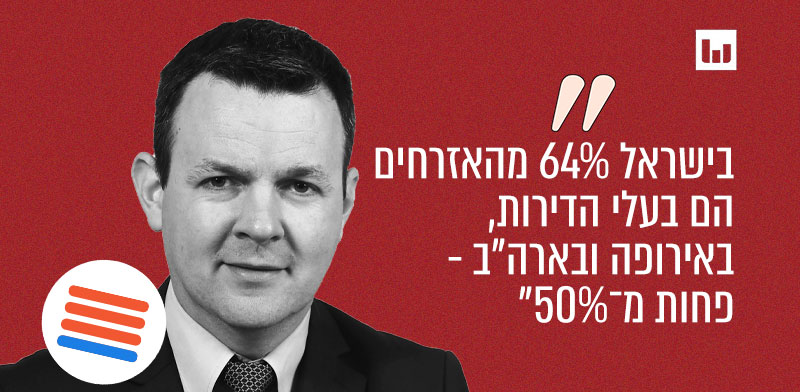
לפי הנתון שאנחנו נחשפנו אליו בכנסת, במדינת ישראל נדמה לי ש-64% הם בעלי הדירות, כשבאירופה זה פחות" מ-50%, ובארה"ב זה פחות מ-50%"
Publisher’s rating: לא נכון ברובו
The claim was made by MK Evgeny Sova in an interview on Kan Bet about homeownership: he said Israel’s rate was about 64%, while rates in Europe and the United States were each below 50%. The review checked the international comparison against published statistics, while noting that Israeli figures were broadly close to the number he gave. It reports that a December 2021 Central Bureau of Statistics release, based on its 2018–2019 long-term survey, found 67% of households lived in a home they owned or that was owned by a relative, compared with 31% renting. The article also cites a separate CBS comparison based on 2018 data, in which 66.5% of Israeli households lived in an owner-occupied home. The international figures contradict the claim that Europe was below 50%. In the CBS comparison, the European Union average was 69.3% of households living in their own home. The review also checked OECD data for 2019, and for some countries 2020: it reports an EU average of 74.7% and an OECD-wide average of 71.1%. These are different datasets and reference periods, but both place the EU figure well above the claimed threshold. For the United States, the review reports an OECD figure of 64.2%—lower than the EU figures, but still above 50%. It says Sova’s office was asked whether he had other data; the response was that he stood by his remarks and directed the reviewers to the CBS. Thus, while the Israeli estimate was close to the cited Israeli household statistics, the article’s cited comparisons do not support his claims about Europe or the United States.

Sen. Sherwin Gatchalian sought scrapping of K to 12 program
Publisher’s rating: FALSE

ගෑස් නොමැති වීම හේතුවෙන් ආදාහනාගාර වැඩ කටයුතු නැවතිලා ද?
Publisher’s rating: Explainer
The investigation examined social-media posts claiming that many crematoriums under local authorities had stopped work because there was no gas. It distinguished a complete or widespread shutdown from interruptions at particular facilities. The review found no recent mainstream news report indicating that crematoriums were entirely out of operation, but inquiries to several local-authority commissioners’ offices confirmed that some facilities were not operating for lack of gas while others continued despite difficulties. The review also sought comment from Upul Rohana, president of the Public Health Inspectors’ Association. He said cremation work was continuing without disruption overall, that crematoriums were receiving sufficient gas, and that authorities had not instructed them to stop. He added that gas had been distributed to most crematoriums. Taken together, these findings do not support the broad claim that crematorium operations had stopped; they do document that some individual facilities faced shortages and interruptions. The review described steps to prioritize gas for essential services amid the shortage. It reported that Prime Minister Ranil Wickremesinghe said gas from a shipment being unloaded on June 13 would be prioritized for hospitals, hotels and crematoriums. Litro chairman Muditha Peiris said gas from the latest shipment was still being supplied to essential users, including crematoriums, on June 19. The evidence therefore presents a qualified picture: some local facilities had difficulties, but the investigation did not find a general halt to cremation services.

Robert Habeck wirbt für ein politisches System wie in China.
Publisher’s rating: Der Video-Schnipsel ist aus dem Zusammenhang gerissen und verkehrt die eigentliche Aussage Habecks in ihr Gegenteil.
The claim arose from a 1-minute-6-second social-media excerpt of a 43-minute conversation between Robert Habeck and author Richard David Precht. The full conversation was broadcast by ZDF on December 17, 2018, and was also available on YouTube. The excerpt was presented as if Habeck’s words endorsed China’s more efficient political system. [S1: “In einem Facebook-Post wird ein 1:06 Minuten dauernder Ausschnitt aus einem insgesamt 43 Minuten langen Gespräch verbreitet, das der Buchautor Richard David Precht mit dem damaligen Co-Bundesvorsitzenden der Grünen, Habeck, führte. Das Gespräch wurde am 17.12.2018 vom ZDF verbreitet und ist auch auf YouTube in voller Länge abrufbar.”] The review explains that the clip’s editing makes Habeck’s “Ja, das wollen wir” appear to refer to the Chinese model. In the full exchange, however, Habeck first asks whether people want to preserve a democratic system based on self-determination and participation, or instead move toward centralized systems. He then describes China’s lack of opposition and public participation, and says the choice must be made on values rather than economic efficiency. [S1: “In dem Video-Ausschnitt wird dann mittels Bild und Ton immer wieder der Eindruck betont, als habe Habeck mit seinem Satz «Ja, das wollen wir» das angeblich effizientere System Chinas gemeint.”] [S1: “Tatsächlich bezieht sich Habeck mit dem «Ja, das wollen wir» auf die erste von ihm aufgeworfene Frage «Will man daran festhalten, dass ein demokratisches System, das im Grunde dem Kern von Selbstbestimmung und auch Beteiligung von Menschen verpflichtet ist, noch eine Chance hat?».”] The decisive omitted context is the sentence immediately after that “yes”: Habeck says that preserving democracy requires keeping pace with technological change and corporate power. The review also points to his remarks elsewhere in the conversation: he says democratic decision-making can lag behind challenges, but rejects giving up on democratic means and says he must believe democracy has a chance. Together, those passages show that the clip’s framing reverses the position conveyed in the longer conversation. [S1: “Das geht unter anderem daraus hervor, dass er an das «Ja, das wollen wir» den - in der entstellten Version weggeschnittenen - Satz anschließt: «Dann müssen wir aber den Wettlauf mit der technischen Entwicklung aufnehmen und auch mit der Macht der Konzerne.»”] [S1: “Wenig später (Minute 11:30) sagt Habeck auf die Frage Precht, welche schnellen und radikalen Schritte denn nun notwendig seien: «Nun ist das (die Politik) ja mein Beruf. Und wenn ich jetzt sagen würde, wir müssen einfach aufgeben und sagen, das ist einfach nicht mehr zu steuern oder jedenfalls nicht mehr mit demokratischen Mitteln, dann kann ich gleich morgen meinen Rücktritt einreichen.”]
Teri mitti song violin cover by Karolina Protsenko
Publisher’s rating: False
Where the data comes from
Fact checks come from Data Commons and link to the organizations that published them.
What you’ll find
Each result links to the original fact check. Open it to read the publisher’s findings, with summaries and supporting sources where available.
Report an error
To report an error, send the page URL and supporting evidence.