PeakMetrics / Fact Checks
Has this been
fact-checked?
Paste a claim or upload an image to find existing fact checks. See what fact-checkers found and read the evidence before you share.
Search fact checks ↓API & integrations ↗Browse by topic
Explore fact checks by subject.
Search fact checks
Search by text or imageLatest fact checks
98,327 published reviews
Claim: misleading being shared on kanimozhi statement regarding sterlite company
Publisher’s rating: FALSE

Image of TIME magazine featuring Narendra Modi with Hitler moustache
Publisher’s rating: FALSE
The claim concerned a purported TIME magazine cover showing Prime Minister Narendra Modi with a Hitler moustache. FACTLY described the image as morphed and reported that no recent TIME issue had Modi on its cover. Its checks included looking at TIME’s latest front cover and consulting the magazine’s online Vault, which archives its published covers. FACTLY said it found no matching image among the latest cover material it checked, and that none of the covers listed for 2022 showed Modi with the moustache. The review also noted a separate, similar-looking artwork depicting Vladimir Putin that had circulated falsely as a TIME cover. That comparison is not evidence about the Modi image by itself; the review’s specific support for its conclusion about the claimed image comes from its checks of TIME’s cover material. FACTLY concluded that the purported Modi cover was not genuine.
হাজার হাজার ঘর-বাড়ি সিলেট-সুনামগঞ্জে নদীর জলে তলিয়ে যাচ্ছে, কিন্তু ঈশ্বরের ঘর (মন্দির) এখনো মাথা উচু করে দাড়িয়ে আছে
Publisher’s rating: False
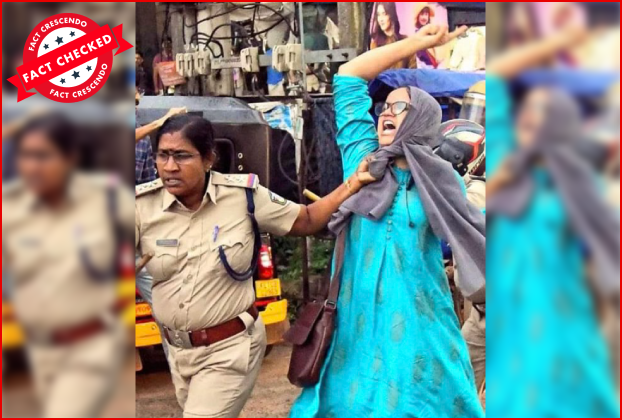
पत्रकार राणा अय्यूब के साथ पुलिस ने गलत बर्ताव किया ।
Publisher’s rating: False
Gesundheitsminister Karl Lauterbach hat bei einer öffentlichen Veranstaltung den Hitler-Gruß gezeigt.
Publisher’s rating: falsch

Claim: misinformation being shared as sangh pariwar attacked foreigners in goa
Publisher’s rating: FALSE

37º aniversário da Emirates. Através do questionário, você terá a chance de obter 1000 REAL.
Publisher’s rating: Falso
La photo de Joe Biden tenant une carte d'instructions est-elle authentique ?
Publisher’s rating: Oui. Elle a été prise le 23.06.2022 par le photographe Drew Angerer lors d'une réunion à la maison blanche.
Полк «Азов» признан на Западе террористической организацией
Publisher’s rating: Намеренно созданный фейк
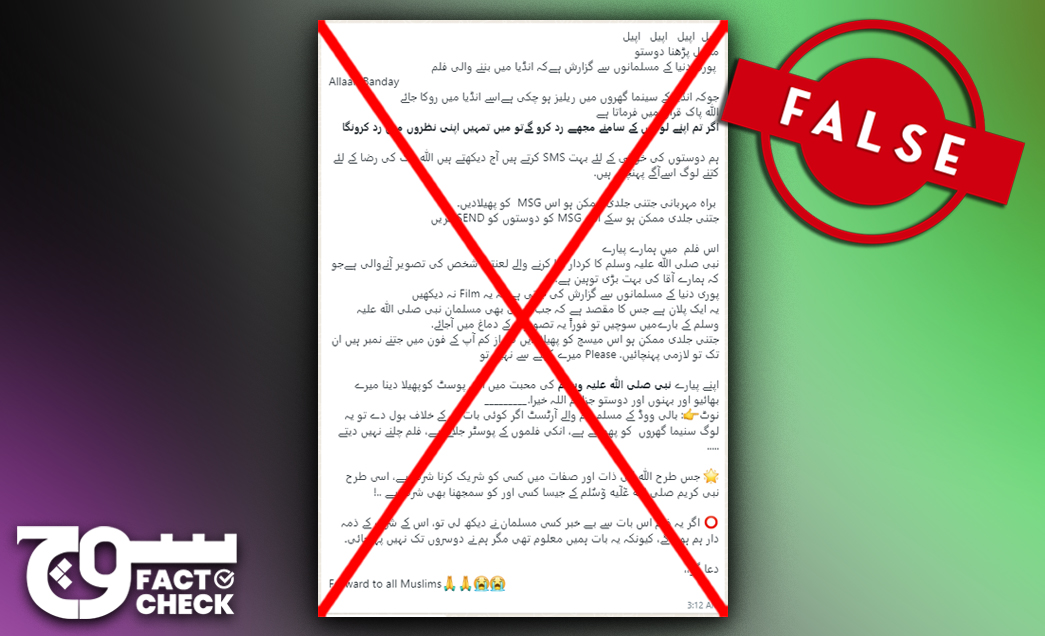
According to a viral WhatsApp message an Indian film called “Allaah Banday” will feature an actor portraying the Prophet Muhammad (PBUH).
Publisher’s rating: False

Deze foto toont vrouwen op het strand in Engeland.
Publisher’s rating: Het beeld komt niet uit Engeland, maar Marokko en is bovendien al in 1999 gemaakt. Het is een in scène gezet filmbeeld uit het kunstproject Rapture van de Iraanse kunstenares Shirin Neshat.
The image circulated online in June 2022 with the caption “Meanwhile in England,” prompting indignant reactions. The investigation found that the beach was not in England: the image showed a staged scene in Morocco, made in 1999 as part of Iranian artist Shirin Neshat’s Rapture project. Thus, the post misidentified both the location and the nature of the scene. [S1: “'Ondertussen in #Engeland (Geen grap)' is de tekst die in juni 2022 online rondgaat bij een foto van gesluierde vrouwen op het strand. Dat heeft verontwaardigde reacties tot gevolg.”; “Het beeld komt niet uit Engeland, maar Marokko en is bovendien al in 1999 gemaakt. Het is een in scène gezet filmbeeld uit het kunstproject Rapture van de Iraanse kunstenares Shirin Neshat.”] The review describes a reverse-image search as its first step. Google Lens led to pages giving the image’s context, including the Dutch website of art collector Han Nefkens, where the investigation identified the image as part of Neshat’s Rapture series and dated it to 1999. The article then says it consulted a Whitney Museum description to establish the beach location as Morocco. [S1: “Door de afbeelding met een Reverse Image Search te zoeken, verschijnt deze via Google Lens op websites die de werkelijke context geven, bijvoorbeeld op de Nederlandse website van kunstverzamelaar Han Nefkens. Wat blijkt: de foto is niet recent gemaakt, maar in 1999. Het is onderdeel van de Rapture series van kunstenares Shirin Neshat.”; “Het gaat hier niet om Engeland, maar Marokko, zo blijkt uit een beschrijving van het Amerikaanse Whitney Museum.”] The article places the photograph within a larger work made up of two video projections, played simultaneously, which it describes as showing differences between men and women in Islamic culture. It says the women in the video participated in the art project, so the beach scene was staged for artistic purposes rather than being a spontaneous snapshot of events in England. [S1: “Het is een foto die uit een groter geheel van twee videoprojecties komt. De twee films die tegelijk worden afgespeeld, laten het verschil zien tussen mannen en vrouwen in de islamitische cultuur.”; “De vrouwen op de video deden mee aan het kunstproject. Dit is dus geen spontaan beeld, maar in scène gezet om artistieke redenen.”]

కొత్తగా స్మార్ట్ వాచ్ల ద్వారా మన ఫాస్ట్ట్యాగ్ ఎకౌంటు నుండి డబ్బులు దోచుకునే స్కామ్ జరుగుతుంది
Publisher’s rating: FALSE

Interpol descobre quadro de Franky Schayffyr roubado por Lula do Palácio do Planalto
Publisher’s rating: Falso
Die Teilnehmer des Weltwirtschaftsforums 2022 in Davos sind mit 1500 Privatjets zur Konferenz angereist.
Publisher’s rating: missing context
असम में आई बाढ़ में सड़क पर तैरते मगरमच्छ का है ये वीडियो
Publisher’s rating: FALSE
Im Büro des Roten Kreuzes in Mariupol wurden Listen von Kindern gefunden, die auf Organhandel hinweisen könnten.
Publisher’s rating: Der Vorwurf ist nicht haltbar. Dem Video, auf dem die Behauptung basiert, sind keine konkreten Beweise zu entnehmen, Krankenakten von ukrainischen Kindern sind nicht zu erkennen. Das Rote Kreuz dementiert, Organhandel zu betreiben.
The allegation concerned the International Committee of the Red Cross (ICRC) office in Mariupol. A post said that, after Russian forces took the city, investigators found records of children documenting their organs. The review traces the allegation to a Facebook article based on a Telegram video, and describes the post as claiming that the documents had been found in the aid organization’s office. The video, rather than identified records or independently described documents, was the evidence examined. In the footage, men search disordered office rooms and speak Russian. The review says many scenes are blurry and parts of the conversation are difficult to understand. Although the men refer to children’s medical records, the review reports that they do not mention organs; during that discussion, nothing visible establishes that the alleged lists exist. The video therefore does not substantiate the specific claim that records documenting children’s organs were found. The review also reports that the ICRC had responded to the allegations, contrary to a claim in a Swiss article that it had made no comment. The organization denied involvement in organ trafficking and said it neither possessed children’s medical records nor had collected such records. It identified the information shown in the video as publicly available material used to explain dangerous and explosive objects to civilians. These details offer an alternative account of what the footage shows, while the review’s examination of the footage found no concrete evidence for the alleged lists.
Where the data comes from
Fact checks come from Data Commons and link to the organizations that published them.
What you’ll find
Each result links to the original fact check. Open it to read the publisher’s findings, with summaries and supporting sources where available.
Report an error
To report an error, send the page URL and supporting evidence.