PeakMetrics / Fact Checks
Has this been
fact-checked?
Paste a claim or upload an image to find existing fact checks. See what fact-checkers found and read the evidence before you share.
Search fact checks ↓API & integrations ↗Browse by topic
Explore fact checks by subject.
Search fact checks
Search by text or imageLatest fact checks
98,307 published reviews

महिला को नशीली दवाएं देकर उसके साथ रेप करने की कोशिश करते मौलवी का वीडियो
Publisher’s rating: FALSE
Candidatos de Roraima poderiam ser beneficiados com votos de venezuelanos
Publisher’s rating: ENGANOSO

afirmação de que pode-se usar camisa de algum candidato ou que remeta a um partido no dia das eleições deste ano.
Publisher’s rating: Verdadeiro

Hier spricht ein Abgeordneter der Grünen.
Publisher’s rating: Der angebliche Grünen-Abgeordnete ist tatsächlich ein Bundestagsabgeordneter der AfD. Das Video zeigt also nicht, was behauptet wird.
The claim attached to the video identifies the speaker as a Green Party member of the Bundestag. The dpa review says the clip shows a speech by Thomas Ehrhorn at the Bundestag on 15 May 2020, but that Ehrhorn belongs to the AfD, not the Greens. It reports that his party affiliation and Bundestag membership could be checked against the Bundestag’s official biography: the review states that “Ein Blick auf die offizielle Biografie des Bundestages erlaubt keinen Zweifel hinsichtlich seiner Identität.” The review also checked the speech’s parliamentary record. It says Ehrhorn’s remarks can be read in the verbatim record of the 161st sitting of the 19th legislative period, beginning on page 20022. In the debate about a new traffic-fines catalogue, Ehrhorn described what he presented as green policy, including a threat to motorists. The words in the clip therefore do not establish that the speaker is a Green politician; the review identifies them as Ehrhorn’s portrayal of what green policy would mean. The post’s attribution also named “Thomas Ehrhorn (Grüne),” but the review says that attribution was false. It reports that a version of the video had circulated on Facebook since spring 2021 and later appeared in a post in Luxembourg. The underlying footage is described as an authentic excerpt of Ehrhorn’s Bundestag speech; the misleading element was the accompanying identification of him as a Green member.

ទំព័រហ្វេសប៊ុកមួយ បានបង្ហោះចំនួន ៣សន្លឹក ដែលបានបង្ហាញនូវទិដ្ឋភាពនៃការជន់លិចផ្ទះសម្បែង និងហេដ្ឋារចនាសម្ព័ន្ធផ្លូវផងដែរ។ រូបថតខាងលើនេះ ត្រូវបានភ្ជាប់ជាមួយនឹងការអះអាងថា ជាទិដ្ឋភាពទឹកជំនន់ប្រទេសថៃនាពេលប៉ុន្មានថ្ងៃចុងក្រោយនេះ។
Publisher’s rating: Missing Context
(...) ao contrário do estado [do Rio], que em todos os anos, as notas [do Ideb] andaram para trás
Publisher’s rating: Falso
Обладатели карты поляка не хотят получать польское гражданство
Publisher’s rating: Намеренно созданный фейк

Das Video zeigt aktuelle Flüchtlingsströme im Burgenland.
Publisher’s rating: Das Video stammt aus dem Jahr 2015. Die aktuelle Flüchtlingssituation an der Ostgrenze ist zudem nicht mit der Situation vor sieben Jahren vergleichbar.
The claim concerned a social-media video presented as showing current refugee flows in Burgenland, near the Hungarian border, in September 2022. The review distinguishes the apparently recent recording of a screen from the older footage being shown: the commentary mentions the Klimabonus debate, which took place in August and September 2022, but the video of the crowd is from 2015. To identify the footage, the review compares visible details with a video posted on Facebook in September 2015. It reports that the groups of people, their clothing and a passing police car match, while the older video has no voice-over. These matching details support the conclusion that the circulating clip reused the 2015 footage rather than documenting current events. The review says that the FPÖ and former FPÖ vice-chancellor Heinz-Christian Strache shared the video in September 2022 with a false indication that it showed current events. It also reports that FPÖ leader Herbert Kickl acknowledged the video was not current and that it had been deleted from the FPÖ TV YouTube channel, although an archived version remained. The review adds that the scale of arrivals in 2015 was not comparable to the situation at Austria’s eastern border in 2022: thousands arrived per day in 2015, many in Burgenland, while asylum-application totals alone do not represent the same measure of arrivals.

Brand op goederentrein met (zeer brandbare) elektrische auto's in Etten-Leur. 'Fijn die elektrische auto's'.
Publisher’s rating: De brand ontstond door een defect in de bovenleiding die op de trein terechtkwam. Het ging ook om hybride auto's die uitbrandden, niet om auto's die enkel op batterij rijden.
The claim refers to the fire involving a car-carrying freight train in Etten-Leur, where online posts blamed the transported electric cars. The review says the fire happened on the railway and describes the allegation as being that “de elektrische auto's die vervoerd werden op de trein” caused it. Its account instead identifies a railway fault as the cause: ProRail reported that a defective overhead wire broke off and landed on the freight train. The investigation also checked what kind of vehicles were involved. A spokesperson for the Safety Region of Midden en West-Brabant told dpa that they were hybrids, not fully electric cars. The review notes that the train mainly carried Ford Puma models, which it describes as mild hybrids with a 48-volt battery. Thus, describing the burned cars simply as electric cars omits a distinction the investigation considered important. The review reports that 30 cars burned completely and 60 others were heavily damaged, and that firefighting took two hours. It also cites an NIPV spokesperson explaining that mild-hybrid cars have smaller battery packs and are quicker to extinguish than fully electric vehicles. For this incident, the spokesperson said the small packs did not make the fire more severe. The review therefore distinguishes both the cause of the fire and the vehicle type from the online account.

यह वीडियो कांग्रेस के भारत जोड़ो यात्रा का है।
Publisher’s rating: Missing Context
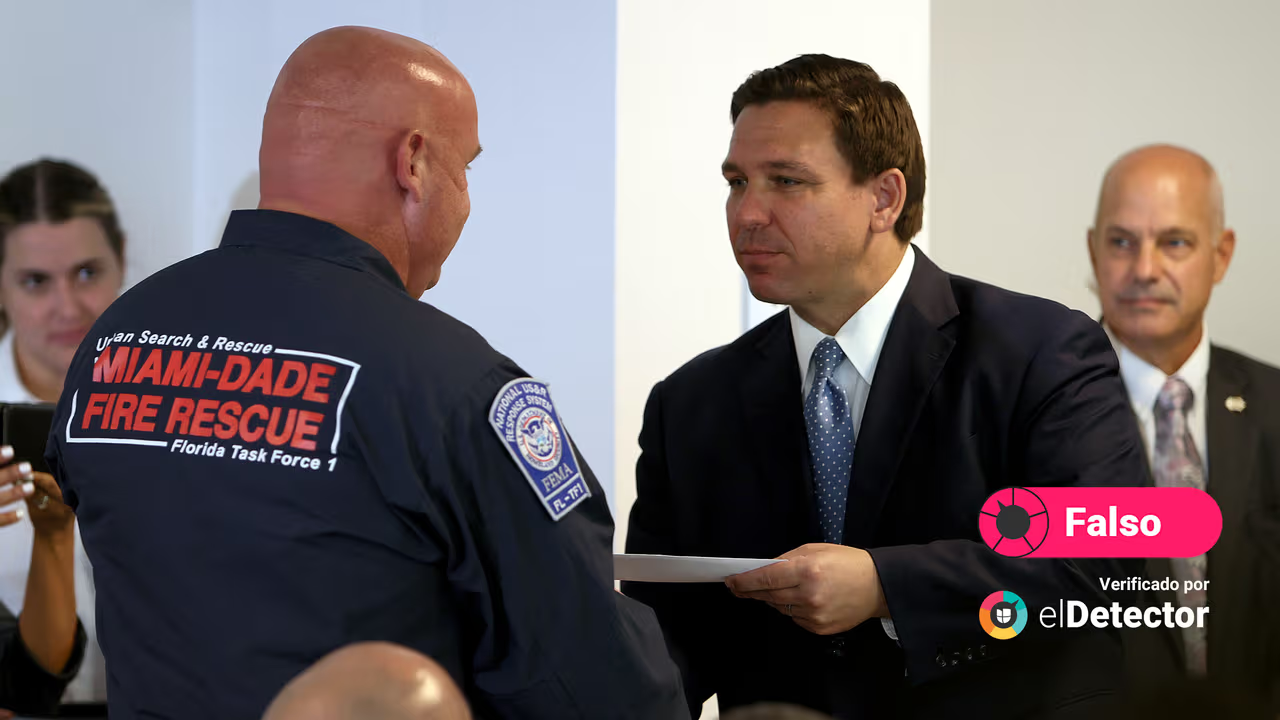
“El gobernador de Florida, Ron DeSantis, fue a Jacksonville el lunes para entregar pagos de bonificación de $1,000 a todos los socorristas del estado gracias al superávit presupuestario"
Publisher’s rating: Falso
The claim said that Ron DeSantis went to Jacksonville on Monday to distribute $1,000 bonus payments to first responders across Florida because the state had a budget surplus. The review reports that DeSantis visited Jacksonville on September 12 and spoke about distributing checks to local first responders who had been on the front line during the COVID-19 pandemic. His remarks connected Florida’s budget surplus with the state’s ability to do things, but that connection does not establish that surplus funds paid for these bonuses. To identify the funding source, the review examined the Florida budget law that authorized the payments. It says HB 5001, the state budget for fiscal year 2022–2023, was ratified by DeSantis on June 2. Section 197 designated $125 million for one-time recognition payments of up to $1,000, after taxes, for each qualifying local-government first responder. The review then points to the section’s funding condition: payments depended on Florida receiving the second installment of federal State and Local Fiscal Recovery Funds under Public Law 117-2, the American Rescue Plan Act. That statutory funding provision is the key evidence against the claim’s explanation of why the bonuses were paid. The review says the budget barred spending more than the federal government sent for this purpose and provided for proportional distribution if federal funds were insufficient. It therefore concludes that the payments were financed through federal American Rescue Plan funds, not thanks to the state surplus. The surplus itself was real: the review reports DeSantis announced a historic $21.8 billion surplus on July 7. The misleading element is attributing the bonuses to that surplus, not the existence of the surplus or the bonus payments.
Where the data comes from
Fact checks come from Data Commons and link to the organizations that published them.
What you’ll find
Each result links to the original fact check. Open it to read the publisher’s findings, with summaries and supporting sources where available.
Report an error
To report an error, send the page URL and supporting evidence.