PeakMetrics / Fact Checks
Has this been
fact-checked?
Paste a claim or upload an image to find existing fact checks. See what fact-checkers found and read the evidence before you share.
Search fact checks ↓API & integrations ↗Browse by topic
Explore fact checks by subject.
Search fact checks
Search by text or imageLatest fact checks
98,284 published reviews
CHP Genel Sekreteri Selin Sayek Böke’nin “Hristiyan kimliğimle gurur duyuyorum” dediği iddiası
Publisher’s rating: Yanlış

Cory Aquino discontinued Imelda Marcos' air pollution monitors
Publisher’s rating: FALSE

Video of five women fighting with each other over a boyfriend at Sonepur mela, Bihar
Publisher’s rating: FALSE
The review examines a video circulated as showing five women fighting over a boyfriend at Sonepur Mela in Bihar. It reports that the same footage was available online before the 2022 fair began, and that earlier news reports described a different incident: a clash between two groups of transgender people at a Dussehra fair in Ludhiana, Punjab. The review says those reports attributed the dispute to an argument over the distribution of an area, not a boyfriend.

තිලිනි ෂැල්වින් සිදු කළ ප්රකාශ බවට හුවමාරු වන නොමඟ යවන සුළු හා ව්යාජ සටහන් පෙළක් !
Publisher’s rating: Misleading
The review concerns posts circulating amid debate in Sri Lanka over teachers wearing alternatives to saris at school. It says the posts attributed provocative remarks to teacher Thilini Shalwin, including a threat to bring young people to schools and campaign to remove teachers’ saris. The investigation concludes that the circulated posts misrepresented her statements. The article explains that Shalwin had publicly supported comfortable clothing as an alternative, citing social, economic and cultural difficulties: “වර්තමාන සමාජ, ආර්ථික, සංස්කෘතික ගැටලු රැසකට විකල්පයක් ලෙස ගුරුවරියන් වන ඔවුන් සාරිය වෙනුවට පහසු ඇඳුමකින් පාසලට පැමිණෙන බවයි.”

Cardinal Luis Antonio Tagle was removed by Pope Francis from Caritas Internationalis for misusing church money
Publisher’s rating: Misleading
Lula confirma criação da guarda nacional o maior exército vermelho da América Latina”
Publisher’s rating: Falso

A mixture of garlic, turmeric, ginger and clove can help women to conceive
Publisher’s rating: FALSE

Video of a fire accident at a 2022 FIFA World Cup stadium in Qatar
Publisher’s rating: FALSE
The claim concerned a video showing people setting off firecrackers in a football stadium, which was shared as footage of a fire breaking out at a Qatar stadium during the 2022 FIFA World Cup. FACTLY reports that it investigated the video’s origin and compared its imagery with older reports and images.
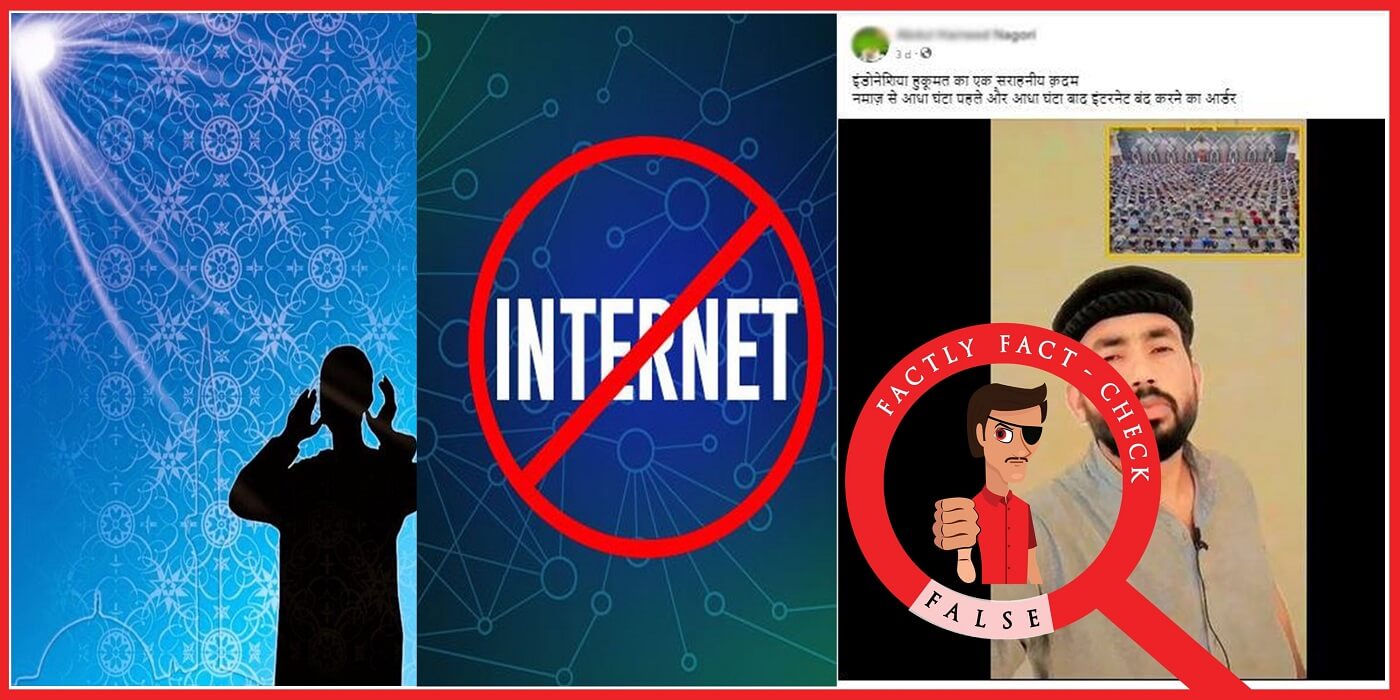
Indonesian government ordered a shutdown of internet services before and after 30 minutes of Azaan
Publisher’s rating: FALSE
The claim concerned a social-media video alleging that Indonesia had ordered internet service cut off before and after the Azaan nationwide. The post reportedly linked the alleged order to a survey finding that more than 40 per cent of people were not attending daily mosque prayers. The review’s finding was that no such order had been issued: it says the Ministry of Religious Affairs did not announce guidelines for internet shutdowns around the call to prayer. [S1: “A video is being shared on social media claiming that the Indonesian government had recently issued guidelines to shut down internet services before and after 30 minutes of Azaan across the nation.”; “The Indonesian government did not issue any such guidelines ordering the shutdown of internet services before and after the 30 minutes of Azaan.”] The review describes checking the Ministry of Religious Affairs’ website and its official Twitter, Facebook and Instagram accounts, where it found no announcement of the alleged guidelines. It also reports finding no news reports about such an order. These are the investigation’s stated checks; the excerpt does not provide a separate survey or technical record of internet-service availability. [S1: “we could not find any such announcement on the Indonesian Ministry of Religious Affairs website. The Indonesian Ministry of Religious Affairs did not announce such guidelines on its official Twitter, Facebook and Instagram handles.”; “But we could not find a single news report about such guidelines.”] The review distinguishes the allegation from a real but different government action: in February 2022, the ministry issued a circular regulating loudspeaker use in mosques and other prayer halls. It says that circular did not order internet restrictions. The excerpt also notes that Indonesia had shut down internet services during past protests, but presents those shutdowns as unrelated to the Azaan allegation. [S1: “In February 2022, Indonesia’s Ministry of Religious Affairs issued a circular regulating the use of loudspeakers in Mosques and prayer halls.”; “Neither in these guidelines circular nor in any of the other circulars, the Indonesian government issued orders to curb internet services before Azaan.”; “The Indonesian government shut down internet services multiple times in the past to curb misinformation during the protests in the country, but they did not issue any such orders of internet shutdown for Azaan.”]
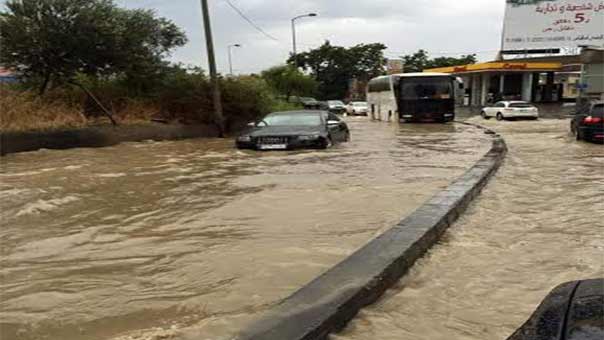
هل تنظيف مجاري المياه والطرقات استعداداً للأمطار من مسؤولية وزارة الأشغال فقط؟
Publisher’s rating: غير صحيح
The review examines whether Lebanon’s Ministry of Public Works and Transport alone is responsible for cleaning roads and storm-water channels before winter rains. It reports that, starting in early October 2022, Minister Ali Hamieh launched preparatory work that included expanding river channels and cleaning storm-water drains on highways in Jounieh, Khaldeh and Antelias. Despite this work, heavy rain again caused flooding and left motorists stranded. The article therefore distinguishes the ministry’s preparation from the wider responsibilities involved in preventing flooding. To describe the division of duties, the review quotes the ministry’s director general for roads and buildings, Tanios Boulos: the ministry follows the condition of main roads, including highways, while connecting roads and roads within local areas fall to municipalities. The article says responsibility is shared among state bodies, municipalities, companies and residents. It also reports the ministry spokesperson’s account that ministry workers clean roads, while other parties have responsibilities too. The review attributes recurring flooding to several contributing factors, rather than cleaning by one ministry alone: waste collection companies’ failure to remove rubbish in time can allow it to block drains; intense, localized rainfall can overwhelm drainage capacity; and housing development without accompanying drainage networks, alongside the loss of green spaces, can worsen runoff. Boulos describes rainfall of 20–30 millimetres in 10 minutes to a quarter-hour in one area while other areas received none, and cites flooding in Jounieh about a month before the report. The conclusion is qualified: the ministry cleans main roads within its available means, but that work is insufficient without other responsible parties fulfilling their duties.
If only “chunavi Hindu” Rahul Gandhi knew that aarti is done clockwise and there is a scientific reason for it (earth moves in clockwise direction and hence environmental frequencies are in sync with movement), he would not be making a spectacle of himself in public like this…
Publisher’s rating: Fake

Staring at a woman for more than 14 seconds is a serious crime and can lead to jail under sections 294 and 509 of IPC
Publisher’s rating: MISLEADING
FACTLY investigated a social-media post attributed to the National Crime Investigation Bureau (NCIB), which asserted that staring at a woman for over 14 seconds is a serious crime punishable under IPC sections 294 and 509. The review reports that it searched online using relevant keywords, identified the tweet as an NCIB post, and examined the text of those two IPC sections. Its central finding is that neither section specifies a 14-second threshold, so the post’s fixed-duration rule is unsupported by the provisions described in the review. The review explains that section 294 concerns obscene acts or obscene songs or words in public places that cause annoyance. It describes section 509 as addressing words, gestures, acts or intrusions intended to insult a woman’s modesty. These provisions may be relevant to conduct involving a stare when the required circumstances are present, but the review does not say that looking for a particular length of time alone automatically satisfies them. It also reports that section 354D may apply to staring with explicit sexual intent bordering on voyeurism or stalking, and says sections 354 and its subsections contain no minimum duration for when staring becomes an offence. The review therefore distinguishes the absence of a special “14-second rule” from the possibility that conduct involving staring could be offensive or actionable in context. It adds that a woman need not wait 14 seconds to decide that someone’s presence makes her uncomfortable. The evidence presented supports rejecting the post’s categorical claim about a fixed time limit; it does not establish that every stare is lawful or unlawful regardless of intent and circumstances.


Where the data comes from
Fact checks come from Data Commons and link to the organizations that published them.
What you’ll find
Each result links to the original fact check. Open it to read the publisher’s findings, with summaries and supporting sources where available.
Report an error
To report an error, send the page URL and supporting evidence.