PeakMetrics / Fact Checks
Has this been
fact-checked?
Paste a claim or upload an image to find existing fact checks. See what fact-checkers found and read the evidence before you share.
Search fact checks ↓API & integrations ↗Browse by topic
Explore fact checks by subject.
Search fact checks
Search by text or imageLatest fact checks
98,269 published reviews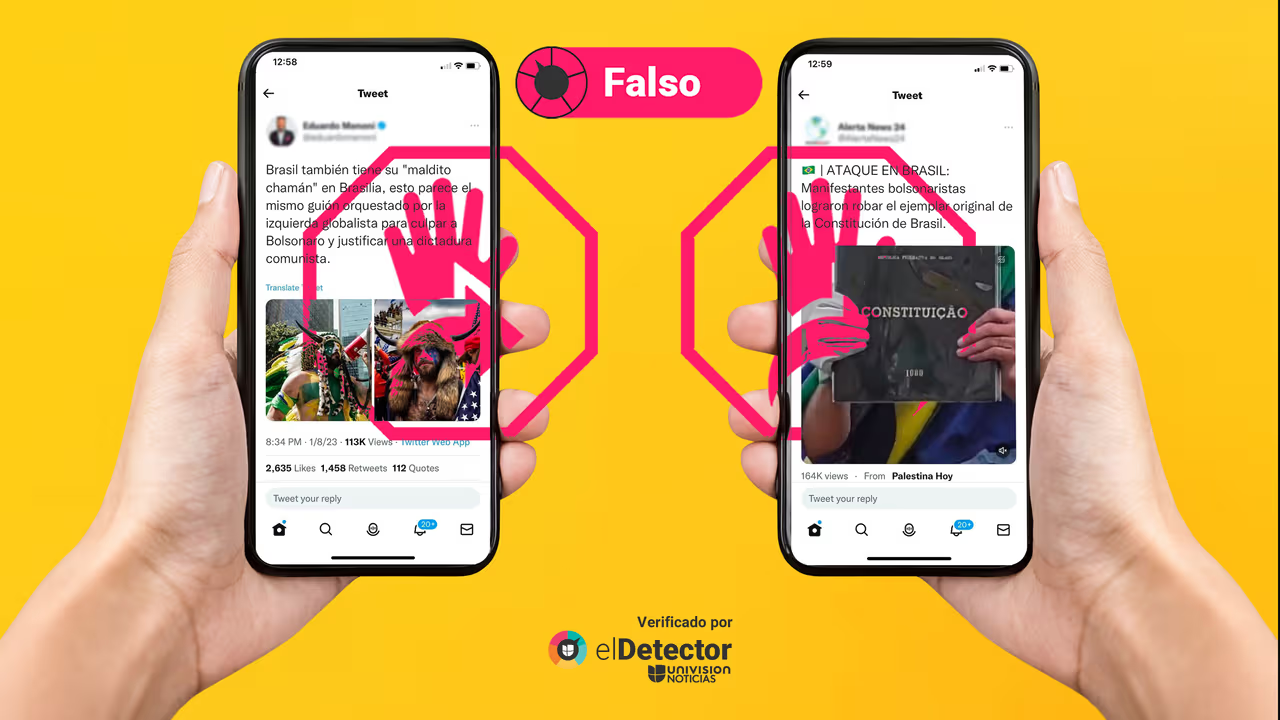
Partidarios del expresidente Jair Bolsonaro que asaltaron edificios de poderes públicos de Brasil se robaron el original de la Constitución del país.
Publisher’s rating: Falso

Shark Tank India’s Judge Vineeta Singh played the role of Raju’s Mother in ‘3 Idiots’ movie
Publisher’s rating: FALSE
The claim concerns the identity of the actor who played Mrs. Rastogi, Raju’s mother, in ‘3 Idiots’. FACTLY says it checked the film’s end credits and IMDb, and identifies actress Amardeep Jha as the performer. Its account therefore contradicts the post’s attribution of the role to Vineeta Singh: “As per the end credits of the movie and IMDb, Raju’s Mother character (Mrs. Rastogi) was played by actress Amardeep Jha, 62.” The review also distinguishes Singh’s response to the claim from actually appearing in the film. It reports that she recreated a scene in a meme video after a similar post circulated in 2022, and quotes her message about the altered image: “Vineeta recreated the scene of ‘rising vegetable prices’ from 3 Idiots and tweeted, ‘All is not well! Stop with the Photoshopping’”. That episode helps explain how an image or post could associate her with the film, but the review does not treat it as evidence that she played the role. FACTLY further says that Singh had not acted in the movie and describes her work at the time by reference to her LinkedIn profile: “Vineeta Singh has not acted in this movie. As per Vineeta’s LinkedIn profile, at that time, she was working as a director for a private company.” The role attribution is supported by the review’s account of the end credits and IMDb; the meme recreation is presented as the context for the misleading association, not as a film performance.
OLHA AI UM DOS INFILTRADOS NA ALVORADA FINGINDO SER PATRIOTA (…)
Publisher’s rating: Falso
OLHA AI UM DOS INFILTRADOS NA ALVORADA FINGINDO SER PATRIOTA (…)
Publisher’s rating: Falso
Grant Shapps was the only politician with Virgin Orbit chief executive Dan Hart and a colleague while standing in front of the LauncherOne vehicle at the spaceport at Newquay Airport in Cornwall.
Publisher’s rating: False: This meeting did not happen as depicted in the image. The then-Prime Minister Boris Johnson was stood between Mr Hart and Mr Shapps, as shown in this image on the official Number 10 Flickr account which was taken on June 9, 2021.


वीडियो में दिख रहा शख्स मुस्लिम धर्म का है जो हिंदू देवी-देवताओं का अपमान कर रहा है।
Publisher’s rating: False
Sandro Marcos said Filipinos who complain over “small matters” such as flight delays are “entitled"
Publisher’s rating: Satire
“ஆளுநர் உரையில் கூடுதல் வார்த்தை” – ஆளுநர் மாளிகை தரப்பு விளக்கம்.
Publisher’s rating: Fake

Visuals of a recent incident where the Taliban executed a captive Pakistani soldier
Publisher’s rating: MISLEADING
The claim concerned a video shared as showing a recent Taliban execution of a Pakistani soldier captured in Afghanistan. FACTLY’s investigation concluded that the video was old: it said the footage dated to 2015 and reportedly showed the Pakistani Taliban executing an ISI officer, not a recent execution as the post claimed. The review identifies the victim as Bashir Ahmad Khan, described in the cited reporting as having served in an army air-defence unit before being recruited by Pakistan’s military intelligence agency, the ISI. [S1]

නාමල් වෙනුවට අනුරගේ රුව යෙදු පාසල් බෑග් ඡායාරුප සංස්කරණයක් !
Publisher’s rating: Altered
The review examined social-media posts alleging that Anura Kumara Dissanayake had given a child a school bag bearing his own image. It reports that the picture circulated during a period of electoral activity and was used to accuse him of using the child for political purposes. The investigation says it sought the photograph’s original background rather than relying only on the apparent differences in the face: it used reverse-image and keyword searches to find earlier images and information about the bag distribution. The decisive comparison was with a photograph from 2018. According to the review, Namal Rajapaksa had distributed school bags bearing his image to children in parts of Hambantota District. It also points to photographs posted in July 2018 by Lalith Wanigasekara, then chairman of the Tangalle Pradeshiya Sabha, showing a bag-distribution occasion, and to a circulating image of a child wearing a bag with Rajapaksa’s image. The review concludes that the image circulating with Dissanayake’s face was made by editing the earlier photograph: Rajapaksa’s image on the bag had been replaced with Dissanayake’s. The finding is therefore about the provenance and alteration of this particular image, not evidence that Dissanayake distributed the pictured bag. The review identifies the child’s bag in the original photograph as bearing Rajapaksa’s image and describes the version showing Dissanayake as misleading and edited.
காயத்திரி ரகுராம் உற்சாக பானமருந்தி தன்னிலை மறந்து பரவசநிலையில் இருந்த ஆதாரம்
Publisher’s rating: Fake
“Um jornalista da CNN acabou de apurar a Notícia. Alexandre de Morais acabou de mandar uma notificação extra judicial para Anatel que vai ser passada agora para as empresas de internet a partir das 22:00 horas todos os servidores de internet do Brasil vão ser desligados para evitar que seja coordenada a maior manifestação da história do Brasil nessa quarta feira (Repassem urgente)”
Publisher’s rating: Falso

කොවිඩ් – ඔමික්රෝන් XBB ප්රබේදය සම්බන්ධයෙන් පැතිර යන ව්යාජ සමාජ ජාලා සටහන් පිළිබඳව පැහැදිලි කිරීමක්
Publisher’s rating: Misleading
Willie Ong is promoting a chia seed cereal product that helps consumers lose weight
Publisher’s rating: Fake

“ATENÇÃO :estão enviando Guias do IPTU falsas, o número da guia e o código de barras são falsos, e o visual.EU JÁ RECEBI!”
Publisher’s rating: Falso
Where the data comes from
Fact checks come from Data Commons and link to the organizations that published them.
What you’ll find
Each result links to the original fact check. Open it to read the publisher’s findings, with summaries and supporting sources where available.
Report an error
To report an error, send the page URL and supporting evidence.