PeakMetrics / Fact Checks
Has this been
fact-checked?
Paste a claim or upload an image to find existing fact checks. See what fact-checkers found and read the evidence before you share.
Search fact checks ↓API & integrations ↗Browse by topic
Explore fact checks by subject.
Search fact checks
Search by text or imageLatest fact checks
98,269 published reviews
नेपाल विमान हादसे में 72 लोगों की मौत अल्लाह के सिवा कोई नहीं बता सकता कि वे कहां मरे ।
Publisher’s rating: False

The country will not run by jumlas Rahul Gandhi will become Prime Minister.
Publisher’s rating: Fake

Chitine, dat in insecten zit, heeft eenzelfde effect op het lichaam als het inslikken van asbest.
Publisher’s rating: Er bestaat nog geen wetenschappelijke consensus over de eenduidige link tussen het binnen krijgen van asbest en darmkanker; die wordt nog onderzocht. Chitine heeft alvast niets met darmkanker te maken; de stof is veilig voor menselijke consumptie.
The review examines a claim circulated in a Twitter post by plastic surgeon Jeff Hoeyberghs and shared in Facebook posts: consuming chitin powder supposedly affects the body like swallowing asbestos fibers, and causes bowel cancer. The review says the post linked to an article whose headline suggested a connection between asbestos and bowel cancer, but whose text did not establish that link. It reports that researchers had studied the question, but had not reached a consensus. The review distinguishes swallowing asbestos from inhaling its fibers. It says the Belgian waste agency OVAM did not classify swallowing asbestos as dangerous, while inhaling asbestos fibers has long been associated with increased risk of lung and pleural cancer. These points do not establish that swallowing asbestos is harmless in every circumstance; they address the specific comparison made in the claim and the evidence described in the review. On chitin, the review identifies it as a substance found in insects, shrimp, and fungi, and says people produce the enzyme chitinase, which processes it. It reports no evidence that chitin causes bowel cancer, and says digestion of the substance activates the immune system. The review therefore finds no support for the asserted chitin–asbestos equivalence or the alleged bowel-cancer effect.

Video of PM Narendra Modi applauding Shah Rukh Khan’s Pathaan movie trailer
Publisher’s rating: FALSE
FACTLY examined a social-media video presented as recent footage of Prime Minister Narendra Modi applauding Shah Rukh Khan’s Pathaan trailer. The post also attributed comments to Modi about politicians and stars working hard to make quality products and criticism of their work being unfair. FACTLY concluded that the clip was edited and did not show the Pathaan trailer: “The video shared in the post is an edited one.” To check whether the claimed event had been recorded, FACTLY says it searched for footage of Modi cheering the trailer and found no such video on the official social-media accounts of the Prime Minister’s Office or Modi. It then searched for the video’s origin and found similar footage in an ANI tweet dated 22 July 2019. ANI described it as showing Modi watching the live telecast of ISRO’s Chandrayaan-2 launch. FACTLY reports that the original footage was from that launch, not a film trailer. The comparison of that earlier footage with the circulating clip led FACTLY to describe the latter as morphed. Its conclusion is that the video does not establish that Modi applauded Pathaan’s trailer; the footage’s identified subject is the Chandrayaan-2 launch. The later related articles supplied here concern different events and do not provide evidence about this video.
single-skin crocodile serum works on all skin scars
Publisher’s rating: False
A viral post warning regarding the XBB variant is true
Publisher’s rating: Mostly False

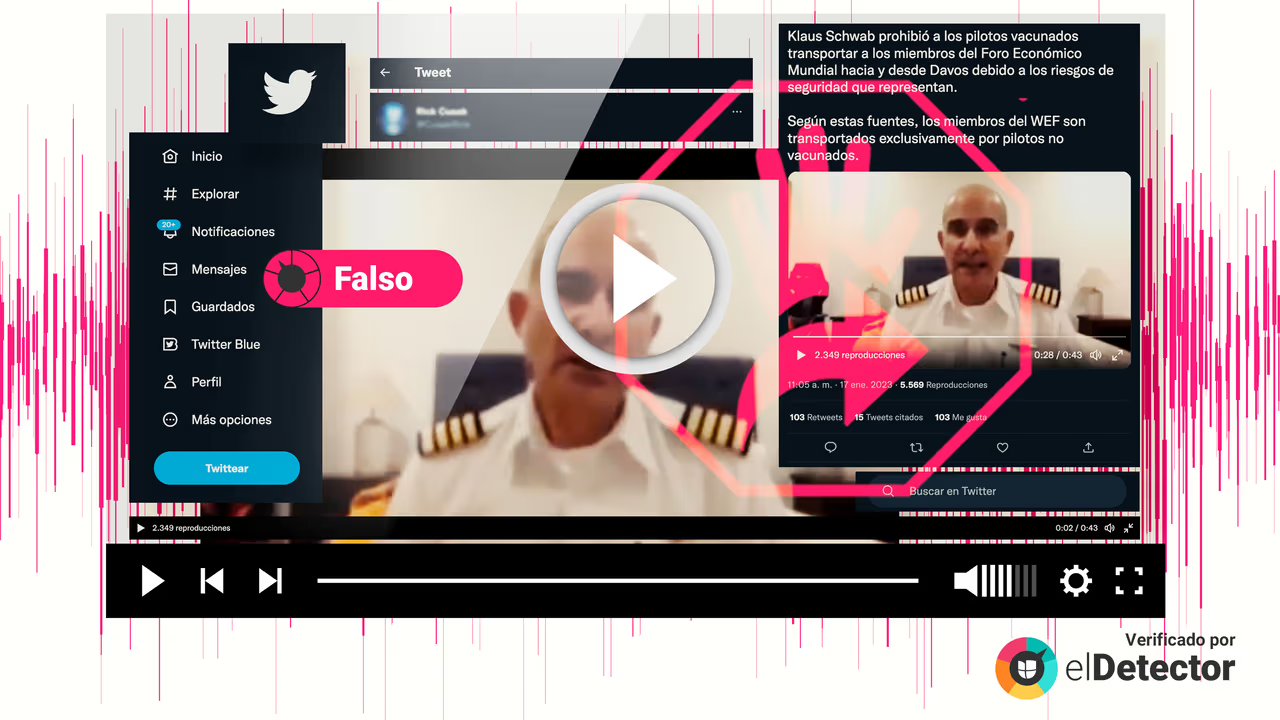
El Foro Económico Mundial pidió que los participantes de la conferencia en Davos fueran transportados por pilotos no vacunados.
Publisher’s rating: Falso
پنل پیامکی سیگنال
Publisher’s rating: پنل های پیامکی رایگان الزاما بد نیستند! برای مثال پنل پیامکی سیگنال، تمام امکانات یک پنل پیامکی پولی (و حتی بهتر و بیشتر) را همان ابتدای کار به صورت رایگان ارائه میدهد و تنها هزینه ارسال پیامک را از مشتری کسر می کند.

জাপানের মাইনিচি সংবাদপত্র বায়োডিগ্রেডেবল কাগজ এবং বীজ থেকে তৈরি করে। খবর পড়া শেষ হলে, এটি রোপণ করা যায় এবং ফুল গাছ পরিণত হয়!
Publisher’s rating: বিভ্রান্তিকর
BOC Spokesperson Arnaldo Dela Torre Jr. said on Jan. 19 that the agency would file a complaint against the PAL flight crew for their “behavior” during the incident. The BOC earlier said that the flight attendants “exhibited unruly behavior by stomping/stepping on the imported agricultural products.”
Publisher’s rating: Flip-flop
मकर संक्रांति कंगना रनौत ने सीमा सुरक्षा बल के साथ मनाया और उनके हौसला अफजाई की है।
Publisher’s rating: False

Coronavirus uit het Latijn vertaalt betekent "hartaanvalvirus".
Publisher’s rating: Een vertaling van "cor ona virus" uit het Latijn is niet hartaanvalvirus, dat laat een professor Latijnse Taal en Literatuur aan Deutsche Presse-Agentur weten. Google Translate is niet de meest betrouwbare vertaalmachine, zeker niet voor het Latijn.
The claim concerns a supposed Latin translation of “cor ona virus” as “heart attack virus.” The review traces the result to Google Translate rather than to a reliable translation of the coronavirus’s name. It reports that the shared screenshot showed the machine’s output and that the unusual result could be produced by inserting double spaces between the words. dpa tested the phrase itself: with ordinary spacing, the tool returned “coronavirus”; with double spaces between syllables, or with “Cor” capitalized, it returned the claimed wording. The review therefore describes the result as dependent on manipulating the input, not as the meaning of the name. The review also consulted Antje Wessels, a professor of Latin Language and Literature at Leiden University. She explained that Latin “corona” means “wreath” and is unrelated to “cor,” meaning “heart.” The review says the virus was given the name because its outer layers resemble a wreath or crown around the virus particle. It further notes that “ona” is not a standalone Latin word, so splitting the name into these pieces does not establish the proposed translation. The key distinction is between a tool’s output under altered spacing or capitalization and the meaning of the Latin words. The review says Google Translate left “virus” unchanged, although Latin dictionaries give it meanings including “slime” or “poison.” Its account thus does not treat the tool’s output as a literal, grammatical translation of the full name.

దేశంలో క్రైస్తవ ముఖ్యమంత్రులు జాబితాను తెలుపుతున్న పోస్ట్
Publisher’s rating: FALSE
A Chinese official say body tattoos can help fight Covid-19
Publisher’s rating: False

మలబార్ ఛారిటబుల్ ట్రస్ట్ కేవలం ముస్లిం విధ్యార్ధినులకు మాత్రమే విద్య కోసం స్కాలర్షిప్ సహాయం అందజేస్తుంది
Publisher’s rating: FALSE
Where the data comes from
Fact checks come from Data Commons and link to the organizations that published them.
What you’ll find
Each result links to the original fact check. Open it to read the publisher’s findings, with summaries and supporting sources where available.
Report an error
To report an error, send the page URL and supporting evidence.