PeakMetrics / Fact Checks
Has this been
fact-checked?
Paste a claim or upload an image to find existing fact checks. See what fact-checkers found and read the evidence before you share.
Search fact checks ↓API & integrations ↗Browse by topic
Explore fact checks by subject.
Search fact checks
Search by text or imageLatest fact checks
98,252 published reviews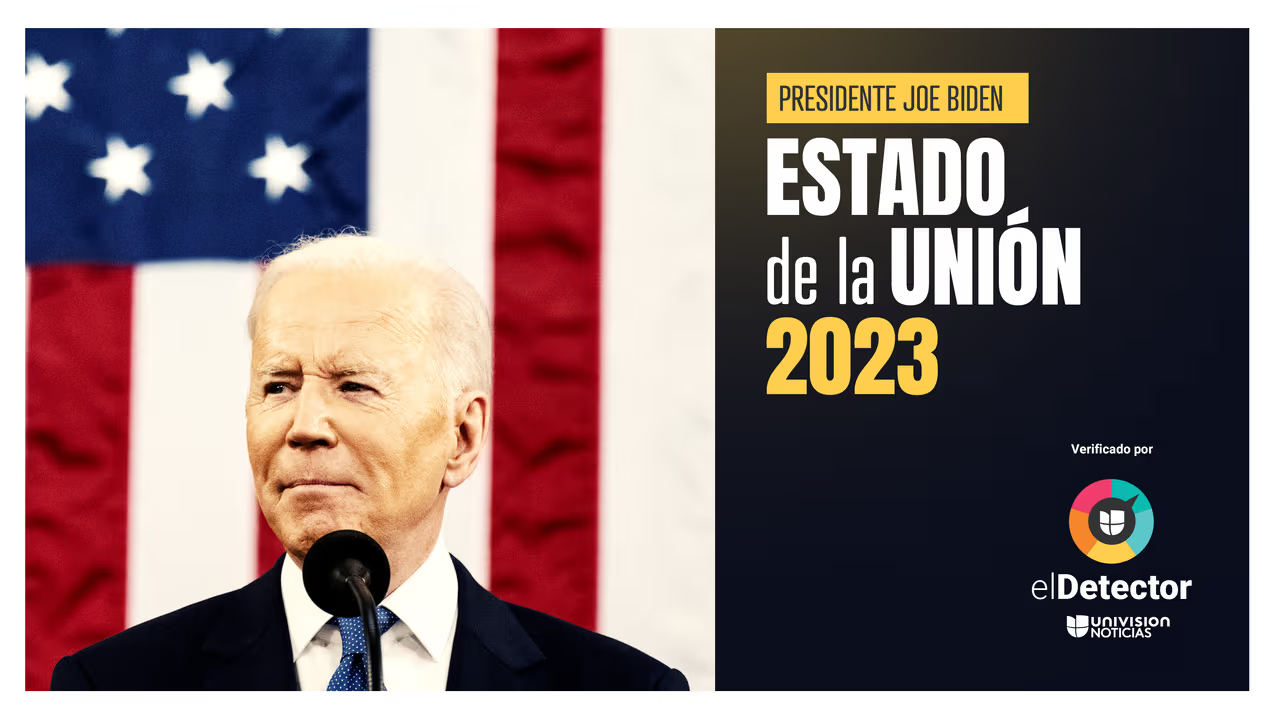
“Desde que pusimos en marcha nuestro nuevo plan fronterizo el mes pasado, la migración ilegal procedente de Cuba, Haití, Nicaragua y Venezuela ha descendido un 97%”.
Publisher’s rating: Verdad / Falta contexto

Visuals of a nuclear plant explosion in Turkey, following the recent earthquake on 06 February 2023
Publisher’s rating: FALSE
The claim concerned a video circulating after the 6 February 2023 earthquake in Turkey and Syria, said to show a nuclear plant exploding because of the earthquake. The review describes the footage as showing “an explosion of a building” and says that, at the time of its investigation, there were no reports of a nuclear-plant explosion in Turkey caused by the earthquake. To investigate the footage, the reviewers used reverse image searches of screenshots from the viral video. They report that this search found news reports from 2020 showing the same visuals, which they identify as an explosion at the port in Beirut, Lebanon. The review attributes that blast to the detonation of 2,750 tonnes of ammonium nitrate that had been stored in a port warehouse. The review also says officials confirmed that Turkey’s Akkuyu Nuclear Power Plant, then under construction, had not been damaged by the earthquake. Its conclusion about this particular video is that old Beirut-explosion footage was being presented as a nuclear-plant explosion in Turkey. The article’s later update distinguishes a different blast video: it identifies those visuals as explosions in Tianjin, China, in 2015, not as the Beirut footage discussed in the original claim.

Mersin’deki Heykel Boksör Sinan Şamil Sam’a mı ait?
Publisher’s rating: Yanlış

Deze video toont een recent gevecht in het Oekraïense parlement
Publisher’s rating: De beelden zijn op 27 april 2010 opgenomen in het Oekraïense parlement. De pro-Westerse oppositie protesteerde toen heftig tegen een nieuwe overeenkomst die de regering van Viktor Janoekovitsj met Rusland sloot.
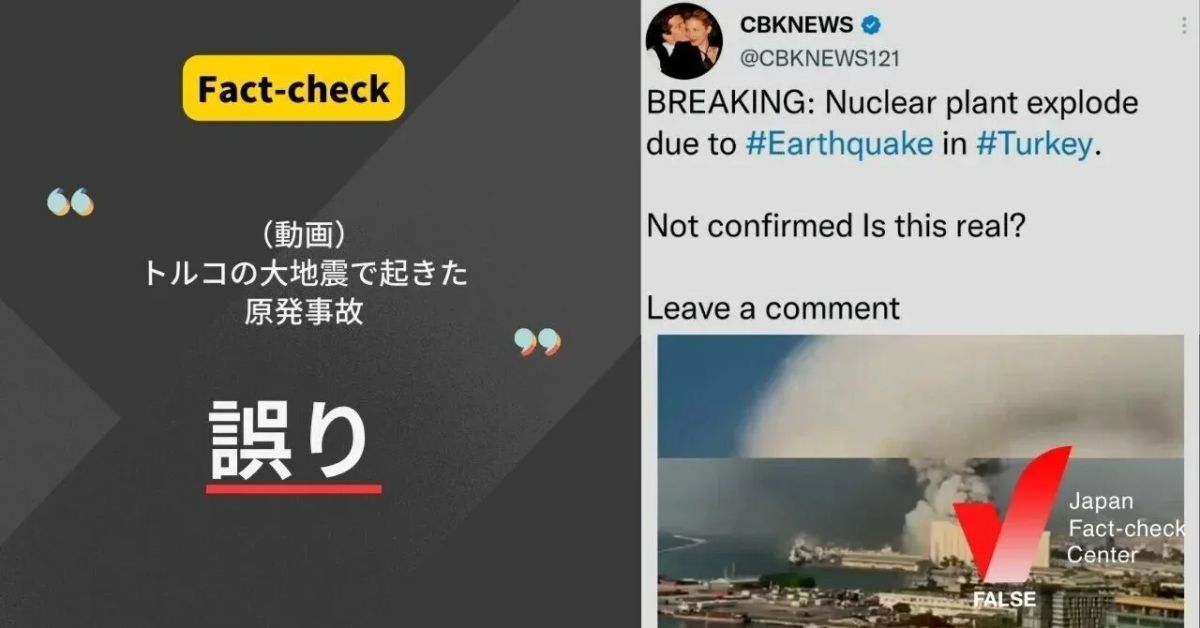
トルコの地震で原発事故が起きた
Publisher’s rating: 誤り
The video circulated as showing a nuclear accident caused by the Turkey earthquake was footage of the 2020 explosion at Beirut’s port in Lebanon. The review says the explosion was caused by ammonium nitrate stored at the port, not by a nuclear power plant.
“En los dos últimos años, mi administración ha recortado el déficit en más de 1.7 billones de dólares [trillones, en inglés], la mayor reducción del déficit de la historia de Estados Unidos”. Falta contexto
Publisher’s rating: Falta contexto


Instagram May Introduce Paid Blue Badge Verification
Publisher’s rating: True
The review investigated whether Instagram’s app contained references to paid blue-badge verification, rather than whether Instagram had already launched a paid verification service. It says it checked the latest application version it identified as v269.0.0.14.75 for code associated with the claim. The reported evidence was two strings: “FB_NME_PAID_BLUE_BADGE_IDV” and “IG_NME_PAID_BLUE_BADGE_IDV.” The review interprets these as references to paid blue-badge identity verification for Facebook and Instagram, respectively. It concludes that the references support the possibility Meta might work on or introduce such a feature; the excerpt does not establish a launch or confirm that a paid Instagram verification service was available. The review’s own FAQ qualifies the finding: it states that Instagram had not introduced paid blue-badge verification and had not launched a paid blue-tick service. Thus, the evidence described supports the narrower claim that the app contained relevant code strings and that a feature might be in development, not that paid verification had already become available.
😱In desperation,people jump himself from the building for fear that building will collapse due to #Turkey M7.8 powerful #Earthquake #TurkeyEarthquake #seism #earthquake #tremor #Syria #Turkish #Lebanon @beenasarwar @ChaudharyParvez @asiyaansar @ragipsoylu @asmashirazi
Publisher’s rating: Fake

Klimaatactivisten van Extinction Rebellion protesteren omdat ze er tot ruim 2.000 euro per maand voor betaald krijgen.
Publisher’s rating: Nee, de bewering is onjuist. XR betaalt geen klimaatactivisten. Vrijwilligers kunnen in sommige gevallen een onkostenvergoeding of vrijwilligersbijdrage krijgen. Die bedraagt zeker geen 2.000 euro per maand: in Nederland is de bovengrens volgens XR 170 euro per maand en 1.700 euro per jaar. De bewering lijkt afkomstig uit een artikel van de Telegraaf, maar dat artikel - op zichzelf ongenuanceerd - is in de Facebookpost bewerkt.
The claim concerned a Facebook post presenting Extinction Rebellion (XR) activists in the Netherlands as being paid up to €2,000 a month to protest. The review traces the post to a clipped version of a Telegraaf article and checks the claim against the article’s fuller account and information from XR. It reports that the protest at the A12 near The Hague on 28 January 2023 was called to oppose government subsidies for fossil fuels, and that XR told dpa nobody involved in that protest—organizers or people sitting on the road—was paid. The Telegraaf article was from 2019. Although its headline suggested demonstrators were paid, the review says the article’s quoted XR spokesperson described a small number of volunteers receiving about €170 monthly after spending 50–60 hours a week on XR work. The Facebook version had been edited so that the amount above €2,000 appeared to apply to Dutch XR; in the full article, that figure was associated with XR in England. The review notes that the Telegraaf did not respond to dpa’s questions about the basis for the English figure. The evidence therefore distinguishes payment for demonstrating from limited support for some volunteers, and Dutch XR from the English branch. The review reports that Dutch XR’s stated maximum volunteer allowance was €170 per month and €1,700 per year, and that the specific A12 protest had no paid participants. It also notes that the British branch’s FAQ said nobody was paid as staff, while some volunteers could receive support for living expenses. That information does not substantiate the post’s claim about Dutch activists receiving up to €2,000 monthly.
هلالاحمر ایران تاکنون هیچ پیامی از سوی ترکیه مبنی بر کمک به زلزلهزدگان خوی دریافت نکرده است.
Publisher’s rating: غیرقابل اثبات

480 fietsen met kleine krasjes worden gratis weggegeven onder degenen die "bedankt" zeggen.
Publisher’s rating: Dit is geen echte winactie van "E-Bike", wat overigens ook geen echte winkel is. Het gaat hier om een voorbeeld van phising.
teeth whitening can be done using carrot, turmeric and toothpaste in 1 minute
Publisher’s rating: False

Selon une étude, les oeufs provoquent la formation de caillots sanguins.
Publisher’s rating: Il n’y a pas de lien établi entre un risque accru de caillots sanguins et la consommation d’œufs. Ce n'est pas non plus ce qu'affirment les scientifiques cités. Dans l’étude, il est question d’un risque en lien avec la consommation d’un complément alimentaire appelé choline (une substance également présente dans les œufs).
The claim arose from social-media posts saying scientists warned that eggs cause blood clots. The review traces the posts to a British Express article about Cleveland Clinic research, but distinguishes the nutrient discussed in that research from eating eggs: the article described choline as a nutrient that can increase clotting risk and noted that choline is also found in eggs. The review says the study did not test egg consumption. (S1: “L’article en lien dans la publication a été publié par le journal britannique Express. Celui-ci se réfère à une étude de la Cleveland Clinic. L’article résume la recherche et explique qu’un nutriment spécifique peut augmenter le risque de caillots sanguins.”; “La consommation d’œufs n’a pas du tout été étudiée”) Instead, participants received choline supplements, and researchers measured their effects in the body over two months. The review reports that a later clinical study found choline supplements could promote clot formation, but that result did not establish that eggs do so. It also says Reuters fact-checkers asked the researchers, who confirmed there was no link between eggs and blood clots. (S1: “Dans le cadre de cette étude, les sujets ont reçu des compléments alimentaires à base de choline, dont l’effet a été mesuré dans le corps, sur une période de deux mois.”; “les chercheurs ont également confirmé aux fact-checkers de l'agence de presse Reuters qu’il n’y a aucun lien entre les œufs et les caillots sanguins.”; “Dans une étude clinique ultérieure, ils ont constaté que les suppléments alimentaires composés de choline pourraient favoriser la formation de caillots sanguins – mais pas les œufs.”) The review also places the research in time: the cited study was published in April 2017, before Covid-19 vaccines were developed. It therefore says the suggestion that researchers were using the study to divert attention from vaccines was unfounded. (S1: “L’étude a été publiée en avril 2017, des années avant même que les vaccins ne soient développés.”; “L’affirmation plus ou moins claire selon laquelle les chercheurs voulaient détourner l’attention d’autres causes de caillots sanguins est donc infondée.”)

MST invade terras na Argentina e o agricultor joga fezes líquida na área ocupada, os invasores não aguentam o cheiro e se retiram.
Publisher’s rating: Falso

JANSIO Threanic Triple-Spin Ring would help in substantial weight loss
Publisher’s rating: FALSE
The review examines a social-media post promoting the JANSIO Threanic Triple-Spin Ring and claiming that wearing it would cause substantial weight loss. It reports that the product website attributed weight reduction to the ring’s magnetization and an electromagnetic charge, which it said would remove bodily blockages. To assess the claim, the review cites Federal Trade Commission guidance that products worn on the body or applied to the skin do not cause substantial weight loss. It also refers to a cautionary guide in which experts said products such as rings, patches, and creams do not help with weight loss. The review further cites studies and expert views as finding no evidence that magnetic rings or similar devices aid weight loss. On that evidence, the review concludes that there is no evidence that wearing a magnetized ring would produce substantial weight loss. The supplied text describes the sources it relied on but does not provide study titles, individual results, or details of how the cited studies were conducted.
“Veamos los resultados. La tasa de desempleo es del 3.4%, el nivel más bajo en 50 años”.
Publisher’s rating: Verdad
Where the data comes from
Fact checks come from Data Commons and link to the organizations that published them.
What you’ll find
Each result links to the original fact check. Open it to read the publisher’s findings, with summaries and supporting sources where available.
Report an error
To report an error, send the page URL and supporting evidence.