PeakMetrics / Fact Checks
Has this been
fact-checked?
Paste a claim or upload an image to find existing fact checks. See what fact-checkers found and read the evidence before you share.
Search fact checks ↓API & integrations ↗Browse by topic
Explore fact checks by subject.
Search fact checks
Search by text or imageLatest fact checks
98,252 published reviews
Raghuram Rajan said that Indian Economy is deteriorating in a manner similar to that of Sri Lanka’s
Publisher’s rating: FALSE
The review examines a social-media post attributing to former Reserve Bank of India governor Raghuram Rajan the claim that India’s economy was becoming like Sri Lanka’s. It reports that the post’s wording misrepresents what Rajan said: in a July 2022 interview, he was asked whether India would face economic challenges like Sri Lanka and Pakistan, and, according to the review, he said India would not face the same issues. The review says he pointed to India’s foreign-exchange reserves and lower foreign debt. [S1] FACTLY says it searched the internet using relevant keywords and found the July 2022 interview. Its account of that interview directly addresses the attribution: rather than saying India was deteriorating like Sri Lanka, Rajan reportedly distinguished India’s situation from the economic issues faced by Sri Lanka and Pakistan. [S1] The review also describes separate comments Rajan made to PTI in March 2023. He expressed concern about India’s growth, citing subdued private investment, high interest rates and slowing global growth; the review reports that he called a sequential GDP slowdown worrying and gives the figures as 4.4% in Q3, compared with 6.3% in the previous quarter. Those concerns do not establish that he made the specific comparison circulated in the post. The review adds that SBI economists disputed Rajan’s assessment, but that dispute concerns his growth commentary, not the attribution about Sri Lanka. [S1]



బీహార్లో ముస్లింల కత్తులతో ప్రదర్శన చేస్తూ హిందువులకు వ్యతిరేకంగా హింసకు పిలుపునిచ్చారు
Publisher’s rating: FALSE
Украинцы не хотят бороться за Крым и Донбасс
Publisher’s rating: Фейк. По данным за ноябрь 2022 года, опрос социологической службы «Рейтинг» показал, что только 9% украинцев готовы смириться с потерей Крыма и территорий Донбасса, которые Россия контролировала до начала вторжения.

Behalve JA21, kun je op geen enkele rechtse partij stemmen als Nederlander in het buitenland bij de aankomende verkiezingen. Dit is een poging tot fraude.
Publisher’s rating: De claim dat hier sprake is van fraude is onterecht. Er staan partijen uit het hele politieke spectrum op het stembiljet voor Nederlanders in het buitenland, van Forum voor Democratie tot GroenLinks. Partijen konden er zelf voor kiezen of zij ook verkiesbaar wilden zijn voor zogenaamde 'niet-ingezetenen'. Onder andere de PVV en BBB hebben er zelf voor gekozen zich niet verkiesbaar te stellen.

Deze video gaat over D66.
Publisher’s rating: De video is satire, maar niet op het beleid van D66. Het is een samenstelling van twee oude video's van het satirische platform De Speld. De originele video's hebben niets met D66 te maken en zijn niet serieus te nemen.
The video circulating on social media portrays government measures—payments at traffic lights and surveillance using drones—as approved by D66. The review says some viewers took it as a genuine party proposal, while others saw it as a parody. Its investigation traces the video to two older videos from De Speld, a satirical platform, rather than to original D66 material. The review reports that the circulating version was assembled from those two videos and that the attribution to D66 was added later. The source material had different subjects: one video concerned a fictional government campaign to make people pay at traffic lights; the other described a government plan to correct people’s behavior with drones. The review dates those original videos to 2011 and 2013, respectively. It says neither contains a reference to D66, and notes that D66 was not in government when either was published. That chronology and the absence of party references undercut the impression that the clips document D66 policy or parody that party’s policies. The review also reports that a person on Twitter claimed to have made the circulating video and acknowledged its underlying sources, but that the shared video no longer referred to them. It identifies the visible D66 logo in the upper-left corner as the only link to the party, added roughly ten years after the original clips appeared. Thus, the claim that this is a video about D66 is misleading: the underlying clips are De Speld satire about government policy, while the D66 association came through later editing.
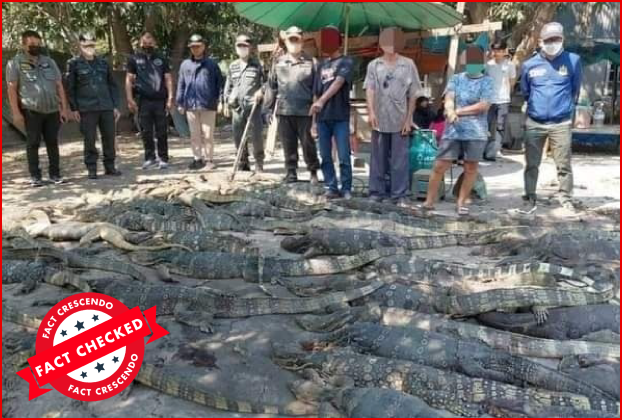
ตำรวจบุกจับผู้ลักลอบชำแหละเนื้อตัวเงินตัวทองที่นำไปขายให้โรงงานลูกชิ้นปลา
Publisher’s rating: False
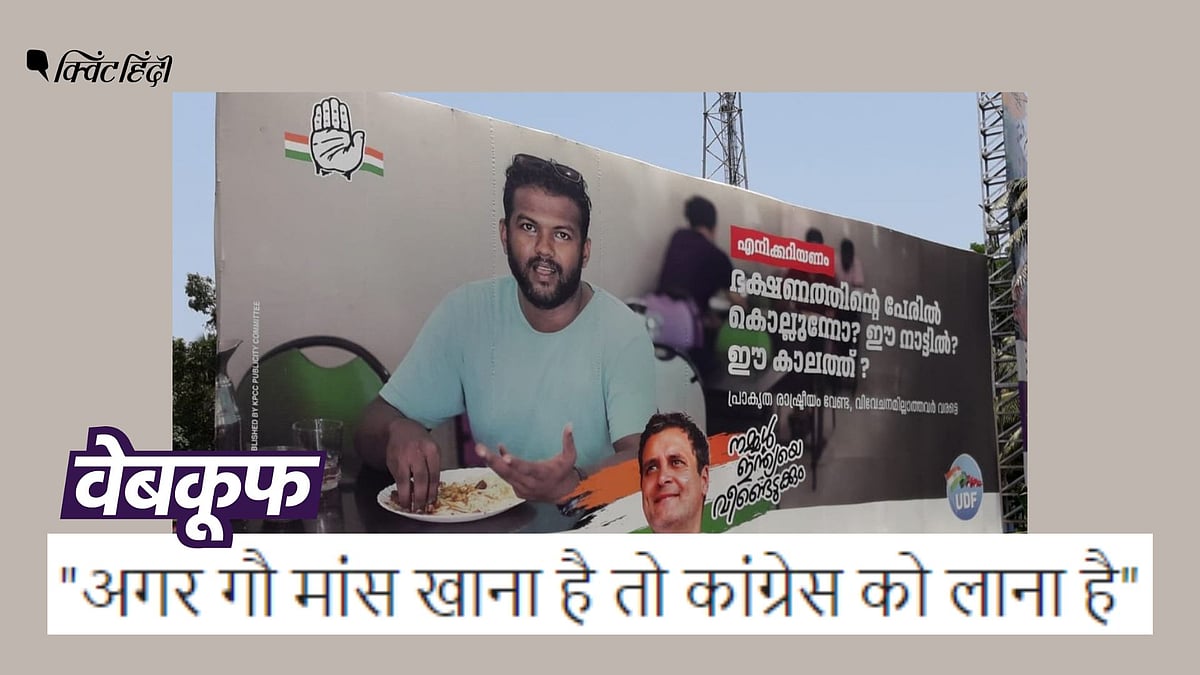
केरल में कांग्रेस के पोस्टर पर वोट के बदले बीफ खाने की आजादी का वादा किया गया है
Publisher’s rating: FALSE

Images of a Muslim man who married his daughter in West Bengal’s Jalpaiguri in 2020.
Publisher’s rating: MISLEADING
The review examined social-media images presented as showing a Muslim man in Jalpaiguri, West Bengal, who married his daughter in 2020 and impregnated her. It found that the images do not depict the people involved in the documented Jalpaiguri case. The review’s conclusion is that the post attaches unrelated images to an older incident and presents that incident as recent. To check the claimed timing, the review says it searched for reports of such incidents in Jalpaiguri since 2020 and found none. It then identified reporting from 2007 about Afazuddin Ali, a 36-year-old man from Jalpaiguri, who allegedly married his teenage daughter and impregnated her. According to the review’s account of those reports, police intervened and arrested Ali and his wife, Sakina; the couple were later released because the lower court lacked criminal jurisdiction and no specific charges had been brought. The review also traced the circulated images through a reverse image search to a Pakistan-based Twitter account. It says the images first appeared there on 18 July 2020, and that the account had since been deactivated. The review therefore distinguishes the existence of an older, reported case from the identity and date claimed for the images: it says the images are unrelated to Ali and his daughter.


El doctor Tomás Borda promociona un medicamento para las várices, según muestra video.
Publisher’s rating: Falso

“El luchador de MMA trans, Fallon Fox, rompe el cráneo a una mujer en un combate”
Publisher’s rating: Falso
மு.க.ஸ்டாலின் பிறந்த நாள் விழாவிற்கு கூட்டணிக் கட்சித் தலைவர்களை அழைக்கவில்லை – சவுக்கு சங்கர்.
Publisher’s rating: Fake
उद्धव ठाकरे औरंगजेब को अपना भाई बताते हुए नजर आ रहे हैं । साथ ही वो कह रहे हैं कि औरंगज़ेब ने देश के लिए अपनी जान दी है।
Publisher’s rating: Missing Context
Where the data comes from
Fact checks come from Data Commons and link to the organizations that published them.
What you’ll find
Each result links to the original fact check. Open it to read the publisher’s findings, with summaries and supporting sources where available.
Report an error
To report an error, send the page URL and supporting evidence.