PeakMetrics / Fact Checks
Has this been
fact-checked?
Paste a claim or upload an image to find existing fact checks. See what fact-checkers found and read the evidence before you share.
Search fact checks ↓API & integrations ↗Browse by topic
Explore fact checks by subject.
Search fact checks
Search by text or imageLatest fact checks
98,240 published reviews“Exército entra na sede polícia federal e retira a força oficial preso ontem [Mauro Cid]”
Publisher’s rating: Falso
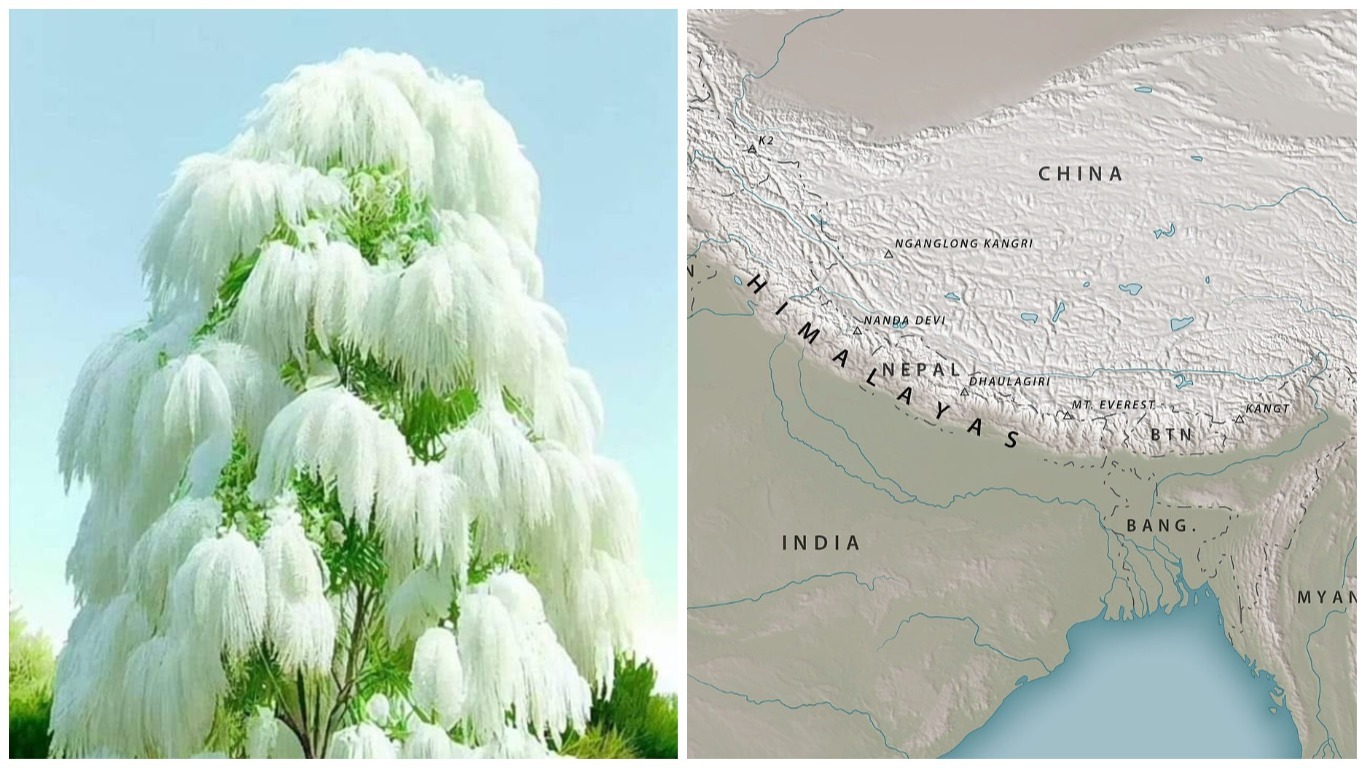
Claims Of Flowers Blooming In The Himalayas Once In 400 Years!
Publisher’s rating: False
The review investigated social-media posts showing a large tree with unusual white flowers, captioned as “Flor do Pagode” or “Maha Molu” and said to be an auspicious Tibetan flower that blossoms in the Himalayas once every 400 years. It reports that the image circulated on Facebook and WhatsApp, where some users treated it as a real plant and described themselves as lucky to see its rare bloom. The review’s conclusion is that the viral artwork does not depict a known real-life plant, and no flower is reported to bloom on a four-century cycle. [S1: “A beautiful image of the large tree with unique white flowers is circulated with the caption, ‘Flor do Pagode’ or ‘Maha Molu,’ a unique auspicious flower in Tibet. The flowers of the pagoda in the Himalayas bloom every 400 years.”; “The image was viral among WhatsApp users also, narrating that our generation was lucky enough to see the Pagoda blossoming, which happens once in 400 years only.”; “We also did not find any real-life plant resembling the viral artwork image claiming to be a flower blooming once in 400 years.”; “there is no plant reported to have a blooming period of 4 centuries.”] The review distinguishes the viral image from a real plant called the Pagoda flower, identified as *Clerodendrum paniculatum*. It says that plant is native to parts of Asia, including the area between India and southeast China, and flowers annually from mid-summer to autumn—not once every 400 years. It also says the plant’s appearance does not match the viral image, so the existence of a flower with a similar name does not substantiate the post’s claim. [S1: “its scientific name is Clerodendrum paniculatum, and it is native to Asia, particularly in the area between India and southeast China.”; “this plant does not bloom every 400 years. Instead, its flowering takes place every year, from mid-summer to autumn.”; “the Pagoda flower’s outlook does not match the viral image.”] For the broader claim about flowering intervals, the review reports that experts consulted by the Australian Associated Press fact-checking project said no known plant anywhere in the world flowers every 400 years. It also says Fact Crescendo contacted Dr. M. Sabu, a botany professor in Kerala, who called the claim a hoax. As a comparison, the review identifies the Guinness Book of World Records’ slowest-flowering plant as being from Bolivia, with an interval of 80–150 years. These details support the review’s rejection of the claimed four-century interval; they do not identify the viral artwork as a real flower. [S1: “several experts consulted by the Australian Associated Press fact-checking project clarified that there is no known plant anywhere in the world that flowers every 400 years.”; “Our Factcrescendo team also contacted Dr. M. Sabu, a Botany Professor in Kerala, who confirmed, ‘The claim that plants bloom just once every 400 years is a complete hoax.’”; “The Guinness Book of World Records for the slowest flowering plant is from Bolivia. That is between 80-150 years.”]

ÚLTIMA GRANDE GREVE GERAL. COMPARTILHE. ATÉ IMPEACHMENT DE LULA, ALCKMIN, PACHECO E MORAES. 11 de junho
Publisher’s rating: Falso
सीसीपुर में कार्यरत मेइती नर्स से अस्पताल के अंदर कूकी ने रेप कर बेरहमी से मार डाला
Publisher’s rating: False


Las fotos son de la enseñanza a niños de “rituales y adoración a Lucifer” en bibliotecas de Estados Unidos tras el evento SatanCon, realizado en Boston.
Publisher’s rating: Falso

කළුතර සිසුවියගේ මරණයේ සැකකරු, අරගලයේ ප්රධාන චරිතයක් බවට හුවමාරු වන ඡායාරූපවල ඇත්ත කතාව!
Publisher’s rating: False
The claim says that photos shared as showing the main suspect in the Kalutara schoolgirl’s death depict him as a prominent figure in the protest movement. The review examined the circulated images and concluded that the people shown were not the suspect, whom it identified as Dhanushka Gayan Sahabandu. It reports that one image was of Shalika Rukshan Senadhira, whom protest participants identified as an active member of the movement; the other showed Chamara Dilshan, who ran the chama YouTube channel. Both men reportedly told the publisher by phone that images of them had been circulated misleadingly or as a joke, and that people had taken the posts as genuine. The review says neither man was in custody. To identify the people in the images, the publisher says it consulted people active in the protest movement, checked Senadhira’s Facebook account, and contacted both men. It reports that the image of Senadhira had appeared in a Facebook album he posted on June 27, 2022, and was reused in the misleading posts. The review also reports that mainstream media had identified Sahabandu as the actual suspect. These checks distinguish the photographed individuals from the person named in the claim; resemblance alone did not establish that either was the suspect. The review also qualifies what was known about the suspect’s connection to the protest movement. It reports that the police spokesperson said the investigation had not established whether the suspect had participated in the movement, and that police had not investigated his political affiliation because it was not relevant to the case. People active in the Kalutara protest movement told the publisher they did not recognize him as an organizer. Thus, the photos did not establish that the suspect was a protest figure, and the review says the images were of other people.

「NHK受信料、スマホ所持でも徴収へ」、有識者会議の意見が一致
Publisher’s rating: 誤り
The review finds the claim false: it says the cited Sankei article did not report that experts agreed, and the Ministry of Internal Affairs and Communications said, “そのような事実はありません” (“There is no such fact”). The review also notes that multiple members had expressed difficulty with charging fees merely for owning an internet-connected device.

https://twitter.com/ElNacional_CL/status/1654618487032016896
Publisher’s rating: Engañoso


Vídeo em que um homem que se diz “estudioso das vacinas” alega que os imunizantes, em especial aqueles contra o H1N1, teriam “vírus e fungos do câncer”. Ele diz que os imunizantes são usados para controle populacional. Na gravação, ele cita especificamente que vacinas contêm o VRS Virus, o Papiloma Vírus Humano (HPV), o Mumps Virus, o vírus da Herpes e diz que esses são os causadores silenciosos da doença.
Publisher’s rating: Falso
The review examined a video in which a man alleges that vaccines—particularly the vaccine against H1N1—contain “cancer viruses and fungi.” It describes the same recording as claiming that vaccines are being used to kill poor, old and unattractive people slowly. Thus the review addresses the central claim in the post, although the supplied text does not independently confirm every specific virus name attributed to the man in the claim. To assess the alleged cancer connection, the investigation consulted the Butantan Institute, which produces Brazil’s H1N1 vaccine, and the National Cancer Institute (Inca). Butantan said there was no scientific evidence that influenza vaccination is associated with causing cancer. The review also reports that vaccines can help prevent some cancers caused by viruses: it cites HPV vaccination and the hepatitis B vaccine as examples. Inca’s infectious-disease specialist said vaccines are a major means of preventing infectious disease, not causes of disease, and noted that H1N1 vaccination is authorized for people with immunosuppression, including cancer patients. The review separately explains that some vaccines use viruses or viral components to prompt an immune response. It describes inactivated vaccines, in which the virus is rendered unable to infect, and viral-vector vaccines, which deliver specific components of a germ using a safe virus. This distinction addresses a potential misleading inference: the presence of a virus or viral component in some vaccines does not, according to the explanation cited in the review, mean the vaccine can transmit disease. The article’s stated investigation also included consulting WHO material on vaccine types and how they are made to ensure safety.

Görüntüdeki yerin Kemal Kılıçdaroğlu’nun mutfağı olduğu iddiası
Publisher’s rating: Yanlış

Este video demuestra que el Presidente de Chile ordena a sus militares a acabar con los inmigrantes ilegales y a destruir sus casas.
Publisher’s rating: Falso

Video clips showing Rahul Gandhi’s statements about the fertility rate in Uttar Pradesh and about the unemployment of birds
Publisher’s rating: FALSE
FACTLY examined two clips shared as Rahul Gandhi making absurd remarks about fertility in Uttar Pradesh and unemployment among birds. Its review says both clips were edited, but in different ways: the first combined footage from one rally with audio from another, while the second clipped a longer statement about municipal cleanliness and debt relief for wealthy businessmen. The review concludes that neither clip supports the claim attributed to Gandhi. For the first clip, FACTLY reports using reverse image search and relevant keyword searches to find the same visuals in a video published by the Indian National Congress on 15 April 2021. That footage showed Gandhi speaking at a Goalpokhar public meeting ahead of the West Bengal elections. According to the review, he discussed COVID-19’s effects and the government’s response, not Uttar Pradesh’s fertility rate. The audio about women allegedly claiming multiple births came instead from a 2011 rally in Phoolpur, Uttar Pradesh, where Gandhi was discussing alleged misuse of the Janani Suraksha Yojana. The post’s edit joined that audio to unrelated footage. For the second clip, the review says reverse image and keyword searches located the same visuals on the Congress YouTube channel in a video from 5 February 2020. At a rally in Delhi’s Kondli, Gandhi referred to eagles in the area while discussing municipal dirt and the alleged waiver of debts or taxes for wealthy businessmen. FACTLY says he did not describe the eagles as unemployed. The clip therefore misrepresented the point of his remarks by removing their surrounding context.

Not Sonam Kapoor’s Performance At King Charles’ Coronation !
Publisher’s rating: Misleading

Dear Kannadigas, Don’t Waste your Vote on CONgress. Don’t trust the Dirty Politics of CONgress – #justasking Prakash Raj.
Publisher’s rating: Misleading

पहलवानों के विरोध का समर्थन करने के लिये ट्रैक्टरों की मार्च जंतर-मंतर जा रही हैं।
Publisher’s rating: False

El fruto del marañón o anacardo aplicado directamente sobre un tatuaje ayuda a “extraer la tinta” y eliminar el tatuaje de forma natural.
Publisher’s rating: Falso
The claim concerns a viral video in which a man says that cutting raw cashew fruit into pieces and applying it directly to a tattoo will extract the ink and remove the tattoo naturally. The review reports that the video had accumulated 1.2 million Facebook views by May 9, 2023. Its conclusion is that the method does not remove tattoos; rather, the oil in the fruit’s shell can harm skin. To assess the claim, the review says it consulted Claudia Arenas, president of the Colombian Association of Dermatology and Dermatological Surgery, by email. Arenas rejected the claim and explained that applying the fruit could cause allergic contact dermatitis, with swelling, inflammation, oozing, itching, and, in severe cases, a burning sensation. The review also notes that the cashew plant belongs to the same family as poison ivy and that its shell contains irritating oil. The review says Arenas described Q-switched laser as a medically supported tattoo-removal method, while noting that multicolored tattoos can be harder to treat and that the technique may have side effects. It also cites Mayo Clinic and FDA information on laser removal, surgical excision, and dermabrasion, and their warnings against do-it-yourself removal treatments. The evidence therefore addresses both parts of the claim: the fruit is not an established natural way to extract tattoo ink, and applying it may instead cause a skin reaction.

TİP sözcüsü Sera Kadıgil'in TRT yayınında, “Her ay bir sinema filmi çekeceğiz, hasılatını halka dağıtacağız” dediği iddiası
Publisher’s rating: Yanlış

Deze foto toont de laatste levende reus in Nederland.
Publisher’s rating: De reus is een AI-beeld gemaakt met Midjourney, en geen lang verloren historisch artefact.
The claim concerns a purported old photograph said to show the last living giant in the Netherlands. The review describes a black-and-white image of a procession with a very tall man at its center, captioned “de laatste Neanderthalreus” (“the last Neanderthal giant”) and said to date from 1901. It reports that a reverse-image search found the image was not an authentic historical photograph: the image appears on Midjourney’s official subreddit and was also shared by a Russian Midjourney Telegram channel. The review therefore identifies the claimed photograph as an AI-generated image made with Midjourney, rather than evidence of a historical giant. The review also distinguishes two other images associated with the claim. It says the image of a gigantic horse is another Midjourney AI image. By contrast, a separate photograph of a very tall man is genuine and depicts Robert Wadlow, an American who measured 2.72 metres and holds the Guinness record for the tallest person who ever lived. That separate authentic photograph does not establish that the central figure in the purported 1901 procession image was real.
Where the data comes from
Fact checks come from Data Commons and link to the organizations that published them.
What you’ll find
Each result links to the original fact check. Open it to read the publisher’s findings, with summaries and supporting sources where available.
Report an error
To report an error, send the page URL and supporting evidence.