PeakMetrics / Fact Checks
Has this been
fact-checked?
Paste a claim or upload an image to find existing fact checks. See what fact-checkers found and read the evidence before you share.
Search fact checks ↓API & integrations ↗Browse by topic
Explore fact checks by subject.
Search fact checks
Search by text or imageLatest fact checks
98,233 published reviews
ராகுல் காந்தியை அமெரிக்காவிற்கு வரவேற்கிறோம். ஆனால் நரேந்திர மோடியின் தலைமையில் இந்தியா திறந்தவெளி மலம் கழிப்பதில் இருந்து விடுபட்டுள்ளது. அதற்காக எப்போது வேண்டுமானாலும் திறந்த வெளியில் மலம் கழிக்க என் நாட்டிற்கு வரலாம் என்று அர்த்தம் கிடையாது. – அமெரிக்க அதிபர் ஜோ பைடன்
Publisher’s rating: Fake
जिस जगह पर ये ट्रेन हादसा हुआ उसके पास ही एक मस्जिद है। हादसे के पीछे मुस्लिम समुदाय का हाथ हो सकता है।
Publisher’s rating: False

Morre ex cantora gospel flordelis aos 64 anos eita morreu agora #flordelis #cantoragospel #luto
Publisher’s rating: Falso
Sakshi Malik withdraws from wrestlers’ protest, joins back railway job
Publisher’s rating: Fake

נתונים בישראל מראים שהיו אפס מתים מקורונה שהיו מתחת לגיל 50 וגם בלי מחלות רקע
Publisher’s rating: לא נכון

10/12 ఉత్తీర్ణులైన విద్యార్థుల కోసం ప్రధాని మోదీ అబ్దుల్ కలాం, వాజ్పేయీ పేర్లపై స్కాలర్షిప్లను ప్రకటించారు
Publisher’s rating: FALSE


Nevşin Mengü’nün 28 Mayıs seçiminden sonra Erdoğan’ı destekler nitelikte açıklama yaptığı iddiası
Publisher’s rating: Yanlış

An diesem tatarischen Gebäude sind Stromleitungen und Steckdosen aus dem Jahr 692 oder 1692 zu sehen.
Publisher’s rating: Die Kirche hat mit Tataria oder Tataren nichts zu tun. Die angeblichen Beweise entpuppen sich als höchst normale und ziemlich moderne Anlagen.
The review examined a Facebook video claiming that St. Oswald’s Church in Oswestry, Shropshire, was a “tatarian” building with original electrical sockets. It identifies the church in the video as St. Oswald’s and checks the video’s specific supposed evidence: a cable on the tower, two marks on the exterior wall, and an inscription presented as evidence of electricity in 1692—or, in a Facebook post, as “J692” meaning 692 years after Jesus’ death. The tower cable is a lightning conductor, not a device for controlling energy from antennas. The review reports that neither the video nor photographs of the tower show antennas; it says the tower has a flagpole. The apparent wall socket bearing the number 2646 and letters OSBM is instead a survey marker, identified as an Ordnance Survey Flush Bracket. The review notes that such benchmarks are found across England and that this one is listed online under that name. The other supposed socket—a metal bolt in a carved wall marking—is also a surveying feature: a “Survey Cut Mark with Bolt” used by technicians for height measurements. The inscription does not establish that electricity existed in 1692: the review explains that the video’s reading relies on the appearance of the numeral 1, which in some historical forms resembles a modern J. It also gives church-history context: a place of worship existed in Oswestry for more than 1,000 years, and a replacement for a church destroyed after the English Civil War was completed in 1670. The review says electrical sockets for transmitting current date only from the beginning of the 20th century.

The viral video shows CCTV footage of the triple train accident that occurred in Balasore, Odisha
Publisher’s rating: FALSE
The claim concerns a video presented as CCTV footage of the triple-train accident in Balasore, Odisha. FACTLY’s investigation says the video instead shows a 2019 head-on collision in Hyderabad, Telangana, involving an MMTS local train and the Hundri Inter-City Express. The review concludes that the footage is unrelated to the Odisha tragedy. To assess the video, the investigation says it examined the trains visible in the footage. One appeared to be a local train rather than an express passenger train. The review then describes a keyword search for collisions involving local trains, which led to 2019 reports about two trains colliding on the same track in Hyderabad. It says an NDTV report contained the same CCTV footage as the viral video. The account of that Hyderabad collision says the local MMTS train’s loco pilot ignored a red signal and started the train, leaving two trains on the same track before they collided head-on. The review’s distinction is therefore not simply that the footage depicts a train crash: it identifies the footage with a separate incident in Hyderabad, rather than the claimed Balasore accident.

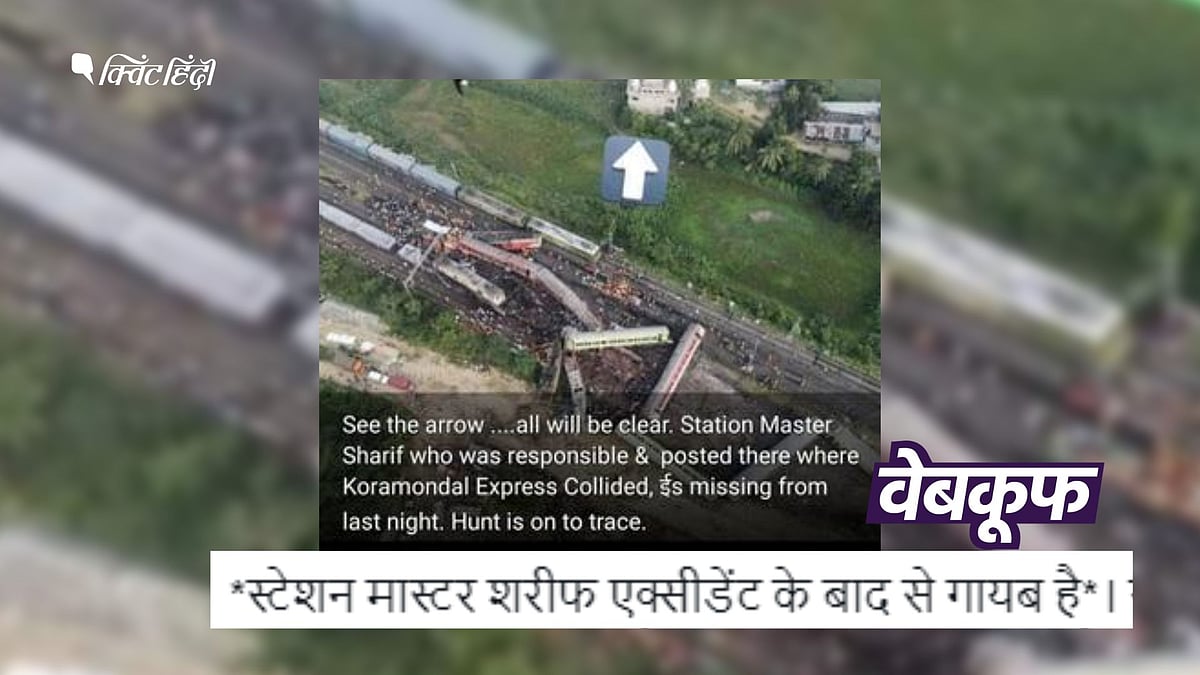
ओडिशा ट्रेन हादसे में हाथ है मुस्लिम स्टेशन मास्टर का
Publisher’s rating: FALSE

Photo showing a Muslim man carrying a dead body on his two-wheeler
Publisher’s rating: FALSE
The claim concerns a photo circulated as showing a Muslim man transporting a dead body on a two-wheeler. FACTLY reports that the image instead shows a man carrying a dismantled mannequin in Cairo, Egypt. The pictured object’s foot-like shape, visible beneath its covering, was used to frame it as a body, but the review says the object was not human remains. The review describes a reverse-image search that located the same photo in a Cairo 24 article. That report identified the scene as a man carrying a dismantled mannequin in Cairo and said Egypt’s Ministry of Interior clarified that the image showed a transport-company executive with a mannequin. The review further reports that the mannequin was being delivered to a garment merchant’s store in the Mokattam area. FACTLY identifies the man as 28-year-old Muhammad Nasar and says he was transporting the mannequin between branches for a garment company. It also reports that BG Collection, the clothing store that assigned the delivery, clarified that the mannequin was being moved from its Gamal Abdel Nasser branch to its Al-Mukattam branch. These details explain the photo’s setting and why the image was misleadingly presented as evidence of a dead body.

Claim: Annamalai not commented this on Odisha train accident
Publisher’s rating: FALSE
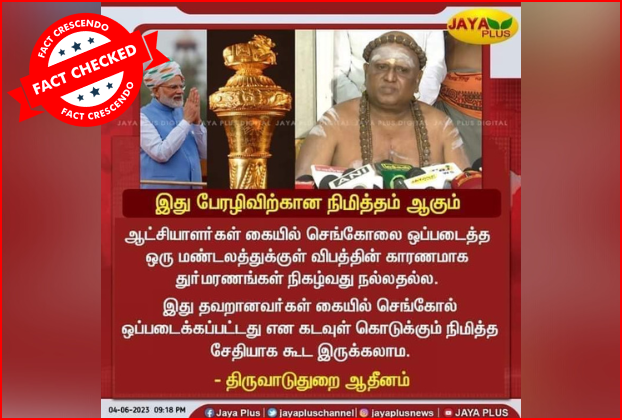
Claim: thiruvavaduthurai adheenam not said this on Odisha train tragedy
Publisher’s rating: FALSE
இது பேரழிவிற்கான நிமித்தம் ஆகும். ஆட்சியாளர்கள் கையில் செங்கோலை ஒப்படைத்த ஒரு மண்டலத்துக்குள் விபத்தின் காரணமாக துர்மரணங்கள் நிகழ்வது நல்லதல்ல. இது தவறானவர்கள் கையில் செங்கோல் ஒப்படைக்கப்பட்டது என கடவுள் கொடுக்கும் நிமித்த சேதியாகக் கூட இருக்கலாம். – திருவாடுதுறை ஆதீனம்
Publisher’s rating: Fake

ముస్లిం వ్యక్తి మూటలో ఒక వ్యక్తి శవాన్ని కప్పేసి తన ద్విచక్ర వాహనంపై తీసుకెళుతున్న దృశ్యం
Publisher’s rating: FALSE
Where the data comes from
Fact checks come from Data Commons and link to the organizations that published them.
What you’ll find
Each result links to the original fact check. Open it to read the publisher’s findings, with summaries and supporting sources where available.
Report an error
To report an error, send the page URL and supporting evidence.