PeakMetrics / Fact Checks
Has this been
fact-checked?
Paste a claim or upload an image to find existing fact checks. See what fact-checkers found and read the evidence before you share.
Search fact checks ↓API & integrations ↗Browse by topic
Explore fact checks by subject.
Search fact checks
Search by text or imageLatest fact checks
98,233 published reviews

בעשור האחרון, מחירי הפירות והירקות לא השפיעו כלל על מדד המחירים לצרכן
Publisher’s rating: מטעה

EXAME REPRESENTATIVIDADE 'Cota GAY' em quartéis APROVADA O congresso aprovou ontem a Cota LGBT em quartéis, a PL 6734/2017 do deputado Edmilson Rodrigues (PSOL-PA) passou com a maioria de votos favoráveis no congresso As cotas terão validade a partir do período de alistamento militar do ano que vem
Publisher’s rating: Falso
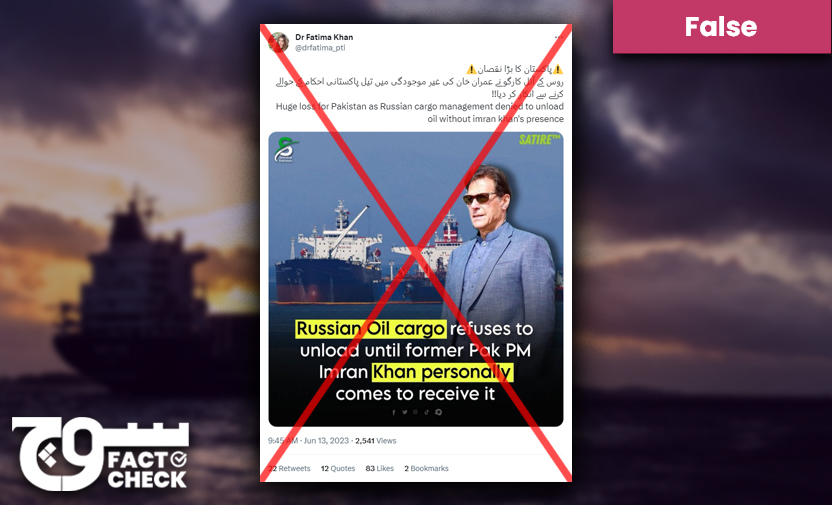
A cargo ship carrying Russian oil has refused to unload its consignment until Imran Khan “personally comes to receive it”.
Publisher’s rating: Satire
The claim concerned a cargo ship carrying Russian oil that supposedly would not unload until former Pakistani prime minister Imran Khan personally received the cargo. Soch Fact Check traced the claim to a visual posted on 2 April 2023 by Twitter user @drfatima_pti. The visual showed Khan against a background of cargo ships and repeated the alleged refusal in text. The review’s account identifies the item as a visual, rather than reporting evidence that a ship or its crew had made such a demand: it says the post showed Khan “against a backdrop of cargo ships” and included the text “Russian Oil cargo refuses to unload until former Pak PM Imran Khan personally comes to receive it.” The review’s key check was the visual’s provenance and labeling. It reports finding a “Standup Pakistan” logo at the top left and the word “Satire” at the top right. It then searched social media for “Standup Pakistan” and found the visual on that page’s Facebook, Twitter and Instagram accounts. The review further notes that the page was categorized as “Satire/Parody” on Facebook and Instagram. Those details identify the image as material from a satire account and show that the image itself carried a satire label; they do not substantiate the supposed shipboard refusal. The review also distinguishes the real oil shipment from the satirical claim. It reports that a ship carrying about 330,000 barrels of Russian crude docked at Karachi on 11 June 2023, and that the shipment was the first under an April deal between Russia and Pakistan. The existence of that shipment does not establish that it refused to unload or demanded Khan’s presence. The review’s conclusion is that the viral visual presented a satirical report as real news.

ప్రేమ పేరుతో అమ్మాయిని మోసం చేసిన ముస్లిం వ్యక్తిని ఒక హిందూ అధికారి గట్టిగా నిలదీస్తున్న దృశ్యాలు
Publisher’s rating: FALSE
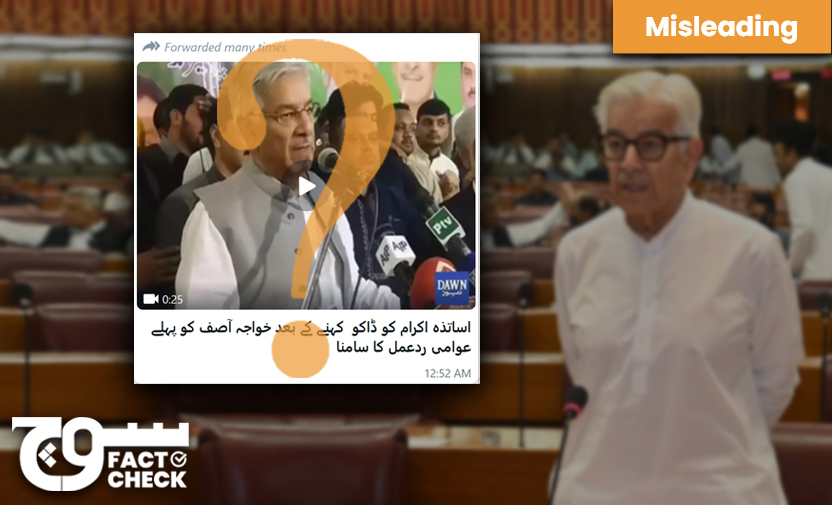
A video claims to show Khawaja Asif facing the first public backlash as a man throws ink on his face during a speech after “calling teachers dacoits”.
Publisher’s rating: Misleading
Meme claims that the Canadian wildfires resulted in more carbon-dioxide in 3 days than human activity has over 100 years.
Publisher’s rating: FALSE

El tulipán africano (Spathodea campanulata) es un árbol tóxico.
Publisher’s rating: Falta contexto


US Military Bases Around China! (Map)
Publisher’s rating: Misleading
The claim concerns a viral map presented as showing U.S. military bases around China. Factcrescendo Sri Lanka’s investigation identified the countries marked on the map as Thailand, Myanmar, Singapore, Brunei, the Philippines, Hong Kong, Cambodia, Japan and Australia. The review’s central finding was that the map did not accurately represent which of those places had U.S. bases. To check the map, the team compared its marked locations with information about U.S. military bases in the named countries and reported findings from its Thailand and Cambodia teams. It said Thailand had no U.S. base, noting that Thailand’s military denied rumors about establishing one. For Myanmar, Hong Kong and the Philippines, it said it had found no supporting information for the map’s claim. It also reported no U.S. base in Brunei or Cambodia, while distinguishing the presence of Singaporean and British forces in Brunei from a U.S. base there. The map was not wholly false: the review said Australia and Japan had U.S. bases, and that Singapore had one. It concluded that some nearby countries do host U.S. forces, but that most countries marked on the map do not have U.S. military bases. The distinction matters: the review challenged the map’s portrayal of the marked locations, rather than claiming that no U.S. forces are present in countries near China. It also said U.S. Defense Department information could be used to see where U.S. bases are located worldwide.

లవ్ జిహాద్ గురించి సత్యాలను తెలుపుతు గుజరాత్ IPS ఆఫీసర్ పబ్లిష్ చేసిన వీడియో
Publisher’s rating: FALSE
यह लव जिहाद का मामला है, जिसमें एक मुस्लिम व्यक्ति एक हिंदू महिला की हत्या कर उसका शव ले जाता दिख रहा है।
Publisher’s rating: False

Deze cijfers over borstkanker zijn accuraat.
Publisher’s rating: De cijfers zijn een samenraapsel die kankerprojecties bij verschillende leeftijdsgroepen tonen en dus niet vergeleken kunnen worden. Het is onmogelijk om op basis van deze cijfers iets over de impact van coronavaccins te zeggen, want dit zijn geen reële cijfers maar projecties op basis van data van voorgaande jaren, waarvan het meest recente 2019 is.
The figures circulating on social media came from annual reports on the American Cancer Society website and concerned the United States. The review explains that the figures were estimates of expected cases, not counts of cases that had actually occurred. They also did not use the same population group each year, so comparing the numbers as a single trend gives a misleading impression of a sharp increase. For example, figures cited for 2019, 2020 and 2021 refer to women under 45. The 2022 figure instead covers women under 50, a larger group, while the 2023 figure covers women of all ages. The review gives a 2023 estimate of 48,780 cases for women under 50 and notes that estimates for breast cancer among all women in 2019–2022 were of a similar order to the 2023 estimate. Those different age groups make the apparent jump in the social-media graphic unsuitable as a like-for-like comparison. The estimates were based on data from earlier years, and the latest estimate discussed in the review used data only through 2019. The review therefore says these figures cannot show an effect of vaccines introduced later. It distinguishes these projections from actual case data, noting that the most recent real figures available at the time were for 2020. It also reports a longer-term rise in breast-cancer cases, but says that the increase was not as dramatic as the social-media figures suggest and was mainly attributed to changing lifestyles.
विरेन्द्र सिंह बचला बना बारां,पाली जिले में । जिले के पावा गांव में आई बाढ़ में फंसे लोगों को वायु सेना ने रेस्क्यू किया।
Publisher’s rating: False
Video shows patriotic Russians sing after Wagner mutiny
Publisher’s rating: False
Black cumin seed oil provides sun protection
Publisher’s rating: False
یک میلیون و ۶۰۰ هزار مورد از عوارض واکسن فایزر در یک سند محرمانه فاش شده است.
Publisher’s rating: نادرست
Where the data comes from
Fact checks come from Data Commons and link to the organizations that published them.
What you’ll find
Each result links to the original fact check. Open it to read the publisher’s findings, with summaries and supporting sources where available.
Report an error
To report an error, send the page URL and supporting evidence.