PeakMetrics / Fact Checks
Has this been
fact-checked?
Paste a claim or upload an image to find existing fact checks. See what fact-checkers found and read the evidence before you share.
Search fact checks ↓API & integrations ↗Browse by topic
Explore fact checks by subject.
Search fact checks
Search by text or imageLatest fact checks
98,233 published reviewsThis video shows an RPG being fired at the Swedish flag in response to a recent Quran burning in Sweden.
Publisher’s rating: False

במאמר של סולברג על עילת הסבירות לא כתוב... שלא תהיה ביקורת שיפוטית על מינויי ממשלה
Publisher’s rating: מטעה
The claim concerns whether Justice Noam Solberg’s essay on the reasonableness doctrine says there should be no judicial review of government appointments. The investigation compared Malinovsky’s statement with the essay, which appeared in the journal “Hashiloach” in 2020 and was based on a 2019 speech. It notes an important qualification: Solberg did not expressly discuss government appointments. But the article argues that reading only for an explicit reference misses the substance of his proposed distinction between elected officials and professional officials. As quoted in the investigation, Solberg argued that broad substantive-reasonableness review does not fit decisions by elected officials—such as the government, ministers and local-authority heads—because those decisions generally reflect policy or value judgments. He contrasted these with professional officials’ decisions, for which he said such review may be justified. The investigation therefore treated his position as proposing less use of the doctrine for decisions by elected officials, a category it says includes appointments, even though the essay did not spell out that application to government appointments. The article also reports that Solberg raised the status of senior officials appointed by the government as an open question: they are professional officials, but their decisions resemble those of elected officials. It says his essay referred to a survey by Justice Daphne Barak-Erez that included rulings concerning appointments. The investigation’s conclusion was that Malinovsky’s wording creates a misleading impression: the essay does not explicitly say there should be no review of government appointments, but its proposed distinction bears on that issue. The article further cautions that there was no formal “Solberg plan”: Solberg had not drafted a bill or expressed support for a legislative change.
Anthony Fauci and Mother Teresa are related, and Mother Teresa was actively involved in child trafficking.
Publisher’s rating: False

வெடிப்பு ஆதாரம். “நானே பிரிவினை முடிவை எடுத்தேன்” – ஜவஹர்லால் நேரு. 1964 மே மாதம் தனது கடைசி நேர்காணலில், முஸ்லிம்களையும் இந்துக்களையும் பிரிக்கும் முடிவை எடுத்ததாக நேரு ஒப்புக்கொண்டார். கஷ்டப்பட்டு சம்பாதித்த இந்த வீடியோவை நாடு முழுவதும் பரப்புங்கள்.
Publisher’s rating: Misleading
France will impose a lockdown and internet blackout amid protests.
Publisher’s rating: False

Keskin nişancı videosunun Fransa’daki son protestolarda kaydedildiği iddiası
Publisher’s rating: Yanlış
This video shows an aerial attack on Paris amid the recent riots in France.
Publisher’s rating: False

Otoparktan atılan araç görüntülerinin Fransa’daki protestolarda kaydedildiği iddiası
Publisher’s rating: Yanlış
France elected a secular Liberal Macron as President leaving a nationalist woman, see the result.
Publisher’s rating: Fake

Visuals show job aspirants from various states flocking to Bihar in overcrowded trains
Publisher’s rating: FALSE
Maria Rosario Vergeire is endorsing HeartKeep, which treats hypertension and other blood pressure-related conditions
Publisher’s rating: Fake
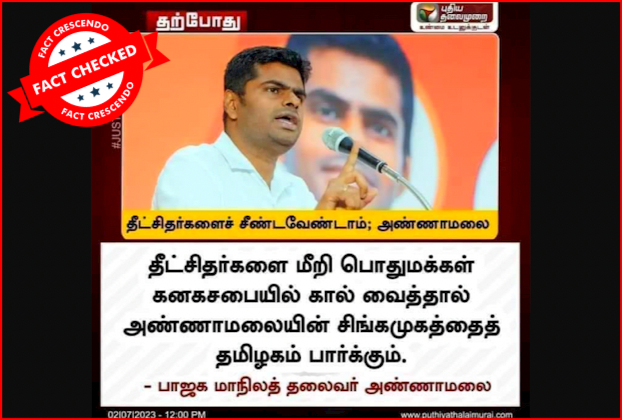
Claim: Annamalai not warned tamil nadu people on chidambaram dikshitars issue
Publisher’s rating: ஃபேக்ட் கிரஸண்டோ ரேட்டிங்: FALSE
This photograph displays a missing child called Sofia.
Publisher’s rating: False
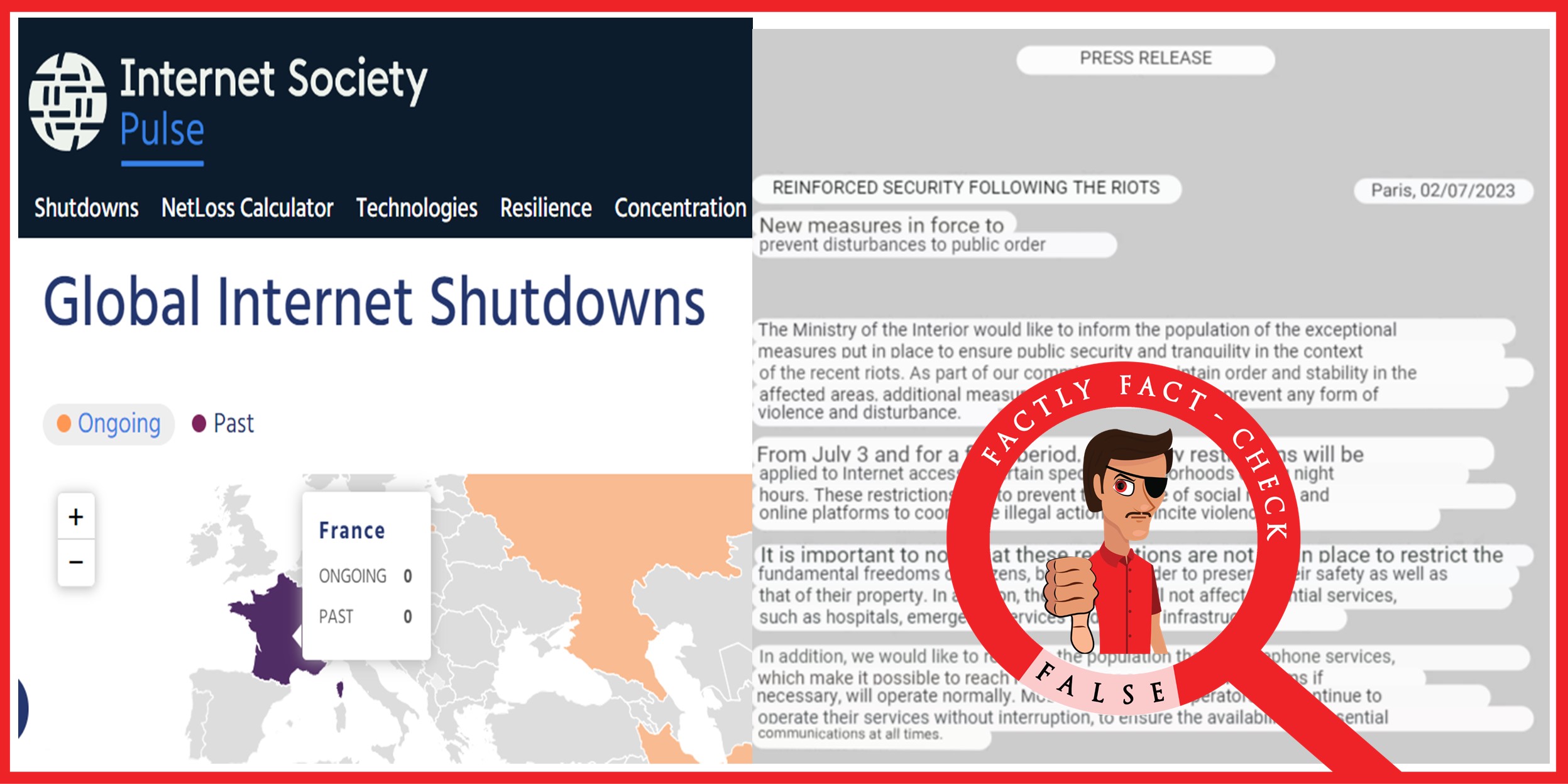
French Ministry of Interior, in a press release, has announced a partial ban on internet access starting from 03 July 2023 to curb the misuse of social media platforms for coordinating illegal activities that incite violence
Publisher’s rating: FALSE
The claim concerned a purported press release saying that France would begin a partial internet-access ban on 3 July 2023 to curb the use of social media to coordinate illegal activities inciting violence. The review places the claim amid unrest in France following the death of a teenager at the hands of a police officer. Its subject was the alleged ban and the authenticity of the circulating letter, not a report that access restrictions had actually taken place. The review says it searched online using relevant keywords and found a French Ministry of Interior statement issued on 2 July 2023. According to the review, that statement explicitly rejected the letter as false and said the government had made no decision to impose an internet ban in connection with the unrest. It also reports a corresponding statement from the Ministry for Europe and Foreign Affairs on 3 July that dismissed the viral letter. The investigation further notes that local media and internet-shutdown trackers reported no internet shutdowns in France at that time. Taken together, the official denials directly address the purported document and the alleged government decision, while the reported absence of shutdowns provides additional context. The review concludes that no official decision to impose the claimed ban had been made; the excerpts do not provide the text of the purported letter or the full statements themselves.

صعود ایران به جایگاه چهارم دنیا در تولید علم مرتبط با علوم و فناوری آب
Publisher’s rating: گمراهکننده
Madonna's hospitalization was caused by the COVID-19 vaccine.
Publisher’s rating: False
Where the data comes from
Fact checks come from Data Commons and link to the organizations that published them.
What you’ll find
Each result links to the original fact check. Open it to read the publisher’s findings, with summaries and supporting sources where available.
Report an error
To report an error, send the page URL and supporting evidence.