PeakMetrics / Fact Checks
Has this been
fact-checked?
Paste a claim or upload an image to find existing fact checks. See what fact-checkers found and read the evidence before you share.
Search fact checks ↓API & integrations ↗Browse by topic
Explore fact checks by subject.
Search fact checks
Search by text or imageLatest fact checks
98,230 published reviews
52 Philippine universities are on World University Rankings lists
Publisher’s rating: Misleading

Klaus Schwab vient d'admettre publiquement qu'il envisage de mettre en œuvre des confinements forcés de Covid à la chinoise partout dans le monde pendant la prochaine pandémie dont il s'attend à ce qu'elle se produire bientôt.
Publisher’s rating: Non. Le WEF les a démenties auprès de la dpa. Il n'existe par ailleurs aucune preuve que Klaus Schwab ait tenu de tels propos, d'autant plus qu'il ne possède pas le pouvoir d'instaurer ce genre de mesures.

दीमापुर में दिनदहाड़े रिपोर्टर का अपहरण हो गया
Publisher’s rating: False

Governo da Itália, solicita a Alexandre de Moraes, não pisar em solo italiano.
Publisher’s rating: Falso

යුප්රටීස් ගඟ සිඳී යාම නුදුරේදීම සිදුවන ලෝක විනාශයක පෙරනිමිත්තක්ද ? කරුණු සොයා බලමු.
Publisher’s rating: Missing Context
The review investigates a social-media claim that the Euphrates will dry up completely and that this would herald the end of the world. It focuses on a video that became popular among WhatsApp users in Sri Lanka and also circulated on Facebook. According to the article, the speaker uses biblical passages to predict the river’s complete drying and an extraordinary event associated with the final judgment. The review places that claim alongside religious references to the Euphrates in Christianity and Islam, rather than treating the video’s prediction as evidence that an apocalypse is imminent. To assess the proposed divine explanation, the article quotes University of Sri Jayewardenepura environmental-management professor Hemanthi Ranasinghe, who says there is no evidence that the river drying is a sign of divine punishment and attributes it to human activity. The review then describes several contributing factors: regional disputes and water-management decisions among countries sharing the basin; ISIS’s past control of important water infrastructure and its manipulation of river flow; dams and hydropower development; and climate change, including rising temperatures and reduced rainfall. The article reports that flow in the Tigris–Euphrates system had fallen to around half the average annual flow during dry years in recent decades, and that the Euphrates’ water level was at a record low at the time described. Its account therefore treats the falling water level as a serious environmental and human-driven problem, but does not establish it as a supernatural warning or proof of an imminent end of the world.
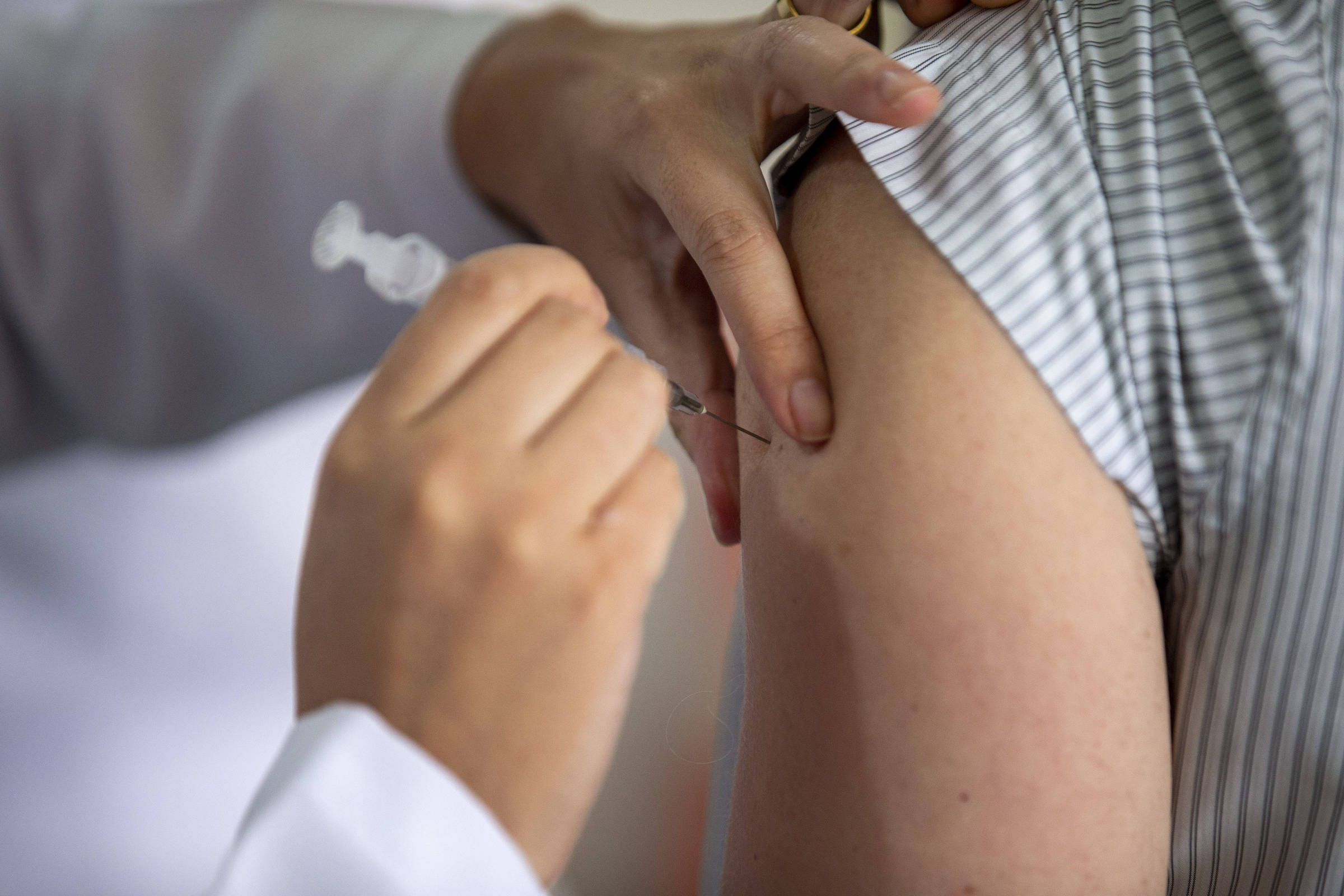
Post nas redes sociais apresenta uma reportagem televisiva em inglês e afirma na legenda: “Flórida declara vacina de mRNA contra Covid uma ‘Bio-Arma’. Legislação a ser aprovada torna ILEGAL a administração de qualquer vacina mRNA a qualquer pessoa no estado”.
Publisher’s rating: Enganoso

Congress party leaders sat before a banner that reads ‘…Chor Group Meeting.’
Publisher’s rating: FALSE
FACTLY examined a viral image said to show Congress party leaders seated beneath a banner reading ‘…Chor Group Meeting.’ The post’s explanation was that “Core” had been misspelled as “Chor” and that the leaders had not noticed. The review’s finding was that the image was digitally edited, rather than a genuine photograph of the leaders with that banner. To investigate, FACTLY says it used Google reverse image search. It found reports from 2019 containing an image it describes as identical to the viral photo. Those reports placed the photograph at a Congress Working Committee meeting in Delhi in May 2019. In the earlier image, according to FACTLY, the banner displayed the Congress party’s name in Hindi and English, not the “Chor Group Meeting” text. The review also compared the viral image with photos and videos of the same meeting taken from other angles. FACTLY reports that the wording “Chor Group Meeting” is absent in those views as well. The comparison of the earlier photograph and footage from the same gathering supports its conclusion that the banner text in the viral version was digitally added.

Alle Wahlen nichtig nach Urteil des Bundesverfassungsgerichts
Publisher’s rating: Nein. Das Bundesverfassungsgericht hat im Jahr 2012 eine damals noch nicht angewandte Fassung des Bundeswahlgesetzes für nichtig erklärt. Auf die Gültigkeit früherer Wahlen hatte das keine Auswirkungen.
The claim comes from a social-media video headed “Bundesverfassungsgericht” that presents the words “Alle Wahlen nichtig” as the announcement of a court ruling. The dpa review identifies the footage as the announcement by then-president Andreas Voßkuhle of a decision concerning Germany’s federal election law. It reports that the recording came from a live broadcast by phoenix and was about eleven years old when the review was written. The decision was issued on 25 July 2012. The court found the version of the Federal Election Act reformed in 2011 unconstitutional and void, but that version had not yet been applied in a federal election. According to the court spokesperson quoted by dpa, the case concerned only the provisions in the 2011 version. The ruling therefore did not invalidate earlier elections. The dispute concerned rules for allocating seats in the Bundestag, especially the “negative vote weight” effect and its connection to overhang seats. The review also explains that declaring a law void does not automatically invalidate all decisions previously made under it. It notes that election validity is decided through a separate election-review procedure, and that even a finding of an error in such a proceeding does not necessarily make an election invalid.

A very important health issue. It is referred to as the world’s tiniest poisonous snake and it is often found inside capsicum. Pls always cut open capsicum before you use either for grinding or for salad. We must not be victims of circumstance. Kindly share with friends n family.
Publisher’s rating: Misleading

మణిపూర్లో కుకి మిలిటెంట్లు హిందూ మైతేయ్ తెగకు చెందిన చిన్నారిని ISIS తరహాలో హత్య చేసిన దృశ్యాలు
Publisher’s rating: FALSE

El paro cardíaco que sufrió Bronny James, hijo mayor de la superestrella de la NBA LeBron James, está relacionado con una miocarditis producida por haber recibido la vacuna contra el covid-19.
Publisher’s rating: No hay evidencias

Imagem mostra o presidente Lula acompanhado do ex-prefeito de Maricá (RJ) Washington Quaquá e de Lurian Cordeiro Lula da Silva. Sobre a foto está escrito: “Lurian, filha do Lula, criou em 2003 a Rede 13, ONG para arrecadar alimentos para os pobres. Após receber repasse de 7 milhões do Governo Federal, embolsou o dinheiro e fechou a ONG. Os pobres ficaram sem a comida.”
Publisher’s rating: Enganoso

Vídeo com discurso do deputado de Nova York (EUA) George Santos em que ele critica a política externa do governo do presidente Luiz Inácio Lula da Silva (PT). Sobre a gravação, foi inserida a frase “A cobra vai fumar. Lula procurado pela Justiça estrangeira?”.
Publisher’s rating: Enganoso
We all know that Manipur has been a complex state, even before BJP came to power. Peace and Manipur don’t co-exist. If you have a closer look, you can notice that before 2014 Manipur has seen more deaths, military fights and murders. Only after 2014, it is moving towards peace – Annamalai, Tamil Nadu BJP leader.
Publisher’s rating: Misleading

Aux Pays-Bas, les médecins ont reçu l'ordre de commencer à euthanasier les citoyens, y compris les enfants, qui souffrent d'un handicap mineur, d'autisme et d'alcoolisme afin de « sauver la planète ».
Publisher’s rating: Non. Ces affirmations sont infondées. L'euthanasie aux Pays-Bas n'est réalisée que sur les personnes qui en font la demande et les médecins qui la pratique doivent suivre des règles strictes. Le gouvernement néerlandais n'a jamais affirmé que cette pratique sauverait la planète.
The review traces the allegation to a July 22, 2023 article on The People’s Voice, which claimed Dutch doctors had been instructed to euthanize people with minor disabilities, autism or alcoholism, as well as children under 12, in order to save the planet. The review says the article invoked a Kingston University study of euthanasia cases from 2012 to 2021, rather than a new government order. The Netherlands had legalized euthanasia in 2001, with the law taking effect in 2002; the review therefore finds that describing the practice as newly “starting” misrepresents the chronology. [S1: “Les publications Facebook qui partagent ces affirmations renvoient à un article publié le 22 juillet 2023 sur le site américain The People's Voice.”; “Les chercheurs ont examiné 927 cas d'euthanasie entre 2012 et 2021”] On the claim of an order to doctors, the review cites the Dutch law’s six care requirements. A doctor must be convinced that the patient’s request is voluntary and carefully considered; doctors decide independently and act only at the patient’s explicit request, and may refuse to perform euthanasia. The study’s figures also do not establish an order: intellectual disability or autism was identified in 39 of the 927 cases examined, and the review notes that these cases involved psychological distress and remained subject to the care requirements. [S1: “Les médecins décident en toute indépendance d'aider un patient à pratiquer l'euthanasie, et ce, uniquement à la demande explicite du patient.”; “Pour 39 de ces patients, une déficience intellectuelle ou un trouble du spectre autistique (TSA) a été indiqué comme étant en cause.”] The review says alcohol featured in one Dutch euthanasia case in 2016, where alcoholism associated with depression was considered unbearable suffering. It distinguishes that case from a general policy targeting people with alcoholism. As for children, Dutch law applies from age 12, with parental or guardian consent required until age 16. A proposal for some children under 12 with grave, incurable conditions had not been adopted when the review was written: it had received support in the lower chamber, but the government’s fall in early July left the proposal unadopted. The review says the claim that euthanasia had begun for these groups to save the planet was invented. [S1: “En 2016, l'alcool a joué un rôle dans l'euthanasie d'une seule personne aux Pays-Bas.”; “Toutefois, le gouvernement néerlandais étant tombé début juillet en raison de désaccords sur la question migratoire, cette proposition sur l'euthanasie n'a pas été adoptée.”; “L'affirmation selon laquelle le gouvernement néerlandais aurait déclaré que les personnes autistes, handicapées et alcooliques devraient être euthanasiées pour sauver la planète est donc une déclaration totalement inventée.”]


కశ్మీర్లో ఆర్టికల్ 370 ఉన్నట్టు మణిపూర్లో ఇప్పటికీ ఆర్టికల్ 371C అమలులో ఉంది
Publisher’s rating: MISLEADING
Where the data comes from
Fact checks come from Data Commons and link to the organizations that published them.
What you’ll find
Each result links to the original fact check. Open it to read the publisher’s findings, with summaries and supporting sources where available.
Report an error
To report an error, send the page URL and supporting evidence.