PeakMetrics / Fact Checks
Has this been
fact-checked?
Paste a claim or upload an image to find existing fact checks. See what fact-checkers found and read the evidence before you share.
Search fact checks ↓API & integrations ↗Browse by topic
Explore fact checks by subject.
Search fact checks
Search by text or imageLatest fact checks
98,230 published reviews
Yalancının mumu yatsıya kadar yanar atasözünün sözde “yassı” aletinden geldiği iddiası
Publisher’s rating: Yanlış

Papst Franziskus sagt, dass Menschen mit Behinderungen eingeschläfert werden sollten, um „den Klimawandel zu bekämpfen“ und setzt sich damit für Ziele des Weltwirtschaftsforums ein.
Publisher’s rating: Nein. Die behaupteten Äußerungen des Papstes sind frei erfunden.
Pope Francis called for euthanizing people with disabilities and alcoholics to combat climate change
Publisher’s rating: FALSE

Recent pictures showing the violence in Haryana
Publisher’s rating: FALSE
The claim concerns a collage presented as recent pictures of communal violence in Haryana, amid clashes in Nuh. FACTLY’s review says it used reverse image searches to trace the pictures to earlier reporting and compared the images’ published descriptions and locations with the claim. Its conclusion is that the pictures predate the Haryana clashes and depict unrelated events. For the first image, the review found the same photograph in an August 2017 National Herald article. It says that report identified the scene as violence following Gurmeet Ram Rahim Singh’s conviction in a rape case in Panchkula. For the second, FACTLY found the same photograph in an Outlook article from December 2019; its caption identified a policeman hitting a civilian during an anti-Citizenship (Amendment) Act protest in Kanpur. The third image was found in a Times of India article dated 25 December 2019, with a caption describing police clashing with protesters at a CAA rally in Kanpur. The fourth photograph was traced to an NDTV article dated 20 February 2013. FACTLY reports that the article described vandalism in Greater Noida during a two-day Bharat Bandh called by 11 major trade unions. These identified earlier sources place the images in Panchkula in 2017, Kanpur in 2019, and Greater Noida in 2013—not in the recent Haryana violence. The review therefore concludes that the collage does not show the event claimed.


Das Video zeigt den nigrischen Finanzminister, der bei einem Verhör nach dem Militärputsch in Tränen ausbricht
Publisher’s rating: Falsche Videobeschreibung. Der Clip hat keinen Bezug zum aktuellen Militärputsch im Niger. Er stammt aus dem Jahr 2021 und zeigt einen Ex-Minister, der während der Machtübernahme des Militärs längst nicht mehr im Amt war.
The claim attached to the circulating clip was that Niger’s finance minister had broken down during an interrogation after the July 2023 military takeover, supposedly while being asked about missing public money. The review says the footage is not from that coup or an interrogation: it is from 2021 and shows a former minister who was no longer in office when it was recorded. The man is identified as former justice minister Marou Amadou, not finance minister Ahmat Jidoud. (S1: “Nun kursiert in sozialen Medien ein Video, das zeigen soll, wie ein Politiker der gestürzten Regierung vernommen wird. «Der Finanzminister des Niger brach beim Verhör in Tränen aus», heißt es dazu. Angeblich soll das passiert sein, als der Minister erklären sollte, wohin Geld «aus dem Staatsschatz» verschwunden sei. Dazu ist ein Video zu sehen, in dem sich ein Mann weinend die Augen reibt. Doch es stammt aus einem ganz anderen, älteren Kontext.”; “Es ist seit Dezember 2021 im Internet zu finden und zeigt den früheren nigrischen Justizminister Marou Amadou - nicht den bisherigen Finanzminister.”) The review describes a reverse-image search using frames from the video, which led to a France 24 fact-check and a post identifying the footage’s earlier origin. It reports that a Facebook user posted the video on December 27, 2021, saying it showed Amadou that day at the Bravia Hotel in Niamey. The Nigerien Press Agency reported that Amadou held a press conference there to present a newly founded, non-governmental centre for climate and security studies. The review says the agency’s report and visual details support that identification. (S1: “Eine Bilderrückwärtssuche mit Ausschnitten aus dem Video führt zu einem Faktencheck des Senders France24 und einem Tweet, der über die echte Herkunft des Videos aufklärt. Es ist seit Dezember 2021 im Internet zu finden und zeigt den früheren nigrischen Justizminister Marou Amadou - nicht den bisherigen Finanzminister. Ein Facebook-Nutzer veröffentlichte das Video am 27. Dezember 2021. Seinen Angaben zufolge zeigt es Marou Amadou an diesem Tag im Hotel Bravia in der nigrischen Hauptstadt Niamey. Das Ereignis lässt sich anhand eines Berichts der Nigrischen Presseagentur bestätigen: Demnach hielt Amadou am 27. Dezember eine Pressekonferenz ab, um sein neu gegründetes Zentrum für Klima- und Sicherheitsstudien vorzustellen, eine nicht-staatliche Organisation.”) The review further compares the video with images from that press conference: it reports matching clothing, glasses and hat, as well as corresponding lines on the wall in the background. It also notes that Amadou had left the justice ministry in April 2021, months before the video’s stated recording date. By contrast, the review says comparison with photographs of finance minister Jidoud shows different facial features and a lighter complexion than the man in the clip. It could not establish why Amadou cried; suggested explanations circulating on two Facebook pages were not independently verified. (S1: “Auf Fotos der Pressekonferenz von 2021 trägt Amadou auch die gleiche Kleidung, die gleiche Brille und den Hut, die alle in dem aktuell kursierenden Social-Media-Video erkennbar sind. Auch die Linien auf der Wand im Hintergrund stimmen im Video und auf dem Pressefoto überein. Warum genau der Ex-Justizminister während der Pressekonferenz weinte, ist nicht klar. Auf zwei weiteren nigrischen Facebook-Seiten heißt es, sein Gefühlsausbruch sei ein Dank oder eine Hommage an den ehemaligen Präsidenten Mahamadou Issoufou gewesen. Ob das zutrifft, ließ sich nicht unabhängig verifizieren. Auch ein Vergleich mit Fotos des bisherigen nigrischen Finanzministers Ahmat Jidoud, zeigt, dass die Männer verwechselt wurden.”)

Video muestra la aparición de un ovni en las costas de Galicia (España).
Publisher’s rating: Falso
The claim concerns a viral clip said to show a UFO appearing off the coast of Galicia, Spain. The review describes an 18-second video, supposedly filmed from a small fishing boat, in which two fighter jets pursue an object that then sinks into the sea. It reports that the video was circulating on Instagram with text presenting it as an old “Galician sighting” followed by something new. The investigation identifies the clip instead as a publicity campaign made for the Spanish news portal Terra. [S1: “En el video, grabado supuestamente en la cubierta de un pequeño barco de pesca y de 18 segundos de duración, se observa cómo dos aviones de combate cruzan el cielo persiguiendo a un tercer objeto que se mantiene sostenido en el aire y que, de repente, se hunde en el mar.”] The review explains that a Google search for “galicia ovni avistamiento pesquero” turned up a YouTube upload titled “23-9-2009. El ovni gallego.” Its description credited Películas Pendelton and named Jim-Box and Gonzaga Manso as creators, working for Terra and agency DDB. The review also says it consulted an archived version of DDB Spain’s website. These sources link the footage to an advertising production, rather than establishing that it records an actual sighting. [S1: “La descripción se puede leer: ‘pieza creada por Películas Pendelton y realizada por Jim-Box y Gonzaga Manso para TERRA y la agencia DDB’”] The review further cites statements from people connected to the production: Luis Manso said it was a Terra advertising campaign intended to attract traffic to Terra.es, while director Rodrigo Pineda said the video was not meant to demonstrate that the images were real. The review’s conclusion is that the clip does not show a UFO appearing off Galicia; it was created as advertising. [S1: “Luis Manso, responsable del proyecto, comentó que el video fue una campaña de publicidad de Terra que ‘en su momento quiso hacer algo llamativo y viral para atraer tráfico hacia su portal de noticias Terra.es’.”]

This video of man desecrating a Hanuman idol is from Hyderabad
Publisher’s rating: FALSE

मणिपुर में महिलाओं के साथ हो रही एक और आपत्तिजनक घटना सामने आई है। महिलाओं के साथ फिर से दुर्व्यवहार किया गया।
Publisher’s rating: False

Beelden van mensen die opzettelijk branden stichten, zodat de media het kunnen rapporteren als klimaatverandering.
Publisher’s rating: Er is geen sprake van een complot. De video toont een in de VS veelgebruikte methode om grote natuurbranden juist in te dammen.
The claim attached to the viral video suggested that people were deliberately starting fires so the media could report them as climate change. The review traced the video to an earlier incident in Arizona, rather than to the contemporary fires around the Mediterranean. It reports that reverse-image searches found versions posted on Instagram, TikTok and Viralhog in 2020, all by Charles Dona. Viralhog’s description dated his footage to 13 July 2020, during a fire in San Carlos, on the Apache Tribe Reservation, and described the action as a “burnout” intended to stop a larger fire spreading. (S1) The review explains that the person uses a drip torch to set a controlled fire, creating a burned strip that can contain a larger wildfire by removing fuel or preventing the fire from spreading beyond the strip. It places this technique in the work of wildland firefighters, who use controlled fires to contain or prevent wildfires. The footage therefore shows a fire-management operation, not evidence that someone was starting a fire to create a misleading media narrative about climate change. (S1) The review also reports two pieces of evidence about the specific incident. Dona’s TikTok profile identified him as a wildland firefighter, and in 2021 he told the Associated Press that the video showed a normal tactic for controlling a fire by creating fire lines. Separately, the local San Carlos Apache Forest Resources Program’s Facebook page began reporting on the fire on 14 July 2020; the review says those posts indicate it was caused by lightning. The video’s 2020 Arizona setting and the reported cause of that fire do not support the claim linking the footage to Mediterranean fires. (S1)
Video shows the funeral procession for Celine Dion
Publisher’s rating: False
Foxconn unit denies signing components’ plant deal with #TamilNadu: Report
Publisher’s rating: Misleading
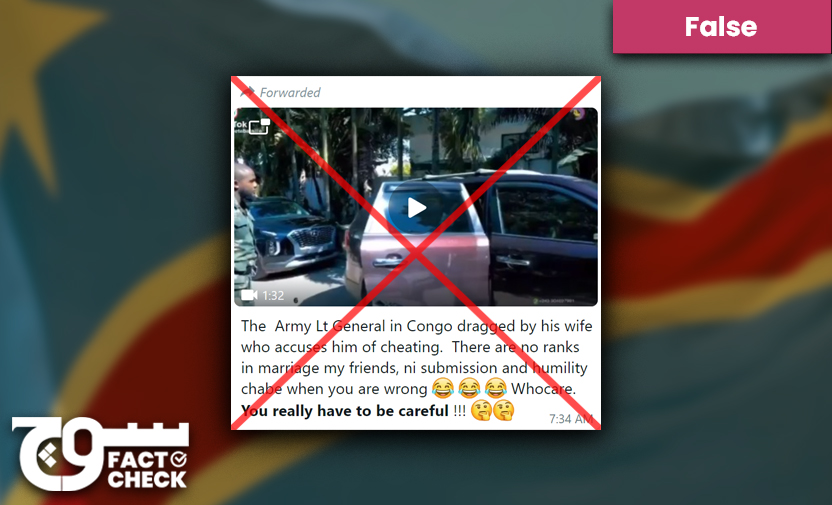
A video shows the Congo Army chief being dragged away from his vehicle into a building by his wife, who has accused him of cheating.
Publisher’s rating: False
Soldiers in Niger training for the recent coup
Publisher’s rating: False
Where the data comes from
Fact checks come from Data Commons and link to the organizations that published them.
What you’ll find
Each result links to the original fact check. Open it to read the publisher’s findings, with summaries and supporting sources where available.
Report an error
To report an error, send the page URL and supporting evidence.