PeakMetrics / Fact Checks
Has this been
fact-checked?
Paste a claim or upload an image to find existing fact checks. See what fact-checkers found and read the evidence before you share.
Search fact checks ↓API & integrations ↗Browse by topic
Explore fact checks by subject.
Search fact checks
Search by text or imageLatest fact checks
98,230 published reviews
දරුවෙකුගේ පිටුපස කැස්බෑවෙකු අල්ලාගෙන ඇති අවස්ථාවක් ලෙස හුවමාරු වන සටහනේ ඇත්ත කතාව!
Publisher’s rating: False

Hindu vigilantes tattooed ‘Jai Bholenath’ on the forehead of a Muslim boy by heating iron rods, in UP’s Bareilly district
Publisher’s rating: FALSE
The claim concerns a boy in Bareilly, Uttar Pradesh, whose forehead was marked with the words ‘Jai Bholenath’. It alleged that Hindu vigilantes used heated iron rods, making the incident an attack by members of another religious community. The review distinguishes the real incident from that account: it says the victim and the people responsible were from the same Muslim community, and were cousins. [S1: “The victim and the accused in this incident belong to minority community and are cousins.”] [S1: “It is true that a Muslim boy’s forehead has been tattooed in the Bareilly district of Uttar Pradesh. However, there is no communal angle in this incident”] To investigate, FACTLY says it searched for the incident using relevant keywords, found a post from the official Bareilly police account responding to similar allegations, and consulted a news report. It also says it contacted Premnagar police. The accounts it describes identify the accused as the victim’s cousin Shadab Khan and say he wrote the phrase with a marker pen—not with a heated rod. [S1: “Online search with appropriate keywords directed us to a tweet from the official Bareilly police Twitter account”] [S1: “According to the tweet from the Bareilly police, the individual responsible for the incident has been identified as Shadab Khan, who is a cousin of the victim. He used a marker pen to write a religious phrase.”] [S1: “in our communication with the Premnagar police, they explicitly rejected any communal connection to the incident.”] The review also reports that the victim’s mother did not seek formal action. It says the family requested a compromise and that this led to the decision not to register an FIR. These details explain the reported handling of the case; they do not support the claim of a communal attack or the use of heated iron rods. [S1: “the victim’s mother did not file a complaint because they are relatives.”] [S1: “the family initially requested a compromise in the matter, leading to the decision not to register an FIR”]
طی دو سال اخیر هیچ موردی مبنی بر اخراج هیات علمی در دانشگاه تهران رخ نداده است.
Publisher’s rating: شاخدار
मैं रूकेगा नहीं ,यह एकदम लेटेस्ट है इटली का माल बहुत असरदार है,लाखो करोड रुपए हमने ,युँ ही देश के गरीब जनता में बांट दिए,उन्हे अरबपति बना दिया।
Publisher’s rating: Altered
the CDC removed COVID-19 VAERS from its website?
Publisher’s rating: Mostly False

Este video muestra imágenes de una "fábrica de carne humana en América".
Publisher’s rating: Falso

関東大震災、朝鮮人が毒を入れようとしたのはデマではなく事実
Publisher’s rating: 誤り
The review reports that post-earthquake records found no evidence of organized crimes or poisonings by Koreans, and that the cited contemporary newspaper stories relied on incorrect information. It notes that the judicial records described the alleged assault cases as having unidentified suspects. [S1: “朝鮮人による暴動や略奪、毒の散布などの事実はなく、司法省発表の朝鮮人による殺傷事件についてはすべて「被疑者不詳」だった。”] [S1: “これらの新聞記事自体が、誤った情報に基づいて報道された誤報だった。”]
Bongbong Marcos retreived $987 billion from a bank account in Belgium
Publisher’s rating: Fake
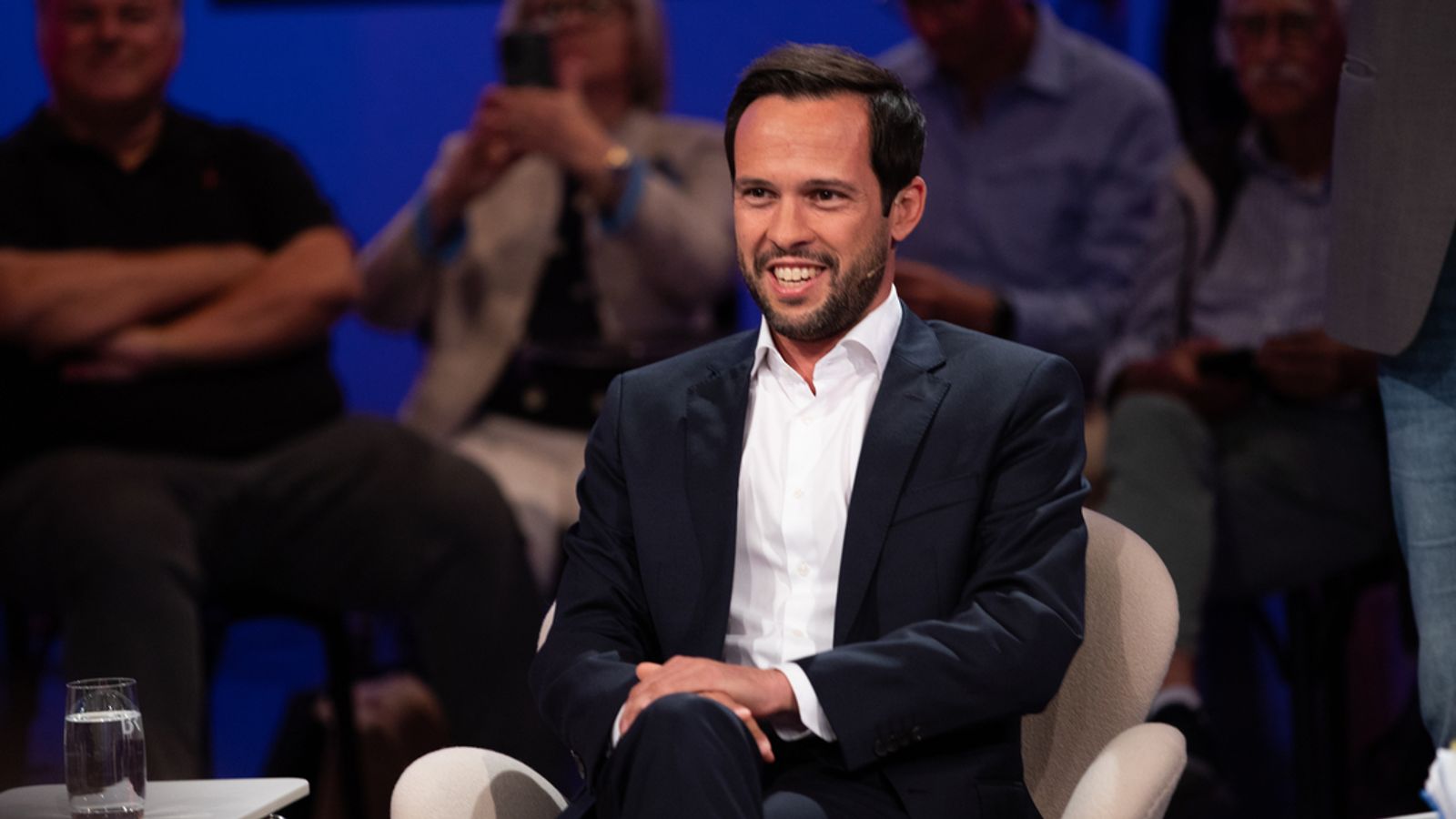
“Es würde Eltern in Bayern helfen, wenn wir hier nicht diesen akuten Kitaplätzemangel hätten. Es würde Eltern und Familien in Bayern helfen, wenn wir nicht in Bayern mit die geringste Quote an Fachpersonal in den Kitas hätten. Es würde den Menschen in Bayern helfen, wenn wir hier nicht die geringste Quote von Ganztagsschulplätzen hätten.”
Publisher’s rating: Hagen stellt in diesem Zitat drei Behauptungen auf - und er liegt bei allen drei richtig. Bei der Fachpersonal-Quote hätte er sich "mit" sogar sparen können. Bayern weist auch hier die geringste Quote auf.
The quote comes from a BR24 election-talk fact-check that reproduces Martin Hagen’s three claims about childcare shortages, specialist staff in day-care centres and all-day school places in Bavaria. The review assesses each separately and concludes that all three are correct. It says it relies on a 2022 federal-family-ministry study for childcare demand and provision, and on the Bertelsmann Stiftung’s Länder-Monitor for the staffing and school comparisons. For children under three, the review compares Bavaria’s 2022 childcare attendance rate of 30.5% with the 42.4% of parents who said they needed care: a gap of nearly 12 percentage points. It reports that the same gap was 10.2 points in 2021. For children over three, it gives a six-point difference in 2022, comparing 91.7% provision with 97.7% parental demand, and notes that this gap had been nearly three points in 2021. These figures support the review’s finding of a shortfall while showing that the comparison is between provision and reported need, not simply the share of children enrolled. On staffing, the review says that in 2021 Bavaria had the lowest proportion of Kita employees with a relevant professional qualification among the German states: 48.3%, compared with 67.5% nationwide. For all-day primary-school places, it reports that Bavaria also ranked lowest in the 2020/21 school year, with 17.5% of pupils in all-day primary schools versus 44.1% nationwide. The excerpt supplies these comparisons and names the reports behind them, but does not include the underlying reports’ tables or further methodological detail.

#Delhi : Video from Sansad Marg, where large group of pissfools taking out procession chanting radical slogans. All this just 2 days prior to #G20Bharat summit. What is this preparation for..?? Same way they started the anti Hindu roits in name of anti CAA protests while the then US president Donald Trump was on visit to Bharat. Btw , remember every time the clown prince visits abroad he comes with a new stock of kerosene to sprinkle all over Bharat .
Publisher’s rating: Misleading
This video shows a jeep stuck in mud after heavy rains hit the 2023 Burning Man festival.
Publisher’s rating: False

"Es gab schon immer Wandel und Änderung im Klima. Und der Glaube, dass wir als Bayern oder als Deutschland durch Reduzierung von CO₂-Ausstoß irgendwas am Weltklima ändern können, ja, dieser abstruse Gedanke (...)"
Publisher’s rating: Diese Aussage ist irreführend. Zu behaupten, dass die derzeit beobachtete Erwärmung wie frühere Phasen sei, impliziert, der Mensch sei nicht dafür verantwortlich. Das ist falsch.
حسین رضازاده رکورددار وزنهبرداری نبوده. سالها پیش در ۱۹۸۸ یک ورزشکار از شوروی سنگینترین وزنه را بلند کرده است.
Publisher’s rating: نیمهدرست

"Also nochmal zum Thema der Kitabetreuung: Wenn Sie sagen, in Bayern sei die Betreuungsquote der Ein- bis Dreijährigen sehr niedrig: Ja, weil wir eben in Bayern noch häufig Drei-Generationen-Familien haben, wo die Omi noch sagt: Ich geb das Kind mit einem Jahr noch nicht in die Kita, sondern das bleibt noch zu Hause. Das heißt ja nicht automatisch, dass jedes Kind mit zwölf oder 13 Monaten an eine Kita gegeben würde, wenn sie eine Kita hätten. Die sagen gezielt: Das soll noch zu Hause bleiben."
Publisher’s rating: Die Behauptung ist überwiegend falsch. Richtig ist, dass nicht "jedes" Kind in eine Kita kommen würde, wenn es einen Platz hätte. Aber: Drei-Generationen-Haushalte machen in Bayern nur einen sehr kleinen Teil der Lebensformen aus. Und Auswertungen zeigen eindeutig, dass sich mehr Eltern einen Kitaplatz wünschen, als ihn derzeit bekommen.

فولكس فاجن تعلن وقف إنتاج سيات نهائيًا
Publisher’s rating: خبر كاذب - فت شركة كيان إيجيبت وكيل السيارة في مصر تلك الأنباء، حيث نشرت بيانًا مرسلًا إليها من الشركة المنتجة تنفي من خلاله توقف العلامة التجارية سيات

Dit is een WEF-document
Publisher’s rating: Het document is een vervalsing en komt niet van het WEF.
The claim concerns an online document, displaying the World Economic Forum (WEF) logo, that purported to set out a plan for a future pandemic. The review examined whether that document was authentic. Its investigation found no copy on the WEF website, including after a Google search of the site. It also noted that the document used Times New Roman, whereas the review says WEF documents use a different typeface. Those observations raised doubts about the document, but the review also reports a direct confirmation from a WEF spokesperson to dpa that it was not genuine and did not originate from the organization. The document’s circulation offered further context, rather than evidence of WEF authorship. The version described in the review was cut off around halfway down the page, ending at a point about the United Kingdom and Ireland; the review says it found no complete version online. Text versions also ended at that point. The earliest copy dpa found was posted on X on 30 August 2023, and its poster reportedly acknowledged in a reply that the document was not authentic. The review therefore distinguishes the existence and circulation of the document from its claimed origin: a logo and assertions about a future pandemic do not establish that the WEF created it. It reports no reason to consider the document WEF-authored, while noting that the claims about a coming pandemic and lockdown were based on unsupported assumptions.

Sneeuw in Milaan eind augustus.
Publisher’s rating: Nee, het sneeuwde in augustus niet in Milaan. De foto is gemaakt op 21 december 2009.
The claim concerns a photograph circulated as evidence that it snowed in Milan during August. The review describes the image as showing Milan Cathedral, a snow-covered square and falling snow, and checks whether it depicted the claimed August conditions: “Als bewijs leveren ze een romantische foto van de Kathedraal van Milaan op een besneeuwd plein en met vallende sneeuwvlokken.” The investigation used a reverse image search to locate the original photograph on Flickr. It reports that Italian photographer Stefano Bertolotti made and uploaded it on 21 December 2009—not during August: “Na een zoektocht op het internet via een reverse image search, is de originele foto op het platform Flickr terug te vinden. De foto werd op 21 december 2009 gemaakt en geüpload door de Italiaan Stefano Bertolotti.” The review also places the image date in a documented winter-weather setting. It says older weather reports confirm snowfall in Milan on 21 December 2009, with as much as 30 centimetres in some places in and around the city in the days before Christmas. For August 2023, it reports sunshine and temperatures around 30 degrees for much of the month, followed by severe storms and flooding near its end—not the snowy scene in the photograph: “Deze augustus scheen vooral de zon in Milaan, met temperaturen rond de dertig graden. Aan het eind van de maand kreeg de stad te maken met noodweer: in twee dagen tijd viel er zoveel regen als gemiddeld genomen in een maand tijd.”
Typhoon Hanna is twice as powerful as Super Typhoon Yolanda
Publisher’s rating: False
A carbon shortage is killing forests and making plants sick
Publisher’s rating: False

Heizen mit Holz ist auch nach Verabschiedung des Heizungsgesetzes erlaubt
Publisher’s rating: Heizen mit Holz ist nach wie vor erlaubt
Where the data comes from
Fact checks come from Data Commons and link to the organizations that published them.
What you’ll find
Each result links to the original fact check. Open it to read the publisher’s findings, with summaries and supporting sources where available.
Report an error
To report an error, send the page URL and supporting evidence.