PeakMetrics / Fact Checks
Has this been
fact-checked?
Paste a claim or upload an image to find existing fact checks. See what fact-checkers found and read the evidence before you share.
Search fact checks ↓API & integrations ↗Browse by topic
Explore fact checks by subject.
Search fact checks
Search by text or imageLatest fact checks
98,230 published reviewsTed Gunderson was assassinated for exposing chemtrails.
Publisher’s rating: False
बारिश होने से 10 सितम्बर को मैच हुआ रद्द , स्टेडियम में हुआ हंगामा
Publisher’s rating: False
No law requires government officials to submit their Statement of Assets, Liabilities and Net Worth.
Publisher’s rating: False

The video shows Neil Armstrong speaking about his conversion to Islam
Publisher’s rating: FALSE
Video shows houses on a river bank about to be swept away by raging water, supposedly in the Philippines
Publisher’s rating: Misleading

Government of India introduced a new scrap policy for mobile phones and other electronic goods
Publisher’s rating: MISLEADING

భారత రాజ్యాంగ పీఠిక నుండి ‘సోషలిస్ట్’, ‘సెక్యులర్’ పదాలు తొలగించారు
Publisher’s rating: FALSE
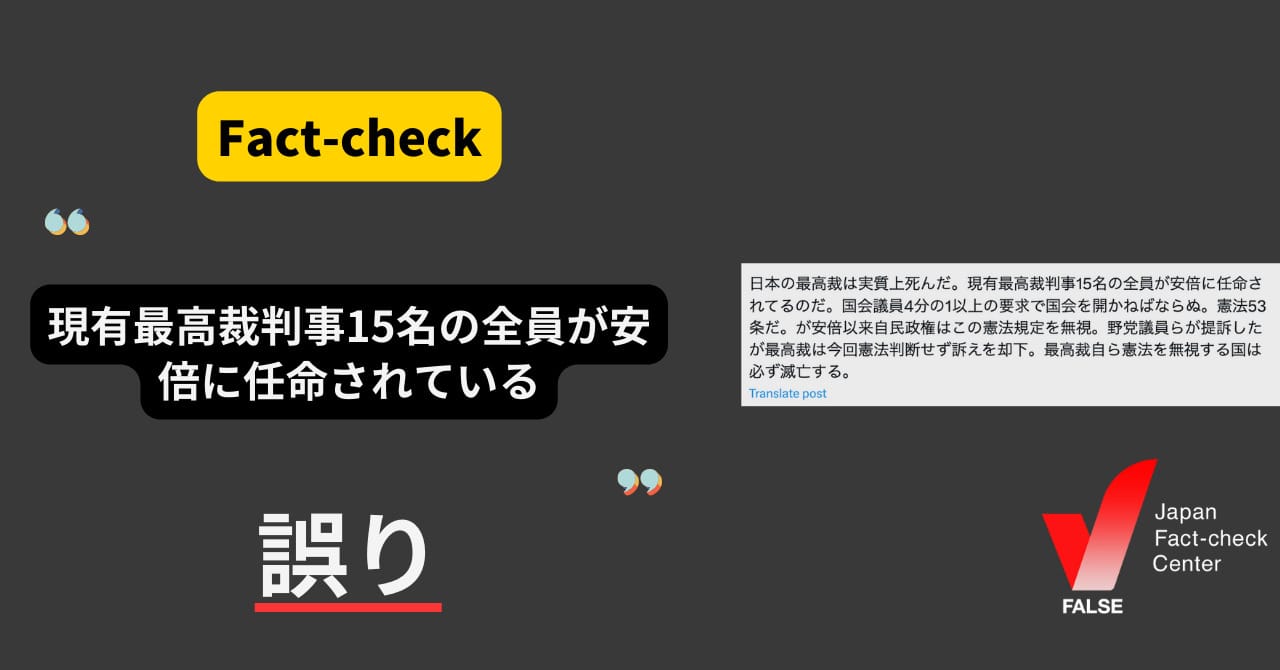
現有最高裁判事15名の全員が安倍に任命されている
Publisher’s rating: 誤り
The review found that the claim about all 15 sitting Supreme Court justices being appointed by Abe was false. It reports that 8 were appointed during Abe’s cabinets, 5 during the Suga cabinet, and 2 during the Kishida cabinet.

బీఫ్ అమ్మకాలు ప్రారంభించడం కొరకు హలాల్ సర్టిఫికెట్ పొందిన పతంజలి రాందేవ్ బాబా
Publisher’s rating: FALSE

"Zunächst mal war es in meinen Augen, obwohl ich kein Atomfetischist bin, ein Fehler, dass wir Isar 2 bei Landshut, das ist sogar in meinem Stimmkreis, jetzt vom Netz genommen haben. Das hat 15 Prozent des bayerischen Stroms erzeugt. Und wir hatten dort noch Brennstäbe, die liegen jetzt noch dort, die noch für vier Monate den Vollbetrieb gewährleisten hätten können, wir hätten den jetzigen Winter noch mit abdecken können, hätten viel Fracking-Gas sparen können."
Publisher’s rating: Größtenteils richtig. Bei der Prozentzahl, die laut Hubert Aiwanger den Anteil von Isar 2 an der bayerischen Stromerzeugung angibt, liegt er um drei Prozentpunkte falsch.
The review checks verifiable factual parts of Hubert Aiwanger’s remarks at the BR24 Wahlarena: the share of Bavarian electricity generated by Isar 2, whether its remaining fuel elements could have supported a further period of operation, and the prospect of saving fracking gas. It explicitly excludes his political judgment that shutting the plant was a mistake. Isar 2 had been shut down during the night of 16 April 2023. For the electricity-share claim, the review reports that the operator put Isar 2’s annual output at about 11 terawatt-hours, or roughly 12% of Bavaria’s electricity through 2021. It also explains why a different figure applies to 2022: Gundremmingen had closed at the turn of 2021–22, reducing total nuclear generation. Using the Bavarian economics ministry’s estimate that this removed 11.22 TWh, the review calculates Isar 2’s 2022 output at 12.3 TWh and its share of Bavaria’s estimated 68.24 TWh total generation at 18.02%. Thus the quoted 15% does not fit either comparison: it is three percentage points above the roughly 12% figure used for the usual pre-2022 share, while the calculated 2022 share was about 18%. On fuel, PreussenElektra had previously told BR that the old fuel elements could support a short extension to March of the following year if the reactor’s output were reduced. By the time of the review, the elements had been moved to the spent-fuel pool and the operator was preparing the plant’s dismantling; it declined to discuss hypothetical continued operation. On gas, the review notes that LNG accounted for 33.8 TWh of Germany’s 526 TWh of imported gas in the first half of 2023, and that a specific forecast for Bavarian LNG gas use in the coming winter could not then be made. The article therefore provides evidence for some parts of Aiwanger’s remarks, but does not establish that the proposed operation would have saved a particular amount of fracking gas.

Videoda anlatılan Enzo Ferrari’nin hayat hikayesinin gerçek olduğu iddiası
Publisher’s rating: Yanlış


The animal protein in cow milk is a significant contributor for Osteoporosis disease
Publisher’s rating: MISLEADING
The review examines a social-media video asserting that animal protein in cow’s milk contributes significantly to osteoporosis. It says the video’s argument is that milk protein generates sulphur waste, so calcium from a glass of milk is used to counterbalance that waste rather than support the body, leaving no net calcium absorption. The review also describes the video as linking high dairy consumption in some countries with high osteoporosis incidence. The review’s discussion accepts that milk protein can cause urinary calcium losses, but says the precise balance between calcium intake and the calcium used to offset those losses is uncertain. It further notes that milk can improve bone density and help prevent osteoporosis in elderly people, while some studies suggest excessive milk consumption could increase calcium excretion and potentially weaken bones over time. Those qualifications do not establish that ordinary or limited milk intake causes osteoporosis. The review also challenges the video’s country comparison: it notes that countries with high cow-milk consumption are affected by osteoporosis, but says numerous factors contribute to its prevalence. Its conclusion is that the video’s claim overstates what the evidence described in the review supports; the review does not establish that milk’s animal protein is a significant cause of osteoporosis.

"Wir wollen, dass die jungen Leute wieder in Deutschland bleiben. Derzeit haben wir ja das Phänomen, dass viele Studierende nach dem Studium dann Deutschland verlassen, weil sie sagen, die Steuern sind zu hoch, die Bürokratie ist zu viel (…) Die Ärzte sind nach meiner Wahrnehmung eher zu wenige und da gilt dasselbe, was ich vorher zu Ihrem jungen Kollegen gesagt habe (…) Zu viele junge Ärzte verlassen Deutschland. Also Zahnärzte nach England, Zahnärzte in die Schweiz, nach Österreich und so weiter. Also wir müssen die Ärzte wieder in Deutschland lassen."
Publisher’s rating: Da Aiwangers Behauptung eine subjektive Einschätzung ist ("viele Studierende", "zu viele junge Ärzte"), ist es nicht möglich, sie abschließend zu verifizieren oder zu widerlegen. Wir liefern deswegen den Kontext zu den Abwanderungszahlen, damit sich die Leserinnen und Leser ein eigenes Bild machen können.

Die bayerische AfD lehne die Inklusion von Kindern mit Behinderung an Regelschulen nicht ab.
Publisher’s rating: Richtig. Im Wahlprogramm der bayerischen AfD steht nicht, dass die Partei gemeinsamen Unterricht von gesunden und behinderten Kindern in Regelschulen abschaffen will. Im Grundsatz- sowie im Bundestagswahlprogramm der Partei wird Inklusion dagegen als "ideologisch motiviert" bezeichnet und die Regelschule für Kinder mit besonderem Förderbedarf abgelehnt.
آمار «خبرهای دروغ رسانهها» درباره ایران در زمان اعتراضهای ۱۴۰۱
Publisher’s rating: شاخدار

భగవద్గీత, కురుక్షేత్రల జన్మభూమిగా వర్ణిస్తూ పోప్ భారత దేశపు మట్టిని తలపై జల్లుకున్నారు
Publisher’s rating: MISLEADING
explodiu A BOMBA FOI O PT Q MANDOU MATAR BOLSONARO 19-09-2023 O ADVOGADO JÁ TEM PROVAS QUE CONDENAM LULA
Publisher’s rating: Falso
কানাডাই ভাৰতৰ বাবে নতুন ট্ৰেভেল এডভাইজাৰী জাৰি কৰিছে I
Publisher’s rating: মিছা
Where the data comes from
Fact checks come from Data Commons and link to the organizations that published them.
What you’ll find
Each result links to the original fact check. Open it to read the publisher’s findings, with summaries and supporting sources where available.
Report an error
To report an error, send the page URL and supporting evidence.