PeakMetrics / Fact Checks
Has this been
fact-checked?
Paste a claim or upload an image to find existing fact checks. See what fact-checkers found and read the evidence before you share.
Search fact checks ↓API & integrations ↗Browse by topic
Explore fact checks by subject.
Search fact checks
Search by text or imageLatest fact checks
98,223 published reviewsબટાકાનો રસ વાળ ખરતા અટકાવી શકે છે
Publisher’s rating: Mostly False
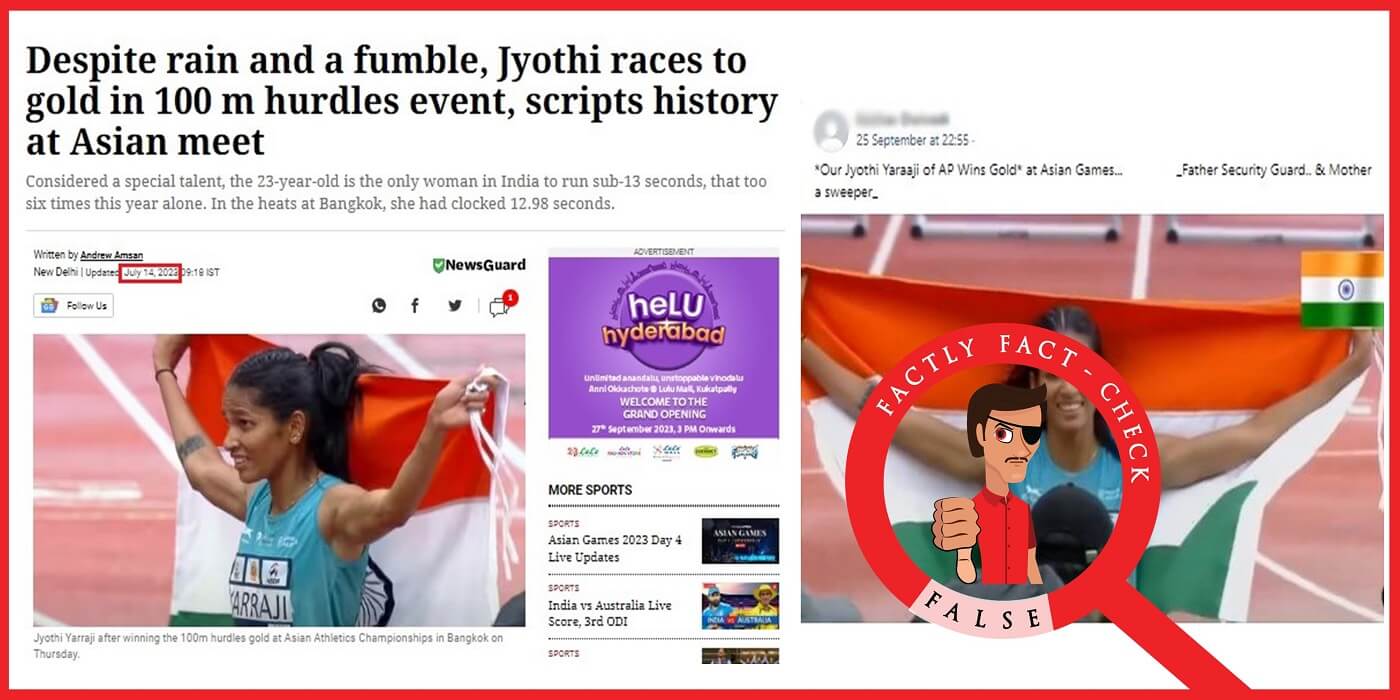
Indian Athlete Jyothi Yarraji won a gold medal in the 100m hurdles in the ongoing Asian Games 2023
Publisher’s rating: FALSE
The claim concerns a video presented as showing Indian hurdler Jyothi Yarraji winning the 100m hurdles at the Asian Games in Hangzhou in 2023. FACTLY’s review distinguishes that event from the Asian Athletics Championships: it says the video showed Yarraji’s race at the latter competition, held in July 2023, rather than at the Asian Games. The review also notes that Yarraji’s Asian Games race had not yet taken place when the video was circulating; her first race there was scheduled for 30 September. The review describes two checks. It says a sign visible behind the athletes in the video reads “Asian Athletics Championship 2023,” and that searches using relevant keywords found the same video shared by Sai Media and sports foundations in July. It also identifies a Reliance Foundation Youth Sports post describing Yarraji’s gold as a win at the Asian Athletics Championships, with a time of 13.09 seconds. These details support the review’s conclusion that the clip was genuine footage of a Yarraji gold-medal race, but from a different championship—not evidence of an Asian Games win. The review states that the Asian Games were being held in Hangzhou from 23 September to 8 October 2023, while Yarraji’s 100m hurdles race was still to come. Its update says she later won silver in that event. The key distinction is therefore both the competition shown in the video and the medal outcome: the clip relates to the Asian Athletics Championships, while the review reports a silver for Yarraji at the Asian Games.

it is true that humans cannot digest meat
Publisher’s rating: False


Video of Narendra Modi acknowledging the hardships faced by the Chhattisgarh people under the BJP rule
Publisher’s rating: FALSE
The claim concerns a social-media clip presented as Modi acknowledging that people in Chhattisgarh suffered because of BJP rule. FACTLY reports that the clip does contain Modi speaking about losses and hardships, but that the excerpt cuts off words that identify the political context he was describing. Its conclusion is that the clip reverses the attribution of responsibility.
The video shows Jyothi Yarraji winning gold at Asian Games 100m hurdles event.
Publisher’s rating: False

Mike Pence: Ron DeSantis ha “aumentado el gasto en Florida en un 30%”.
Publisher’s rating: Falta Contexto
ITLF has issued a press release about a “Mega Poppy Flower Sale” in Manipur.
Publisher’s rating: False

The butterfly population in the UK has exploded by 338% and butterflies are a marker of a healthy environment thus climate change is not real.
Publisher’s rating: Misleading
The review examines an Instagram video by @katie_hopkins that claimed UK butterfly numbers had “exploded by 338%” and argued that, because butterflies indicate environmental health, climate change was not real. The review says the figure did not describe the UK’s butterfly population as a whole: it concerned one species, the red admiral. Its account reports that red admiral numbers rose by about 78% over 13 years, while seven of the 17 widespread species counted over that period had significant declines. Those contrasting trends undermine the video’s presentation of a single increase as a general population boom. The review links the red admiral’s increase to its benefit from global heating, rather than treating it as evidence that climate change is absent. It describes varied responses among species: some have expanded northward or emerged earlier in spring, while others have declined. For example, the comma has expanded into Scotland, whereas the review identifies the brown argus and small copper among species with more significant losses over the past 40 years. The evidence presented is therefore about different species responding differently, not a uniform change across UK butterflies. The review also gives broader conservation context. It says a current Red List assessment found a 26% increase in butterfly species facing extinction and a 76% drop in butterfly abundance or range since 1976. While the review describes butterflies as bio-indicators sensitive to climate and other environmental pressures, that does not make one species’ increase proof that the environment is healthy overall—or that climate change is not real. The excerpt reports findings and cites research and government statistics, but does not describe a separate checking procedure or provide the underlying data tables.
President Bongbong Marcos ordered the jailing of Sen. Risa Hontiveros for her involvement in the bonus mess at Philhealth
Publisher’s rating: False
Video shows Marcos administration's plans to lower the price of rice to P20 per kilo
Publisher’s rating: Misleading
ভিডিঅ'ত একাংশ লোকে এজন হীৰা ব্য়ৱসায়ীয়ে পেলাই দিয়া হীৰা বুটলি থকা দেখা গৈছে।
Publisher’s rating: মিছা
Video shows Kukis training with firearms in Manipur
Publisher’s rating: False
Video shows buildings destroyed by a magnitude 6.8 earthquake that jolted Morocco in September 2023
Publisher’s rating: False
Tim Scott: "Joe Biden debería estar en la frontera sur. Es insegura, abierta de par en par e insegura, y ha provocado la muerte de 70,000 estadounidenses en los últimos 12 meses a causa del fentanilo"
Publisher’s rating: Engañoso

ఉత్తరప్రదేశ్లో సైకిల్పై వెళ్తున్న అమ్మాయి మరణానికి కారణమైన వ్యక్తులపై యోగి ప్రభుత్వం చర్య తీసుకున్న వీడియో
Publisher’s rating: MISLEADING
திருப்பதி கோவிலுக்கு பாராளுமன்ற குழு வுடன் சென்று வந்த பிறகு கோவில் வாசலில் கனிமொழி கூறியது::- ‘- இத்தனை கோடி பேர்கள் பைத்தியமாக வணங்கும் ஒரு பொம்மை எப்படி இருக்கும் என்று காணவே இங்கு வந்தேன்.” என்னுடன் வந்தவர்கள் பயபக்தியுடன் அந்த பொம்மையை வணங்கும் போது என்னால் சிரிப்பை அடக்க முடியவில்லை.”… மறவாதீர்! திமுக வுக்கு ஓட்டு போடுவது தெய்வ குற்றம்.
Publisher’s rating: False
Clip shows Nepali MP criticizing Prime Minister Narendra Modi
Publisher’s rating: False

Dravidians and Shudras should remain silent like how Kshatriyas have historically adhered to it- Rajnath Singh
Publisher’s rating: FALSE
Where the data comes from
Fact checks come from Data Commons and link to the organizations that published them.
What you’ll find
Each result links to the original fact check. Open it to read the publisher’s findings, with summaries and supporting sources where available.
Report an error
To report an error, send the page URL and supporting evidence.