PeakMetrics / Fact Checks
Has this been
fact-checked?
Paste a claim or upload an image to find existing fact checks. See what fact-checkers found and read the evidence before you share.
Search fact checks ↓API & integrations ↗Browse by topic
Explore fact checks by subject.
Search fact checks
Search by text or imageLatest fact checks
98,223 published reviews
The viral video shows Hezbollah’s anti-ship missiles displayed in response to the recent deployment of US warships in the Eastern Mediterranean
Publisher’s rating: MISLEADING
The claim concerns a video presented as Hezbollah’s response to the recent deployment of US warships in the Eastern Mediterranean. FACTLY’s review says the footage does show Hezbollah anti-ship missiles, but challenges the claimed timing and connection: it reports that the video dates to 2019 and is not related to the recent movement of US warships. To investigate the video’s provenance, FACTLY says it ran a reverse image search on keyframes. That search found a 2019 news report with screenshots resembling the viral footage. The review also describes comparing the circulating clip with the earlier video and says they are the same, supporting its conclusion that the footage was old rather than a recording of a response to the recent deployment. The review identifies the missiles shown as C-802 anti-ship missiles and says reports from 2019 also featured the footage. Thus, the material fact it disputes is not what the video depicts, but the post’s framing of when and why the video was made: the review traces it to 2019, not to the recent movement of US warships.

The Supreme Court bans firecrackers across India
Publisher’s rating: MISLEADING
The claim concerns whether the Supreme Court imposed a complete nationwide ban on firecrackers. FACTLY’s review says the Court did not ban all firecrackers: its nationwide prohibition applies to firecrackers made with barium and other prohibited chemicals. The distinction matters because the post described the Court’s directions as a ban on the sale and use of firecrackers generally.
BRS leader assaulted voter during election campaign in Telangana
Publisher’s rating: Misleading
John Kerry hat gesagt: "Wir müssen Milliarden von Menschen opfern, um den Planeten Erde zu retten"
Publisher’s rating: Es gibt keine Belege dafür, dass Kerry jemals diese Aussage getroffen hat. Sie findet sich zwar in einer Überschrift eines Blogbeitrags, jedoch weder im Text des Beitrags noch in der Rede, auf die sich der Text bezieht.
The allegation is that John Kerry said billions of people must be sacrificed to save the planet. The review traces it to a blog headline, not to a passage in the blog’s article: the article’s text does not discuss the alleged quotation. The blog post was a translation of an article published in October by an American site that has appeared under different names, including NewsPunch. The post pointed readers to Kerry’s speech at the Scottish Global Dialogue on August 24, 2023, and suggested that he spoke there about reducing the world’s population. The review says the linked video contains the complete speech, but that the alleged statement does not appear in it. Instead, the blog presents selected fragments and comments on them. One fragment concerns Kerry’s warning that humanity is being threatened by humanity itself. In the speech, he was referring to people who deny climate-change research and persuade others to accept what he described as a fictional alternative reality in which action is unnecessary. That context makes the fragment different from the alleged call to sacrifice billions of people. The review therefore finds no supporting evidence for the claimed quotation in either the blog’s text or the speech it links.
Gaza Mujahideens are destroying Israeli tanks by carrying out similar attacks
Publisher’s rating: False
Pepsi company has modified its brand design with the Palestine name during the Israel-Hamas war.
Publisher’s rating: Misleading


לפי האמנות [הבינלאומיות] השונות, כשיש חשש ש[הסיוע ההומניטרי] מגיע לכוחות האויב, אז יש צידוק למצור מהודק לגמרי
Publisher’s rating: ללא ציון
The review examined a statement by Likud MK Amit Halevi in an interview about whether Israel should allow humanitarian aid into Gaza. Halevi argued that international conventions justify a “completely tight siege” if there is concern that aid reaches enemy forces. The investigation focused on what international law says about siege, starvation, and humanitarian relief, consulting INSS researcher Tami Kaner and discussing her analysis with retired-colonel lawyer Pnina Sharvit Baruch. It also set out the relevant treaty conditions rather than treating the mere existence of a concern as the only test. On siege, the review reported that it is a lawful method of warfare when directed at enemy forces and aimed at a military objective, but that civilian harm must be proportionate and not excessive in relation to that objective. It noted that the restrictions Israel imposed were described as intended to prevent weapons and supplies reaching Hamas, while acknowledging that civilian harm may result. The review also explained that the law’s treatment of aid depends on conditions: a party may require inspection and monitoring, and an obligation to permit aid is qualified where there is serious reason to fear diversion, ineffective supervision, or military or economic advantage to the enemy. The qualification is important: the review did not present those rules as an unrestricted license to deny aid or starve civilians. Kaner told the investigators that even where Israel has valid grounds to restrict or halt aid, it remains bound by the prohibition on starving the civilian population. The review’s conclusion distinguishes permissible action against enemy forces from starvation of civilians, which it says is expressly prohibited. Thus, the evidence supports a conditional legal basis for restrictions and siege, but not the claim if read to mean that any concern by itself justifies an entirely sealed siege without regard to civilian protection, proportionality, and the rules governing aid.

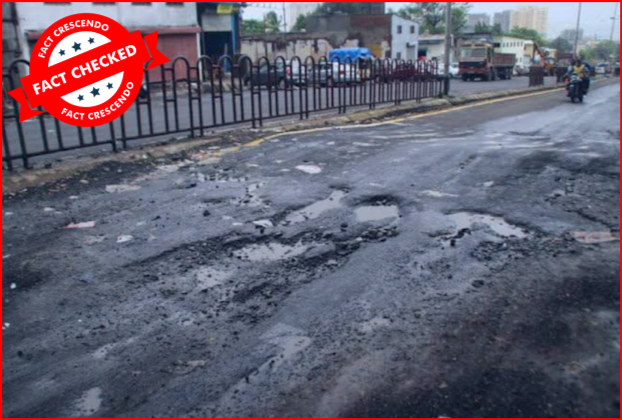
Claim: maharashtra photo shared on dmk government account
Publisher’s rating: ஃபேக்ட் கிரஸண்டோ ரேட்டிங்: FALSE
This is not a Drunk and Drive Case. *it’s a DRUG Addicted Case in Koramangala (Bangalore) Parents have handed her over to the Police! Parents were constantly beaten by this girl. She is physically very strong and you can see that 6 policewomen are needed to hold her down.
Publisher’s rating: false

“De resultaten hebben verder bewijs geleverd dat positieve emoties zoals dankbaarheid geassocieerd zijn met een betere gezondheid, met cardiovasculaire gezondheid in het bijzonder.”
Publisher’s rating: Geen bewijs
The Czech Republic will come to the Philippines’ defense amid rising tensions with China
Publisher’s rating: False

صادرات الصناعات الغذائية بلغت 1.8 مليار دولار
Publisher’s rating: الادعاء "غير دقيق"، حيث بلغت صادرات الصناعات الغذائية في الأشهر التسعة الأولى من عام 2023، حوالي 3.9 مليارات دولار
Where the data comes from
Fact checks come from Data Commons and link to the organizations that published them.
What you’ll find
Each result links to the original fact check. Open it to read the publisher’s findings, with summaries and supporting sources where available.
Report an error
To report an error, send the page URL and supporting evidence.