PeakMetrics / Fact Checks
Science & space fact checks
Explore claims publishers have checked about science & space. Read their original ratings and follow the evidence.
Search fact checks
Search by text or image1,577 published reviews in this topic
Chandrayaan3 launching video! विंडो सीट से यात्री ने देखा चंद्रयान का ऐसा सीन।“
Publisher’s rating: False
“Enorme pirámide emergió en eƖ triángᴜlo de lɑs Bermudas con un ovni que briƖla intensamente".
Publisher’s rating: Falso
This video shows Chandrayaan-3 on its way to the moon
Publisher’s rating: FALSE
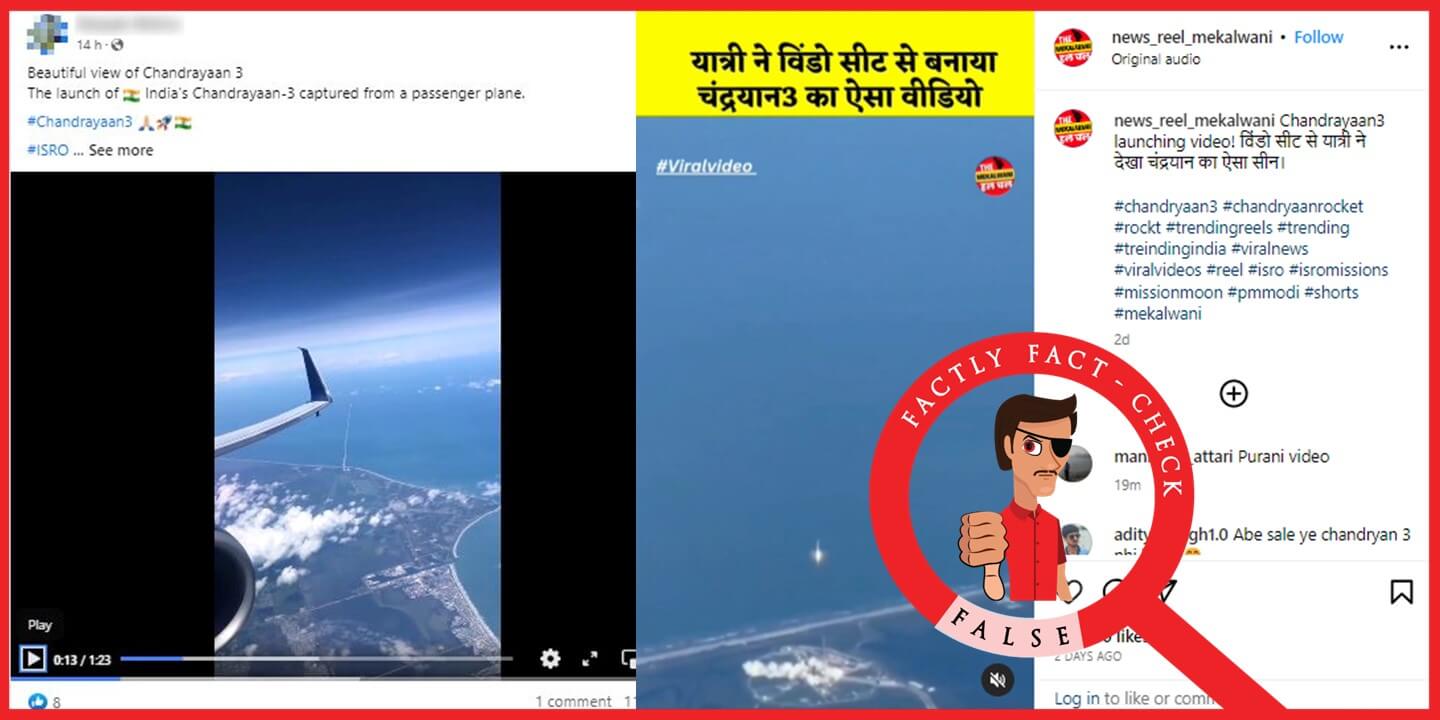
Visuals showcasing the launch of Chandrayaan-3, captured by a passenger traveling onboard a flight
Publisher’s rating: FALSE
The review distinguishes the viral clips from genuine footage of Chandrayaan-3’s 14 July 2023 launch. It reports that a passenger named Ponraj filmed the launch during an IndiGo flight from Chennai to Dhaka, and that IndiGo released those visuals. But the review says the different visuals circulating in the viral posts were old and unrelated to Chandrayaan-3. Thus, the fact that launch footage was captured from a flight does not establish that the viral clips show this launch. [S1: “Notably, IndiGo Airlines released visuals of the Chandrayaan launch, captured by one of their passengers named Mr. Ponraj during a Chennai to Dhaka flight.”; “However, the visuals disseminated through other viral posts on social media are old and are not related to the recent Chandrayaan-3 launch.”] For one viral video, the review describes reverse-image searches that found the same visuals in December 2022 news reports. Those reports attributed the footage to a flight attendant who said the plane flew by Cape Canaveral and recorded a SpaceX Falcon 9 launch. The review notes that it could not independently confirm the specific launch, but says the footage’s availability before Chandrayaan-3 launched shows it could not depict that later event. [S1: “A reverse image search conducted on the screenshots from this viral video led us to a couple of news reports published in December 2022, which featured the same visuals”; “the fact that these visuals are available on the internet much before the Chandrayaan-3 launch suggests that they are not associated with the recent Chandrayaan-3 launch.”] The second video was traced to an Atlas V launch from Cape Canaveral on 18 May 2021. The review cites reports identifying the footage as photographer Andy Lin’s video, filmed while traveling on a Delta flight from New York to Cancun. It also describes a satellite view of Cape Canaveral as further support for the location, while acknowledging that it could not independently verify which launch the viral footage showed. These clips’ earlier provenance and timing, rather than the existence of separate genuine Chandrayaan-3 passenger footage, are the basis for the review’s conclusion. [S1: “The visuals in question, which are old, portray the launch of an Atlas V rocket from Cape Canaveral on 18 May 2021, carrying a satellite.”; “10 Tampa Bay, which describes itself as an affiliate of CBS reported that the video was shot by photographer Andy Lin and showed the launch of rocket Atlas V, while traveling The Delta flight was traveling from New York to Cancun.”; “Although we were unable to independently verify which rocket launch the viral visuals depict, the fact that these visuals are widely available on the internet much before the Chandrayaan-3 launch strongly indicates that they are unrelated to the recent launch.”]
டாக்காவிலிருந்து சென்னை வந்து கொண்டிருந்த விமானத்திலிருந்து சந்திரயான் 3 ராக்கெட் ஏவபட்ட காட்சி…
Publisher’s rating: False

Chandrayaan 3 Budget – 615 Crore. Haj subsidy annual budget – 685 Crores. What do we need?
Publisher’s rating: Misleading
காங்கிரஸ் அடிவருடிகள், அர்பன் நக்ஸல்கள் பெருங்குரலெடுத்து இஸ்ரோவை ஆரம்பித்தவர் நேரு என்றும் விண்வெளியை கனவு கண்டவர் என்றும் கதற ஆரம்பித்து இருக்கிறார்கள். சிறிய உண்மை என்னவென்றால், நேரு மே 1964 இல் இறந்தார் மற்றும் ISRO ஆகஸ்ட் 1969 இல் நிறுவப்பட்டது.
Publisher’s rating: Misleading
Congress Cheerleader shares a picture that Nehru created ISRO. ISRO was founded in 1969. While Nehru died in 1964
Publisher’s rating: Misleading
Videos of Crocodiles found in recent rainfall in Himachal Pradesh.
Publisher’s rating: False
Photo showing the monkey flower that blooms once every 20 years in the Himalayan mountains
Publisher’s rating: FALSE
FACTLY examined a social-media image claimed to show a monkey-shaped flower that blooms once every 20 years in the Himalayan mountains. The review says reverse image search found the same image in a June 2023 article by the website mygopen, which described it as digitally created using AI by a Toutiao page called Leaf Beauty Gallery. The review then located the same image on that page, where its author described it as an AI painting of cat face flowers and the page biography said the paintings were generated with AI. These traced copies point to a digital artwork rather than a photograph of a Himalayan flower. [S1] The review distinguishes the image from real “Monkey Orchids,” or Dracula orchids. It says those orchids’ columns, petals and lip can resemble a monkey’s face, but that they predominantly grow in Ecuador and Peru, in South America. The review’s conclusion is that the circulated image was AI-generated and has no connection to the Himalayas; it does not establish that a flower with the claimed once-in-20-years bloom cycle exists there. [S1]
Se você colocar um sapo uma água fervendo, ele vai pular imediatamente. O contrário acontece se você colocar ele numa água fria e for esquentando aquecendo essa água gradativamente.
Publisher’s rating: Falso
The claim says that a frog placed in boiling water will jump out immediately, but one placed in cold water and gradually heated will not escape. The review examines that specific assertion, which it says circulated alongside a moral message comparing the gradual warming to a harmful situation that may initially seem calm. It concludes that the biological premise is false: there is no confirmation that frogs will remain in a pan as the water heats. The review reports that it found no study proving the claim. It traces the story instead to a nineteenth-century experiment by physiologist Friedrich Goltz, while emphasizing that the experiment was conducted under special conditions. It also says biologists, zoologists, and other scientists have refuted the hypothesis. The excerpt does not name those scientists or describe their evidence, so it does not establish further details about the experiment or the refutations. The review describes its examination of the circulating message: it says the claim had appeared on TikTok and had also circulated on Facebook and websites and blogs. It points to the message’s alarmist tone and lack of cited reliable sources as warning signs, and frames its questions around whether the frog escapes and whether a study supports the claim. Its conclusion is limited to the claim that frogs do not jump out when placed in cold water that is gradually heated; the review separately notes that the accompanying moral message does not make that premise true.
Geckos are deadly venomous animals !!
Publisher’s rating: False
හූනන් මාරාන්තික විෂ සහිත භයානක සත්ත්ව ප්රභේදයක්ද?
Publisher’s rating: Explainer
A social media user claimed that a genuine photograph of Bigfoot was taken in 1883. .
Publisher’s rating: False. This is an AI-generated image.