PeakMetrics / Fact Checks
Religion & belief fact checks
Explore claims publishers have checked about religion & belief. Read their original ratings and follow the evidence.
Search fact checks
Search by text or image3,371 published reviews in this topic
ব্রাজিল এমন একটি দেশ যে দেশে আজান নিষিদ্ধ আর আর্জেন্টিনা এমন একটি দেশ যে দেশে প্রকাশ্যে কেউ আল্লাহর নাম নিতে পারে না
Publisher’s rating: False
একজন খালিদ বিন ওয়ালিদ (রাঃ) খুব প্রয়োজন গজব আসবে ইন্ডিয়া, অপেক্ষা করো
Publisher’s rating: False
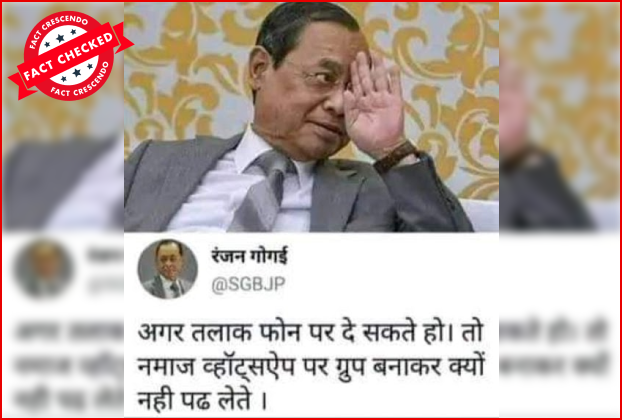
रंजन गोगोई ने मुस्लिम समुदाय को वॉट्सएप ग्रुप में नमाज़ पढ़ने को कहा है
Publisher’s rating: False


أضخم مسيرة تشهدها الدنيا خرجت اليوم في مومباي الهند لنصرة النبي صلى الله عليه و سلم
Publisher’s rating: تضليل
കല്ക്കട്ടയില് പ്രവാചക നിന്ദയെ പ്രതിഷേധിച്ച് സംഘടിപ്പിച്ച റാലി
Publisher’s rating: FALSE

Former CJI and Rajya Sabha Member Ranjan Gogoi’s tweet comparing the Talaq and Namaz practices of Muslims
Publisher’s rating: FALSE
The claim concerns a screenshot circulated as a recent tweet by former Chief Justice of India and Rajya Sabha member Ranjan Gogoi. It says that Muslims who can grant Talaq by telephone should be able to offer prayers through a WhatsApp group. FACTLY investigated whether Gogoi himself had posted that message, rather than whether the practices mentioned in it were comparable. The review identifies the message as a purported tweet and specifies its wording: “when they can give Talaq on the telephone, why could not they offer prayers through a WhatsApp group.” FACTLY reports checking for Gogoi’s official Twitter handle and, separately, looking up the username shown in the screenshot. Its findings were that Gogoi had no Twitter account, while the account that posted the message, @SGBJP, described itself as his fan page. The review therefore attributes the screenshot to a parody account, not to Gogoi. This account-level evidence directly addresses who posted the alleged statement. The review also says it could not find a mainstream news report attributing the comments to Gogoi, while noting that it had previously debunked claims based on tweets from parody or fan-page accounts. Its stated conclusion is that the screenshot does not establish that Gogoi made the tweet; it came from a parody account. The investigation thus disputes the attribution, not the wording visible in the screenshot.

Claim: Pakistan video being shared that Muslims protested in Kolkata
Publisher’s rating: FALSE


హిందువుల నుండి వస్తువులు కొనకూడదని ఇటీవల ఫత్వా జారీ చేసారు
Publisher’s rating: MISLEADING
മുഹമ്മദ് നബിയെ കുറിച്ചുള്ള വിവാദ പരാമര്ശവുമായി ബന്ധപ്പെട്ട് നടന്ന കലാപത്തില് ഝാര്ഘണ്ഡിലെ റാഞ്ചിയില് കൊല്ലപ്പെട്ടവരുടെ ചിത്രങ്ങള്
Publisher’s rating: FALSE
पैंगबर पर बयान को लेकर नूपुर शर्मा को समर्थन करते योगी आदित्यनाथ का वीडियो वायरल
Publisher’s rating: FALSE

বিশ্বনবীকে ভারতে অবমাননা করায় সংসদে প্রধানমন্ত্রীর ধর্ম বিরোধী আলোচনা, নাউজুবিল্লাহ
Publisher’s rating: False

ముహమ్మద్ ప్రవక్తపై అనుచిత వ్యాఖ్యల వివాదం నేపథ్యంలో కోల్కతాలో జరిగిన ముస్లింల ర్యాలీకు సంబంధించిన వీడియో
Publisher’s rating: FALSE

Recent video of a Hindu man threatening to kill Muslims
Publisher’s rating: MISLEADING
The claim concerned a video circulating amid controversy over remarks by a BJP spokesperson about Prophet Muhammed. It showed a man brandishing guns and threatening Muslims, and was presented online as recent. FACTLY’s investigation concluded that the video was from Uttar Pradesh and dated to March 2020, rather than the recent controversy: “This is an old video from Uttar Pradesh, and it dates back to March 2020.” To trace the footage, the review says reverse-image searches of screenshots found social media posts sharing the same video in 2020. Searches using relevant keywords also led to a 2020 news report about the arrest of the man shown. According to the review’s account of that report, police arrested him after the video went viral for inflammatory remarks against a community, and he was identified as Yogendra Singh Chauhan, from Thakurganj Misri Bagia in Uttar Pradesh. This evidence addresses the video’s age and provenance, not whether the threats were made: the review describes the man as threatening the Muslim community and reports an arrest for inflammatory remarks. Its conclusion is that the old footage was being recirculated as recent and had no connection to the controversy then prompting its circulation.

Visuals of Muslims setting fire to Indian tricolour in the context of Prophet Muhammad row
Publisher’s rating: MISLEADING
The review examines two different visuals shared as evidence of Muslims in India burning the Indian flag during protests over BJP spokespersons’ remarks about Prophet Muhammad. It finds that the woman shown setting fire to the flag is YouTuber Sajida Ahmad, and that this video was not from the recent protests or from India. The article says the footage was at least two years old and connected to a demonstration about Kashmir. [The review describes the video as “at least two years old” and says Sajida “did it during a demonstration regarding the Kashmir issue.”]
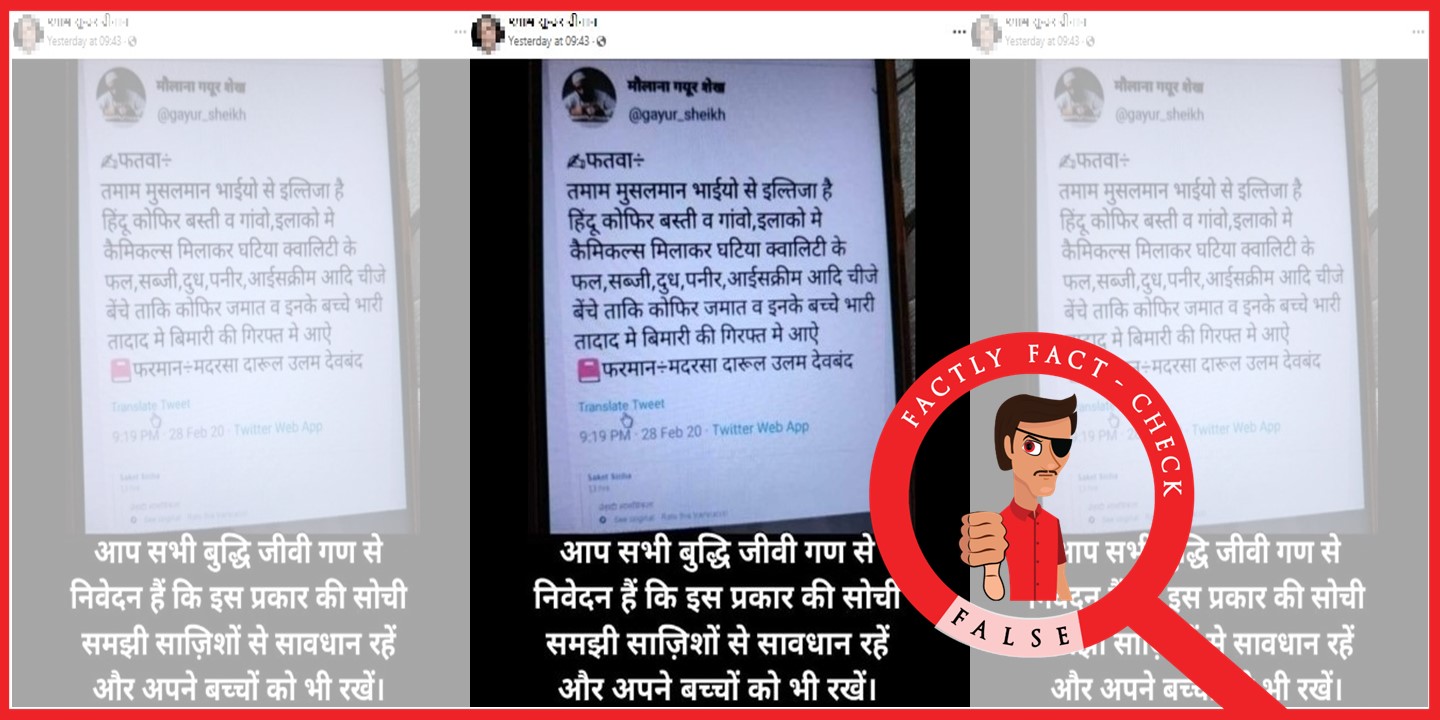
Darul Uloom Deoband issued a ‘fatwa’ asking Muslims to sell food with chemicals to make Hindu people sick
Publisher’s rating: FALSE
The claim concerned a social-media post alleging that Darul Uloom Deoband had issued a fatwa telling Muslims to sell food containing chemicals to make Hindu people sick. The post included an image of a purported tweet by a Maulana as confirmation. FACTLY examined both the alleged directive and the screenshot offered to support it. FACTLY reports that it found no information about such a fatwa through its internet search and none on the seminary’s official website. It also notes that the claim was not supported by the social-media account shown in the screenshot: the handle “@gayur_sheikh” was not Darul Uloom Deoband’s official account, and attempting to open it showed that the account did not exist. These findings undermine the screenshot’s value as evidence of an official institutional statement. The review also reports that a similar claim circulated in 2020 and that Darul Uloom Deoband complained to police about a fake fatwa issued in its name. According to FACTLY, a seminary representative said it had not issued the alleged fatwa. Taken together, the review’s account identifies the purported tweet as unauthenticated and reports the institution’s denial; it concludes that Darul Uloom Deoband did not issue the directive described in the post.

यह मूर्ति एक ही पत्थर को काटकर, बनाई गई है,कैसे बनाई ! यह भगवान जाने, या बनाने वाला…नाग-वासुकि मन्दिर, प्रयागराज क्या लग रहा है बरगद का पेड़ ??? जी नही ये नक्कशी पत्थर पर की गयी है। सनातन धर्म में ऐसी ऐसी बेजोड़ चीजें है जिन्हें देखकर वैज्ञानिक आज भी अपना विस्मित हैँ, मगर समझ नही पाते कि ये कैसे बना होगा! वो अद्भुत कारीगर कैसे दिखते होंगे, उन्हें वो कमाल का कौशल किनसे मिला होगा!!और हम हैं कि ताजमहल को देख कर पागल हुए जा रहे हैं। प्रचार करें अपने सनातन के अविश्वसनीय मंदिरो का।।
Publisher’s rating: FALSE
The post claims that an image of an intricate, tree-like carving shows a sculpture made from a single stone at the Nag Vasuki temple in Prayagraj. It presents the supposed carving as an example of remarkable Hindu temple craftsmanship. Vishvas News investigated the image and concluded that it does not depict the claimed temple or location: its review identifies it as an artistic banyan-tree sculpture at Utsav Rock Garden in Karnataka. The review says it began by uploading the viral image to Google reverse image search. It reports finding the image on where-is-this.com, whose caption identified it as being from Utsav Rock Garden, and a similar image on the Utsav Rock Garden website. The review also says kannadatimes.com featured the image alongside other photographs described as being from the Karnataka attraction. To check the Prayagraj attribution directly, Vishvas News searched for information about the Nag Vasuki temple and contacted Tirthraj Pandey, secretary of the Prayagraj Seva Samiti. According to the review, Pandey confirmed that the ancient temple is in the Daraganj area but said it does not contain such a sculpture; he described its idol as a single image of Vasuki Nag. The review therefore says the viral photograph is not from that temple. The evidence described in the article points to a misattributed image, rather than a stone carving at the claimed Prayagraj site.