PeakMetrics / Fact Checks
Religion & belief fact checks
Explore claims publishers have checked about religion & belief. Read their original ratings and follow the evidence.
Search fact checks
Search by text or image3,371 published reviews in this topic

ಸಿಕಂದರಾಬಾದ್ ಗಣೇಶ ದೇವಸ್ಥಾನದಲ್ಲಿ ಕ್ರೈಸ್ತ ಧರ್ಮ ಪ್ರಚಾರ ಮಾಡುತ್ತಿದ್ದಂತೆ ಪಾದ್ರಿಯೊಬ್ಬ ಕ್ರೈಸ್ತ ವ್ಯಕ್ತಿಯ ಮೇಲೆ ಹಲ್ಲೆ ನಡೆಸಿದ ವಿಡಿಯೋ.
Publisher’s rating: MISLEADING

राम मंदिर में एससी-एसटी और ओबीसी वर्ग के लोगों को जाने की अनुमति नहीं रहेगी।
Publisher’s rating: False

Video showing the visuals of PM Narendra Modi circumambulating around the Kedarnath temple
Publisher’s rating: FALSE
The claim concerns a video said to show Narendra Modi circumambulating Kedarnath temple when he was 26. FACTLY identifies the man in the footage as Kedarnath temple priest Santosh Trivedi, not Modi. The review says Trivedi performed the circumambulation on his hands while protesting the Uttarakhand government’s Char Dham Devasthanam Management Board Act; it states that the video has no connection to Modi. To check the footage, the review reports conducting reverse image searches on screenshots from the video. It found a video with similar visuals posted by the Facebook page “Sri Kedarnath Jyothirling,” which identified the person as a Kedarnath priest. FACTLY also points to reporting by ETV Bharat, which likewise identified the man as Trivedi and connected his action to the protest against the board act. The review distinguishes this video from Modi’s reported personal association with Kedarnath: it says Modi had described regularly visiting the temple and offering water when he lived in Garudchatti. That separate account does not identify him as the person in the footage. The review’s conclusion is that the video shows Trivedi, not Modi.

Fotoğrafın Şanlıurfa’daki ortak kurban kesimine ait olduğu iddiası
Publisher’s rating: Yanlış
The claim was that a photograph showed a village sharing meat after a communal sacrifice in Şanlıurfa. The review says the same image was also circulated with its location changed to Şırnak, but reports that it was taken in Soran, a district of Erbil in the Kurdistan Region of Iraq—not in Turkey. It dates the photograph to 9 July 2022. (S1: “Bu fotoğraflardan birisi Şanlıurfa’da topluca kurban kesen bir köyün et paylaşımını gösterdiği iddiası ile paylaşıldı. Aynı fotoğraf, eş zamanlı olarak konum bilgisi Şırnak olarak değiştirilerek de paylaşıldı.”; “Fotoğraf, 9 Temmuz 2022 tarihinde Irak Kürt Bölgesel Yönetimi’nin Erbil kentinde çekilmiş.”) The review’s account of the image’s provenance is that Rudaw, a local news group, used the photograph with its own logo in a report published on the first day of the holiday. It says social-media posts reused the image after cropping out that logo and changing the location. This supports the conclusion that the Şanlıurfa attribution was misleading: the image was linked to reporting from Erbil’s Soran district, rather than to the claimed event in Turkey. (S1: “Bölgenin yerel haber kaynaklarından Rudaw basın grubu, bayramın ilk günü paylaştığı haberde kendi logosu ekli bir şekilde iddia fotoğrafını kullanmış.”; “Sosyal medyadaki paylaşımlar, fotoğraftaki logo kesilip konum bilgisi değiştirilerek yapılmış.”)

A Shivalinga and two Nandis (bulls) were engraved on the Rasa, Arab world’s oldest mosque.
Publisher’s rating: MISLEADING
The claim concerns a viral image said to show a Shivalinga and two Nandis engraved on “Rasa,” described as the Arab world’s oldest mosque. FACTLY reports that its searches found no Arab-world mosque by that name and that “Rasa” does not appear in the list of the world’s oldest mosques. The mosque name that did turn up was Masjid Agung Sang Cipta Rasa, also called the Great Mosque of Cirebon, in Indonesia—not an Arab country. The review says it found no image or statement about a Shivalinga or Nandi in the materials it checked about the Cirebon mosque, including images, videos, reviews and historical articles. It then traced the viral image through reverse-image search to a Tripadvisor review by a user named Vivek P. The review was about travel to Delhi, Agra and Jaipur, and the image was shared there in March 2016. FACTLY could not identify the pictured structure from its searches for tourist attractions near those cities. The investigation therefore separates the image’s apparent subject from the location and history claimed for it: the available evidence did not connect the image to an Arab-world mosque called Rasa or to the Cirebon mosque. FACTLY noted Kannada script above the Shivalinga, which it says translates as “Namah Shivaya,” and said this, along with people in the image who resembled Indians, indicated the structure was most likely in Karnataka. It did not identify the specific structure; the review says it contacted the image uploader, Tripadvisor and the trip organiser for more information.
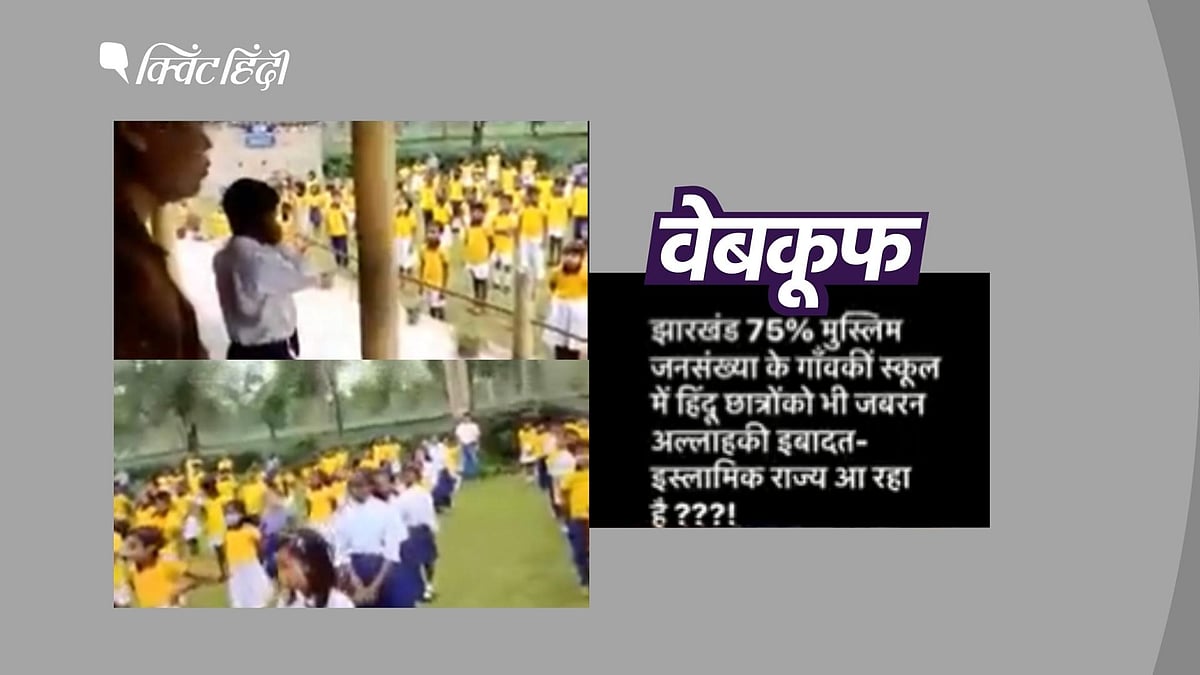
असम में हिंदू छात्रों से जबरन कराई जा रही इस्लामिक प्रार्थना
Publisher’s rating: FALSE

నరేంద్ర మోదీ కేదార్నాథ్ ఆలయం చుట్టు తలకిందులుగా ప్రదక్షిణ చేస్తున్న దృశ్యాలు
Publisher’s rating: FALSE

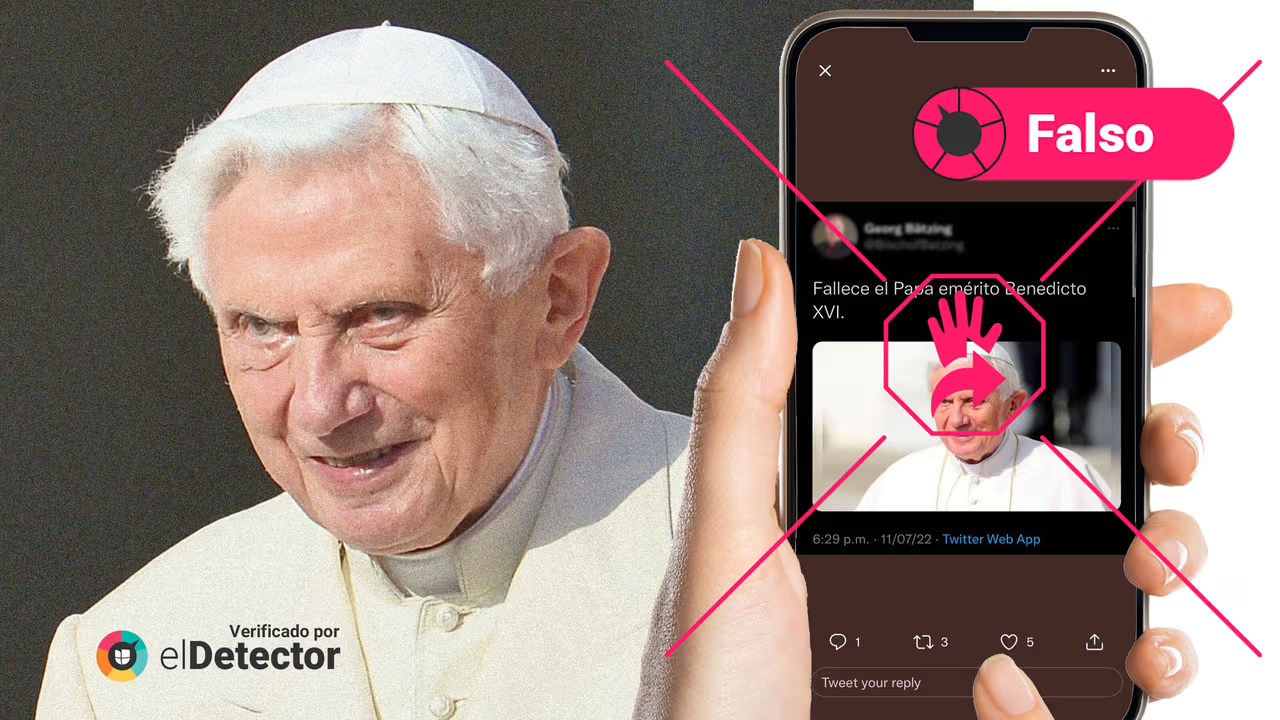
"Fallece el Papa emérito Benedicto XVI"
Publisher’s rating: Falso
The claim concerned the death of Pope Emeritus Benedict XVI, also known as Joseph Ratzinger. The review says the rumor originated in a July 11, 2022, Twitter post from an unverified account using the name of George Bätzing, then president of the German Bishops’ Conference. It reports that the account later said it was fake and had been created by Italian journalist Tommaso Debenedetti; the profile was subsequently deleted. The review could not independently confirm that Debenedetti was behind the account. To examine the post after the profile disappeared, the review says it captured a screenshot and used Google’s cached search result for “twitter georg bätzing.” It reports that the cached result showed a post, in English, claiming Benedict XVI had died, timestamped 11:27 p.m. on July 11 and accompanied by a photo. The review also checked for corroboration: it found no report of the alleged death on the Vatican’s media outlets or the German Bishops’ Conference website, or in the named international news outlets, and noted that specialized Catholic news organizations had also debunked the rumor. The evidence described in the review therefore identifies a fabricated social-media announcement, not a confirmed death. It also distinguishes what the investigators could establish from what they could not: they documented the false post and reported its account’s later admission, but said they could not independently verify the identity of the person behind the account.

Picture of the Shital Nath temple in Kashmir
Publisher’s rating: MISLEADING
The claim concerns a photo circulated as showing the Shital Nath temple in Kashmir. FACTLY’s review identifies the pictured building as a different Srinagar temple: the Meruvardhana swami temple, also known as the Pandrethan temple. The review says the image is from inside the Badami Bagh Cantonment in Srinagar, Jammu and Kashmir, rather than the Shital Nath temple. To check the image, the review reports conducting a reverse image search. That search found a similar photograph in an article from the Kashmir Review, which identified the building as the historical Pandrethan temple. FACTLY explains that Pandrethan is also called the Meruvardhana swami temple and Pani Mandir, and reports that other images of this temple were available for comparison. The review does not describe additional technical image analysis, so its account supports the identification through the reported image match and comparison rather than a more detailed forensic method. The review distinguishes the two sites by location and by comparing images: it places the pictured temple inside Badami Bagh Cantonment, while locating Shital Nath temple in Srinagar’s Habba Kadal area. It says that images of Shital Nath were also available for comparison. On that evidence, the photograph does not show the temple named in the claim; it shows the Pandrethan/Meruvardhana swami temple instead.

Birds and Airplanes cannot fly over Kaaba in Mecca
Publisher’s rating: MISLEADING
The review examines a social-media post claiming that birds and airplanes cannot fly over the Kaaba in Mecca. It distinguishes the reported restriction on aircraft from the post’s broader assertion that flight is impossible: according to the review, flights over Mecca are generally banned for religious reasons, not because aircraft cannot fly there. The stated purpose of the ban is to avoid disturbing pilgrims and show respect for the holy site. To assess the aircraft claim, the review reports finding news accounts of helicopters hovering around Mecca during emergencies to monitor pilgrims’ safety. It also cites an expert, Julien Aubert, whom AFP consulted while checking a similar claim about magnetic attraction. Aubert said that scientists had found no magnetic anomalies particular to Mecca and that magnetic disturbances do not prevent an airplane from flying. These points support the review’s distinction between an administrative or religious flight restriction and a scientific barrier to flight. For birds, the review says it found no credible evidence that they cannot fly over the Kaaba, and reports finding social-media visuals showing birds there. It concludes that neither the claimed impossibility for birds nor a scientific obstacle for aircraft is established. The qualification is important: the review does report a general flight ban, so the claim’s wording can confuse a restriction on flights with an inability to fly.
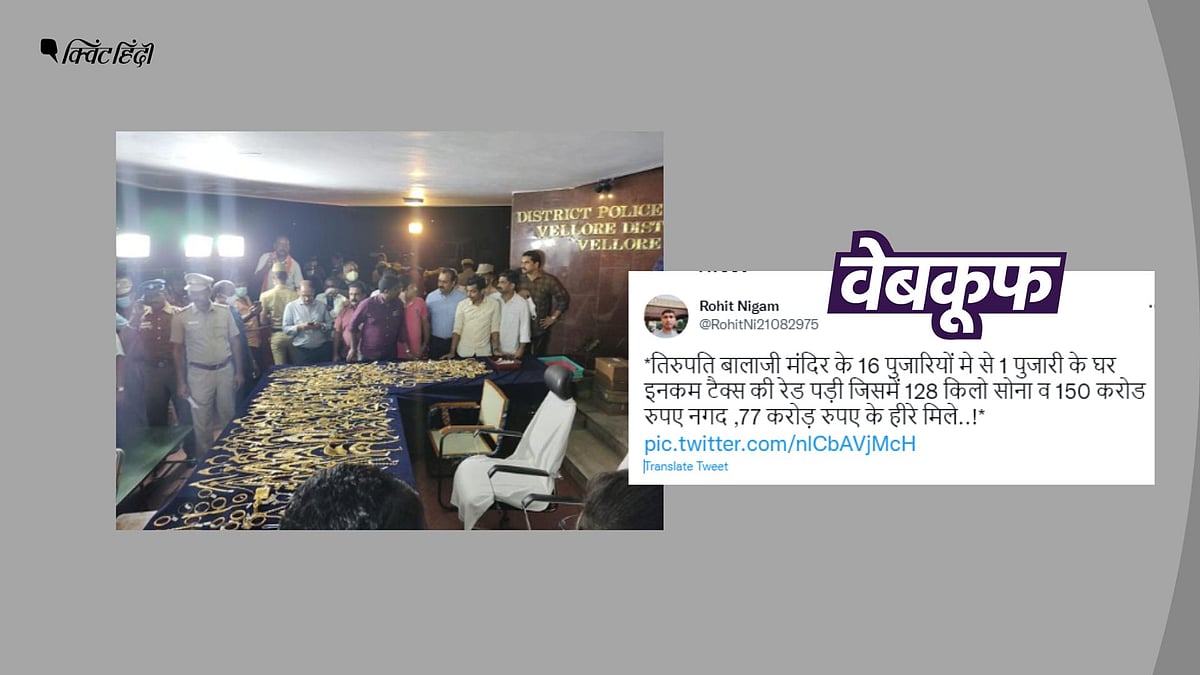
तिरुपति बालाजी मंदिर के पुजारी के घर से जब्त हुए सोने की है ये तस्वीर
Publisher’s rating: FALSE

यह शख्स एक मुस्लिम विद्वान है और वह हिंदुओं को कायर कह रहा है।
Publisher’s rating: False
Степана Бандеру в Украине причислили к лику святых
Publisher’s rating: Намеренно созданный фейк

President of Ivory Coast Alassane Ouattara performed hajj with his own money, refusing the official protocol
Publisher’s rating: MISLEADING
The claim concerned a circulating photo said to show Ivory Coast President Alassane Ouattara performing Hajj using his own money and refusing Saudi official protocol. FACTLY’s review says Ouattara did perform Hajj in 2018, but with his family and other prominent Ivorian figures, and that the claim he refused protocol was not supported. It also reports that he performed Umrah in Madinah in April 2022 and was received by Saudi officials. The review therefore distinguishes the real pilgrimages from the claim attached to the circulating photo. To check the photo’s identification, the review compared it with images from Ouattara’s April 2022 Umrah visit and his August 2018 Hajj; it says the images from neither visit matched the viral photo. It also cites Saudi media platform Anti-Rumours Authority, which said the person in the circulating image was not Ouattara. That authority’s account stated that Ouattara had performed Hajj in 2018 with his private security, at the Saudi king’s invitation, and rejected the assertion that he had refused Saudi protocol. The evidence supports the conclusion that the photo was misidentified and that the claim of refusing official protocol is misleading. Although the social-media claim also says Ouattara used his own money, the review’s cited account instead says his 2018 pilgrimage was by invitation; the supplied text does not establish that he personally paid for it.
এ বছর হজের খুতবা দেবেন শায়খ ড.আবদুল্লাহ বিন সুলাইমান আল মানিয়া
Publisher’s rating: False

The video shows the priests removing donation boxes and telling the officials first to bring the donations of the churches and mosques
Publisher’s rating: MISLEADING
The claim concerns a video said to show priests in Karnataka removing temple donation boxes and telling officials to bring donations from churches and mosques first. FACTLY identifies the footage as an incident at Kolaramma temple in Kolar, Karnataka, in 2015—not a new event. Its account says the High Court had ruled that a donation box could be placed in the temple. The investigation’s central distinction is between what the video and accompanying posts claim and what the reported temple dispute was actually about. (S1: “The video was taken in 2015 in the Kolaramma temple in Kolar, Karnataka when the High Court ruled that a donation box could be placed in the temple.”) The review says the temple’s head priest objected on economic grounds: the priests did not receive government salaries and relied on offerings made by devotees in the aarti plate. The reported question to officials was how the priests would survive if a donation box were installed. That account does not support the post’s claim that they demanded donations from churches and mosques. (S1: “the head priest of the temple said that they do not get salaries from the government and are dependent on the money devotees offer in the aarti plate. He questioned how they would survive if a donation box is installed in the temple.”) On the key point, the review states that the video contains no mention of churches or mosques and concludes that the priests did not ask officials to bring or collect donations from them. The finding therefore addresses the specific words attributed to the priests, rather than merely the broader question of whether a donation-box dispute took place. (S1: “As the social media post claims, there is no mention of churches and mosques in the video.”; “To sum it up, the priests in this video have not asked the government officials to bring or collect the donations money from Churches and Mosques.”)