PeakMetrics / Fact Checks
Religion & belief fact checks
Explore claims publishers have checked about religion & belief. Read their original ratings and follow the evidence.
Search fact checks
Search by text or image3,371 published reviews in this topic

ಪಾಕಿಸ್ತಾನದ ಧ್ವಜ ಹಾರಿಸಿದ್ದಕ್ಕಾಗಿ ಉತ್ತರ ಪ್ರದೇಶ ಸರ್ಕಾರ ಪ್ರಯಾಗ್ರಾಜ್ ಜಿಲ್ಲೆಯಲ್ಲಿ ಮಸೀದಿಯನ್ನು ಕೆಡವಿದ ದೃಶ್ಯಗಳು.
Publisher’s rating: FALSE
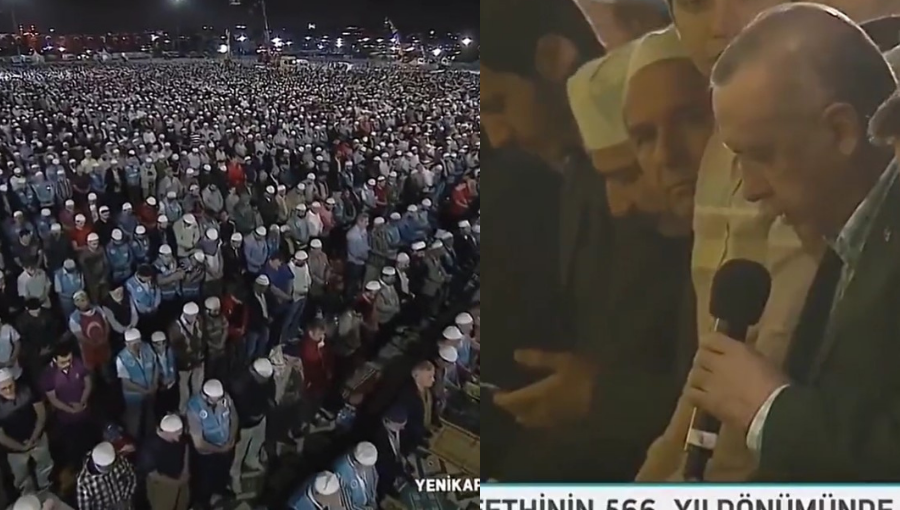
Yenikapı Meydanı’nda kılınan teravih namazı görüntülerinin güncel olduğu iddiası
Publisher’s rating: Yanlış

बिहार के पूर्णिया में रामनवमी के मौके पर निकाली गई भगवान राम की शोभायात्रा में शामिल लाखों लोगों का वीडियो
Publisher’s rating: FALSE

ಸಾಯಿಬಾಬಾ ಅವರ ರೂಬಿಕ್ಸ್ ಕ್ಯೂಬ್ ಮೊಸಾಯಿಕ್ ಅನ್ನು ಚಿತ್ರಿಸಿ ಗಿನ್ನೆಸ್ ಬುಕ್ ಆಫ್ ವರ್ಲ್ಡ್ ರೆಕಾರ್ಡ್ಸ್ನ ಸೇರಿದ ವೀಡಿಯೊ.
Publisher’s rating: FALSE

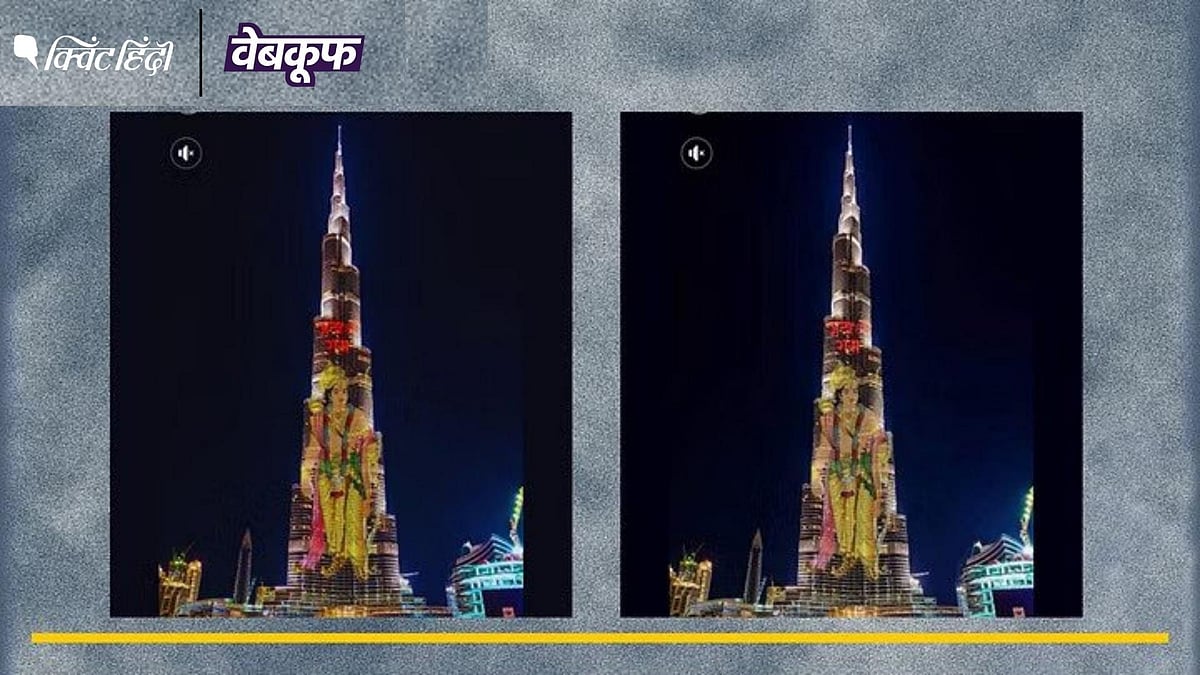
रामनवमी पर दुबई के बुर्ज खलीफा में लगाई गई राम की फोटो
Publisher’s rating: FALSE
ویدئویی که در آن آیتالله صافی برای همسر صیغهای خود گردنبند طلا خریده است.
Publisher’s rating: نادرست
اجرای شعبدهبازی «آزمون کتاب» با قرآن توسط محمدمهدی حقگویان
Publisher’s rating: در چند روز گذشته بخشهایی از یک برنامه تلویزیونی بهنام «محفل» که روز ۵ فروردین ۱۴۰۲ از شبکه ۳ تلویزیون ایران و به مناسبت ماه رمضان پخش شد، در شبکههای اجتماعی مورد توجه قرار گرفتهاست.

এখন একটি পোস্টে দাবি করা হয়েছে যে রমজানের আগে সৌদি আরব সরকার মসজিদে লাউডস্পিকার নিষিদ্ধ করেছে এবং এখন লাউডস্পীকারে আজান হবে না। এটাকে সত্য বলে বিশ্বাস করে অনেক ইউজার তা ভাইরাল করছেন। বিশ্বাস নিউজ দাবির সত্যতা যাচাই করেছে। দাবিটি মিথ্যা বলে প্রমাণিত হয়েছে।
Publisher’s rating: MISLEADING

“Prohíben hablar de Jesús en Israel”.
Publisher’s rating: Falso
The viral Facebook post said that Israel had banned talking about Jesus and threatened people with years in prison. The review traces that claim to a proposed amendment introduced on January 9, 2023, by Knesset members Moshe Gafni and Yaakov Asher. The proposal concerned soliciting religious conversion and sought to extend restrictions on promoting the Gospel; it was a legislative proposal, not a rule then in force. The review says the proposal had not been approved or even debated. The proposed amendment was consequential if enacted: according to an English version cited by the review, it would have made personal conversations about Jesus and online videos explaining the Gospel to Jews or Muslims in Israel illegal, with prison terms of one to two years. That description helps explain how the post could refer to prison, but it does not establish that the restrictions had taken effect. The review distinguishes the proposal’s potential provisions from the claim that speaking about Jesus was already prohibited. The review also reports evidence that the proposal was not moving forward. Gafni said there were no plans to advance it, and the review cites a spokesperson’s account that it had been introduced as a procedural formality over the years. Prime Minister Benjamin Netanyahu said he would prevent approval and stated that no law against the Christian community would advance. Taken together, the review’s evidence supports the distinction between a proposed measure and an enacted prohibition.

सफेद रंग की पफर जैकेट पहने पोप फ्रांसिस की तस्वीर
Publisher’s rating: FALSE
২০২৩ সালে আবারও দুবাই আন্তর্জাতিক হিফজুল কুরআন প্রতিযোগিতা ১ম স্থান অধিকার করেছে হাফেজ সালেহ আহমাদ তাকরীম
Publisher’s rating: মিথ্যা

“No, no es pailita, es el Papa Francisco” con una chaqueta blanca de pluma"
Publisher’s rating: Falso
Der österreichische Alpenverein will auch Gipfel-Halbmonde anbringen, um die Muslime zufrieden zu stellen.
Publisher’s rating: Es handelt sich bei dem Brief um eine Fälschung, die bereits im Jahr 2006 verbreitet wurde.
The claim is based on a purported letter between the Austrian Alpine Club and the Islamic Religious Community in Austria. As described in the review, the letter alleges that the religious community objected to summit crosses as symbols of Christian dominance and that the Alpine Club agreed to allow a crescent at a mountain summit chosen jointly. It also purports to propose an Islamic section within the club. The review finds that the letter is not a genuine, current agreement: it had already circulated in 2006 and was fabricated. The review checks the document’s apparent date and the roles of people named in it. The letter describes Andreas Ermacora as the club’s vice-president, although the review says he is now its president; it identifies Omar Al-Rawi as the religious community’s integration commissioner, a role he had left in 2011. Comparing the version then circulating with an older version, the review reports that the date had been altered: the older version reads “20.3.006.” These discrepancies support the conclusion that the circulating document is not reliable evidence of an Alpine Club decision. The account also places the letter’s history in 2006: it prompted political controversy, and a BZÖ politician cited it in a televised debate. The review says the Islamic Religious Community and Al-Rawi sued him, and that the letter was subsequently exposed as a forgery, with an artists’ group claiming responsibility. Thus, the claim presents a long-circulating fabricated document as an actual Alpine Club concession.

2050 నాటికి ప్రపంచమంతా హిందుత్వమయం – అమెరికా సర్వే సంస్థ ఇగ్నోయిస్
Publisher’s rating: FALSE

ఇజ్రాయెల్ ప్రభుత్వం తమ దేశంలో క్రైస్తవ మత ప్రచారం నిషేదిస్తూ ఒక బిల్ను ప్రవేశపెట్టింది
Publisher’s rating: MISLEADING

Videodaki Rahip "Şişman Kadınlar Cennete Giremez" Dedi mi?
Publisher’s rating: Yanlış
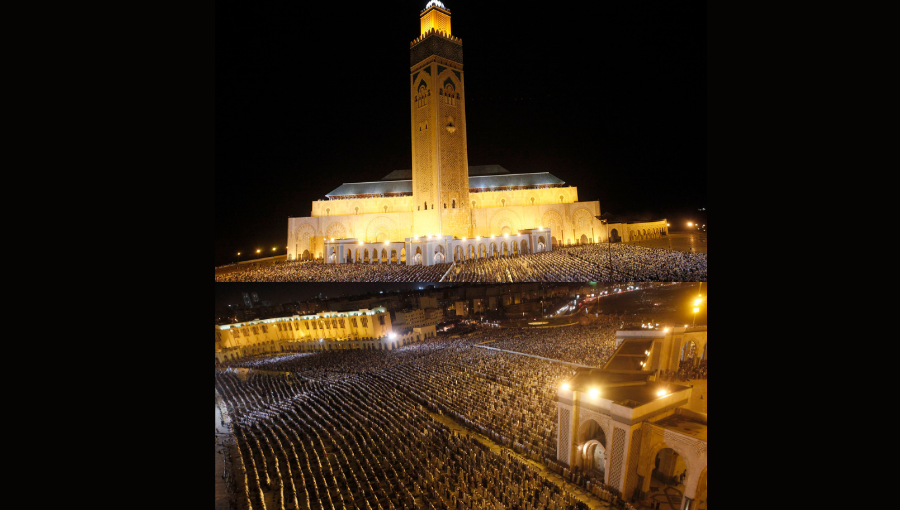
Fas’taki teravih fotoğraflarının güncel olduğu iddiası
Publisher’s rating: Yanlış
The claim concerns photos of crowded prayers at Morocco’s Hassan II Mosque that circulated as if they showed current Tarawih prayers. The investigation says it examined those photos and found that they were in Reuters’ photo archive, where both were dated to 5 August 2013, during Laylat al-Qadr in Casablanca. To check the images, the publisher reports using reverse image search. It also says that searching with the date led to contemporary news reports containing the same photos. This evidence ties the circulating images to the 2013 event, rather than to current prayers. The article adds that the photos had circulated the previous year with the same claim and had been examined by AFP.

Video of an Ayyappan Devotee singing a Muslim prayer during Bhajan at a temple in Kerala.
Publisher’s rating: MISLEADING
The post says a video shows an Ayyappan devotee singing the Muslim prayer “La ilaha illallah” during a temple bhajan in Kerala. It further alleges that the incident resulted from appointing Muslim and Christian priests in Hindu temples. The review’s central finding is that the event was not at a Kerala temple: it identifies the footage as a Padi Puja held in Eluru, Andhra Pradesh, in 2017. “The post alleges that this incident occurred due to the appointment of Muslim and Christian people as priests in Hindu temples.” “The video is not from a temple in Kerala but rather from a Padi Puja event held in Eluru City, Andhra Pradesh in 2017.” (S1) To trace the footage, the review says it searched online and found a complete version on YouTube, posted in 2019 under the title “La ilaha illallah ayyappa swamula songs.” In that version, devotees sing Ayyappan bhajans incorporating Islamic prayer phrases; the lead singer speaks Telugu and refers to Vavar Swami. The review also notes that the orchestra banner visible in the video is written in Telugu. These details link the clip to an Ayyappan devotional performance, rather than establishing the claimed Kerala temple setting. “Through a thorough internet search using appropriate keywords, we were able to locate the complete version of the viral video on YouTube.” “The lead singer converses in Telugu and alludes to Vavar Swami during the song.” (S1) The review traced other videos of the same event, uploaded in 2017, to the Ayyappa Swami Padi Puja at Chalasani Gardens, a function hall in Eluru. It says the venue comparison supports that identification and reports that singer N Balaji confirmed it to India Today in 2021. The review also provides context for the Islamic phrases: it describes Vavar as a Muslim saint and Ayyappa devotee, and says Ayyappan songs have included references to Vavar and Islamic phrases. The footage therefore does not substantiate the post’s location or its explanation for why the singing occurred. “These videos reveal that the event in question is the Ayyappa Swami Padi Puja, which took place at Chalasani Gardens, a function hall situated in the city of Eluru, Andhra Pradesh.” “The Singer in the viral video, N Balaji, also confirmed the same to India Today in 2021.” “Over the years, there have been several instances of Ayyappan devotees including references to Vavar Swami and Islamic phrases in their songs.” (S1)