PeakMetrics / Fact Checks
Religion & belief fact checks
Explore claims publishers have checked about religion & belief. Read their original ratings and follow the evidence.
Search fact checks
Search by text or image3,371 published reviews in this topic

Het WEF roept op om de Bijbel te herschrijven met AI.
Publisher’s rating: Er zijn geen plannen van het WEF om de Bijbel te herschrijven met behulp van AI. De bron van het gerucht staat bekend voor het verspreiden van desinformatie. Harari heeft evenmin een officiële rol binnen het WEF.

Banglore MusIims decide not to buy anything from Hindus. “We have 5 years power, don’t buy petrol in Hindu pumps, don’t take medicine in Hindu shops” They want to break Hndus. Think 20% Jihadists threatening 80 %. What if Hindus turn the tables Jaago Sanathana
Publisher’s rating: Misleading
பெங்களூரு முஸ்லீம்கள் கூட்டத்தில், இந்துக்களிடம் எதுவும் வாங்க வேண்டாம். எங்களுக்கு 5 ஆண்டு அதிகாரம் உள்ளது. இந்து பம்புகளில், பெட்ரோல் வாங்கக்கூடாது, இந்து மெடிக்கல் கடைகளில் மருந்து சாப்பிடக்கூடாது இந்துக்களுக்கு வியாபார லாபம் தரக்கூடாது என்று முடிவு செய்தனர். ஜாகோ சனாதன…
Publisher’s rating: Misleading
In madrassas and family, from childhood, the inspiration to do bad and heinous acts with non-Islamic people, motivates them to do bad behavior and heinous attempts with us, again and again. Now it is your wisdom that….. keep distance from them and their products and their establishments
Publisher’s rating: False

కర్ణాటకలో కాంగ్రెస్ ప్రభుత్వం ఏర్పాటైన తరువాత రాష్ట్రంలోని హిందూ దేవాలయాలను కూల్చివేస్తున్న ఇటీవల దృశ్యాలు
Publisher’s rating: FALSE

A photo of a three-story caravan made for the purpose of Ram Mandir darshan in Ayodhya
Publisher’s rating: FALSE

Vandana Tiwari, Sister of Bageshwar Dham Dhirendra Shastri, is marrying a Muslim man
Publisher’s rating: FALSE
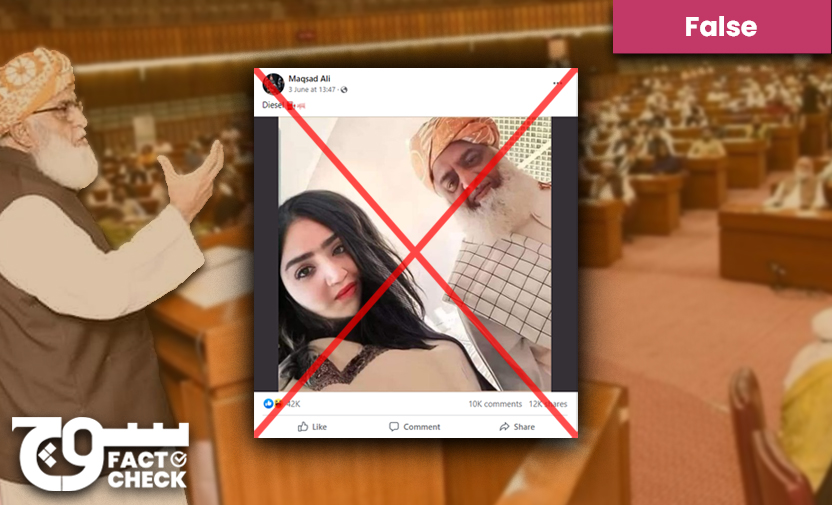
A picture shows Maulana Fazlur Rehman posing for a selfie with a young woman.
Publisher’s rating: Morphed image

Muslimische Kinder sind dem Koran zufolge mit acht Jahren erwachsen.
Publisher’s rating: Heilige Schriften, egal welcher Religion, ersetzen in Österreich keinerlei Gesetze. Als erwachsen gilt hierzulande jeder Mensch ab dem 18. Geburtstag. Zudem gibt es in Österreich kein Kindergeld, sondern Familienbeihilfe. Sie steht auch vielen Familien mit volljähroigen Kindern zu.
The Austrian sharepic reviewed by dpa argued that Muslim children should lose state support from their eighth birthday, on the grounds that they are adults under the Quran from age nine. The review distinguishes that claim about religious adulthood from the legal question of adulthood in Austria. It reports that people become legally adult at 18, and that religious communities have no direct influence on Austrian legislation. It also notes that the sharepic’s “Kindergeld” framing is inaccurate for Austria, which pays Familienbeihilfe instead. The review says the Quran does not establish a clear, defined age at which Muslims become adults. It describes adulthood in Islam as associated with the beginning of puberty, but says there is no concrete minimum age for marriage in Islamic legal texts. The review therefore finds no basis in the Quran for the sharepic’s specific claim that children become adults at nine. It also explains that Familienbeihilfe can continue after a child turns 18: depending on vocational training, it may be paid to children under 24, with an additional year for children with a significant disability.
شکاف کعبه را که هنگام تولد علی ابن ابیطالب ایجاد شده هر سال تعمیر میکنند اما ۱۳ رجب دوباره شکاف ظاهر میشود.
Publisher’s rating: شاخدار
धीरेंद्र शास्त्री की धर्म बहन वंदना तिवारी ने मुस्लिम युवक से निकाह कर लिया है।
Publisher’s rating: False
An illegal ‘mazar’ was constructed near Himachal Pradesh temple
Publisher’s rating: False
भारत में एक मुस्लिम बस ड्राइवर बस में नमाज़ पढ़ रहा है और सारे यात्री धूप में उसका इंतज़ार कर रहे है। बस के दरवाज़े बंद है और उसके नमाज़ पढ़ने के बाद वे दरवाज़े खुलेंगे।
Publisher’s rating: Missing Context

Video clips showing girls in the USA reciting Shiva stotras
Publisher’s rating: FALSE
The claim concerned multiple social-media clips presented as showing girls in the USA reciting Shiva stotras. The post also attributed their supposed popularity to the effectiveness of sound therapy. FACTLY says it checked whether the clips actually depicted what the post claimed, rather than assessing the broader claim about sound therapy. The review describes using reverse image searches on screenshots from the circulated clips. That search found a video with similar visuals on the Instagram account of German singer and musician Cass Mae. In its account, Cass Mae described the video as a Lord Shiva mantra she had posted, writing that she was happy when people saved and shared it. FACTLY also says it found other clips from the post on her Instagram account. On that basis, the review identifies the footage as Cass Mae’s cover performances, not videos of girls in the USA. It says Cass Mae also performed songs dedicated to other Hindu deities, but the evidence presented here does not establish the post’s separate assertion about sound therapy. The review’s conclusion is limited to the identity and location attributed to the people in the clips.

The World Economic Forum has called for a ban on the Bible
Publisher’s rating: False
The Muslim community was behind incidents of temple vandalism in Uttar Pradesh.
Publisher’s rating: FALSE


Shirdi Saibaba Sansthan Trust donated ₹35 crore to Haj Pilgrims, while no donation was made for the construction of Ayodhya Ram Mandir
Publisher’s rating: FALSE
The claim concerns the Shirdi Saibaba Sansthan Trust and alleges that it gave ₹35 crore to Haj pilgrims while making no donation toward construction of the Ram Mandir in Ayodhya. FACTLY reports that Rahul Jadhav, the Trust’s then-CEO, said no donation was given to Haj pilgrims. On the temple-funding part, Jadhav said no one had approached the Trust for a contribution, so it had made no decision to donate. The review describes two checks: searches found no credible reporting of a Haj donation, and the Trust’s official Facebook and Twitter accounts and website had issued no statement about one. It also recounts Jadhav’s clarification when the rumour spread in April 2023. Regarding the Ram Mandir, the review says there were no requests for donations and no provision for such funds under the Sansthan Regulations; accordingly, the Trust had taken no decision. This supports a narrower conclusion than a claim about the Trust rejecting a request: according to the review, no request had been made. The review traces a viral screenshot to a tweet by Kavita Tewari on 20 April 2023, which it says was later deleted after the information proved incorrect. It also says the full Latestly article shown in the screenshot categorized the information as false. The Trust filed a police complaint on 20 June 2023, and Shirdi police registered an FIR and began investigating, according to the review’s update. These details document the rumour’s circulation and response; the review’s central evidence is Jadhav’s clarification and the absence of any donation.