PeakMetrics / Fact Checks
Religion & belief fact checks
Explore claims publishers have checked about religion & belief. Read their original ratings and follow the evidence.
Search fact checks
Search by text or image3,371 published reviews in this topic

West Bengal Police have attacked ISKCON members for selling Bhagavad Gita.
Publisher’s rating: MISLEADING
The claim concerns a video circulated as showing West Bengal Police attacking ISKCON members for selling the Bhagavad Gita. FACTLY identifies the footage instead as a 2008 clash in Goa involving Russian members of the Hare Ram Hare Krishna group and Goa police—not the alleged West Bengal incident or a dispute over selling the Gita. The review concludes that presenting the video as evidence for the claim is misleading. [S1]

Claim iskcon devotees were not beaten up for distributing bhagwad gita in West-Bengal
Publisher’s rating: Fact Crescendo Rating FALSE

La religión islámica sustituye a la católica en un colegio de Murcia
Publisher’s rating: Falso
The claim concerned a photographed form circulating on social media that appeared to offer families at a Murcia school only a choice between Islamic religion and a civic-values subject. The accompanying interpretation was that Catholic religion had been replaced. Newtral reports that the image was incomplete and out of context: the full paperwork also included a page offering Catholic or Evangelical religion. Newtral says it obtained photographs of the other page after asking Murcia’s education department for the document it had described. The department said the form was a proposed consultation for a small group of pupils, not a form distributed to families, and that the consultation never took place because the department did not authorize it. The school identified in the report was CEIP Bienvenido Conejero Requiel; the department also said Islamic religion was not offered in schools in the region. Thus, the image did not show that Islamic religion had displaced Catholic religion at the school. It showed an incomplete version of an unapproved proposed consultation, while the omitted page included Catholic religion as an option. The review’s evidence addresses both the missing document context and whether the proposal was actually implemented.

Claim is this a video of people who went to build ram mandir
Publisher’s rating: Fact Crescendo Rating FALSE
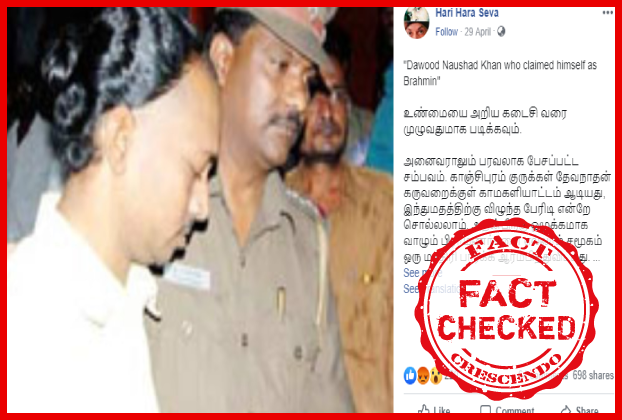
Claim: Kanchipuram Temple priest devanathan is a Muslim
Publisher’s rating: FALSE
The review examines a Facebook post alleging that Kanchipuram temple priest Devanathan was Muslim, using the name “Dawood Naushad Khan,” and had concealed his identity to study and perform temple duties. It reports that the post attributed its story to events supposedly revealed in the Madras High Court on April 26, 2019. The review says it searched for information about Devanathan’s case and found no support for the claim that he was Muslim or circumcised.
Claim old video claims that muslims thrashed brahmin in West-Bengal
Publisher’s rating: Fact Crescendo Rating FALSE

Claim: Lord Ganesha idol submerged in sea
Publisher’s rating: FALSE
The review examined a widely shared Facebook image showing a priest appearing to touch a partly submerged Ganesha idol. The accompanying post described it as a rare idol in the sea and said sharing the image would bring good fortune. The review notes that the post did not identify where the image was taken, so its investigation focused on whether the pictured idol was actually in the sea. The post was shared by a Facebook group on January 18; the excerpt does not specify the year. (“கோவில் அர்ச்சகர் ஒருவர், கோட்டைச் சுவர் போன்று இருக்கும் இடத்தில் தண்ணீரில் பாதி மூழ்கி இருக்கும் விநாயகர் சிலையைத் தொடுவது போல இந்த படம் உள்ளது.”; “இதனால், இந்த பகுதியை மட்டும் ஆய்வுக்கு எடுத்துக்கொண்டோம்.”) To trace the image, the review says it searched for it using Google reverse image search. It found the same priest-and-idol picture on NearMumbai.com and a version bearing a Maharashtra.com watermark; the image also had “Bhimashankar” written in Hindi. The review identifies the depicted site as the Bhimashankar temple in Pune district, Maharashtra. (“படத்தை கூகுள் ரிவர்ஸ் இமேஜ் தேடலில் பதிவேற்றித் தேடினோம்.”; “மேலும் அந்த படத்தில் பீமா சங்கர் என்று இந்தியில் எழுதப்பட்டு இருந்தது.”) The review then checked the location against the sea claim. It reports that the temple is 1,034 metres above sea level and that Pune district has no coastline. It also says a TripAdvisor image of the temple showed a place like the one in the Facebook image. On that basis, the review concludes that the image depicts an idol at the hilltop Bhimashankar temple, not an idol submerged in the sea. The shared image therefore presented the location misleadingly. (“இந்த கோவில் கடல் மட்டத்திலிருந்து 1034 மீட்டர் அதாவது சுமார் 3000 அடி உயரத்தில் அமைந்துள்ளது”; “புனே மாவட்டத்திற்கு கடல் எல்லையே இல்லை.”; “மலைக்கு மேல் உள்ள விநாயகர் சிலையை” )

శ్రీలంక ప్రభుత్వం వారి దేశంలో ఇస్లాం మతాన్ని నిషేధించాలని నిర్ణయించింది
Publisher’s rating: FALSE
శ్రీలంక ప్రభుత్వం వారి దేశంలో ఇస్లాం మతాన్ని నిషేధించాలని నిర్ణయించింది.
Publisher’s rating: FALSE
Claim is this baba chunmun nand ji maharaj kissing a girl before going for bjp campaign
Publisher’s rating: Fact Crescendo Rating FALSE

கடவுள் மறுப்பு கொள்கையான நாத்திகம் பேசினால் மரண தண்டனை விதிக்கப்படும்- சவூதி அரேபியா அரசு.
Publisher’s rating: True

పాక్ లోని హిందువులు తమ ఇళ్ల పై కాషాయం రంగు జెండా ఉంచినందుకు గాను వారిపై ఆ దేశస్థులు దాడి
Publisher’s rating: FALSE
Dana haji untuk tambahan kuota 10.000 jemaah dari Arab Saudi sudah habis untuk biaya infrastruktur.
Publisher’s rating: Keliru

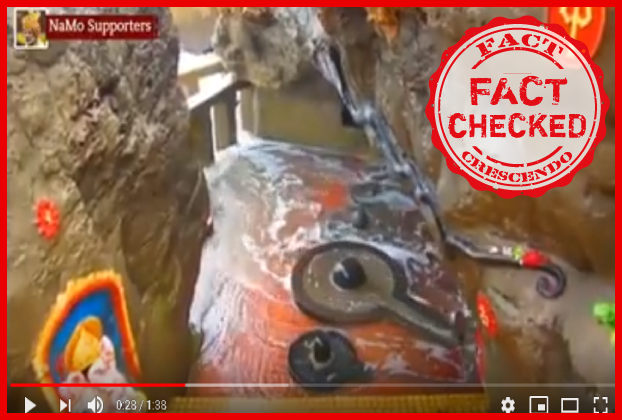
Claim: Pashupatinath temple situated near to sea
Publisher’s rating: Fact Crescendo Rating: False
The review examined a widely shared Facebook video that appeared to show waves washing over Shiva lingas and was presented as footage of Pashupatinath Temple in Kathmandu. Its investigation addresses the claim that the temple is near the sea by checking whether the coastal-looking footage really depicts that location. The publisher says it took a frame from the video and searched for it using Yandex. The resulting images and reports led it to identify the lingas as being at Gangeshwar Temple, in Diu, a Union Territory on Gujarat’s coast—not at Pashupatinath. The review therefore identifies the video’s coastal setting as real but its attribution to Pashupatinath as false. The article distinguishes the locations: it says Pashupatinath stands on the bank of the Bagmati River, not beside the sea, and gives Kathmandu’s elevation as 4,600 feet above sea level. Its conclusion is that the video shows Gangeshwar’s Shiva lingas being misidentified as those of Pashupatinath; it does not claim that the coastal footage itself is fabricated.
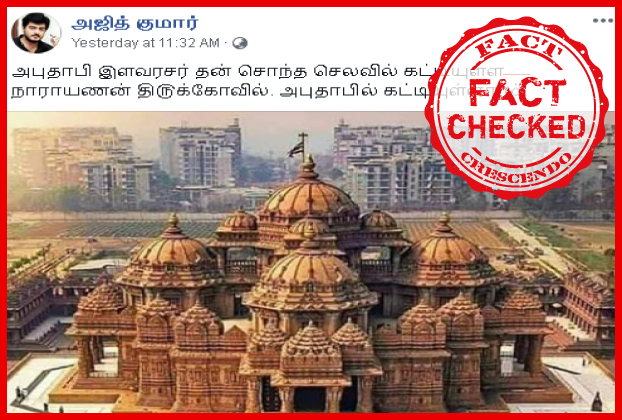
Claim: Abu Dhabi Crown Prince built a Hindu temple
Publisher’s rating: Fact Crescendo Rating: False
The review investigates a social-media post claiming that Abu Dhabi’s crown prince built a grand Hindu temple in Abu Dhabi at his own expense. It says the post used a photograph of a temple and that a Facebook account presented as belonging to actor Ajith Kumar helped circulate it. The review reports using reverse-image search to identify the pictured building as Delhi’s Swaminarayan Akshardham, rather than a temple in Abu Dhabi. The review distinguishes the provision of land from payment for construction. It says the UAE government agreed to provide land for the Abu Dhabi temple after a request during Narendra Modi’s 2015 visit, and that an agreement involving the temple’s builder, BAPS, was signed during Modi’s 2018 visit. The review also reports that the Abu Dhabi temple’s groundbreaking took place on April 20, 2019, and that the crown prince provided land, but it found no reports that he financed construction. Instead, it says BAPS was building the temple with public donations and private contributions. The review therefore finds that the post conflated a land grant with personally funding the temple and used a photograph of a different temple. It also says the Facebook page was not Ajith Kumar’s official page: the account used his image and name, while the review reports that he did not use social media and had no official social-media page. These points concern the post’s provenance; the central factual correction is that the image showed Delhi’s Akshardham and the Abu Dhabi project was being built through fundraising, not shown to have been paid for by the crown prince.

Claim old news of harassment of pastor by hindu yuva vahini workers in up
Publisher’s rating: Fact Crescendo Rating FALSE

Sri Lankan president Maithiripala Sirisena has ordered a shut down of all mosques and madrasas in the country
Publisher’s rating: FALSE
Photo shows Kenyan preacher stoned while preaching good news to the people
Publisher’s rating: Misleading