PeakMetrics / Fact Checks
Religion & belief fact checks
Explore claims publishers have checked about religion & belief. Read their original ratings and follow the evidence.
Search fact checks
Search by text or image3,371 published reviews in this topic

PASTOR RR SOARES FUNDADOR DA IGREJA DA GRAÇA PARTiU PARA A GLÓRIA EM COMPLICAÇÃO DA COVID 19.
Publisher’s rating: Falso


হেফাজত ইসলামের নতুন যুগ্ম মহাসচিব মিজানুর রহমান আজহারি
Publisher’s rating: False


FACT CHECK: තවමත් අපවත් නොවූ වසර 200ක් වයසැති භික්ෂුවක්ද?
Publisher’s rating: Misleading
The claim concerned social-media posts describing a monk as a 200-year-old who was still alive. The review says one post gave no country or location for the supposed monk. To investigate, it used a reverse-image search and traced the image to reporting about a mummified monk found in Mongolia—not a living 200-year-old. The review describes the monk as being preserved in a meditative, cross-legged posture, which helps explain why an image of the body could be presented as evidence that he remained alive. The reporting the review discusses attributes the identification to Tsorzh Sanzhzhav, a monk believed by some researchers to have lived about 200 years earlier. It says he was associated with Ovgon Geser Lama, a Buddhist leader who died in 1890, and that the two bodies were found preserved near one another. The review says the body was discovered in Mongolia’s Arkhangai region when a burial chamber at about 2,000 metres above sea level was opened. It reports that the Buddhist institute’s leader initially supposed the monks were not dead because they were preserved in meditation postures, but later said Tsorzh Sanzhzhav had died at about 70. The review’s conclusion is therefore not that a 200-year-old monk was alive: it says the image showed a preserved monk who had died, and that the “still alive” interpretation arose from the posture and earlier reporting. It also notes other cases of deceased monks preserved in similar postures. The review presents its image-search findings and accounts from other publications as the basis for identifying the image and correcting the social-media claim.
Picha inayodaiwa kuwa ya mtoto aliyewapa watu ujumbe wa ujio wa kristo pindi alipozaliwa
Publisher’s rating: FALSE
Images claiming to show idols of Hindu gods discareded for refusing to protect poeple from virus
Publisher’s rating: FALSE

Muslim population in India is 20% and out of 65000 children born every day, 40000 are Muslims
Publisher’s rating: FALSE

কৰ্ণাটকৰ ৰাইচুৰৰ ফটো, য’ত মছজিদৰ তলৰ পৰা জৈন মন্দিৰৰ উত্থান ঘটে
Publisher’s rating: FALSE
Thousands of Hindu idols were discarded by Indians for failing to protect them against COVID-19
Publisher’s rating: False


FACT CHECK: බුරුම ස්වාමීන් වහන්සේ නමක් සත්ය වශයෙන්ම පිරිනිවන් පෑ දර්ශන පෙළක් ද?
Publisher’s rating: Misleading

Have Indians Abandoned Their Gods As They Failed To Save Them From Covid-19?
Publisher’s rating: False
The review examined viral images and videos presented as evidence that Indians were angry at their gods for failing to save them from Covid-19 and were destroying idols. It identifies two separate clips: one showing a bulldozer collecting idols from a street, and another showing people immersing idols in a river. The review concluded that neither depicts Covid-era destruction of Hindu deities.

ఒక హిందువు పాడె మోసి ప్రచారం చేసుకుంటున్న కొందరి ముస్లిముల కి సంబంధించిన ఫోటో
Publisher’s rating: MISLEADING

“मक्का और मदीना के बाद इस्लाम में अल अक्शा तीसरी सबसे पवित्र मस्जिद मानी जाती थी जोकि इजरायल द्वारा तोड़ दी गई |
Publisher’s rating: False

Video yang diklaim sebagai video saat Ketua Umum PBNU Said Aqil dibaptis di gereja
Publisher’s rating: Keliru
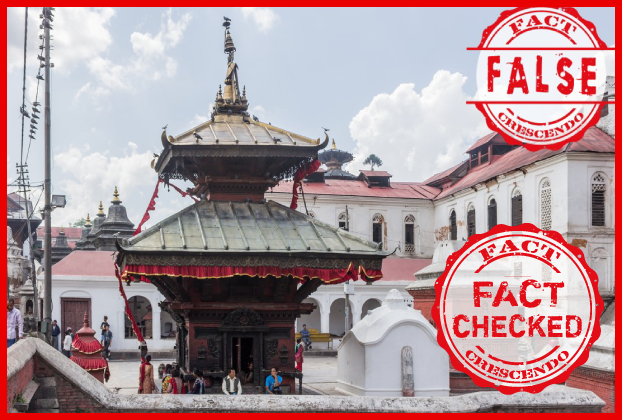
Claim: Misleading shared as Nepal announced again itself as a hindu country
Publisher’s rating: False
The claim concerned a social-media post saying Nepal had again declared itself a Hindu country. The review identifies the post as shared by a Facebook account called Singaraja on May 11, 2021, alongside a photograph of the Pashupatinath Temple. It reported that Nepal had been declared secular in 2007 and that efforts to restore Hindu-country status had continued, but found no evidence that a new declaration had been made.

శ్రీలంక కొలంబో నేషనల్ మ్యూజియంలో పొందుపరిచిన శ్రీ కృష్ణుడి శంఖం యొక్క ఫోటో
Publisher’s rating: FALSE