PeakMetrics / Fact Checks
Religion & belief fact checks
Explore claims publishers have checked about religion & belief. Read their original ratings and follow the evidence.
Search fact checks
Search by text or image3,371 published reviews in this topic
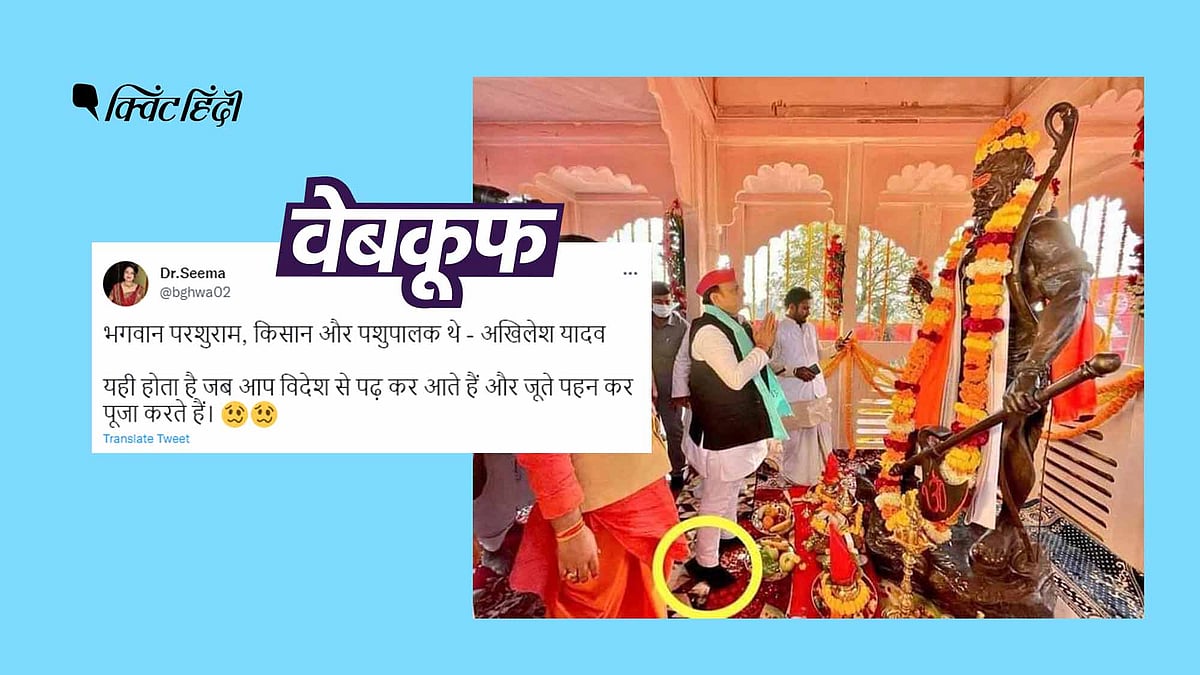
अखिलेश यादव ने परशुराम मंदिर में जूते पहनकर पूजा की
Publisher’s rating: FALSE

बनारस में रोड पर नमाज पढ़ने का अंजाम देख लो ,क्या ये और किसी के राज में सम्भव है। धन्यवाद योगी जी का।“
Publisher’s rating: False


కెనడాలో 300 చర్చిలను హిందూ దేవాలయాలుగా మార్చుకొని హిందువులుగా మారిన క్రైస్తవులు
Publisher’s rating: FALSE

कालीपुत्र कालीचरण महाराज की बेल स्वीकार हो गई है शेरों की तरह दहाड़ दो। जय श्री राम।”
Publisher’s rating: False

శ్రీ కృష్ణుడు ద్వారకా నగరాన్ని పాలించిన చరిత్ర వాస్తవమే అని నాసా నిర్ధారించింది
Publisher’s rating: FALSE

Richest Man in America, John Ford, converted to Islam
Publisher’s rating: FALSE
The post claimed that John Ford, identified as the richest man in America, had converted to Islam, and circulated a photograph of a man in a suit. The review checked both the identity implied by the claim and the photograph, rather than relying on the image alone. It reports that a reverse-image search found a similar image connected to a video that had circulated in Oman in 2018. In that earlier material, the person was rumoured to be a US Army leader reciting the Shahada. The review says the person’s name could not be identified and that the article discussing the image did not mention John Ford. Thus, the reported image trail did not establish that the man shown was a person named John Ford or that he had converted to Islam. The review also compared the claimed identity with Forbes’s list, titled “The 10 Richest People in America From 2010-2021,” and reports that no John Ford appeared on it. It further says searches found no recent news articles reporting that a richest man in America named John Ford had converted. The review distinguishes two other people named John Ford—a Hollywood director and producer who died in 1973, and a person with a LinkedIn profile in media—whose pictures did not match the image in the post. Taken together, the image’s unidentified identity and the lack of support for the claimed person in the cited wealth list or news reporting undermine the post’s identification and conversion claim.

ఇండోనేషియాలో 50 వేల మంది ముస్లింలు ఇస్లాంని వదులుకొని హిందూ మతంలోకి మారారు
Publisher’s rating: FALSE


ఢిల్లీ విమానాశ్రయంలో ఒకరు నమాజ్ చేయడం చూసి, అక్కడే కూర్చున్న సినీ నటుడు మాధవన్ గాయత్రీ మంత్రాన్ని పఠించడం ప్రారంభించాడు
Publisher’s rating: MISLEADING

מותר לבעל מסעדה להציב שלט "כשר ללא תעודה"
Publisher’s rating: מטעה
The investigation examined Finance Minister Avigdor Liberman’s recommendation that businesses put up a sign saying “the place is kosher, without a certificate.” Its central question was whether the proposed wording was allowed under the law, rather than whether any particular restaurant’s food met religious dietary standards. The review says it checked the wording against the relevant statute and the Supreme Court’s interpretation of it. It also notes that the 2021 kashrut reform did not change the statutory provision at issue: “בעל בית אוכל לא יציג בכתב את בית האוכל ככשר, אלא אם כן ניתנה לו תעודת הכשר”. The decisive evidence was the expanded Supreme Court ruling in a case brought by two Jerusalem restaurateurs, who challenged fines imposed after displaying alternative kashrut certificates. The review reports that the court drew a distinction between describing specific food-handling standards and presenting the establishment as kosher. It quotes former Supreme Court President Miriam Naor’s view that a restaurant without a certificate may not use “כשר” or other expressions that convey that status in a written representation: “מי שאין בידו תעודת הכשר לא יוכל להתהדר בתואר 'כשר'”. The review says the court nevertheless allowed truthful statements about specific practices, such as what food is served or how flour is sifted. Applying that distinction, the investigation concluded that adding “without a certificate” does not make the proposed sign permissible: it still describes the establishment as kosher. It says businesses may instead explain which standards they follow, while making clear that they do not hold a kashrut certificate. The review also records Liberman’s office’s response: it said his intention was to refer to businesses describing their own standards and noted that truthful descriptions with an explicit disclosure about certification were permitted. The investigation concluded that this clarification did not make the wording he had recommended lawful.

Recent picture of a Hindu family converting to Islam in Rajasthan
Publisher’s rating: MISLEADING
আখেরি নবী করীম সাল্লাল্লাহু আলাইহি ওয়া সাল্লাম এর তলোয়ার
Publisher’s rating: False

ಕರ್ನಾಟಕದಲ್ಲಿ ರಸ್ತೆ ವಿಸ್ತರಣೆಯ ಕಾಮಗಾರಿ ಭಾಗವಾಗಿ ಮಸೀದಿಯನ್ನು ಕೆಡವಲಾಗಿದ್ದು ಅದರ ಶಿವ ದೇವಾಲಯ ಕಂಡು ಬಂದಿದೆ.
Publisher’s rating: MISLEADING

గుజరాత్ శాసన సభ్యుడు జిగ్నేష్ మేవాని ఖురాన్ని పట్టుకొని బహిరంగ ప్రదర్శన చేస్తున్న దృశ్యం
Publisher’s rating: FALSE


আপুনি খনন কৰা প্ৰতিটো ঠাইতে চাওকচোন, প্ৰতিটো মাজাৰ, দৰগাহ আৰু মছজিদৰ তলত সনাতনৰ প্ৰতীক দেখা পাব।
Publisher’s rating: FALSE