PeakMetrics / Fact Checks
Health & medicine fact checks
Explore claims publishers have checked about health & medicine. Read their original ratings and follow the evidence.
Search fact checks
Search by text or image13,677 published reviews in this topic


“Mysterious pneumonia” from China is now in Ohio.
Publisher’s rating: False
“Covid is never going away! This is the beach today in Raleigh, North Carolina.”
Publisher’s rating: Pants on Fire
Emails show that Fauci knew "hydroxychloroquine worked [and] emailed friends about it being effective."
Publisher’s rating: False

The dog dewormer fenbendazole can cure cancer in humans.
Publisher’s rating: False
Research from related reporting documents claims and self-reports about fenbendazole and human cancer, but the supplied excerpts do not establish that it cures cancer. One interview account describes fenbendazole as killing cancer cells and says people report clearing cancer; the same excerpt notes that there are no human dose-escalation studies. These are claims and reports of experience, not evidence in the excerpts that treatment caused a cure. Other supplied reporting discusses a case series of three people who self-administered fenbendazole. Its account of one 83-year-old woman says she also received an estrogen-blocking injection and radiation for spinal pain, so the excerpt does not isolate fenbendazole as the cause of her reported outcome. A separate source presents an individual’s protocol as including other ingredients, while cautioning that it is not claiming a cure. The excerpts therefore describe interest, anecdotes, and limited case reporting—not evidence sufficient to show that fenbendazole cures cancer in humans.
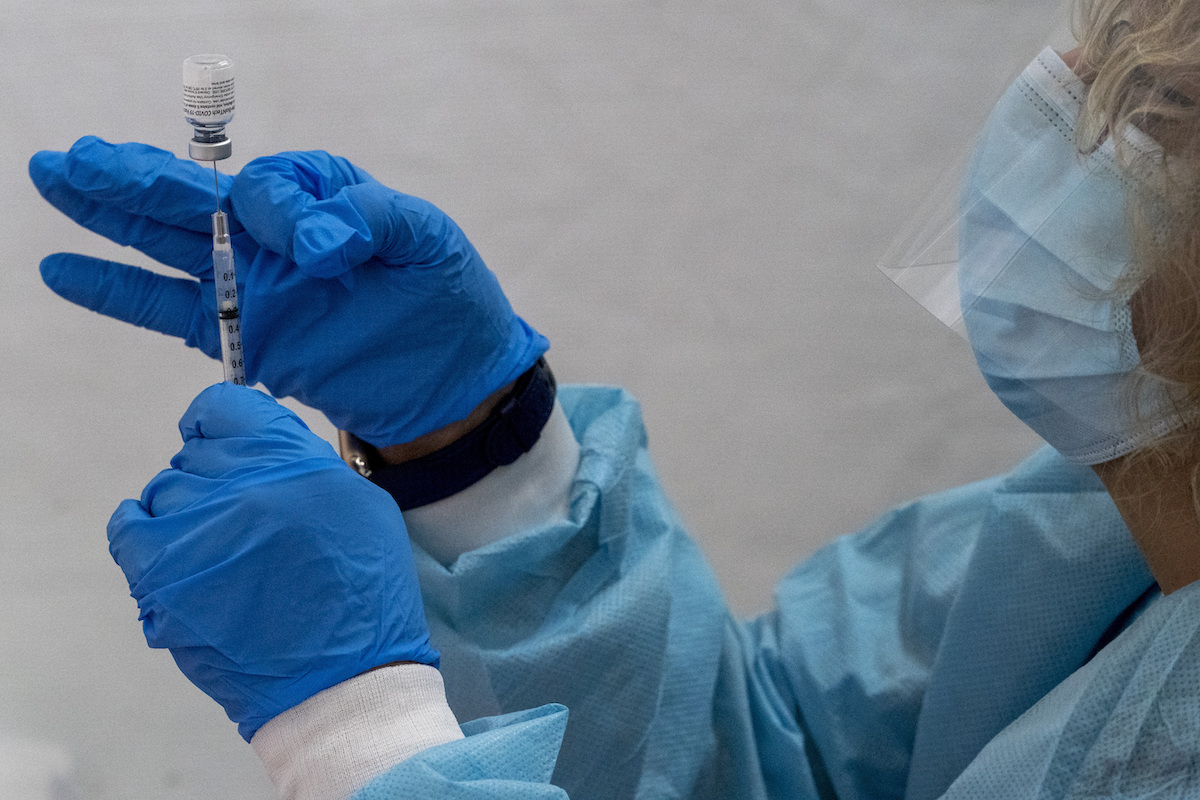
“There is no FDA approval for the Pfizer BioNTech vaccine for COVID-19.”
Publisher’s rating: False
Research from related reporting contradicts the claim that the FDA has not approved the Pfizer-BioNTech COVID-19 vaccine. A JCI Insight study describes BNT162b2 as a Pfizer-BioNTech vaccine and refers to the study’s comparison group as receiving “all 3 FDA-approved COVID-19 vaccines.” That directly identifies the Pfizer-BioNTech product among vaccines the excerpt calls FDA-approved. A separate CNN report says Pfizer/BioNTech and Moderna received FDA emergency use authorization in December 2020, and later states that Pfizer/BioNTech, Moderna and Novavax vaccines “maintain broad approval or emergency use authorization in the U.S.” Together, these excerpts support the conclusion that the categorical assertion of no FDA approval is false. They do not provide the FDA’s underlying authorization documents or spell out the Pfizer-BioNTech product’s precise current approval terms, so those details cannot be established from the supplied text alone.


Una persona tiene de 300 a 900 veces más probabilidades de morir “después de recibir la vacuna contra el #Covid que la contra la influenza”.
Publisher’s rating: Distorsiona los hechos

"It looks like by April, you know in theory, when it gets a little warmer, [the new coronavirus] miraculously goes away — I hope that’s true."
Publisher’s rating: Too Early to Say

Particulate matter, found in wildfire smoke, has “no effect” on human health and is “total junk science.”
Publisher’s rating: False
“People Of Color May Be Immune To The Coronavirus Because Of Melanin.
Publisher’s rating: False

“Your government quietly confirmed the fully vaccinated are developing Acquired Immunodeficiency Syndrome.”
Publisher’s rating: Pants on Fire

"I never had the flu. And I come to the White House, 'Sir, we have to give you a flu shot.' ... And I took it. I don't know if I should have. Who knows?"
Publisher’s rating: CDC: Get Flu Shot

“Hydroxychloroquine is why Uganda, with a population of 43M, has only 15 COVID-19 deaths.”
Publisher’s rating: False
Tuit de 'El País': Cantabria pedirá al Gobierno que decrete el confinamiento domiciliario en la comunidad durante 15 días
Publisher’s rating: Falso

“The best way to avoid COVID altogether is to exercise, eat healthy and let your immune system beat it naturally.”
Publisher’s rating: Mostly False

Bill Gates is coating your organic produce with a “dangerous chemical.”
Publisher’s rating: False
Research from related reporting identifies the claim as a social-media post about Apeel, an edible produce coating associated with Apeel Sciences. The reporting says the Gates Foundation provided funding to the company, but describes Gates as an early investor rather than its owner or operator. It says the posts overstate his role and characterize the product as dangerous. The reporting describes Apeel as a plant-based coating made with purified monoglycerides and diglycerides, applied to some fruits and vegetables to reduce water loss and oxidation. It says the FDA approved those compounds as food additives and that the coating is used on some apples, avocados, and limes. The stated purpose is to slow spoilage and extend shelf life—not to damage or poison produce. A central source of confusion, according to the report, was a safety sheet circulated with the posts. It says that document concerned a different product, made by another company, that shared the Apeel name. The article also notes a qualification: the coating may cause eye damage or allergic skin reactions. That qualification does not substantiate the broader claim that it is a dangerous chemical coating organic produce.