PeakMetrics / Fact Checks
Health & medicine fact checks
Explore claims publishers have checked about health & medicine. Read their original ratings and follow the evidence.
Search fact checks
Search by text or image13,677 published reviews in this topic
"You lose 27,000 people to the common flu.”
Publisher’s rating: Accurate figures, misleading comparison

Outbreak of COVID-19 will be stopped by the hot weather conditions
Publisher’s rating: UNVERIFIED
FACTLY addresses the hot-weather assertion as Claim 4 in a viral social-media message circulating during the early COVID-19 outbreak. Its conclusion is that the claim was unverified: the review says there was no scientific evidence showing that hot weather would stop the outbreak, and quotes the CDC saying it was not known whether COVID-19 spread would decrease as weather became warmer. The review also draws on a National Geographic article, which notes that influenza and some milder coronavirus colds tend to subside in warmer months, but says it was highly uncertain whether SARS-CoV-2 would behave similarly. Researchers studying the disease considered their research too early to predict the virus’s response to changing weather. This is an important qualification: seasonal behavior in other viruses did not establish that hot weather would halt COVID-19. FACTLY further quotes the CDC’s broader explanation that weather and temperature effects on COVID-19 were not yet known, and that investigations into the virus’s transmissibility and other features were ongoing. The evidence described in the review therefore supports an unverified finding, not a conclusion that heat would stop the outbreak—or that it definitively would not.

Runny nose and coughing sputum suggest that one does not have COVID-19. They are not symptoms of COVID-19
Publisher’s rating: FALSE
The review addresses a social-media post asserting that a person with a runny nose and sputum production could not have COVID-19, on the grounds that coronavirus pneumonia involved a dry cough without a runny nose. FACTLY says it checked that assertion against WHO materials, rather than relying only on the post’s characterization of symptoms. It reports that “runny nose” appears on the WHO website’s COVID-19 symptoms list and that “sputum production” appears in the WHO-China Joint Mission report on COVID-19, submitted on 28 February 2020. Those two reported findings directly counter the claim that neither symptom is associated with COVID-19. The review concludes that both symptoms can occur with the disease; it does not say that either symptom alone establishes a diagnosis. The excerpt also reports that AFP found no medical expert named “Dr. Khin Maung U” at a hospital in Shenzhen and no “Shenzhen Hospital,” but does not provide further details of AFP’s checking method.

కోవిడ్-19 యొక్క వ్యాప్తి వేడి వాతావరణ పరిస్థితుల వల్ల ఆగిపోతుంది
Publisher’s rating: UNVERIFIED
Drinking/sipping water every 15 minutes can help against COVID-19/
Publisher’s rating: FALSE
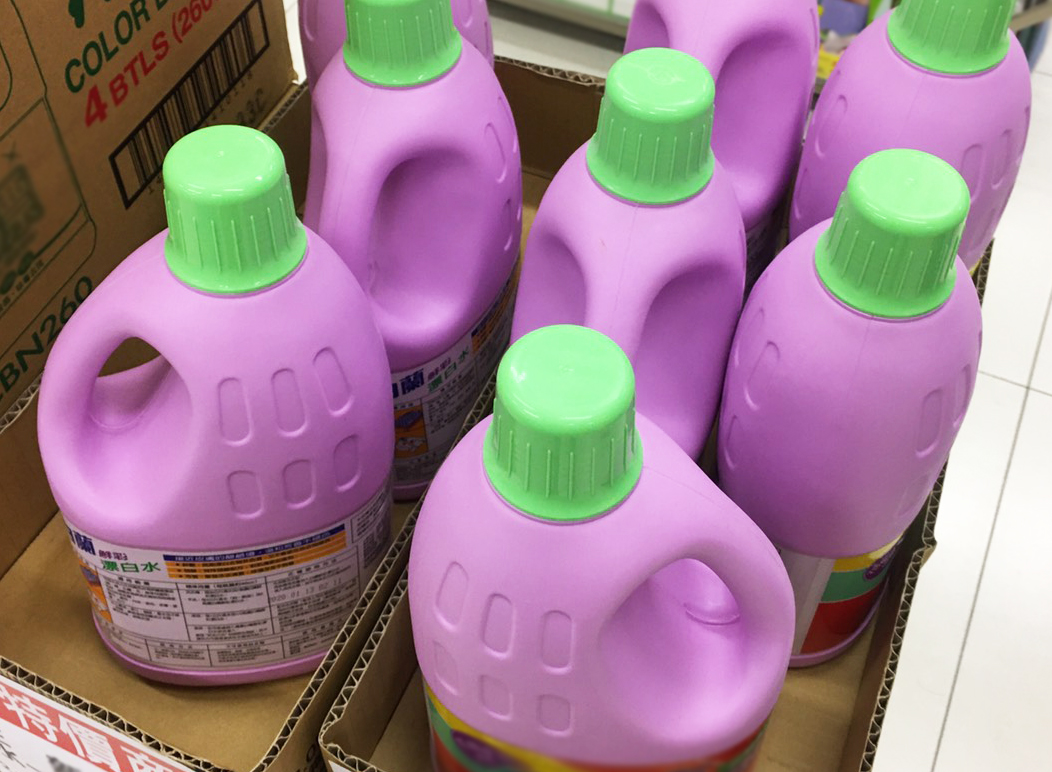
【事實釐清】網傳「市面上賣的『次氯酸水』太貴了...自己做吧...10cc漂白水+10cc工研白醋+980cc水=1000cc次氯酸水」?
Publisher’s rating: 事實釐清
The review examined a social-media message advising people to make “hypochlorous acid water” by combining 10 cc of bleach, 10 cc of white vinegar, and 980 cc of water. It reports that the message came from a retired teacher’s post and promoted the mixture for disinfection, including spraying hands and household items. The review consulted a chemistry professor and a high-school chemistry teacher about whether the recipe could produce the claimed solution and what risks it posed. The experts said the recipe could work in theory, but did not recommend making it at home. The chemistry professor explained that vinegar might lower the pH and convert some sodium hypochlorite in bleach to hypochlorous acid, but the vinegar is a mixture, and its other components could cause sediment or other by-products. The high-school teacher warned that adding too much acid to bleach can produce harmful chlorine gas. The review therefore did not endorse the recipe as a safe or reliable way to make disinfectant. The report also supplied an alternative: experts said diluted bleach can disinfect without adding vinegar. It cautioned that either hypochlorous acid water or sodium hypochlorite at excessive concentrations can harm people, and recommended using them for environmental surfaces such as tables and door handles rather than on the body. The findings distinguish theoretical chemical possibility from a practical recommendation: the recipe might produce hypochlorous acid, but uncertainties and the risk of chlorine gas make home mixing inadvisable.
Precautionary measures suggested by the UNICEF in the context of Corona Virus (COVID-19) outbreak
Publisher’s rating: FALSE
FACTLY examined a viral social-media message that attributed a list of COVID-19 precautionary measures to UNICEF. The review says the message was not issued by UNICEF and reports that most of its proposed measures did not appear on UNICEF’s website. It also notes that some recommendations contradicted UNICEF’s and WHO’s views, including claims about mask use and warm weather. To check the attribution, the review compared the message’s recommendations with information on UNICEF’s website and referred to UNICEF’s clarification that the circulating message was not genuine. It also reports that UNICEF Cambodia posted an image of the message and called it fake. These checks address both whether UNICEF published the message and whether its contents matched UNICEF’s advice. The review’s conclusion is specifically about the attribution of the message as a whole; it does not establish that every individual precaution in it is false. Its stated reasons are that UNICEF did not issue the message, many of its measures were absent from UNICEF’s website, and some contradicted published guidance or lacked scientific evidence.
కొరోనా వైరస్ యొక్క సైజు 400-500 మైక్రాన్లు. కాబట్టి, మాస్క్ ధరించడం వలన ప్రజలు కోవిడ్-19 బారిన పడకుండా ఉంటారు
Publisher’s rating: PARTLY TRUE
"Nobody had ever even heard of Ebola or ever conceived of something where you basically — the people would disintegrate....The level of death with Ebola — you know, at the time, it was a virtual hundred percent.”
Publisher’s rating: This is exaggerated.

బీఫ్ కొరోనాకు విరుగుడని యూరప్ హెల్త్ ఆర్గనైజేషన్ (EHO) తెలిపింది
Publisher’s rating: FALSE
గోరువెచ్చటి నీరు మరియు ఉప్పుతో పుక్కులించడం వలన కోవిడ్-19 ని నివారించవచ్చు
Publisher’s rating: FALSE
“There’s a theory that, in April, when it gets warm — historically, that has been able to kill the virus. So we don’t know yet; we’re not sure yet.”
Publisher’s rating: This is disputed.

La ingesta conjunta de Apirofeno y Metalgial utilizados para el tratamiento del dolor y la fiebre es mortal para los menores
Publisher’s rating: Falso
The claim concerns a warning shared on Facebook that Apirofeno, described in the post as a “new ibuprofen,” could be fatal to children if taken with Metalgial. Newtral’s article identifies the medicines as Apirofeno oral suspension and oral Metalgial, and consulted family doctor Jaime Barrio, a member of the scientific council of Madrid’s College of Physicians, as well as the Madrid College of Pharmacists’ medicines-information department. The sources quoted in the article said that combining or alternating the medicines is not advisable because it has not been shown to work better than either medicine alone. But, they said, that does not mean the two cannot be taken together. The article reports that the pharmacists’ department did not consider the combination contraindicated for children older than three months, provided a doctor prescribes it. It also says both medicines are used for pain and fever, while Metalgial is used for more intense pain and high fever, and Apirofeno for mild or moderate pain and symptomatic treatment of fever. The article does not present combining the drugs as risk-free: each can cause adverse effects, including digestive discomfort, and some adverse effects can be potentially lethal. Barrio said a serious episode after a child took both medicines would not necessarily have been caused by the combination itself; a serious adverse effect or an allergic reaction to either drug could also be responsible. The article therefore emphasizes medical direction, correct dosing according to the child’s weight and age, and following administration instructions. Its evidence supports rejecting the categorical claim that taking the two together is inherently fatal, while retaining the need for clinician guidance and recognition of individual drug risks.

Gargling with warm water and salt will prevent COVID-19
Publisher’s rating: FALSE
Coronavirus cases are "going very substantially down, not up."
Publisher’s rating: False
The corona virus is large in size with a cell diameter of 400-500 micro, so any mask prevents its entry so there is no need to exploit pharmacists to trade with muzzles. The virus does not settle in the air, but on the ground, so it is not transmitted by the air. The corona virus, when it falls on a metal surface, will live for 12 hours, so washing hands with soap and water well will do the trick. Corona virus when it falls on fabrics stays for 9 hours so washing clothes or exposing them to the sun for two hours is enough for the purpose of killing him. The virus lives on the hands for 10 minutes so putting the alcohol sanitizer in the pocket is enough for the purpose of prevention. If the virus is exposed to a temperature of 26-27°C, it will be killed, it does not live in hot areas. Also drinking hot water and exposure to the sun is good enough. Stay away from ice cream and cold food is important. Gargling with warm water and salt kills tonsils and prevents them from leaking into the lungs. Adhering to these instructions is sufficient to prevent the virus.
Publisher’s rating: Fake
Coronavirus live up to 12 hours on metal, 9 hours on fabric, and 10 minutes on the human hand
Publisher’s rating: UNVERIFIED