PeakMetrics / Fact Checks
Health & medicine fact checks
Explore claims publishers have checked about health & medicine. Read their original ratings and follow the evidence.
Search fact checks
Search by text or image13,677 published reviews in this topic

Meme says Netherlands took issue with faulty COVID-19 test kits from China
Publisher’s rating: Misleading

El SESCAM prohíbe el uso de máscaras de buceo adaptadas en pacientes con COVID-19 en Castilla-La Mancha
Publisher’s rating: Falso

వీడియోలో ముస్లింలు కొరోనావైరస్ ని వ్యాప్తి చేయడానికి ప్లేట్లను మరియు స్పూన్లను నాకుతున్నారు
Publisher’s rating: FALSE
La OMS advierte de que la mascarilla no protege o no es eficaz para ir por la calle
Publisher’s rating: Falso
El anciano sin documentación, que no recuerda nada y que está en el Hospital La Paz
Publisher’s rating: Falso
Newtral investigated a WhatsApp message accompanying a photograph of an older man. The message claimed he had no identification, did not know who he was and remembered nothing; it also said that a nurse had shared his photograph in the hope that someone would recognize him. Newtral’s conclusion was that the patient was not at Hospital La Paz and that the photograph was not recent. This directly contradicts the message’s identification of the man as a current patient there, rather than merely disputing a detail about his memory. The review says the image had circulated on social media since at least 2017, repeatedly attached to a story about an elderly man who could not remember his identity. It also describes an earlier use of the same image in a Mexican post dated 5 March 2017. That post sought help finding relatives of a purported patient named Tomás Moreno at a hospital in Guadalajara, Jalisco, but said he remembered who he and his relatives were and lacked a telephone number to call them. The different accompanying story and location help show why the circulating photograph alone did not establish the claims in the La Paz message. Newtral also reports that, three years earlier, Burgos Local Police had debunked claims placing the pictured man at hospitals in Burgos and Málaga. The review names earlier reporting and that police account among its sources, but the supplied text does not give further details of Newtral’s verification process. Its stated findings are that the patient was not at La Paz and the image was not current.


Under the leadership of former Vice President Joe Biden, H1N1, also known as swine flu, killed 12,000 people and infected 61 million others
Publisher’s rating: Needs context
The claim joined two ideas: that H1N1 caused 12,000 deaths and infected 61 million people in the United States, and that those outcomes occurred “under the leadership” of then-Vice President Joe Biden. MediaWise checked the statistics and the implication about responsibility separately. It reports that the tweet’s figures were broadly accurate, but says the figures alone do not establish that Biden caused or was responsible for the outcomes. To examine the administration’s response, the review consulted a PolitiFact article. It reports that the acting health and human services director declared a public health emergency on April 26, 2009, when the United States had 20 confirmed cases and no deaths; two days later, the administration made an initial funding request to Congress. The review says $7.65 billion was eventually allocated for a vaccine and other measures, and concludes that the administration responded quickly. For the statistics, MediaWise says it went “straight to the source” and checked the Centers for Disease Control and Prevention’s final U.S. estimates. Those estimates were 60.8 million infections, 274,300 hospitalizations and 12,400 deaths. Thus, the tweet’s rounded figures of 61 million infections and 12,000 deaths track the estimates reported by the review. But the article also emphasizes that state and local officials have authority to respond to national emergencies in their own way. Its conclusion is that the statistics are accurate while connecting Biden to the pandemic’s outcome is a stretch; the figures do not, by themselves, demonstrate personal responsibility.
Menghirup uap air panas bisa membunuh virus Corona Covid-19
Publisher’s rating: Keliru

【錯誤】網傳「這是留美醫學教授黃建中先生發到同學群的微信...這不是鼓吹靠自己來治療,而是用這些生活中的方法給自己贏得時間等待 .... 整體條件改善時住進醫院治療。」
Publisher’s rating: 錯誤
The claim concerned a circulating Chinese-language message attributed to “留美醫學教授黃建中,” which said that people with mild or suspected COVID-19 who could not get into hospital could use everyday measures to buy time while waiting for treatment. The message recommended, among other things, salt-water gargling, extensive household alcohol spraying, hot-water treatment of clothes, garlic, ginger, onion, chicken soup, supplements, wine and aspirin. The review examined this specific message and its attributed author, rather than offering a general assessment of home care. To investigate the attribution, the Taiwan FactCheck Center searched Google for “黃建中” and “Wong Kin-Chung,” and searched PubMed for “Wong Kin-Chung.” It reported finding one Hong Kong Chinese-medicine practitioner through Google, but no information substantiating the claimed U.S.-based medical professor; the two PubMed results under that name were, on comparison of their paper titles, unrelated to medicine or nutrition. The review therefore found no support for the message’s claimed medical credentials. The review also checked individual recommendations against expert input and the center’s earlier reports. It reported that salt-water gargling does not prevent or treat COVID-19; that alcohol can disinfect, but experts advised cleaning frequently touched surfaces rather than spraying the entire home; and that clothes need not be boiled. A physician interviewed by the center said the circulated remedies lacked relevant evidence for treating the virus, and warned that relying on them could delay medical care. On aspirin, he said it may relieve fever or pain but does not provide substantive treatment benefit, and advised against taking it without medical assessment.

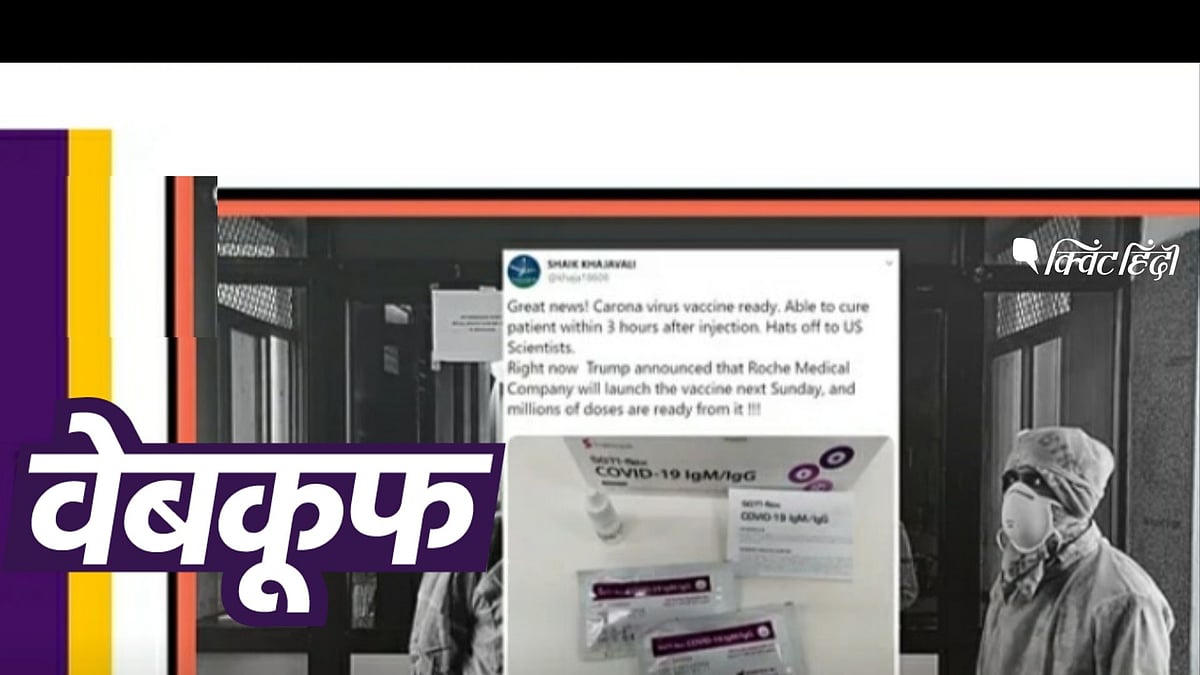
కొరోనా వైరస్ కి 'Roche' లాబొరేటరీస్ వాళ్ళు ఔషధాన్ని కనిపెట్టారు
Publisher’s rating: FALSE
Estas fotos de ataúdes son de los muertos en España por coronavirus
Publisher’s rating: Falso


एक्ट्रेस कनिका के संपर्क में आने से प्रिंस चार्ल्स हुए COVID-19 के शिकार.
Publisher’s rating: FALSE
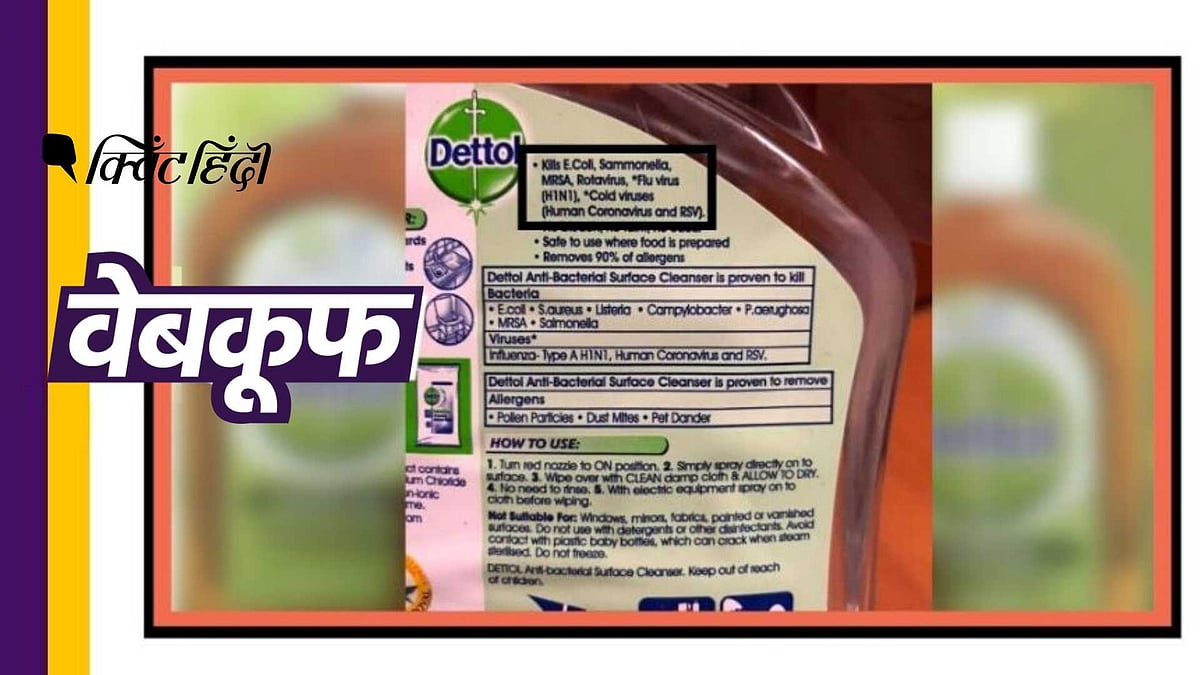
नोवेल कोरोनावायरस के खिलाफ काम करते हैं डेटॉल के प्रोडक्ट्स
Publisher’s rating: FALSE
कोरोनावायरस पर TikTok यूजर्स फैला रहे फेक न्यूज
Publisher’s rating: FALSE
El coronavirus puede curarse con un recipiente con agua de ajo recién hervida
Publisher’s rating: Falso
WHO ने भारत सरकार को देश में दो महीने के लॉकडाउन का सुझाव दिया
Publisher’s rating: FALSE