PeakMetrics / Fact Checks
Health & medicine fact checks
Explore claims publishers have checked about health & medicine. Read their original ratings and follow the evidence.
Search fact checks
Search by text or image13,676 published reviews in this topic

కెన్యా ప్రభుత్వం దేశ ప్రజలు సామాజిక దూరాన్ని పాటించేలా చూడ్డానికి ‘మసాయ్’ తెగను ఉపయోగిస్తున్న వీడియో
Publisher’s rating: FALSE
با بالاگرفتن بحران کرونا در ایتالیا، مردم این کشور پولهای خود را به خیابان ریختهاند.
Publisher’s rating: نادرست
Gráfico: primer borrador de desescalada del coronavirus y el confinamiento remitido hoy por el Gobierno a las autonomías
Publisher’s rating: Falso


La Universidad de Oxford otorga a España la puntuación más alta de los países occidentales, 90 sobre 100, en cuanto al rigor en la respuesta a la pandemia
Publisher’s rating: Falso
The claim concerns Pedro Sánchez’s statement in Congress on April 9, 2020, that an Oxford University study gave Spain the highest score among Western countries for the strictness of its pandemic response: 90 out of 100. Newtral checked the comparative ranking against Oxford’s daily Stringency Index data. Its review says that Spain’s score of 90 was correct for the relevant earlier data, but that the score was not the highest: other countries were ahead. The index was updated daily, so the comparison depends on the data available for the date of Sánchez’s statement. Newtral describes two data formats it consulted. One file showed Spain at 90 through April 2, the latest date then recorded in that file, while some other countries had entries through April 5. The review later found a more up-to-date CSV file: it recorded Spain at 95.24 on April 8, the day before Sánchez spoke. That score was matched by Italy, Austria, and France, and exceeded by Israel, Croatia, and New Zealand. Thus, neither the 90 score nor the newer 95.24 score made Spain the highest-scoring Western country in the comparison. The review also clarifies what the index measures. Oxford’s index combines indicators of government policies, including school and workplace closures, restrictions on movement, testing, and contact tracing. The source says the researchers explicitly cautioned that the index should not be interpreted as measuring whether a government’s response was appropriate or effective. The claim’s ranking assertion is contradicted by the contemporaneous country comparisons; interpreting the index as a measure of response effectiveness would also go beyond what its stated purpose supports.

石正麗凌晨發出警告:新冠病毒將透過蚊蟲傳播,變成蚊冠病毒
Publisher’s rating: 錯誤
The claim concerned messages circulating in Taiwan that attributed a warning to Shi Zhengli, a researcher at the Wuhan Institute of Virology: mosquitoes might become a new route for spreading the coronavirus, potentially producing a more dangerous “mosquito-coronavirus.” The review examined those specific messages, including a version claiming that Shi had spoken in the early hours of the 16th and another describing her as the institute’s director. It reported that she was actually the director of the institute’s Emerging Infectious Diseases Research Center, not the institute’s director.

As Kalonji seeds have 100 per cent of Hydroxychloroquine, taking them can prevent COVID-19
Publisher’s rating: FALSE
The reviewed social-media post claimed that Kalonji seeds contain “100 per cent” hydroxychloroquine and that taking seven seeds with honey and warm water before breakfast could prevent COVID-19. The investigation addressed both parts: whether the seeds contain that drug and whether either seeds or hydroxychloroquine had been shown to prevent the disease. It concluded that the seeds do not contain hydroxychloroquine and that the evidence described did not establish prevention by either substance. [S1: “A message is being widely shared on social media with a claim that Kalonji seeds have 100 per cent of Hydroxychloroquine, so taking 7 Kalonji seeds with honey mixed with warm water before breakfast can prevent COVID-19.”; “Kalonji seeds do not have 100 per cent of Hydroxychloroquine. Also, there is no scientific evidence yet to prove that either Kalonji seeds or Hydroxychloroquine can prevent COVID-19.”] For the ingredient claim, the review identifies Kalonji as Nigella seeds (Nigella sativa) and says its search found no information that the seeds prevent COVID-19. It distinguishes the seeds’ active compound thymoquinone from hydroxychloroquine, which it describes as a derivative of chloroquine. Thus, evidence of medicinal properties or other active compounds does not substantiate the post’s assertion that the seeds are hydroxychloroquine. [S1: “When searched about the Kalonji seeds (Nigella Seeds/ Nigella sativa), it was found that they have a lot of medicinal properties, but no information was found that they can prevent COVID-19.”; “It was found that one of the most active compounds of Nigella Sativa is Thymoquinone, not Hydroxychloroquine (Hydroxychloroquine is a less-toxic derivative of Chloroquine, another malaria drug).”] The review also notes an Algerian study that identified possible SARS-CoV-2 inhibitors among compounds from Nigella sativa, but quotes the study as calling for more research before medicinal or preventive use. For hydroxychloroquine, it cites an Indian taskforce advisory limited to selected high-risk groups and statements from the CDC and FDA that clinical-trial data were still needed to determine whether the drug was safe and effective for prevention or treatment. Those qualifications do not support the post’s claim that eating Kalonji seeds prevents COVID-19. [S1: “An Algerian study found that some compounds from Nigella Sativa may act as potential inhibitors of SARS-CoV-2 but the study itself mentions that more ‘researches are necessary to testify medicinal use of identified and to encourage preventive use of Nigella Sativa against coronavirus infection’.”; “the FDA, which issued an Emergency Use Authorization allowing the use of chloroquine phosphate and hydroxychloroquine sulfate for COVID-19, mentions that ‘more data from clinical trials are necessary to determine whether chloroquine phosphate or hydroxychloroquine sulfate are safe and effective in treating or preventing COVID-19’.”]


Sostengono che l'OMS ora ha intenzione di entrare con la forza nelle case per deportare i nostri cari in caso siano positivi al Sars-Cov-2. Ma le cose non sono esattamente come raccontato.
Publisher’s rating: 2

第二個冠狀病毒吹哨人石正麗教授向全人類發出警告,蚊蟲將是人類第三病毒傳播者,石正麗教授則是蚊冠病毒的第一吹哨人
Publisher’s rating: 不實


COVID-19 ಗಾಗಿ ಯುಎಸ್ ವಿಜ್ಞಾನಿಗಳು ಅಭಿವೃದ್ಧಿಪಡಿಸಿದ ಲಸಿಕೆಯ ಫೋಟೋ.
Publisher’s rating: FALSE

No one under the age of 25 has died from coronavirus
Publisher’s rating: False
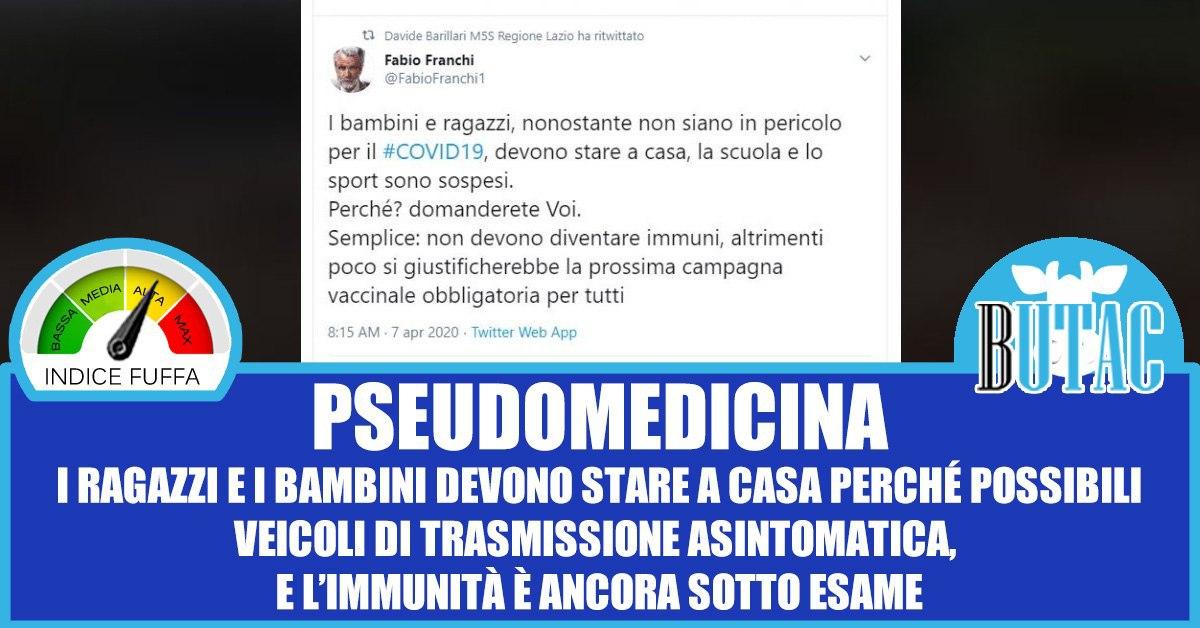
Affermano che ci sia un complotto per far sì che i ragazzi non acquisiscano immunità di gregge dal Sars-Cov-2 per poi poter vendere vaccini.
Publisher’s rating: 1

Le hantavirus risque de causer une nouvelle pandémie
Publisher’s rating: Faux


網傳文章宣稱「人權歐美?讓老人去死吧」、「歐美國家讓老人放棄治療」?
Publisher’s rating: 錯誤
The review examined viral claims that European countries and the United States were abandoning older people with COVID-19, including a post titled “Human rights in Europe and America? Let the elderly die.” It reports that the post attributed age cutoffs to Italy, Spain and France, described British triage as abandoning older patients at a particular frailty-score threshold, and cited remarks by a Ukrainian former health minister and Texas lieutenant governor. The review’s overall finding was that these claims misrepresented policy and evidence. Supporting the scope and conclusion, it states that the viral post “列舉包括義大利、西班牙、法國、烏克蘭、英國與美國等國家放棄治療年長病患的規定” and concludes “因此,該傳言為錯誤。” For Italy, Spain, the United Kingdom and France, the review compared the viral claims with clinical guidance and reporting from fact-checking organizations. It found that the guidance considered factors such as frailty, expected lifespan, health status and complications when assessing intensive-care admission, rather than directing clinicians to deny care to everyone above a set age. In particular, it says the Spanish guidance did not bar patients of a particular age from receiving ventilators, and the UK guidance used a frailty assessment to inform evaluation, not as an automatic cutoff for abandoning older people. The review summarizes its findings as: “僅建議將病患的衰弱程度、預期壽命作為是否轉入加護病房的評估因素之一,並未將病患年齡作為依據;也沒有拒絕治療特定年齡患者的建議。” The review also checked the cited statements and their policy context. It says Ukrainian former health minister Illya Yemets did not say that money should not be spent treating people over 65, although it reports he left office after controversial remarks. Texas lieutenant governor Dan Patrick’s comments were his personal opinion, not U.S. health policy; the review cites a federal civil-rights notice against age discrimination in medical care. Its conclusion was that the United States had no policy of abandoning older patients. The review’s summary states: “烏克蘭前衛生部長葉曼並未說「別浪費錢給65歲以上的老人治病」等語” and “美國德州副州長派屈克個人意見,並不代表美國衛生政策。”