PeakMetrics / Fact Checks
Health & medicine fact checks
Explore claims publishers have checked about health & medicine. Read their original ratings and follow the evidence.
Search fact checks
Search by text or image13,676 published reviews in this topic

A cura é oficial de acordo médicos infectologistas e imunologistas
Publisher’s rating: Enganoso: O áudio foi realmente gravado por Roberto Zeballos. Porém, ao comentar sobre tratamento para a covid-19, o médico afirma a outro profissional que o coronavírus “veio de um laboratório de Wuhan”. No entanto, não há evidências disso e um estudo publicado pela Nature Medicine descarta a hipótese.
Semen, when ingested or used as a hand sanitizer, can kill and prevent the novel coronavirus.
Publisher’s rating: False


Registros de cartórios comprovam que não há epidemia
Publisher’s rating: Falso: Texto de corrente de WhatsApp diz que "não há epidemia" e mostra números que seriam do Portal da Transparência. O Comprova verificou, no entanto, que esses números não condizem com os verdadeiros dados disponíveis na plataforma

వచ్చే వారం నుండి అందుబాటులోకి రానున్న కోవిడ్-19 మెడిసిన్
Publisher’s rating: FALSE

Does COVID-19 have a mortality rate of 1%-2%?
Publisher’s rating: Partly False
The claim concerns whether COVID-19’s mortality rate was 1–2%, an assertion shared in a Facebook meme that also gave a 98.54% survival rate and suggested people should not panic. USA Today examined the claim in the early pandemic, when the exact U.S. mortality rate was not known. It reported that Anthony Fauci had told Congress in March that the rate might be as low as 1% if estimates included infected people who were never tested or had no severe symptoms. The review also quoted Fauci explaining that even a 1% rate would be substantially more lethal than seasonal flu. The review’s central qualification was that a single rate could not reliably describe everyone infected. It reported that outcomes depended on factors including age, health history and whether the healthcare system had capacity to provide care. Theo Vos, a University of Washington health-metrics professor, cautioned that reported deaths and cases came from people who had been tested, not necessarily all infections in the community. USA Today also noted that antibody studies suggested a considerable gap between confirmed positive tests and the number of people thought to have encountered the virus. The article illustrated why the percentage could not be treated as a reassuring, universal prediction: it described an early estimate that 70 million to 150 million U.S. residents might contract COVID-19, under which a 1% mortality rate would imply 700,000 to 1.5 million deaths. It also reported that death rates varied between countries and could rise where healthcare systems were overwhelmed. Thus, the review accepted that an overall rate around 1% or lower was possible when accounting for undetected infections, but found the blanket claim misleading because the actual risk varied and the true spread was uncertain.

Claim: Tamil Nadu govt not approved Thanikasalam Siddha medicine for Covid 19
Publisher’s rating: False
Fact Crescendo examined a viral claim that Tamil Nadu had approved a Siddha remedy recommended by practitioner Thanikasalam. The review says the Facebook post linked to a Cine Cafe article and a YouTube video. In the video’s account, Thanikasalam had asked for time, given his medicine to COVID-19 patients for testing, and those patients had recovered; the video then claimed state approval had been granted and an official announcement would follow. The review’s conclusion was that the state had not approved his medicine. To distinguish that claim from the Siddha remedies the state did use, the review describes Kabasura kudineer and nilavembu as remedies distributed to the public on the recommendation of the government Siddha hospital in Chennai’s Arumbakkam. It says these were intended to support immunity, not to treat or cure COVID-19. Their use therefore did not establish government approval of Thanikasalam’s separate remedy. The review also reports that the director of the Indian Medicine and Homoeopathy department complained to Chennai police about Thanikasalam, and that the state health department said legal action would be taken. It further says health officials warned people not to trust social-media posts, videos, or medicines associated with him, and identified him as someone without government approval. These details support the review’s distinction between existing government-supported Siddha remedies and Thanikasalam’s unapproved claims; the excerpt does not provide a separate official approval document or test results for his medicine.

תמונה של חולה קורונה עם שני ילדים לטפל בהם הזקוק לשיתופים רבים בקבוצות כדי שיוכלו להתפלל בשבילו
Publisher’s rating: לא נכון
Pada 30 April 2020, terdapat ratusan pekerja pabrik rokok Sampoerna yang positif Covid-19
Publisher’s rating: Keliru

Women have gone out to shop despite the lockdown due to coronavirus
Publisher’s rating: FALSE

कोरोना वायरस को खत्म करने में मदद करता है सरसों का तेल
Publisher’s rating: FALSE

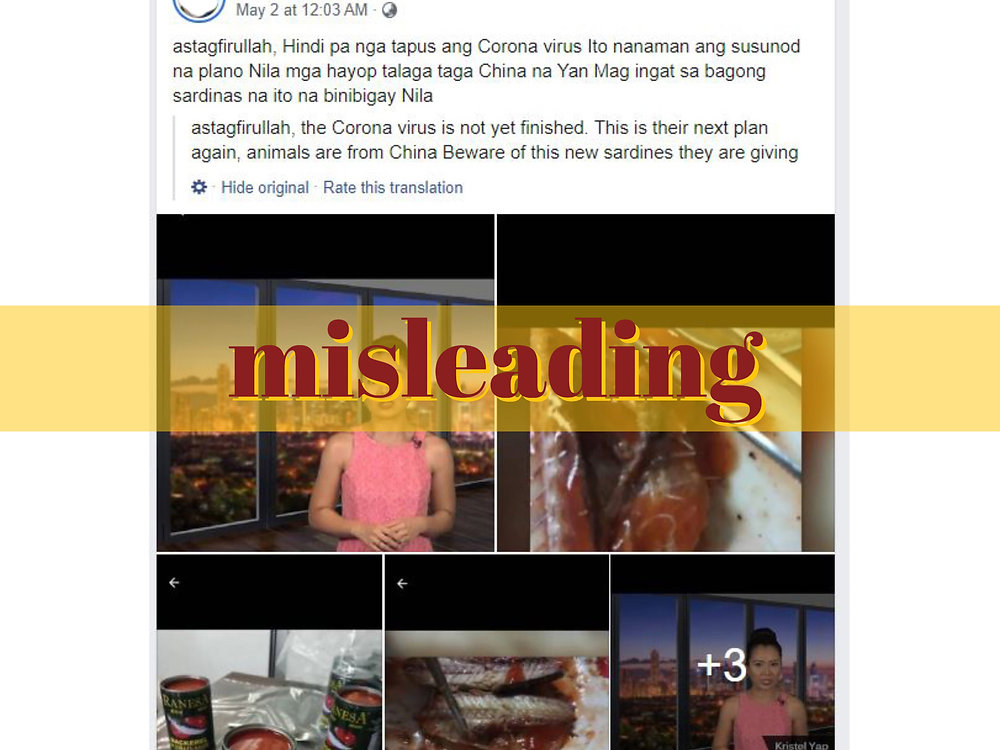
China's 'plan' after coronavirus: Send contaminated sardines to PH
Publisher’s rating: False
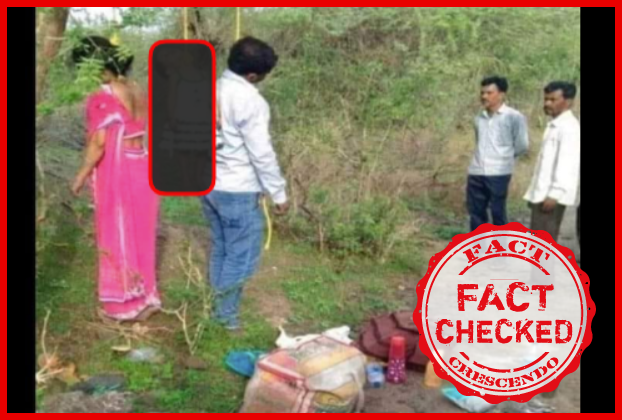
Claim: Surat labour committed suicide due to covid 19 lockdown
Publisher’s rating: False
The claim attached a photo of three people, including a child, to an allegation that a family walking from Surat had died by suicide because they could not endure hunger during the lockdown. Fact Crescendo examined whether the photo showed a lockdown-related incident in Surat or elsewhere in Gujarat. The review reports that its searches for news of a migrant family suicide in Gujarat found no such report, and that the photo itself did not establish the claimed location: “சூரத்தில் இருந்து நடந்து சென்றார்கள் என்று குறிப்பிட்டுள்ளனர். எனவே, இந்த சம்பவம் சூரத்தில் நடந்ததாக கருத முடியாது.” The investigation then used reverse-image searching to trace the photo’s earlier appearance. It found the image used as a YouTube thumbnail on 9 March 2019, before the lockdown, although the video supplied no information about the image and only played a song. The review also found that the image had circulated for years and located a 2018 Nagpur Today report using it. That report described a different account: a child was killed and the husband and wife died by suicide in Wardha district, Maharashtra; police reportedly suggested family conflict and debt as possible factors. The review says it could not establish where and when the depicted incident actually occurred, so the earlier report does not prove the full history of the photo. But the pre-lockdown use of the image and its reported association with a 2018 incident contradict its presentation as evidence of a family’s lockdown-era death after walking from Surat. Fact Crescendo concludes that the Facebook claim was false.
Kenya has received 500,000 test kits from Jack Ma
Publisher’s rating: False.
Die Maßnahmen der Regierung in Bezug auf die Corona-Pandemie sind nach Aussagen des Facharztes für Hals-Nasen-Ohrenheilkunde Bodo Schiffmann übertrieben. In einem Video behauptet er, Sars-CoV-2 sei "genauso gefährlich oder nicht gefährlich wie eine Grippe". Er stützt sich dafür unter anderem auf die aktuellen Daten des EuroMOMO-Netzwerkes zur Übersterblichkeit. Dort könne man sehen, dass "auf der ganzen Welt keine ansteigenden Krankheitsfälle messbar sind". Nicht wegen des Coronavirus, sondern wegen einer "reißerischen Berichterstattung und gezielten Massenpanik" würden die Krankenhäuser zusammenbrechen. Seine Folgerung: "Die Panik kostet Menschenleben, nicht das Virus!" Er fordert deshalb "ein sofortiges Ende der Maßnahmen". Außerdem gebe es "erschreckende Neuigkeiten aus Frankreich": Dort würden Patienten über 80 in Krankenhäusern "getötet"
Publisher’s rating: Fallsterblichkeitsraten und die EuroMOMO-Daten von Ende März allein sind kein Beleg dafür, um die Maßnahmen im Kampf gegen die Corona-Pandemie als falsch oder als Hysterie herunterzuspielen. Auch korrekte Daten müssen im Kontext gelesen und können falsch interpretiert werden.

Video of people violating lockdown conditions in Old city (Hyderabad)
Publisher’s rating: FALSE
The claim concerns a video presented as showing people violating lockdown conditions in Hyderabad’s Old City. FACTLY identifies the gathering in the footage as migrant workers who had been stuck in Telangana during the lockdown. It says they marched in Toli Chowki on 3 May 2020, asking to be sent to their native places—not in the Old City as the post claimed. To check the location, the review says it searched online for reports of lockdown gatherings in Hyderabad and found reports placing this incident in Tolichowki. It also says it used Google Maps to check the shops visible in the video and found that some were in Tolichowki. These reported location checks support the review’s conclusion that the footage was mislocated. The review’s conclusion is specifically about where the video was filmed: it says the footage shows migrant workers marching in Toli Chowki and being shared as footage from the Old City. The excerpt does not establish that the gathering violated lockdown conditions; it describes the workers’ stated purpose as demanding return to their native places.

WHO report – ‘No vegetarian in the world was found to have been infected with COVID-19’
Publisher’s rating: FALSE
The claim concerns a social-media post asserting that a WHO report found no vegetarian anywhere had been infected with COVID-19. The post also attributed a supporting quote to a WHO representative. FACTLY reports that it searched for a WHO report making that statement and found none, then contacted the WHO Representative in China about the quoted words. According to FACTLY, the representative said the quote had been taken out of context. He explained that it came from a discussion of zoonotic diseases and animal-to-human spillover, and described the need to regulate livestock trade through a One-Health approach. FACTLY says the representative did not claim that no vegetarian had contracted COVID-19. The quoted explanation concerns risks associated with proximity between animals and humans, not evidence that infection status depends on diet. The review also notes that WHO had advised people they could eat meat if it was thoroughly cooked and properly handled. It cites a Food and Agriculture Organization report stating there was no evidence that animals or food of animal origin could transmit COVID-19 to humans. These points address the post’s implication about meat and infection, but the decisive evidence reported by FACTLY is that the WHO representative clarified the meaning of his quote and did not make the asserted claim.