PeakMetrics / Fact Checks
Health & medicine fact checks
Explore claims publishers have checked about health & medicine. Read their original ratings and follow the evidence.
Search fact checks
Search by text or image13,676 published reviews in this topic
Covid-19 hanya flubiasa dan hasil rekayasa untuk cari untung
Publisher’s rating: Keliru

COVID-19 is bacterial, not viral, and can be easily treated with aspirin
Publisher’s rating: False
The review examines a widely shared post alleging that Italian doctors discovered COVID-19 was caused by bacteria, not a virus, and that aspirin and other medicines could treat it. The post also claimed the World Health Organization had barred autopsies. The review reports that Italy’s Ministry of Health had made no announcement of a cure or change in its account of the disease: it continued to describe COVID-19 as viral and antibiotics as ineffective because the disease is not bacterial. It also notes that the WHO had not prohibited autopsies and lacked the power to create and enforce laws. On the treatment claim, the review says medical researchers had found no evidence that aspirin could cure or treat COVID-19. It cites a WHO systematic review of 73 studies on nonsteroidal anti-inflammatory drugs, including aspirin, and acute respiratory viruses, which found no evidence that aspirin could cure or treat COVID-19. The source describes another clinical trial as expected to finish in June, but does not report its results. Thus, the material it presents does not support the post’s assertion that aspirin was an established, easy treatment. The review also explains the distinction relevant to the claim: antibiotics act against bacteria, not viruses. It quotes the National Human Genome Research Institute on that point and the WHO’s statement that antibiotics do not work against viruses. The review concludes that the claim is unsupported, noting that health officials maintained COVID-19 was caused by a virus and had no known cure. Its evidence addresses both the alleged bacterial cause and the purported aspirin treatment, rather than merely discussing COVID-19 in general.
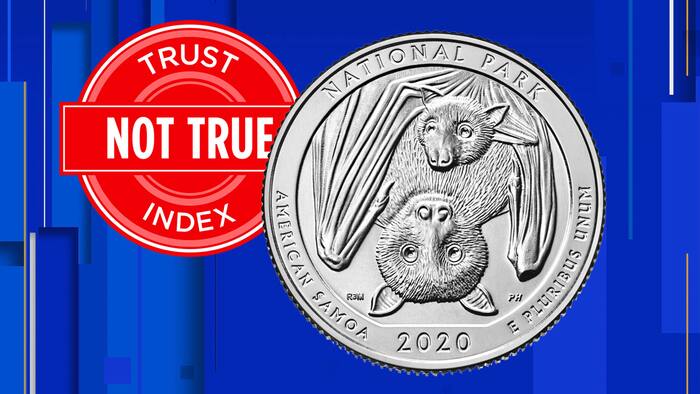
Is new US quarter proof government knew COVID-19 was coming?
Publisher’s rating: It's false.
Zuletzt kursierten auf Facebook Postings, in denen davon die Rede ist, dass Vitamin C gegen das Coronavirus helfe. Hoch dosiertes Vitamin C töte das neuartige Virus Sars-CoV-2 «höchst effektiv» ab. Ein angeblicher Beleg: «Die Chinesen» hätten «50 Tonnen Vitamin C unter der Bevölkerung verteilt», und die Zahl der Neuinfektionen sei daraufhin gesunken. Man solle deshalb zur Vorsorge gegen Covid-19 täglich drei Gramm Vitamin C zu sich nehmen
Publisher’s rating: Es gibt keine Belege für eine virustötende Wirkung von Vitamin C. Eine hoch dosierte Aufnahme wird nicht empfohlen. Tatsächlich wurden 50 Tonnen Vitamin C Anfang Februar von einer Chemiefirma in die chinesische Provinz Hubei geliefert. Die Menge entspricht aber gerade einmal dem Normalbedarf der dort lebenden Menschen für acht Tage.
Die Meinungen von Ärzten, die die Gefährlichkeit des neuartigen Coronavirus relativieren, werden von den Gegnern der Covid-19-Maßnahmen gerne gehört. Diese Gegenmeinungen werden gesammelt und häufig geteilt. Allerdings werden sie oft aus dem Kontext gerissen oder falsch wiedergegeben. So etwa bei einem Interview mit Dr. Klaus Püschel, Direktor des Instituts für Rechtsmedizin am Universitätsklinikum Hamburg-Eppendorf (UKE). Einige Facebook-Postings behaupten, er habe gesagt, dass kein einziges der von ihm bis dahin obduzierten Corona-Opfer an Covid-19 gestorben sei
Publisher’s rating: Das ist falsch. Püschel sagte, dass niemand der obduzierten Todesopfer ohne Vorerkrankung gewesen sei und er die Gefahr des Coronavirus für gesunde Leute daher für gering halte.
The Facebook posts made a specific claim about Dr. Klaus Püschel: that he had said none of the people who had died and been autopsied by him had died of Covid-19. The review identifies Püschel as director of the Institute of Legal Medicine at Hamburg-Eppendorf University Hospital and traces the disputed statement to a Sat.1 interview. It reports that, in that interview, he said all the dead people his team had autopsied in the region had serious pre-existing internal illnesses. That is not the same as saying Covid-19 caused none of their deaths. The review also gives the relevant distinction in Püschel’s comments: he said that no autopsied death had been someone without a pre-existing condition, and described the danger as low for healthy people. But it reports that he explicitly acknowledged a serious risk to people whose immune systems were weakened by prior illness, and said the virus could ultimately cause a fatal course for them. Thus the posts’ broad claim leaves out the stated possibility that Covid-19 was fatal for people with underlying conditions. The review places the interview in context with two other reported statements. It says Püschel had earlier told Die Welt that no person without a pre-existing condition had died of the virus in Hamburg up to that point; in a late-April NDR interview, he said 80 percent of the 140 people autopsied by then had cardiovascular disease. Those statements concern the presence of prior illnesses, not an assertion that none of the deaths involved Covid-19.


Morre, Genival Lacerda Aos 89 anos vítima de AVC. Estava internado em um hospital do Recife.
Publisher’s rating: Falso
Pesan berantai soal virus hanya bisa dikalahkan oleh antibodi yang diklaim berasal dari Dekan FMIPA IPB
Publisher’s rating: Keliru
Diverses publications Facebook affirment qu’on s’est « bien trompé sur le traitement du COVID19 ». Largement diffusés, les posts indiquent que des médecins italiens ont pratiqué des autopsies et ont fait une découverte concernant le coronavirus. Les victimes ne sont pas mortes du virus, mais des suites d’une « thrombose ». D'après les publications, « les respirateurs n'ont jamais été nécessaires, ni l'unité de soins intensifs ». Seuls les « antibiotiques, les anti-inflammatoires et les anticoagulants » ou de l’aspirine et du jus de citron bouilli sont à prescrire aux patients.
Publisher’s rating: Le message est une information comportant de nombreux amalgames et contre-vérités qui circule dans différents pays et dans différentes langues. Le texte affirme à tort qu'une infection bactérienne est à l'origine de la crise et que la plupart des gens meurent de thrombose. Des sources, citées, se sont avérées être incorrectes.
The Facebook posts claimed that Italian doctors’ autopsies showed people were dying from thrombosis rather than COVID-19, and that ventilators and intensive care were unnecessary. They recommended antibiotics, anti-inflammatory drugs and anticoagulants, or aspirin and boiled lemon juice. The review says the post circulated in several languages and describes its wording as a translated message; it does not establish that the alleged autopsies or discovery occurred. The central medical claim is contradicted by the evidence the review cites. It reports that a British fact-check examined studies linking COVID-19 with thrombosis and found thrombosis to be a possible complication, not evidence that deaths were caused by a bacterial infection instead of the virus. Belgian virologist Steven Van Gucht likewise told dpa that thrombosis can occur in severe COVID-19, but is a reaction to the virus; he also said pneumonia and thrombosis can occur together. The review rejects the claim that existing care was unnecessary and that the listed drugs were a sufficient treatment. Van Gucht called that assertion “total nonsense” and explained that bacterial infections may sometimes occur secondarily after ventilation, but often do not. The review also reports that Italian health-ministry spokesperson Nicola Del Duce denied that the ministry had issued the alleged reports, and that Professor Jacques Theron denied authorship of a version circulating in French. These details undermine the posts’ cited authority and attribution; they do not support replacing medical care with the proposed remedies.

Une publication virale sur Facebook en appelle à la "discipline" pour ne pas reproduire les erreurs commises en 1918 lors de la grippe espagnole. Le post suggère que le confinement était mal supporté par la population et que réjouie, elle a abandonné "toutes les précautions". Une deuxième vague, plus mortelle, serait survenue des suites de cette insouciance.
Publisher’s rating: Ce post mélange vérités et fausses affirmations. Oui, il y a eu quelque 50 millions de victimes qui ont succombé à la grippe espagnole, entre 1918 et 1919, en plusieurs vagues. Non, il n'y a pas eu de confinement général.
The viral Facebook post argued that people in 1918 grew tired of restrictions, abandoned precautions, and thereby helped cause a more deadly second wave of influenza. The review distinguishes two parts of that account: deaths occurred in several waves, including a particularly deadly second wave, but the proposed explanation based on ending a lockdown is not supported by the evidence it reports. To assess the historical claims, the review cites historical reports for the death toll and multiple waves, and refers to historian Nicolas Beaupré’s assessment in a Libération CheckNews investigation. Beaupré confirmed that there were three waves and that the second was especially severe, but rejected the claim that easing restrictions or disregarding precautions caused it. He instead pointed to seasonality and a possible mutation of the virus. The review also cites historian Freddy Vinet, who said that measures such as distancing existed but were not equivalent to a general lockdown, and that there was therefore no comparable “deconfinement.” The key context is that the post presents a causal chain—lockdown fatigue, abandonment of precautions, then a deadlier wave—that the cited historians do not establish. The review’s account supports the existence of multiple waves and a severe second wave, while explaining why the analogy to lockdown and reopening is misleading.
Tocilizumab adalah obat yang 90 persen bisa menyembuhkan Covid-19 meskipun pasien dalam kondisi kritis
Publisher’s rating: Tidak terbukti

Virus Corona Covid-19 bisa dihilangkan dengan meminum campuran air hangat dan garam
Publisher’s rating: Keliru

Bolsonaro confirma possível câncer e desabafo comove: ‘Não sou mais dono de mim
Publisher’s rating: Falso
Op sociale media gaat een bericht rond over Italiaanse artsen die door autopsie een vaccin zouden hebben gevonden voor het coronavirus. Volgens het bericht stierven de onderzochte slachtoffers niet aan het virus, maar aan de gevolgen van de bacteriële infectie 'diffuse intravasculaire coagulapathie'. Die infectie kan onder meer trombose veroorzaken, waarbij het bloed gaat stollen in de bloedvaten en er klonters ontstaan. Volgens de post is er dan ook geen vaccin nodig, maar zijn "antibiotica, ontstekingsremmers en anticoagulantia" de beste remedie.
Publisher’s rating: Het bericht is een hoax die in verschillende landen en verschillende talen rondgaat. In de tekst wordt onterecht beweerd dat een bacteriële infectie aan de basis ligt van de crisis en dat de meeste mensen sterven aan trombose. Bovendien worden bronnen geciteerd die niet kloppen.
The post claimed that Italian doctors had found through autopsies that people diagnosed with Covid-19 were actually dying from a bacterial infection, diffuse intravascular coagulopathy (DIC), and that antibiotics, anti-inflammatory medicines, and anticoagulants were the appropriate remedy. The review says the post circulated in multiple languages and countries. It describes odd constructions in the text as signs of literal translation and copy-pasting, then reports that translating it into English and searching again led to examples of the claim being shared in different languages. It also cites a Spanish fact-check that traced circulation to Facebook and WhatsApp from mid-April. The review challenges the claim that DIC means Covid-19 deaths were caused by bacteria rather than a virus. It cites a British Full Fact investigation, which the review says referenced research linking severe Covid-19 with thrombosis. Belgian virologist Steven Van Gucht is quoted explaining that thrombosis can be a serious complication, especially in severe cases, but remains a bodily reaction to the virus, not evidence of a bacterial cause. He also says thrombosis is one possible reaction and can occur alongside pneumonia. The proposed treatment and the post’s claim of misdiagnosis are also disputed. Van Gucht calls the treatment claim false and says secondary bacterial infections can sometimes follow infection, including in patients ventilated in hospital, but are not present in many cases. Finally, the review says the post attributed its claims to Italy’s health ministry and claimed Italy was changing its protocols. Ministry spokesperson Nicola Del Duce told DPA that the ministry had never published such reports, so the cited source did not substantiate the post.
« La fausse pandémie est finie. Merci d’avoir collaboré à ce test mondial d’obéissance. C’est un succès », clame un message posté le 23 mai 2020 sur Facebook, qui a largement été partagé dans toute la francophonie
Publisher’s rating: La première partie du message est mensongère : le coronavirus a provoqué une vraie pandémie, puisque l’épidémie partie de Chine a touché l’ensemble de la planète. Et elle n’est pas finie, puisque le nombre de contaminations et de décès continue de croître en ce fin de mois de mai, même si le rythme ralentit fortement. L’opinion émise dans la seconde partie du post relève de la liberté d’expression.
The review examined a Facebook post that declared the pandemic a “false pandemic” and a global obedience test. The post appeared on 23 May 2020 on the page of “S’informer autrement,” a France-based group; the review says it was widely shared across French-speaking communities. The post’s claim that the pandemic was over was distinct from its accompanying criticism of public-health measures, which the review treated as opinion. To assess whether the pandemic was real and ongoing, the review cited official figures from the World Health Organization and Johns Hopkins University’s Center for Systems Science and Engineering. It reported that, by late May 2020, confirmed infections across the continents numbered about 5.5 million and deaths from Covid-19 nearly 350,000. It noted that both organizations counted confirmed cases, and said that the number of victims was still rising, including in Belgium. The review also cited concern about a possible second wave from Andrea Ammon, director of the European Centre for Disease Prevention and Control. The review separately addressed claims in the longer text accompanying the post. It said that most scientists considered masks useful, especially during the gradual easing of restrictions, and cited Belgian government and WHO guidance. It also described social-distancing measures, including confinement, as considered necessary, citing an Imperial College study. The excerpt does not provide the study’s findings or enough detail to assess its methods independently. On vaccination, the review distinguished between mass vaccination being not then on the agenda and the European Commission’s view that developing a vaccine was important to protect people and prevent a resurgence.